

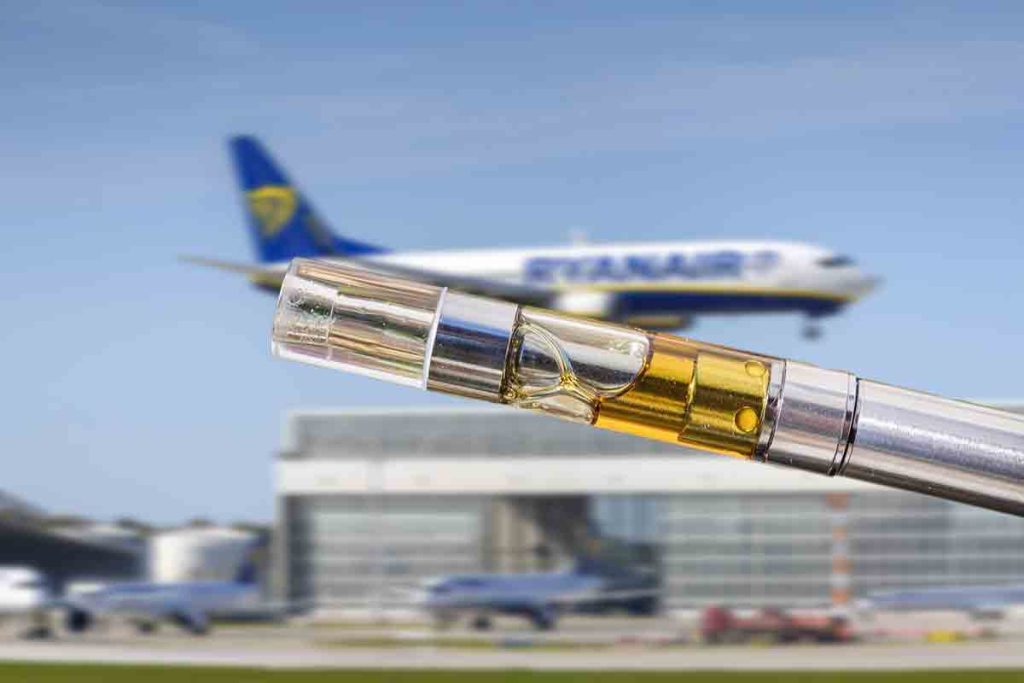
Traveling with a THC vape? You’re not alone in wondering what happens at the airport. With 24 states plus Washington, D.C. now allowing recreational cannabis and 40 states permitting medical use, plenty of travelers carry vape pens, cartridges, or gummies. But airports operate under federal law, not state law, and that gap is where things get messy.
This guide covers what TSA actually does when they find a THC vape, what the current federal landscape looks like (including the ongoing rescheduling process), how to handle lithium battery rules for vapes, and what happens when you fly internationally. No sugarcoating, just the facts you need before you pack.
The Short Answer
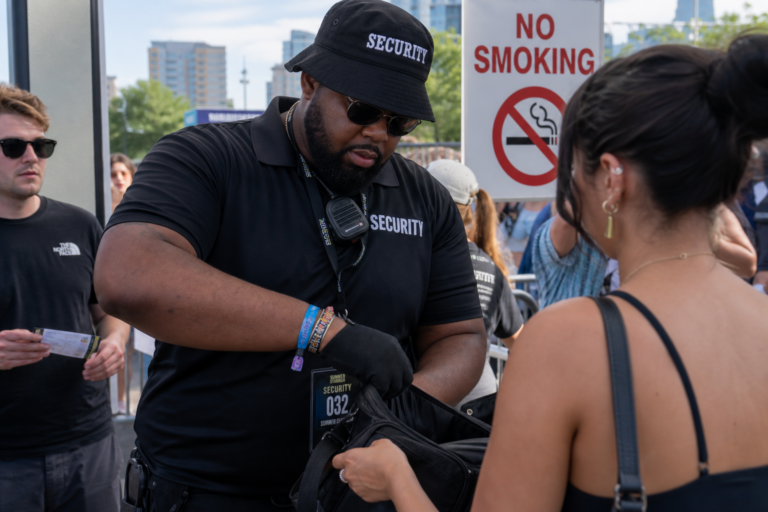
Can you bring a THC vape on a plane? Technically, no. Cannabis remains a Schedule I controlled substance under federal law. TSA is a federal agency, so its checkpoints follow federal rules, not state ones. If a TSA officer discovers THC products during screening, they’re required to refer the matter to local law enforcement.
In practice, though, the outcome varies a lot depending on the airport, the state, and the amount. Some travelers walk through without incident. Others face confiscation, questioning, or worse. The risk is real, and it’s yours to assess.
Federal Law vs. State Law: The Disconnect That Matters
Cannabis legalization has moved fast at the state level. As of April 2026, recreational cannabis is legal in 24 states plus D.C., and medical programs operate in 40 states. But here’s the problem: airports and airspace fall under federal jurisdiction. TSA officers don’t enforce state laws. They enforce federal ones.
This means that even if you bought your THC vape legally in California and you’re flying to New York, both states where recreational cannabis is legal, the moment you step into the airport, you’re in federal territory. Possession of THC products there is technically illegal, regardless of your state’s laws or your medical card.
The Rescheduling Process: What’s Happening Now
In May 2024, the DEA published a Notice of Proposed Rulemaking to move marijuana from Schedule I to Schedule III of the Controlled Substances Act. That process has been slow and complicated, involving administrative hearings and legal challenges.
In December 2025, President Trump signed an Executive Order directing the Attorney General to expedite the rescheduling of medical marijuana. On April 28, 2026, the Justice Department published new Federal Register actions:
- Final Rule (2026-08176) , placing FDA-approved marijuana products in Schedule III
- Final Rule (2026-08177) , placing state-licensed medical marijuana products in Schedule III
- Notice of Hearing (2026-08178) , scheduled to begin June 29, 2026
Here’s what this means for travelers right now: nothing has changed yet. Until a final rule is actually enacted, marijuana, including THC vape products, remains Schedule I at the federal level. The rescheduling is in progress, but it’s not done. Don’t assume the law has shifted. For a deeper dive, see our guide to THC Vape Laws and Regulations.
TSA’s Actual Policy: What Happens at the Checkpoint
TSA’s official stance on medical marijuana, per their website (updated April 27, 2026), is straightforward:
“TSA’s screening procedures are focused on security and are designed to detect potential threats to aviation and passengers. Accordingly, TSA security officers do not search for illegal drugs, but if any illegal substance or evidence of criminal activity is discovered during security screening, TSA will refer the matter to a law enforcement officer.”
Translation: TSA isn’t hunting for your vape pen. They’re looking for weapons, explosives, and other threats to flight safety. But if a THC cartridge happens to show up during a scan or bag check, they can’t ignore it. They hand it off to airport police, and what happens next depends on local laws. Our coverage of the TSA crackdown on vapes has more detail on recent enforcement trends.
In states where cannabis is legal, airport police might just tell you to throw it away or leave it in your car. In states where it isn’t, you could face fines or even misdemeanor charges. The final decision always rests with the local law enforcement officer, not TSA.
Battery Rules: The Safety Regulation You Can’t Ignore
There’s a separate set of rules that applies to all vaping devices, nicotine or THC, and they come from fire safety, not drug policy. This is critical and the original version of this guide got it wrong.
All vaping devices with lithium batteries must go in carry-on bags only. They are prohibited in checked luggage.
This is an FAA/TSA safety rule, not a suggestion. Lithium-ion batteries in the cargo hold have caused fires. Multiple airlines and regulatory bodies worldwide enforce this. If you pack a vape in your checked bag, it may be confiscated at screening, not because of THC, but because of the battery. For airline-specific policies, see our analysis of major airlines’ vape policies.
Battery Safety Quick Reference
| Rule | Details | Source |
|---|---|---|
| Carry-on only | All vape devices with lithium batteries must go in carry-on bags | TSA What Can I Bring |
| Spare battery protection | Individually protected from short circuits (tape over contacts or original packaging) | FAA PackSafe |
| Capacity limits | 100 watt-hours per battery (most vape pens are well under this) | FAA PackSafe |
| Device must be off | Protected from accidental activation during flight | FAA PackSafe |
Hemp-Derived Products: THC-A, Delta-8, and the Farm Bill Gray Area
The 2018 Farm Bill legalized hemp and hemp-derived products containing less than 0.3% Delta-9 THC by dry weight. This created a market for THC-A vapes, Delta-8 cartridges, and other products that are technically “hemp-derived” but can still produce psychoactive effects. For a full breakdown, see our guide to THC-A vape pen legal status.
Here’s the problem at the airport: TSA officers aren’t chemists. They can’t tell whether your cartridge contains Delta-9 THC (illegal) or THC-A that converts to Delta-9 when heated (arguably legal under the Farm Bill, but disputed by some state laws). If they see a vape cartridge that looks like it contains cannabis oil, they may treat it the same way regardless of the label.
If you’re traveling with hemp-derived products:
- Carry Certificates of Analysis (COAs) from a lab showing Delta-9 THC content under 0.3%
- Keep products in original packaging with clear labels
- Know that TSA might still confiscate it, the officer on scene makes the call
- Research your destination state’s laws on THC-A and Delta-8; several states have banned these specifically
What Happens If TSA Finds Your THC Vape
The process usually follows this sequence:
- Discovery , TSA finds the product during routine screening (X-ray, physical bag check)
- Referral , TSA officer refers the item to airport law enforcement
- Decision , Airport police decide what to do based on state/local laws
Possible Outcomes
| Outcome | When It Happens | How Common |
|---|---|---|
| Confiscation and release | Legal states; officer tells you to surrender the item and proceed | Most common |
| Confiscation with citation | States with decriminalization but not full legalization | Occasional |
| Arrest or charges | Prohibition states; larger quantities; other factors involved | Rare for personal amounts |
| No action | TSA doesn’t notice the item | Not guaranteed, but it happens |
The originating and destination airports don’t change TSA’s obligation. TSA defers to local police at the airport where the discovery happens. TravelPulse and Fox8 Cleveland both confirmed this in their reporting on TSA marijuana policy.
International Travel: Don’t Risk It
Flying internationally with a THC vape is a different level of risk entirely. Cannabis laws outside the U.S. range from fully legal to zero-tolerance, and the penalties in some countries are severe.
Countries With Severe Cannabis Penalties
| Country | Policy | Potential Penalty |
|---|---|---|
| Japan | Strict prohibition | Years in prison |
| United Arab Emirates | Zero-tolerance | Arrest for trace amounts in luggage |
| Singapore | Toughest drug laws globally | Long prison sentences |
| Russia | Fully illegal | Up to 10 years for possession/smuggling |
| Saudi Arabia | Extremely harsh | Severe penalties for drug offenses |
| Malaysia | Mandatory penalties | Death penalty possible in some circumstances |
Brittney Griner’s case is the most well-known example. In February 2022, the WNBA star was detained at a Moscow airport after security found vape cartridges containing cannabis oil in her luggage. She was convicted and sentenced to 9 years in a Russian prison, released only through a U.S.-Russia prisoner exchange in December 2022. A single vape cartridge changed her life for nearly a year.
Other cases: Gigi Hadid was fined $1,000 for bringing cannabis into the Cayman Islands in 2023. Paul McCartney spent 10 days in a Japanese jail in 1980 for carrying half a pound of cannabis. These incidents aren’t theoretical, they’re real consequences that happened to real people.
The rule for international travel: leave every cannabis product at home. No exceptions, no “just a small amount,” no “it’s legal where I’m going.” The border is where your state laws stop protecting you.
Airport Detection: Scanners and K-9 Units
TSA uses X-ray scanners and millimeter-wave body scanners at checkpoints. Checked bags go through high-energy X-ray screening behind the scenes.
What Scanners Actually Detect
| Detection Method | What It Catches | Limitations |
|---|---|---|
| X-ray scanners | Dense organic material (appears orange), includes dried flower, edibles, concentrated oils | Flags density anomalies, doesn’t identify “cannabis” specifically |
| Vape cartridges on X-ray | Small, may blend with electronics; liquid-filled cartridges can appear unusual | Not specifically flagged as cannabis |
| Full-body scanners | Items based on density and shape | Cannot detect chemical composition |
| K-9 units | Varies, some trained on marijuana, others on harder drugs | Training varies by airport; you can’t know which you’ll encounter |
As state legalization has expanded, many TSA and airport police K-9 programs have shifted training focus to harder drugs like heroin, cocaine, and methamphetamine. This varies by airport. Some still have dogs trained to alert on cannabis; others don’t. You can’t know which you’ll encounter until you’re at the checkpoint.
Packing Tips If You Decide to Travel With a THC Vape
If you’ve weighed the risks and still want to carry your vape, here are practical considerations. This isn’t encouragement, it’s harm reduction for those who choose to proceed.
- Carry-on only , This is both a battery safety rule and a practical choice. If something is found in your carry-on, you’re present and can respond. In checked bags, TSA can open and inspect without you there, and you lose the chance to explain or surrender the item voluntarily.
- Keep it minimal , One cartridge, one pen. Not a collection. Small personal amounts are more likely to be treated as a minor issue; larger quantities suggest intent to distribute.
- Disassemble the device , Separate the battery from the cartridge. Store the cartridge away from the battery. This makes the device look less like a “cannabis product” at first glance and satisfies battery safety requirements.
- No smell, no branding , Cannabis branding on packaging draws attention. Use a plain protective case. Avoid products with strong odors. Vape cartridges are inherently more discreet than flower.
- Liquid rules still apply , Vape liquids and oils in carry-on must follow TSA’s 3-1-1 rule: containers of 3.4 ounces (100 ml) or less, in a quart-sized clear bag. Most vape cartridges are well under this limit, but larger bottles of vape oil would need to comply.
- Documentation won’t protect you federally , A medical marijuana card or a doctor’s note doesn’t exempt you from federal law at TSA checkpoints. However, carrying documentation may help explain your situation to airport police if you’re referred to them. It won’t stop confiscation, but it might influence how law enforcement handles the situation. For medical vape guidance, see our article on choosing the best vape for medical marijuana.
- Research your destination , Even if you make it through TSA, you need to know the cannabis laws at your destination. Flying from a legal state to a legal state doesn’t mean the destination state will treat your product the same way. Possession limits, product types, and reciprocity rules vary widely.
CBD and Hemp Products: A Safer Option
Hemp-derived CBD products containing less than 0.3% Delta-9 THC are federally legal under the 2018 Farm Bill. TSA generally doesn’t treat these the same as marijuana products. If you want a cannabis-related product for travel, CBD is the lower-risk choice. For more on CBD vs. other methods, see our comparison of vapes vs. gummies for CBD.
What to Carry With CBD Products
- Products in original packaging with clear CBD labeling
- COAs or lab results confirming under 0.3% Delta-9 THC
- Oils and tinctures that comply with TSA’s liquid limits (3.4 oz / 100 ml)
CBD won’t produce the psychoactive effects of THC, but it’s available in many forms, gummies, oils, capsules, vape cartridges. For travelers who want some form of cannabis product without the legal risk, CBD is the practical alternative. Learn more about what to expect from your first CBD vaping experience.
Note: Delta-8 THC products, while marketed as hemp-derived, are banned in several states and may be treated as illegal by TSA if discovered. The legal status of Delta-8 is contested and varies by jurisdiction.
Vapes vs. Edibles vs. Other Forms: Risk Comparison
Different cannabis product types carry different levels of risk at airports:
| Product Type | Detection Risk | Legal Risk If Found | Key Notes |
|---|---|---|---|
| THC vape pen/cartridge | Moderate , small but visible on X-ray | High , clearly a cannabis product | Must go in carry-on (battery rule) |
| THC edibles/gummies | Lower , looks like food in packaging | High , still THC if tested | Not subject to liquid rules |
| THC tinctures/oils | Moderate , flagged as liquid | High , THC content if tested | Must comply with 3.4 oz liquid rule |
| Dried flower | High , distinctive density and odor | High , unmistakable if found | Smell is a major detection factor |
| CBD products | Low , looks like supplement | Low , federally legal if under 0.3% Delta-9 | Carry COAs for safety |
For travelers who decide the risk is acceptable, edibles tend to be the least detectable option. But remember: lower detection risk doesn’t mean zero legal risk. If any THC product is found and tested, the legal consequences are the same regardless of form.
Frequently Asked Questions
Can you bring a THC vape on a plane in your carry-on?
Vaping devices must go in carry-on bags per battery safety rules. THC-containing cartridges, however, remain federally illegal. TSA may allow the device through but refer the THC cartridge to law enforcement if discovered.
What happens if TSA catches you with a THC vape?
TSA refers the item to airport law enforcement. What happens next depends on the local laws at that airport. In legal states, it’s usually confiscation and release. In prohibition states, fines or charges are possible.
Does a medical marijuana card help at TSA?
No. TSA operates under federal law, which doesn’t recognize state medical marijuana cards. A card won’t prevent confiscation or referral to law enforcement. It may, however, help explain your situation to airport police.
Can you pack a THC vape in checked luggage?
No, for two reasons. First, all vape devices with lithium batteries are prohibited in checked bags (fire safety rule). Second, checked bags are screened without you present, so you can’t respond if something is found.
Are THC-A and Delta-8 vape cartridges legal to fly with?
THC-A and Delta-8 products derived from hemp (under 0.3% Delta-9 THC) occupy a gray area under federal law. TSA officers can’t distinguish these from Delta-9 THC products on sight, and several states have banned THC-A and Delta-8 specifically. Carry COAs if you choose to travel with them, but know the risk remains. See our guide on THC-A vape pen legal status for details.
Is it safe to fly internationally with a THC vape?
No. International cannabis laws range from lenient to extremely harsh. Countries like Japan, UAE, Singapore, and Russia impose serious criminal penalties for cannabis possession. The Brittney Griner case, 9 years in a Russian prison for vape cartridges, is a real-world example. Leave all cannabis products at home for international flights.
What about CBD products?
Hemp-derived CBD with less than 0.3% Delta-9 THC is federally legal and generally safe to fly with domestically. Carry proof of compliance (COAs, clear labeling). International CBD rules vary, some countries treat all cannabis-derived products as illegal.
Key Takeaways
- THC vapes remain federally illegal at airports, state legalization doesn’t change this
- The DEA’s marijuana rescheduling to Schedule III is in progress but not yet finalized (hearing set for June 29, 2026)
- Vaping devices must go in carry-on only due to lithium battery fire safety rules
- TSA doesn’t search for drugs but will refer discovered THC products to law enforcement
- Medical marijuana cards don’t protect you at federal checkpoints
- International travel with any cannabis product is high-risk, penalties in some countries are severe
- Hemp-derived CBD (under 0.3% Delta-9 THC) is the lowest-risk cannabis product for domestic travel
- THC-A and Delta-8 occupy contested legal territory, don’t assume they’re safe to fly with
Sources: TSA.gov (medical marijuana page, updated April 27, 2026); DEA.gov marijuana rescheduling regulatory actions; Federal Register documents published April 28, 2026; National Conference of State Legislatures cannabis legalization data (2025); Fox8 Cleveland; TravelPulse; Herb.co.

Put them in your liquid bag in your carry-on and no one will care.
I agree with you, generally there is no problem