

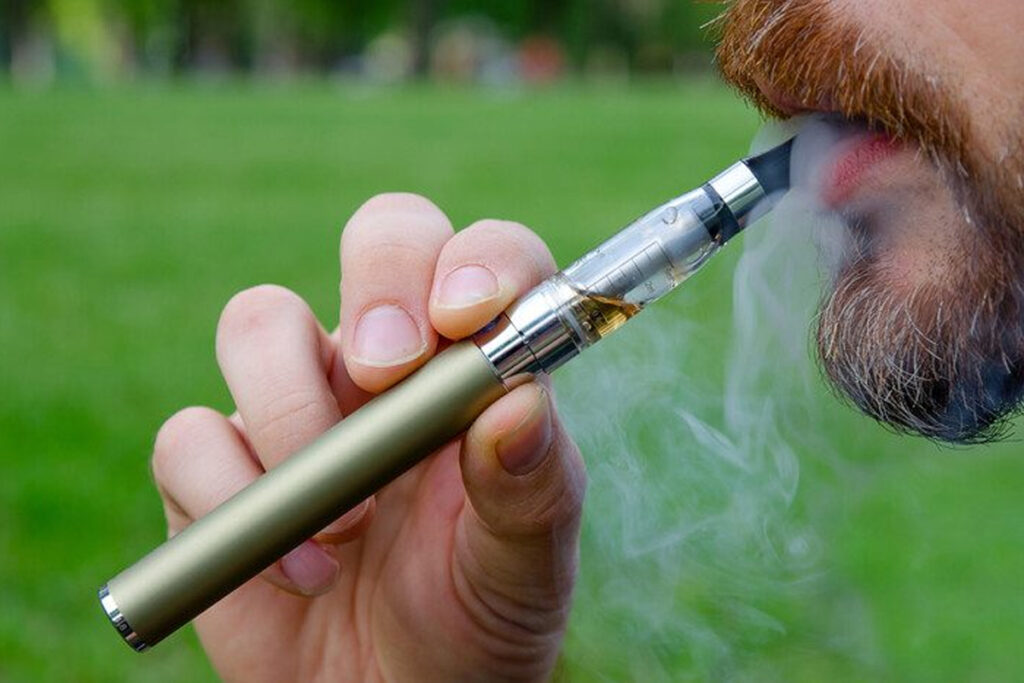
Walk into any smoke shop or convenience store in America right now and you’ll probably find THC-A vape pens sitting right there on the counter, next to the energy drinks and rolling papers. They’re packaged like legal products. They’re sold like legal products. And depending on where you live, they might actually be legal products, at least for now.
But here’s the thing: the legal ground underneath THC-A vapes is shifting fast. The 2018 Farm Bill opened a door that nobody in Congress seemed to anticipate. A door that let a $28 billion market for intoxicating hemp products walk right through. That door is now closing. On November 12, 2025, President Trump signed a continuing appropriations bill that quietly rewrote the federal definition of hemp, and the changes are staggering. Enforcement kicks in November 12, 2026, and when it does, roughly 95% of the hemp-derived products currently on shelves, including most THC-A vape pens, will become federally illegal.
If you use, sell, or are just curious about THC-A vape pens, this article breaks down where the law stands today, what’s changing, and what it all means for you.
The 2018 Farm Bill Loophole: How THC-A Became “Legal”
The Agriculture Improvement Act of 2018, better known as the Farm Bill, was primarily about crop insurance, conservation programs, and agricultural subsidies. Tucked inside it was a definition of hemp that changed everything:
“The term ‘hemp’ means the plant Cannabis sativa L. and any part of such plant, whether growing or not, with a delta-9 tetrahydrocannabinol concentration of not more than 0.3 percent on a dry weight basis.”
Read that carefully. The law specifies delta-9 THC. Not total THC. Not THC-A. Not delta-8. Not delta-10, THC-O, HHC, or any other cannabinoid you’ve seen marketed at a gas station.
THC-A (tetrahydrocannabinolic acid) is the raw, acidic precursor to delta-9 THC. In its natural state, it doesn’t get you high. A cannabis plant can test well below 0.3% delta-9 THC while containing 20% or more THC-A. Under the Farm Bill’s language, that plant qualified as hemp. And once it qualified as hemp, products derived from it, including vape cartridges loaded with THC-A, were legally sold across state lines, shipped through the mail, and stocked on shelves in states where recreational marijuana was still illegal.
The industry exploded. According to the U.S. Hemp Roundtable, the market for intoxicating hemp products grew to an estimated $28 billion annually. THC-A flower, vape pens, edibles, and concentrates flooded the market, often with minimal regulatory oversight, no consistent lab testing standards, and packaging that looked like candy.
Was this what Congress intended? Almost certainly not. A Congressional Research Service report on hemp noted the ambiguity, and lawmakers from both parties eventually acknowledged the loophole. But closing a loophole in federal law takes, well, federal law. And that took until November 2025.
The 2026 Federal Hemp Restriction: H.R. 5371, Section 781
On November 12, 2025, President Trump signed the Continuing Appropriations Act, 2026 (Public Law 119-37). Tucked inside this must-pass spending bill was Section 781, sourced from H.R. 5371, which fundamentally rewrites the federal definition of hemp.
This wasn’t a standalone cannabis bill. It wasn’t debated on the floor of the House as a standalone measure. It was attached to a continuing resolution that kept the government funded. That’s how most consequential policy changes happen in Washington, not with a bang, but with a rider on a bill nobody wants to vote against.
Here’s what Section 781 actually does:
Total THC, Not Just Delta-9
The new definition replaces “delta-9 tetrahydrocannabinol” with total THC. That means THC-A, delta-8, delta-10, and every other tetrahydrocannabinol isomer all count toward the 0.3% limit. The loophole that allowed high-THC-A, low-delta-9 plants to qualify as hemp? Gone.
0.4 mg Per Container Cap
This is the provision that will eliminate most products. Finished hemp products are now capped at 0.4 mg total THC per container. A typical THC-A vape cartridge contains anywhere from 500 mg to 2,000 mg of cannabinoids. A standard gummy has 2.5 to 10 mg. Even a conservative CBD tincture often exceeds 0.4 mg per bottle. The U.S. Hemp Roundtable estimates that 95% of current hemp products would fail this standard. Over 90% of CBD products alone exceed this limit.
Explicit Ban on Synthetic and Converted Cannabinoids
Delta-8 THC, delta-10 THC, THC-O acetate, HHC (hexahydrocannabinol), and other cannabinoids produced through chemical conversion are now explicitly banned. These products, which were never naturally present in meaningful quantities in the hemp plant, were the fastest-growing segment of the intoxicating hemp market. The law draws a clear line: if it was chemically synthesized or converted, it’s not hemp.
Preservation of Industrial Hemp
The legislation carves out explicit protections for industrial hemp used for fiber, grain, seed, and research. The goal was never to shut down hemp farming, it was to shut down the intoxicating product market that had grown around the Farm Bill loophole. Farmers growing hemp for textiles, construction materials, food products, or academic research are unaffected.
FDA Mandate
The law requires the FDA to issue regulatory guidance within 90 days of enactment. This is significant because the FDA has been conspicuously absent from cannabinoid regulation for years, despite having the authority to regulate dietary supplements and food additives. The 90-day deadline forces action.
365-Day Grace Period
Enforcement begins on November 12, 2026, one year after enactment. This grace period was designed to give the industry time to comply, but for most current THC-A vape manufacturers, there is no way to “comply” with a 0.4 mg per container limit while still selling an intoxicating product. The grace period is less a transition window and more a countdown clock.
Key Changes Under the New Law
| Provision | 2018 Farm Bill | 2026 Law (Section 781) |
|---|---|---|
| THC Definition | Delta-9 THC only | Total THC (all isomers + THCA) |
| Plant Limit | 0.3% delta-9 THC (dry weight) | 0.3% total THC (dry weight) |
| Product Limit | None specified | 0.4 mg total THC per container |
| Delta-8/Delta-10 | Not addressed (gray area) | Explicitly banned |
| THC-O, HHC | Not addressed | Explicitly banned |
| THC-A | Not counted toward limit | Counted as THC |
| Industrial Hemp | Permitted | Permitted (explicitly preserved) |
| FDA Role | No mandate | 90-day guidance deadline |
| Enforcement Date | Immediate (2018) | November 12, 2026 |
The November 2026 Deadline: What Happens When
Mark the date: November 12, 2026. That’s when the grace period expires and federal enforcement begins. Here’s how the timeline breaks down:
| Date | Event |
|---|---|
| November 12, 2025 | P.L. 119-37 signed into law; Section 781 enacted |
| February 2026 | FDA 90-day deadline for regulatory guidance |
| Mid-2026 | State legislatures adjust laws to align with new federal standard |
| November 12, 2026 | Federal enforcement begins; 0.4 mg/container cap takes effect |
| Late 2026-2027 | Expected wave of product recalls, retailer compliance actions, and industry lawsuits |
What does enforcement actually look like? That’s still unclear. The FDA will regulate hemp-derived products as food additives or dietary supplements, which means warning letters, import alerts, and injunctions. But state attorneys general and local law enforcement can also act under the new federal standard, which gives them a clearer legal basis than they had before.
Some manufacturers are already pivoting. A few are exploring formulations that stay under the 0.4 mg threshold. Others are restructuring as licensed cannabis businesses, moving into the regulated marijuana market where THC-A products can still exist, but under strict state licensing and testing requirements. Many smaller operators will simply close.
State-by-State THC-A Legal Status
Federal law is only part of the picture. States have been all over the map on THC-A. Here’s where things stand as of April 2026:
| Category | Number of States | Description |
|---|---|---|
| Full Ban | 7 | THC-A products prohibited entirely, regardless of source |
| Dispensary Only | 8 | THC-A legal only through licensed cannabis dispensaries |
| Gray Area | 9 | No explicit law; inconsistent enforcement |
| Tolerated/Unregulated | 26+ | Not specifically addressed; generally sold under hemp laws |
A critical factor in state regulation is whether a state uses total THC testing or only tests for delta-9 THC. States that test for total THC effectively close the Farm Bill loophole at the state level. As of early 2026, the following states require total THC testing for hemp compliance: Colorado, Oregon, Idaho, Utah, Minnesota, and Virginia.
States That Banned THC-A: Specific Details
Texas
Texas became the most high-profile state to ban THC-A when Governor Greg Abbott signed SB 3 into law. The bill bans THC-A and delta-8 THC products sold outside of the state’s Compassionate Use Program, with limited exceptions for products sold through licensed dispensaries. Smoke shops and vape retailers across the state had weeks to pull products that represented a significant portion of their revenue.
The Texas ban was notable not just for its scope but for the political dynamics behind it. Repubican Lieutenant Governor Dan Patrick made hemp-derived intoxicants a priority, while some conservative lawmakers who had supported the 2019 hemp farming bill expressed surprise at how the market had evolved. Critics warned that banning legal sales would push consumers toward an unregulated black market, where product safety is nonexistent and law enforcement resources are wasted.
Other States With Full Bans
While Texas grabbed the headlines, other states have taken similar action. States with outright THC-A bans typically cite the same concerns: products reaching minors, lack of manufacturing standards, and the disconnect between state hemp laws and the reality of intoxicating products being sold as “hemp.” The specific states in this category change frequently as legislatures act, so always verify current law before purchasing or selling.
States Requiring Dispensary Sales
Eight states have taken a middle path: THC-A is legal, but only when sold through licensed cannabis dispensaries with proper testing, labeling, and age verification. This approach treats THC-A vape pens essentially the same as any other cannabis product, regulated, taxed, and tracked from seed to sale. For consumers, this means higher prices and fewer access points. For the industry, it means a path forward, but only for companies willing to navigate the licensing process.
The Science: Why THC-A Is Controversial
To understand the legal debate, you need to understand the chemistry. And the chemistry is pretty straightforward.
THC-A (tetrahydrocannabinolic acid) is the most abundant cannabinoid in raw, unheated cannabis. A typical cannabis plant might contain 15–25% THC-A and less than 0.3% delta-9 THC at harvest. In its raw form, THC-A is non-intoxicating. It doesn’t bind effectively to CB1 receptors in the brain. You could eat raw cannabis flowers and not feel high.
But apply heat, and everything changes.
Decarboxylation is the process of removing a carboxyl group from THC-A, converting it to delta-9 THC. This happens at roughly 220°F (104°C). When you vape, smoke, or cook cannabis, decarboxylation is essentially instantaneous. The THC-A in your vape cartridge becomes delta-9 THC the moment it hits the heating element.
This is the core of the legal controversy. THC-A products are marketed and sold as “non-intoxicating hemp”, and technically, they are, sitting there in their packaging. But the intended use (vaping, smoking, baking) converts them into a Schedule I controlled substance. It’s a bit like selling a kit that’s technically just metal and springs, but when you assemble it, you get a firearm. The legal status of the components and the legal status of the final product are two different things.
The table below summarizes the conversion:
| Property | THC-A | Delta-9 THC |
|---|---|---|
| Chemical formula | C22H30O4 | C21H30O2 |
| Psychoactive? | No | Yes |
| Binds CB1 receptor? | Weakly | Strongly |
| Decarboxylation temp | ~220°F (104°C) | N/A (already decarbed) |
| Legal under 2018 Farm Bill? | Gray area (not delta-9) | Restricted (>0.3%) |
| Legal under 2026 law? | Counted as THC | Counted as THC |
The decarboxylation argument cuts both ways. Proponents of THC-A products point out that the law regulates the product as sold, not as used, otherwise, every bottle of vanilla extract (which contains alcohol) would be regulated as a spirit. Opponents argue that the intended use is obvious: nobody is buying THC-A vape pens for their non-intoxicating properties. The product is designed to be heated, and the manufacturer knows it.
DEA’s Position on Synthetic vs. Natural Cannabinoids
The DEA has been caught in the middle of this debate, and its position has evolved. The agency’s 2020 Interim Final Rule stated that “all synthetically derived tetrahydrocannabinols remain Schedule I controlled substances.” You can read more about this on the DEA’s cannabis information page.
The key word is “synthetically derived.” This targets cannabinoids like delta-8 THC (produced by isomerizing CBD through a chemical process), delta-10 THC, THC-O acetate, and HHC. These cannabinoids don’t exist in meaningful natural quantities, they’re manufactured from hemp-derived CBD through chemical reactions that can involve solvents, acids, and metal catalysts.
But THC-A is different. It’s the most abundant natural cannabinoid in the cannabis plant. It’s not synthesized or converted, it’s extracted. The DEA’s interim rule didn’t explicitly address naturally occurring THC-A, which left the agency in an awkward position. How do you regulate a compound as a controlled substance when it’s the primary natural component of a plant that Congress defined as legal hemp?
Under the 2026 law, this ambiguity is resolved. By redefining hemp using total THC, Congress essentially did the DEA’s job for it. THC-A is now part of the THC calculation, which means a hemp plant with 20% THC-A is no longer hemp under federal law, regardless of how “natural” that THC-A is.
THC-A Vape Pens Specifically: How Regulations Apply
THC-A vape pens are the product category most directly in the crosshairs of the new regulations. Here’s why:
Concentration. A typical THC-A vape cartridge contains between 500 mg and 2,000 mg of cannabinoids. Even a “mild” THC-A vape with 60% cannabinoid content would contain roughly 600 mg of THC-A in a one-gram cartridge. The new federal limit is 0.4 mg total THC per container. That’s a gap of roughly 1,500x. There is no reformulation that bridges that gap while maintaining a product that works as intended.
Intended use. A vape pen is, by definition, designed to heat its contents. Heating THC-A converts it to delta-9 THC. The legal argument that THC-A is “non-intoxicating” collapses the moment you put it in a device whose sole purpose is to heat it to the point of decarboxylation.
Accessibility. THC-A vape pens have been sold in convenience stores, gas stations, and online, often without age verification. This accessibility is precisely what prompted the bipartisan coalition of 39 state and territorial attorneys general who wrote to Congress in October 2025 urging closure of the Farm Bill loophole. Their letter cited unregulated products reaching minors and the absence of safety testing as primary concerns.
Product safety. The unregulated nature of the THC-A vape market has led to real safety issues. Without mandatory testing standards, products may contain pesticide residues, heavy metals from cheap hardware, residual solvents from extraction, or mislabeled cannabinoid content. Some THC-A vape cartridges tested by independent labs have been found to contain significantly less THC-A than advertised, or significant amounts of delta-9 THC, meaning they were already decarboxylated and technically illegal even under the old Farm Bill.
Under the 2026 law, THC-A vape pens that exceed 0.4 mg total THC per container, which is virtually all of them, will be illegal to manufacture, distribute, or sell under federal law after November 12, 2026. The only legal path forward for THC-A vape products will be through state-licensed cannabis dispensary channels, where they’re regulated like any other cannabis product.
Buying THC-A Vapes: What to Look For
If you’re buying a THC-A vape pen right now, while the grace period is still active, you should be extremely selective. The unregulated market means quality varies wildly. Here’s what matters:
Certificate of Analysis (COA)
Any reputable manufacturer provides a third-party lab Certificate of Analysis for each batch. Look for:
- Cannabinoid profile: Does the COA confirm the THC-A percentage on the label? Many products are underdosed or contain unexpected cannabinoids.
- Delta-9 THC content: If a product is sold as hemp-derived, it must test below 0.3% delta-9 THC. Some COAs reveal products that are already over this limit due to poor handling or intentional decarboxylation.
- Contaminant testing: Pesticides, heavy metals, residual solvents, microbials. If the COA doesn’t include these, don’t buy the product.
- Lab accreditation: Look for ISO 17025 accreditation. Anybody can print a COA. Accredited labs have quality controls.
Hardware Quality
Cheap vape hardware can leach heavy metals, particularly lead, into the oil. Ceramic heating elements are generally preferable to metal coils. Reputable brands publish hardware testing results alongside their oil COAs.
Ingredient List
A THC-A vape should contain cannabis-derived oil and possibly botanical terpenes. If you see ingredients like vitamin E acetate (linked to the 2019 EVALI outbreak), MCT oil, or unspecified “cutting agents,” avoid the product entirely.
Packaging and Labeling
Legitimate products have batch numbers, manufacturing dates, ingredient lists, and QR codes linking to COAs. Products in packaging with cartoon characters, candy branding, or no labeling information at all are red flags, not just for quality, but for the kind of irresponsible marketing that got the industry into this regulatory mess.
Travel Considerations
Traveling with THC-A vape pens is a bad idea, and it’s getting worse. Under the 2018 Farm Bill’s ambiguity, some travelers argued that THC-A products were legal hemp. That argument was always risky, TSA and local law enforcement don’t typically conduct lab tests at security checkpoints. Under the 2026 law, that argument is effectively dead.
We’ve covered THC vape travel rules in detail elsewhere, but the short version: don’t fly with THC-A vape pens. Even if you’re traveling between two states where they’re currently legal, federal airspace, federal checkpoints, and varying state laws make this a gamble not worth taking. The penalties for possession of a Schedule I substance at an airport can include federal charges, and “I thought it was legal hemp” is not a defense that tends to work well.
What the Marijuana Rescheduling Means for THC-A
On April 28, 2026, the Justice Department published a Federal Register notice placing certain marijuana products in Schedule III of the Controlled Substances Act. A hearing is scheduled for June 29, 2026. This follows the proposed rule published in May 2024 that initiated the rescheduling process.
So what does marijuana moving from Schedule I to Schedule III mean for THC-A vape pens? Not much, directly.
Schedule III drugs are still controlled substances. They require a prescription. They can’t be sold at gas stations or shipped through the mail without proper licensing. Moving marijuana to Schedule III primarily benefits state-licensed cannabis businesses by removing the Section 280E tax penalty (which disallows standard business deductions for Schedule I and II operations) and opening the door to research.
THC-A hemp products, especially those sold outside the dispensary system, don’t benefit from rescheduling. They were never part of the licensed marijuana market. If anything, rescheduling further clarifies the regulatory divide: intoxicating cannabis products will be regulated through the dispensary system, and the hemp market will return to its original purpose of fiber, grain, and non-intoxicating extracts.
Industry Impact: The $28 Billion Question
The hemp-derived intoxicating product market grew to an estimated $28 billion annually, according to the U.S. Hemp Roundtable. That’s not a niche market, it’s a significant sector of the American economy, employing thousands of farmers, manufacturers, retailers, and lab technicians. The 0.4 mg per container cap would eliminate approximately 95% of products currently on the market.
Who gets hurt? Small and mid-size manufacturers who built their businesses around the Farm Bill’s delta-9-only definition. Farmers who pivoted from traditional crops to hemp when prices were high. Retailers, particularly small smoke shops and CBD stores, whose revenue depends heavily on THC-A and delta-8 products. Independent testing labs that specialize in cannabinoid analysis.
Who benefits? Licensed cannabis companies in states with established recreational programs, who will absorb displaced consumers. Large CBD companies that can reformulate to stay under the 0.4 mg threshold (though their product lineup will shrink dramatically). Law enforcement agencies that gain clearer legal authority to act against unregulated sellers.
The political irony is hard to miss. The 2018 Farm Bill was championed by Republicans as a boon to American farmers. The 2025 restriction was also driven by Republicans, who argued the market had spiraled out of control. The hemp industry went from policy darling to policy problem in seven years.
Frequently Asked Questions
Is THC-A legal right now?
During the grace period (through November 11, 2026), THC-A products that comply with the 2018 Farm Bill definition, under 0.3% delta-9 THC, are technically legal under federal law. However, individual states may have their own restrictions, including outright bans. Check your state’s current laws before purchasing.
What happens after November 2026?
After November 12, 2026, hemp products must contain no more than 0.4 mg total THC per container. Virtually all THC-A vape pens, flower, and edibles will exceed this limit. Products that don’t comply will be illegal under federal law. The only path forward for THC-A products will be through state-licensed cannabis dispensary channels.
Can I still buy THC-A in a dispensary?
Yes, in states with legal cannabis programs, THC-A products will continue to be available through licensed dispensaries. These products are regulated under state marijuana laws, not hemp laws, and the 0.4 mg container cap doesn’t apply to them. Our guide to THC vape laws covers the dispensary landscape state by state.
Why is the limit 0.4 mg per container?
The 0.4 mg figure was negotiated during the legislative process. Industry groups pushed for a higher limit; some lawmakers pushed for zero. The final number is low enough to eliminate intoxicating products while theoretically allowing trace amounts of THC in non-intoxicating hemp products like fiber and grain. In practice, even many CBD products exceed this threshold, which is why the U.S. Hemp Roundtable estimates over 90% of CBD products would also be excluded.
Will law enforcement come to my door?
No. The 2026 law targets manufacturers, distributors, and retailers, not individual consumers. Possession of small amounts for personal use is unlikely to be a federal enforcement priority. However, state laws vary, and in states with THC-A bans, local law enforcement may act. If you’re in a state like Texas, where state-level bans are already in effect, the risk is higher.
Is the 2026 law being challenged in court?
Industry groups including the U.S. Hemp Roundtable have signaled their intent to challenge the law. Legal arguments center on whether Section 781, buried in an appropriations bill, violates procedural rules for substantive policy changes in spending legislation. There’s precedent for such challenges, but no guarantee of success. Regardless of litigation, the law is currently in effect, and the November 2026 enforcement date stands unless a court issues an injunction.
What should I do with my THC-A products?
That’s a personal decision. During the grace period, possessing THC-A products that comply with the 2018 Farm Bill definition is not a federal crime. After November 2026, products that exceed the 0.4 mg threshold will be federally illegal. If you’re in a state with a THC-A ban, the products may already be illegal under state law. Check your local regulations and make an informed choice.
Does marijuana rescheduling help THC-A products?
No. Rescheduling marijuana to Schedule III benefits licensed cannabis businesses, it removes the Section 280E tax penalty and opens research opportunities. THC-A hemp products sold outside the dispensary system don’t benefit. They’re regulated under hemp law, not marijuana law, and the 0.4 mg container cap still applies.
Key Takeaways
- The 2018 Farm Bill loophole is closing. THC-A products were sold under a legal definition that only counted delta-9 THC, not total THC. That definition changes under the 2026 law.
- The 0.4 mg per container cap is the real killer. This limit eliminates virtually all THC-A vape pens, edibles, flower, and most CBD products. It’s not a restriction, it’s a near-total ban on intoxicating hemp products.
- November 12, 2026 is the deadline. Federal enforcement begins one year after the law’s enactment. The grace period is a countdown, not a transition window for most products.
- State laws add another layer. Seven states have already banned THC-A. Others restrict it to dispensaries. Federal law sets the floor; state law can be stricter.
- THC-A vape pens specifically are the most affected. Their high cannabinoid concentration and inherent design (heating = decarboxylation) make compliance with the new law impossible while maintaining a functional product.
- The licensed cannabis market is the path forward. THC-A products will continue to exist in states with legal cannabis programs, sold through dispensaries with proper testing and regulation.
- If you buy THC-A vapes now, prioritize safety. Look for COAs from accredited labs, quality hardware, and transparent labeling. The unregulated market has real safety risks. As Virginia’s recent enforcement sweep shows, regulators are paying attention.
- Marijuana rescheduling doesn’t help THC-A. Moving marijuana to Schedule III benefits licensed cannabis businesses. It does nothing for hemp-derived THC-A products sold outside the regulated market.
The bottom line: the era of buying THC-A vape pens at a gas station is ending. The legal framework that made it possible was an accident of legislation, and Congress has corrected it in the bluntest way possible. Whether you see this as sensible regulation or regulatory overreach, the change is real, it’s coming, and anyone involved with THC-A products, whether as a consumer, retailer, or manufacturer, needs to plan accordingly.


Build your vape knowledge
Read more guides
Find explainers, how-to articles and reference material.
Open guide library →Compare vape products
Check specifications across the product database.
Open product data →Read hands-on reviews
See tested devices and documented trade-offs.
Read review coverage →