

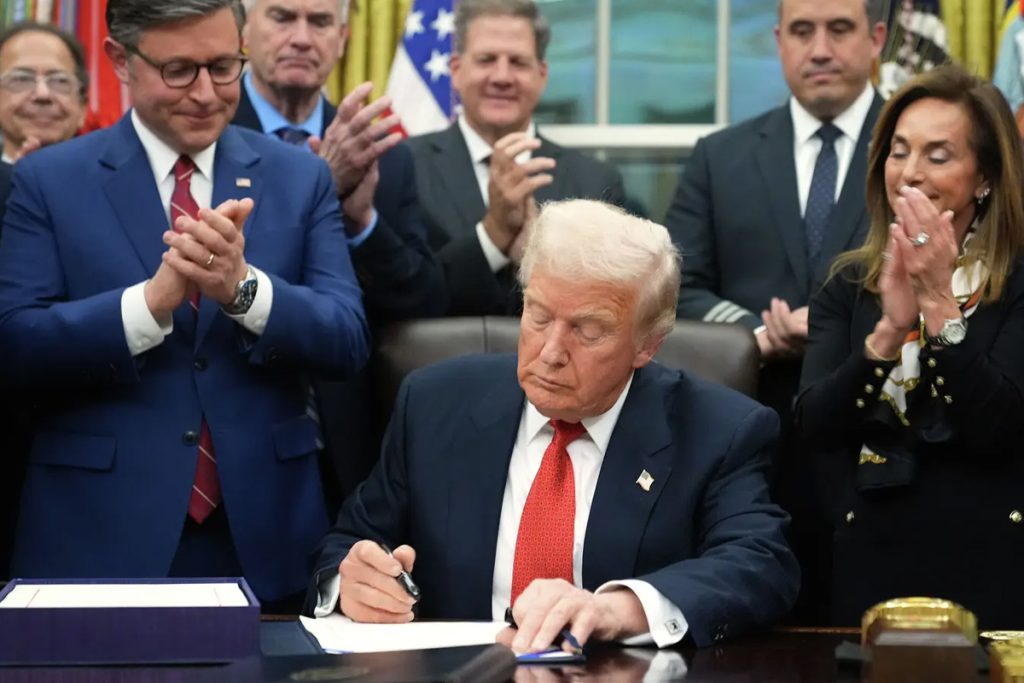
President Donald Trump on Wednesday night signed a government spending package that quietly rewrites the rules of America’s hemp economy, capping total THC at 0.4 milligrams per package and setting the stage for a federal Schedule 1 designation for nearly all hemp‑derived intoxicants. The move, which takes effect in a year, could erase the core product lines that powered Texas’ fast‑growing hemp and vape sectors—just months after the industry narrowly dodged a similar statewide prohibition.
The deal, crafted to end the government shutdown, passed the U.S. House 222–209 after clearing the Senate earlier in the week. The House vote broke largely along party lines; six Democrats—including Rep. Henry Cuellar of Laredo—voted yes, while two Republicans opposed the package.
What changes
- A hard cap: Any consumer product with more than 0.4 mg of THC per package becomes illegal—covering all forms of THC, not just delta‑9, and “other intoxicating cannabinoids.”
- Schedule 1 sweep: Delta‑8 THC, THCA, HHC, delta‑10, CBN, THCP, and any cannabinoids synthesized or made outside the plant (or not naturally produced by it) would be treated as Schedule 1 narcotics, subject to DEA enforcement.
- Retail fallout: Edibles, beverages, smokables, and most vape products currently on shelves would need to be removed or reformulated to near‑zero potency.
- Timeline: The restrictions don’t kick in for one year, creating a brief compliance and sell‑down window.
The language amends the 2018 Farm Bill’s definition of legal hemp—from “less than 0.3% delta‑9 THC by dry weight” to a per‑package ceiling of 0.4 mg total THC and other intoxicants. That shift dismantles the legal foundation the hemp‑derived vape category has relied on, especially in Texas, where adult‑use cannabis remains illegal and hemp‑derived cannabinoids filled the demand gap.
Cannabis attorney Rod Kight warned that even CBD, nominally spared by the bill, will be collateral damage. “Most CBD products contain more than 0.4 milligrams of THC,” he wrote, adding that isolating CBD “necessarily results in excess ‘waste‑stream’ THC exceeding 0.3%,” exposing manufacturers to criminal liability.
Texas context—and confusion
- Mirror image: The federal ban resembles a Texas Legislature prohibition passed earlier this year but vetoed by Gov. Greg Abbott. Lt. Gov. Dan Patrick and other critics argued hemp sellers exploited federal loopholes to market intoxicants to teens and adults.
- State rules in limbo: Texas agencies are currently revising rules to implement Abbott’s August executive order imposing 21+ age limits. It’s unclear how the new federal ban intersects with or supersedes that process.
- Industry impact: Texas hemp retailers and vape shops—many built on delta‑8, THCA flower, and infused disposables—now face the prospect of core SKUs becoming contraband under federal law. Reformulation to 0.4 mg per package is, for practical purposes, a market exit for intoxicating products.
How it passed—and who broke ranks
Senate Minority Leader Mitch McConnell inserted the hemp provision into the spending bill. A subsequent attempt to strip the language failed on a bipartisan vote; Sen. Ted Cruz was one of only two Republicans to oppose the ban. In the House, Reps. Dan Crenshaw and Democrats Sylvia Garcia (Houston) and Marc Veasey (Fort Worth) had urged leaders to remove the hemp language and leave regulation to states, but even Crenshaw ultimately voted for the broader package.
Trump has generally signaled more openness to cannabis than prior GOP leaders, but a White House official told reporters earlier this week that he supported the hemp crackdown.
- Immediate uncertainty, rapid triage: Brands and retailers have a 12‑month runway to assess inventory, forecast write‑downs, and halt long‑lead manufacturing of banned SKUs.
- Supply chain whiplash: Extractors focused on delta‑8/THCA will face sudden demand collapse; compliant CBD manufacturing is complicated by the “waste‑stream THC” issue flagged by Kight.
- Enforcement risk: Schedule 1 status brings DEA jurisdiction. Distribution, online sales, and interstate logistics for hemp‑derived intoxicants all become high‑risk.
- Consumer shift: With intoxicating hemp effectively gone, consumers may migrate to state‑legal marijuana markets where available—or to illicit channels where they aren’t.
Open questions
- Will Congress revisit the standard before the one‑year clock runs out?
- How will federal agencies implement testing, packaging, and enforcement for a 0.4 mg/package threshold?
- Will litigation emerge over the Schedule 1 reclassification of compounds “not capable of being naturally produced” by cannabis?
- How will Texas proceed with 21+ rules that may be mooted by federal preemption?
A single line in a must‑pass spending bill just rewrote the economics of hemp‑derived vaping. Unless Congress reverses course, Texas’ hemp and vape ecosystem—once a national bellwether for delta‑8 and THCA retail—faces a near‑total reset within a year
To understand how Texas law classifies hemp vapes under current state regulations, see our Texas hemp vape legal overview.



Follow the wider vape market
Read the latest vape news
Track regulation, launches and industry updates.
Open vape news →Browse product data
Move from market news to device specifications.
Open product data →Check product reviews
Read independent testing and comparison reports.
Read review coverage →