

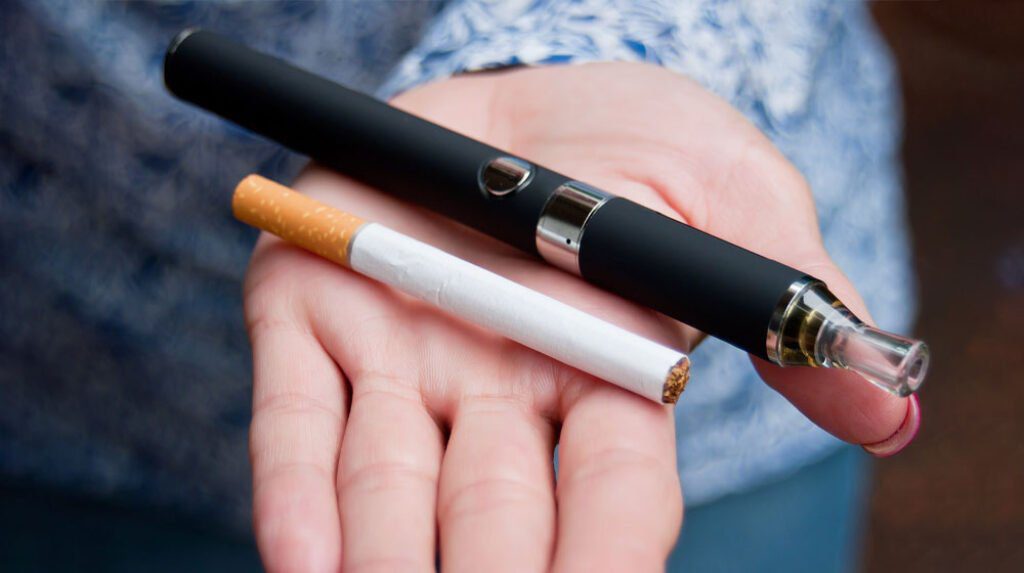
Lately, friends keep asking me: which is worse, vaping or smoking? Some of them have heard that vapes are actually more dangerous than cigarettes. One told me to cut it out entirely.
I get it. The headlines are scary, and the science keeps shifting. But after digging into the research, real, peer-reviewed studies, not TikTok takes, I think the picture is clearer than most people realize. Not simple. Clearer.
Let’s walk through what we actually know.
What happens when you smoke a cigarette?
When you light a cigarette, you’re burning dried tobacco leaves. That combustion is the core problem. It creates more than 7,000 chemicals in the smoke. At least 69 of those are known carcinogens, according to the CDC. That includes benzene, formaldehyde, lead, arsenic, and polycyclic aromatic hydrocarbons, some of the nastiest compounds we know of.
Cigarette smoke also produces tar and carbon monoxide. Tar is what coats your lungs. Carbon monoxide displaces oxygen in your blood. These two alone account for a huge portion of smoking-related disease.
Smoking remains the leading cause of preventable death worldwide. In the U.S. it kills roughly 480,000 people per year. American men who smoke are about 21 times more likely to die from lung cancer than non-smokers.
What happens when you vape?
Vaping works differently. An e-cigarette heats a liquid, usually containing propylene glycol, vegetable glycerin, nicotine, and flavorings, into an aerosol. No burning. No combustion.
That doesn’t mean it’s safe. The aerosol isn’t harmless water vapor, despite what some marketing suggests. It can contain small amounts of metals released from heating coils, volatile organic compounds, and other byproducts from heated flavorings. Breathing in any aerosol can irritate your lungs and worsen asthma or bronchitis.
But here’s the key comparison: regulated vaping products expose users to far fewer toxic chemicals and at much lower levels than cigarette smoke. No tar. No carbon monoxide. No thousands of combustion byproducts.
Is vaping safer than smoking? What the major health organizations say
This is where people get confused, because different organizations frame the answer differently. Here’s a straightforward rundown:
The UK position , Public Health England first estimated in 2015 that vaping was “around 95% less harmful” than smoking. That specific number has been debated, and some researchers argue it was always an educated guess rather than a precise measurement. But the underlying point has held up. In 2024, the Royal College of Physicians published a comprehensive evidence review reaffirming that vaping is substantially less harmful than smoking and recommending it as a tool to help smokers quit. England’s Chief Medical Officer Chris Whitty put it plainly: “If you smoke, vaping is much safer; if you don’t smoke, don’t vape.”
The US position , The CDC acknowledges that e-cigarettes “have the potential to benefit adult smokers who are not pregnant if used as a complete substitute for regular cigarettes,” but emphasizes they are not safe for youth or pregnant women. The FDA has authorized some e-cigarette products through its PMTA process, though enforcement against illegal disposable products remains a work in progress.
The WHO position , The World Health Organization is more cautious. In its 2024 call to action, WHO stated that e-cigarettes with nicotine “are highly addictive and are harmful to health” and has not endorsed them for smoking cessation.
The bottom line: most health bodies that have studied this carefully agree that vaping is less harmful than smoking for adults who already smoke. None of them say it’s safe.
The problem nobody saw coming: toxic metals in disposable vapes
Here’s where the story gets more complicated. A 2025 study from UC Davis, published in ACS Central Science, tested seven types of popular disposable e-cigarettes from three major brands. The results were alarming:
- Some disposable devices released more lead in a single day of use than nearly 20 packs of traditional cigarettes
- Levels of chromium, nickel, and antimony increased the more puffs were taken
- Vapors from three devices had nickel levels, and two had antimony levels, that exceeded cancer risk limits
- Four devices had nickel and lead emissions above health-risk thresholds for non-cancer effects like nerve damage and respiratory disease
The researchers traced the metals to leaded bronze alloy components and degrading heating coils inside the devices. Antimony was already present in unused e-liquid at high levels.
This is important context. These were illegal, non-FDA-approved disposable vapes, the kind widely sold in convenience stores and gas stations despite lacking regulatory authorization. Regulated, FDA-authorized vaping products are held to different manufacturing standards. But the reality is that most disposable vapes on the US market are unregulated, and teens are the primary users.
One more thing worth knowing. If you’re vaping with unregulated disposable products, the safety gap between vaping and smoking narrows considerably. For some contaminants, it may disappear entirely. This is not a minor footnote. It’s the single biggest development in vape safety research in years, and it changes the conversation in ways that matter for anyone using disposable vapes.
Can vaping help you quit smoking?
This is one of the most studied questions in tobacco research right now. The 2025 Cochrane Living Systematic Review included 104 studies with over 30,000 participants. Its findings:
- High-certainty evidence that nicotine e-cigarettes help more people quit smoking than nicotine replacement therapy (patches, gum, etc.). For every 100 people using nicotine e-cigarettes, 8 to 11 successfully quit for at least six months, compared to 6 out of 100 using NRT.
- Nicotine e-cigarettes probably work better than e-cigarettes without nicotine, and may work better than behavioral support alone or no support.
- The most common side effects were throat and mouth irritation, headache, cough, and nausea, similar to NRT. Serious adverse events were rare and similar across groups.
This aligns with NIDA’s 2025 position: vaping can facilitate smoking cessation and doesn’t carry the worst risks of combustible tobacco, though it’s not without its own risks, and adolescent initiation remains a serious concern.
If you’re a smoker trying to quit, vaping may improve your chances compared to going cold turkey or using patches alone. But it works best when combined with behavioral support, and the goal should be transitioning off nicotine entirely. For more on that process, see our guide to quitting vaping.
The nicotine question: do vapes deliver more nicotine than cigarettes?
It depends on the device and how you use it. A typical pack of 20 cigarettes delivers about 20–30 mg of absorbed nicotine. A standard 2ml vape at UK-legal nicotine strength contains about 40 mg of nicotine total, of which roughly half (about 20 mg) is absorbed, comparable to the lower end of a cigarette pack.
But some disposable vapes contain much higher concentrations of nicotine, particularly those using nicotine salts, which allow higher doses with a smoother throat hit. Devices like JUUL were designed to deliver nicotine rapidly, faster than most earlier e-cigarettes, and in a form that mimics the quick hit of a cigarette.
The Royal College of Physicians’ 2024 review concluded that “on average, daily intake of nicotine is similar for smokers and e-cigarette users.” Heavy vapers can consume more; lighter users consume less. It’s not one-size-fits-all.
What about kids and the “gateway” effect?
This is where public health gets genuinely difficult. E-cigarette use among young people has risen substantially. Flavors, sleek designs, and social media marketing have made vaping popular with teenagers who never smoked.
The CDC and FDA’s “The Real Cost” campaign specifically target youth vaping. The evidence on whether vaping acts as a “gateway” to smoking is mixed, some studies find a correlation, others argue it’s unclear whether vaping causes later smoking or whether the same risk factors lead to both.
What’s not in dispute: nicotine affects brain development in adolescents. Memory, attention, and learning can all be impacted. No one under 21 should use any nicotine product.
Why do so many people think vaping is worse than smoking?
Here’s a statistic that surprised me. A 2026 study from UT Southwestern Medical Center, published in Nicotine and Tobacco Research, found that the share of US adults who believe e-cigarettes are more harmful than conventional cigarettes rose from 3% in 2012 to over 30% in 2022.
In England, the shift is even more dramatic. A 2025 survey of about 27,000 current smokers found that 38% considered vaping more harmful than smoking, up from just 14% a decade earlier. Only 12% correctly identified vaping as less harmful, down from 35%.
This misperception matters. People who think vaping is equally or more dangerous than smoking are less likely to try it as a quitting tool, and some smokers who vape actually switch back to cigarettes. The researchers behind the UT Southwestern study warned that this perception gap could undermine public health efforts.
What’s driving the shift? Likely a combination of sensational media coverage, the 2019 EVALI outbreak (which was linked to illicit THC products containing vitamin E acetate, not standard nicotine vapes), and general wariness of a relatively new product.
What are the main ingredients in vape juice vs cigarettes?
| Vape Juice | Cigarettes | |
|---|---|---|
| Nicotine source | Added to liquid (optional; 0 mg available) | Naturally present in tobacco leaf |
| Base | Propylene glycol + vegetable glycerin | Dried, shredded tobacco leaves |
| Flavor | Added flavorings (varies) | Chemical additives for taste/burn |
| Combustion | None, heated to create aerosol | Burned at ~600°C |
| Tar | No | Yes, major harm source |
| Carbon monoxide | No | Yes |
| Known carcinogens | Trace amounts in aerosol | At least 69 in smoke |
Quick comparison: vaping vs smoking at a glance
| Factor | Vaping | Smoking |
|---|---|---|
| Harm level | Less harmful, not safe | Extremely harmful |
| Cancer risk | Lower, but not zero | Very high |
| Heart/lung damage | Possible, less severe | Well-established, severe |
| Nicotine addiction | Yes (varies by device/strength) | Yes |
| Secondhand exposure | Minimal aerosol | Harmful secondhand smoke |
| Cost (long-term) | Generally lower | Generally higher |
| Quitting aid | Evidence supports effectiveness | N/A |
| Risk to youth | High appeal, brain development concerns | Also harmful to youth |
What this means for you
If you’re a smoker: switching to a regulated vaping product is likely to reduce your health risks compared to continuing to smoke. The evidence for this is strong. But “less harmful” is not the same as “harmless.” The best thing for your health is to quit nicotine entirely.
If you’re a vaper who never smoked: you’re taking on risk you didn’t need to. Vaping isn’t harmless, and the long-term effects of inhaling heated flavorings and aerosolized chemicals are still being studied. Consider quitting.
If you’re under 21: don’t use either product. Nicotine affects brain development. Period. The data on that is clear.
If you’re pregnant: avoid both. Nicotine can cross the placenta and affect fetal development. The CDC is explicit that no tobacco product is safe during pregnancy. And if you’re breastfeeding, the same caution applies, nicotine passes into breast milk.
FAQ
Is vaping worse than cigarettes for your lungs?
No. Cigarette smoke causes far more lung damage than vaping aerosol because it contains tar, carbon monoxide, and thousands of combustion byproducts that vaping does not produce. However, vaping is not risk-free, some disposable vapes have been found to release concerning levels of heavy metals, and aerosol inhalation can irritate the lungs.
Do vapes have more nicotine than cigarettes?
On average, daily nicotine intake is similar between vapers and smokers. Some high-nicotine disposable vapes using nicotine salts can deliver nicotine faster than cigarettes, which may make them more addictive for some users.
Can vaping help me quit smoking?
Yes, according to the 2025 Cochrane Review. Nicotine e-cigarettes outperformed nicotine replacement therapy in helping people quit smoking. About 8–11 out of every 100 people who use nicotine e-cigarettes to quit succeed for at least six months, compared to 6 out of 100 using patches or gum.
Is the “95% less harmful” claim accurate?
The figure originated from Public Health England’s 2015 expert review and has been widely cited, but also widely criticized. It was an estimate, not a precise measurement. What’s more solid is the underlying principle: vaping is substantially less harmful than smoking because it avoids combustion. The Royal College of Physicians’ 2024 review supports this conclusion even as it moves away from the specific 95% number.
Are disposable vapes safe?
The 2025 UC Davis study raised serious concerns about illegal, non-FDA-approved disposable vapes, which released toxic metals at levels that sometimes exceeded those from traditional cigarettes. Regulated products face manufacturing standards that illegal products ignore. If you vape, choose FDA-authorized products and avoid unregulated disposables.
What did the WHO say about vaping?
The WHO maintains that e-cigarettes with nicotine are harmful and highly addictive, and has not endorsed them for smoking cessation. This puts WHO at odds with UK health authorities, who recommend vaping as a harm reduction tool for adult smokers.
—
Sources cited in this article include the CDC, American Cancer Society, Royal College of Physicians (2024), Cochrane Living Systematic Review (2025), UC Davis/ACS Central Science (2025), UT Southwestern/Nicotine and Tobacco Research (2026), NIDA, Our World in Data, and the World Health Organization.




Build your vape knowledge
Read more guides
Find explainers, how-to articles and reference material.
Open guide library →Compare vape products
Check specifications across the product database.
Open product data →Read hands-on reviews
See tested devices and documented trade-offs.
Read review coverage →