

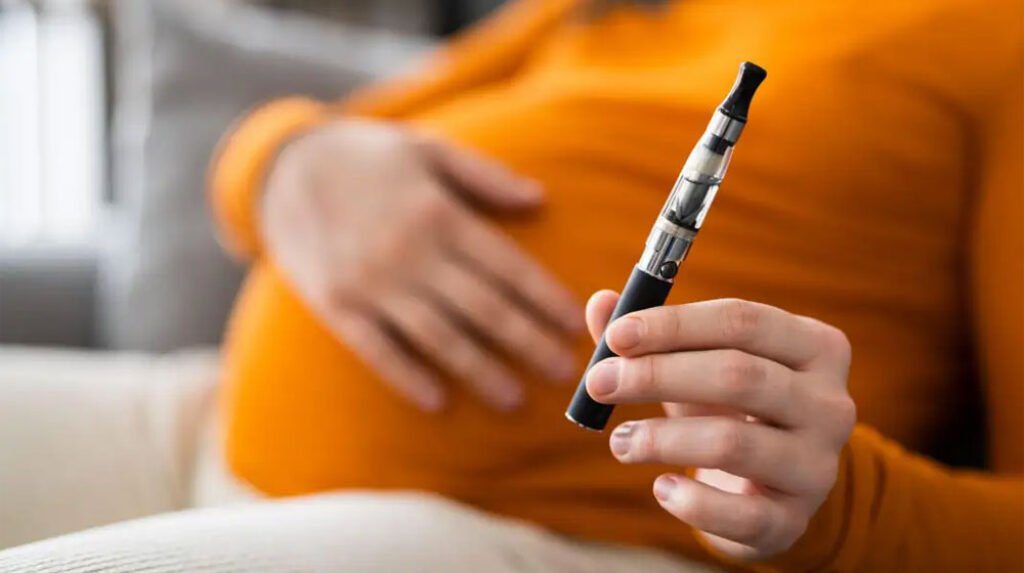
No. That’s the short answer from every major medical organization on the planet. The CDC, the American College of Obstetricians and Gynecologists (ACOG), the World Health Organization, and the Royal College of Obstetricians and Gynaecologists all say the same thing: do not vape while pregnant. Not occasionally. Not “just a little.” Not even zero-nicotine e-liquid.
But the short answer isn’t always helpful. Pregnant smokers who switch to vaping aren’t making a random decision, they’re trying to do less harm. And the question “is vaping during pregnancy safer than smoking?” has a more complicated answer than a flat no. This article explains what the research shows, why nicotine is the core problem, what zero-nicotine doesn’t solve, and what resources actually help.
Why Nicotine Is the Core Problem
Most vapes contain nicotine. That’s not a hidden ingredient, it’s the reason most people use them. And nicotine is specifically dangerous during pregnancy in ways that go beyond general health concerns.
The CDC states plainly: “Nicotine is a health danger for pregnant women and is toxic to developing fetuses.” This isn’t a new finding or a contested one. The evidence spans decades and comes from both cigarette research (where nicotine was always studied alongside thousands of other chemicals) and more recent e-cigarette research that isolates nicotine’s effects.
How Nicotine Affects the Fetus
Nicotine crosses the placenta. Once it reaches the fetus, it concentrates in fetal blood at levels that can exceed the mother’s own concentration. The developing fetus cannot metabolize nicotine as efficiently as an adult, the elimination half-life is longer, meaning the chemical stays in the fetal system longer.
The specific harms documented in research include:
- Brain development damage. Nicotine disrupts the formation of synapses and neurotransmitter systems in the fetal brain. This can lead to cognitive deficits, attention disorders, and behavioral problems that may not appear until childhood, well after birth.
- Lung development disruption. Research from the University of Colorado Anschutz Medical Campus found that nicotine from e-cigarettes alters which genes are activated in the fetal lung, interfering with normal development. Animal models showed that fetuses exposed to e-cigarette vapor developed smaller lungs with reduced function.
- Restricted fetal growth. Nicotine constricts blood vessels, reducing blood flow to the placenta. Less blood flow means fewer nutrients and less oxygen reaching the fetus. The result: lower birth weight, shorter gestation, and in severe cases, intrauterine growth restriction (IUGR).
- Bone development. Studies using animal models have found that fetuses exposed to e-cigarette vapor developed shorter and smaller bones, indicating that the growth restriction affects skeletal development specifically.
Pregnancy Outcomes Linked to Nicotine
| Outcome | Associated with Nicotine Exposure | Evidence Level |
|---|---|---|
| Low birth weight | Yes , consistent across cigarette and e-cigarette studies | Strong |
| Preterm birth | Yes , associated with maternal nicotine use | Strong |
| Stillbirth | Increased risk with smoking; e-cigarette data still emerging | Strong for smoking, moderate for vaping |
| Miscarriage | Increased risk with smoking; e-cigarette data still emerging | Strong for smoking, moderate for vaping |
| Sudden Infant Death Syndrome (SIDS) | Increased risk with prenatal nicotine exposure | Strong |
| Cognitive/behavioral issues in childhood | Associated with prenatal nicotine; may not appear until years later | Moderate |
The CDC notes specifically that e-cigarette use during pregnancy has been associated with low birth weight and preterm birth, the two outcomes with the most data available from recent studies.
The Zero-Nicotine Problem
Some pregnant vapers switch to zero-nicotine e-liquid thinking they’ve eliminated the risk. They haven’t.
E-cigarette aerosol contains more than nicotine. Even without nicotine, the aerosol from a vape includes:
- Propylene glycol and vegetable glycerin , the base liquids. Generally recognized as safe for ingestion, but inhaling them is fundamentally different from eating them. Heated PG breaks down into formaldehyde and acetaldehyde, both known carcinogens. The long-term effects of inhaling these compounds during pregnancy have not been studied.
- Flavoring chemicals , the same compounds used in food. “Safe to eat” does not mean “safe to inhale,” and it certainly doesn’t mean “safe for a developing fetus when inhaled.” Diacetyl, a buttery flavoring linked to bronchiolitis obliterans (“popcorn lung”), has been found in some e-liquids. Other flavoring compounds break down into aldehydes when heated.
- Trace metals , nickel, tin, lead, and chromium from the heating coil. These leach into the aerosol at low levels. No level of lead exposure is considered safe during pregnancy.
- Volatile organic compounds , detected in e-cigarette aerosol at levels lower than cigarette smoke but above ambient air.
A 2025 Johns Hopkins analysis reinforced that e-cigarette aerosol contains potentially harmful chemicals regardless of nicotine content. The researchers emphasized that the absence of nicotine does not equal the absence of risk, particularly during pregnancy, where the threshold for harm is lower because the fetus is developing rapidly and has minimal capacity to detoxify chemicals.
Vaping vs. Smoking During Pregnancy: The Uncomfortable Comparison
Here’s where the conversation gets difficult. Some pregnant women smoke and can’t quit. If a pregnant smoker switches completely to vaping, is that better than continuing to smoke?
The honest answer: probably, but no medical organization will officially say so for pregnancy specifically.
What We Know
Cigarette smoke contains over 7,000 chemicals, including at least 69 known carcinogens, carbon monoxide (which directly deprives the fetus of oxygen), and heavy metals. The combination of nicotine plus combustion byproducts plus carbon monoxide makes smoking uniquely devastating to pregnancy outcomes. Smoking during pregnancy increases the risk of stillbirth by 47% and low birth weight by 2–3 times compared to non-smokers.
Vaping eliminates combustion. No carbon monoxide. No tar. Fewer chemicals overall, and at lower concentrations. For non-pregnant adults, the evidence is clear that vaping is less harmful than smoking. The Cochrane review and Public Health England have both concluded this.
Why That Doesn’t Translate to Pregnancy Guidance
Several things prevent medical organizations from recommending vaping during pregnancy even as a harm reduction tool:
- Nicotine itself harms the fetus. Removing combustion byproducts reduces some risks, but if the vape still contains nicotine, the fetal brain and lung damage pathways remain active.
- No long-term pregnancy-specific data. Vaping hasn’t existed long enough for large-scale, long-term studies on pregnancy outcomes. The evidence we have is from animal models and small human studies, enough to show risk, not enough to quantify how much less risk than smoking.
- Dual use risk. Most smokers who try vaping don’t quit cigarettes, they dual-use. And dual use (smoking and vaping) may expose the fetus to more toxins than either alone. The CDC notes that dual use “is not an effective way to safeguard health” and “may result in greater exposure to toxins.”
- Gateway concern. Recommending vaping for pregnant smokers could normalize vaping during pregnancy more broadly, reaching women who might otherwise quit entirely with NRT or behavioral support.
| Factor | Smoking | Vaping (with nicotine) | Vaping (zero-nicotine) |
|---|---|---|---|
| Nicotine exposure | High | Variable (often high with salts) | None (claimed) |
| Carbon monoxide | Present , deprives fetus of oxygen | Not present | Not present |
| Combustion byproducts | 7,000+ chemicals | Far fewer | Far fewer |
| Heavy metals | Present (cadmium, lead, arsenic) | Trace amounts from coil | Trace amounts from coil |
| Formaldehyde | Present | Present at high temps | Present at high temps |
| Known pregnancy harm | Extensive, documented | Nicotine harm confirmed; aerosol harm emerging | Aerosol harm possible; not well studied |
| Medical guidance | Quit entirely | Quit entirely | Quit entirely |
What About Secondhand Vape Exposure?
Secondhand vape aerosol is not the same as secondhand cigarette smoke, it contains fewer chemicals and at lower levels. But “fewer” doesn’t mean “none.” Studies have detected nicotine, fine particles, and volatile organic compounds in the air around someone who is vaping.
For a pregnant woman, the exposure from secondhand vape is lower than from secondhand smoke but higher than from clean air. The practical advice is the same as for any airborne chemical exposure during pregnancy: minimize it. Don’t spend extended time in enclosed spaces where people are actively vaping.
What Medical Organizations Actually Say
The consensus is remarkably uniform:
- CDC: “The use of any tobacco product, including e-cigarettes, is not safe during pregnancy. Nicotine is a health danger for pregnant women and is toxic to developing fetuses.”
- ACOG: Recommends complete abstinence from all nicotine products during pregnancy, including e-cigarettes. Acknowledges that nicotine replacement therapy may be considered under medical supervision for smokers who cannot quit by other means, but e-cigarettes are not included in that recommendation.
- WHO: Recommends that countries ban or severely restrict e-cigarettes. Their 2025 report states that e-cigarettes are “fuelling a new wave of nicotine addiction” and that no e-cigarette should be considered safe during pregnancy.
- NHS (UK): States that vaping is less harmful than smoking but advises pregnant women to use licensed nicotine replacement therapy (patches, gum) rather than e-cigarettes. If a pregnant woman is vaping and it’s keeping her from smoking, the NHS suggests continuing but seeking help to quit vaping too.
- American Academy of Pediatrics: Strongly opposes e-cigarette use during pregnancy and recommends FDA-approved cessation methods.
The UK’s NHS is the most nuanced. Their position essentially says: if you’re vaping instead of smoking and you can’t stop either way, vaping is the lesser harm, but try to quit both, and use NRT under medical supervision as your first option.
How to Quit Vaping During Pregnancy
If you’re pregnant and vaping, quitting is the right thing to do. But “just quit” is terrible advice by itself. Nicotine addiction is real, and pregnancy adds unique stressors. Here’s what actually works.
Talk to Your Healthcare Provider First
This isn’t a formality, it matters. Your OB-GYN or midwife can prescribe nicotine replacement therapy (NRT) if the benefits of controlled, lower-dose nicotine outweigh the risks of continued vaping. The evidence on quitting smoking shows that support plus medication works better than willpower alone. The same principle applies here.
NRT Under Medical Supervision
Nicotine patches, gum, and lozenges are FDA-approved and deliver nicotine without the aerosol chemicals found in vape products. They’re not risk-free during pregnancy, nicotine is still nicotine, but they provide a controlled, lower dose without the additional toxins in vape aerosol. ACOG considers NRT an acceptable option for pregnant smokers who have been unable to quit through behavioral methods alone.
Behavioral Support
Counseling works. The CDC’s smokefree.gov offers free text-based support programs including one specifically for pregnant women. State quitlines (1-800-QUIT-NOW in the U.S.) provide free coaching. The UK’s NHS Stop Smoking Service offers one-on-one support for pregnant vapers and smokers.
Practical Strategies
- Set a quit date within the next two weeks. Not “someday”, a specific date. Tell your partner, a friend, or your healthcare provider.
- Identify your triggers. When do you reach for your vape? Stress? After meals? First thing in the morning? Knowing your patterns lets you plan alternatives.
- Remove the device. Don’t keep your vape “just in case.” If it’s in your drawer, you’ll use it. Give it away or throw it out.
- Replace the hand-to-mouth habit. Cinnamon sticks, chewing on a straw, ice water with a straw, anything that occupies the physical pattern your body is used to.
- Manage stress differently. Pregnancy is stressful. Nicotine was your coping mechanism. You need a replacement: walking, breathing exercises, calling a friend, prenatal yoga.
What If You Can’t Quit Immediately?
If you’re vaping nicotine and you can’t stop cold turkey, the priority order is clear:
- Best: Quit all nicotine with behavioral support
- Better: Switch to medically supervised NRT (patches or gum) under your doctor’s guidance
- Not ideal but better than smoking: If vaping is keeping you from smoking cigarettes, don’t go back to cigarettes. Talk to your provider about a step-down plan from vaping to NRT to nothing
Going back to smoking is the worst option. Cigarettes add carbon monoxide and thousands of additional chemicals on top of the nicotine. If the choice is vaping or smoking, vaping is the lesser harm, but you should still be working toward quitting both.
FAQ
Can I vape zero-nicotine while pregnant?
Medical guidance says no. Zero-nicotine e-liquid still produces aerosol containing propylene glycol, flavoring chemicals, trace metals from the heating coil, and potentially aldehydes formed during heating. These compounds have not been studied for safety during pregnancy, and some (like lead from the coil) have no known safe exposure level. The mechanics of vaping inherently involve inhaling heated chemicals, something best avoided during pregnancy entirely.
Is vaping safer than smoking during pregnancy?
Vaping eliminates carbon monoxide and most combustion byproducts, which are major drivers of pregnancy complications from smoking. However, nicotine, present in most vapes, still harms the fetus by restricting blood flow and disrupting brain and lung development. No medical organization recommends vaping during pregnancy under any circumstances. If you’re currently smoking and considering vaping as a step toward quitting, talk to your healthcare provider about FDA-approved NRT options instead.
What if I vaped before I knew I was pregnant?
This is common and usually not a cause for panic. The critical period for many major organ formations is weeks 4–10 of pregnancy, and many women don’t know they’re pregnant until week 5 or 6. If you vaped during that window, tell your healthcare provider. They can assess your specific situation. What matters most is what you do going forward, quitting now reduces risk regardless of past exposure.
Can secondhand vape exposure harm my pregnancy?
Secondhand vape aerosol contains fewer chemicals than secondhand smoke, but it’s not harmless. Nicotine, fine particles, and volatile organic compounds have been detected in the air around active vapers. Minimize your exposure by avoiding enclosed spaces where people are vaping. The risk from occasional, brief exposure is likely low, but chronic exposure should be avoided.
Is nicotine replacement therapy safe during pregnancy?
NRT (patches, gum, lozenges) is considered acceptable during pregnancy under medical supervision when the benefits outweigh the risks, specifically, when a pregnant smoker cannot quit through behavioral support alone. NRT delivers controlled, lower-dose nicotine without the additional toxins found in cigarette smoke or vape aerosol. ACOG supports this approach. It’s not risk-free (nicotine is still reaching the fetus), but it’s less risky than continued smoking or vaping.
How long does nicotine stay in my system during pregnancy?
Nicotine has a half-life of about 2 hours in adults, but it stays in the fetal system longer because the fetus metabolizes it more slowly. Cotinine (the primary nicotine metabolite used in testing) is detectable in blood and urine for 1–3 days after last use in non-pregnant adults. During pregnancy, the fetal exposure persists longer because nicotine concentrates in fetal blood and amniotic fluid.
Where can I get help quitting vaping during pregnancy?
Several free resources are available: smokefree.gov (U.S. includes a pregnancy-specific program), 1-800-QUIT-NOW (U.S. state quitlines), the NHS Stop Smoking Service (UK), and your OB-GYN or midwife. Behavioral counseling combined with NRT under medical supervision produces the best quit rates. Don’t try to do this alone, help exists and it works.
Further Reading
- Are Nicotine-Free Vapes Safe? — What the latest research says about zero-nicotine vaping.
- Can Vaping Help You Quit Smoking? — Evidence-based analysis of e-cigarettes for cessation.
- Can You Vape While Breastfeeding? — Medical evidence on nicotine transfer to infants.




Build your vape knowledge
Read more guides
Find explainers, how-to articles and reference material.
Open guide library →Compare vape products
Check specifications across the product database.
Open product data →Read hands-on reviews
See tested devices and documented trade-offs.
Read review coverage →