

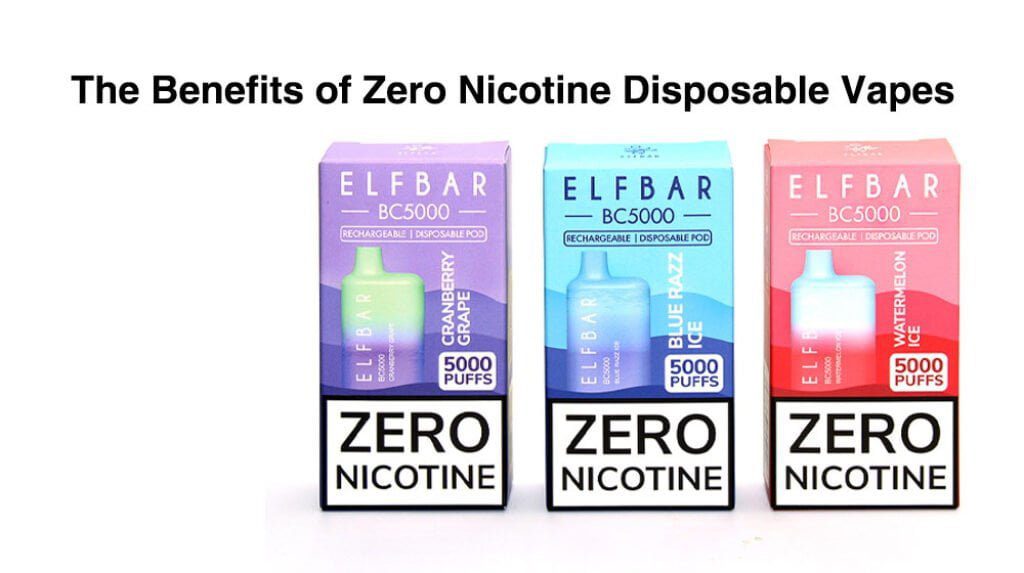
The benefits of zero nicotine disposable vapes are real—but so are the caveats. If you’re considering switching to a nicotine-free disposable, you probably want a straight answer about what you gain and what you still risk. Removing nicotine eliminates the addiction, the cardiovascular stress, and the brain chemistry concerns. That’s significant. But the aerosol from a nicotine-free vape still isn’t harmless, and pretending otherwise does you no favors. Here’s an honest look at what zero-nicotine disposables actually offer, what the research says about their safety, and how to decide if they’re right for you.
What zero nicotine disposable vapes actually are
A zero nicotine disposable vape is a single-use device pre-filled with e-liquid that contains no nicotine. The liquid base is propylene glycol (PG) and vegetable glycerin (VG), plus flavoring compounds. You inhale the aerosol, get the flavor and the throat hit, and toss the device when it runs out. No refilling, no coil changes, no nicotine.
If you’re new to the format, our guide on what a disposable vape is covers the basics. The key distinction here is the absence of nicotine, which changes the pharmacological profile entirely. You’re not getting a stimulant hit, you’re not spiking dopamine, and you’re not feeding a physical addiction.
The real benefits: what you gain by dropping nicotine
No addiction or dependence
This is the biggest one. Nicotine is one of the most addictive substances available—comparable to cocaine and heroin in its dependence potential, according to the Surgeon General. When you remove it from the equation, you eliminate the cycle of craving and withdrawal that keeps people hooked on vaping or smoking. A zero-nicotine disposable won’t make you physically dependent, which means you can pick it up and put it down without your brain screaming at you for another hit.
For people trying to step down from nicotine, this matters. Our article on how much nicotine is in a vape shows that many disposables deliver 50mg/mL (5%)—a serious dose. Going from that to zero is a meaningful reduction in pharmacological exposure.
No cardiovascular stress
Nicotine raises your heart rate and blood pressure within minutes of use, and impairs endothelial function—the ability of your blood vessels to dilate properly. A 2025 meta-analysis in Toxics confirmed these effects are dose-dependent: the more nicotine you inhale, the harder your cardiovascular system works.
A 2024 study published in the Journal of Clinical Medicine specifically compared nicotine-free e-cigarettes with nicotine-containing ones and found that the nicotine-free variants did not produce the same acute cardiovascular effects. Heart rate and blood pressure remained stable. That’s a real, measurable benefit for anyone concerned about heart health.
No adolescent brain risk
Nicotine exposure during adolescence alters prefrontal cortex development and can cause lasting changes to attention, learning, and impulse control. A 2025 review in Molecular Psychiatry described these changes as persistent well into adulthood. Removing nicotine eliminates this specific risk entirely. For more on how nicotine affects the body, see our detailed breakdown of nicotine’s effects from e-cigarettes.
Better flavor, no nicotine interference
Nicotine has a distinct peppery, harsh taste that can mute or distort e-liquid flavors. Without it, the flavor profile of the e-liquid comes through more cleanly. This isn’t a health benefit, but it’s a practical one that many vapers appreciate—especially those who use vaping primarily for flavor rather than nicotine delivery.
Behavioral substitute for quitting
One of the hardest parts of quitting vaping or smoking isn’t the chemical withdrawal—it’s the behavioral habit. The hand-to-mouth action, the oral fixation, the ritual of taking a break. Zero-nicotine disposables let you keep the behavior while dropping the addictive substance. This can be a useful stepping stone for people who aren’t ready to go cold turkey. Our analysis of whether vaping helps you quit smoking explores this in more depth.
Cost savings
Nicotine-free e-liquids are typically less expensive to manufacture, and those savings sometimes get passed on to consumers. More importantly, if you’re not addicted, you’re less likely to chain-vape through multiple disposables per day. A pack-a-day smoker spending $10-15 daily on cigarettes could save significantly by switching to an occasional zero-nicotine vape.
The honest risks: what zero nicotine doesn’t fix
Here’s where the marketing gets ahead of the science. “Nicotine-free” does not mean “safe.” Cleveland Clinic pulmonologist Dr. Angela Wang put it plainly: “There’s no such thing as a safe vape.” Removing nicotine eliminates specific risks, but the aerosol from a zero-nicotine disposable still contains biologically active compounds.
PG/VG still damage the gut barrier
The UC San Diego study published in iScience (2021) tested nicotine-free e-cigarette vapor and found it still caused gut barrier breakdown and “leaky gut” in their 3D human intestinal models. Propylene glycol and vegetable glycerin—the base liquids in every vape, regardless of nicotine content—were identified as the primary drivers of gut inflammation. We cover the digestive implications in our article on vaping and diarrhea.
Lung inflammation persists without nicotine
A 2024 study in Scientific Reports tested PG/VG-only aerosol on human bronchial epithelial cells and found it caused measurable airway inflammation and disrupted mucociliary function. A separate 2025 systematic review in Science Direct concluded that e-cigarettes “regardless of nicotine content” induce oxidative stress, inflammation, and tight junction disruption in barrier tissues. Nicotine makes the inflammation worse, but the PG/VG base causes it on its own.
And a 2025 study from the American Chemical Society found that some disposable vapes released higher amounts of metals and metalloids than older refillable e-cigarettes and even traditional cigarettes. This is a device-specific problem, not a nicotine problem—cheap disposables with poor manufacturing standards can leach metals into the aerosol regardless of nicotine content.
Labeling may be inaccurate
Dr. Wang from Cleveland Clinic raised an important point: these products aren’t well-regulated. A vape labeled “nicotine-free” may still contain trace amounts of nicotine. Studies have documented this discrepancy. A 2020 analysis published in Nicotine & Tobacco Research found that some e-liquids labeled as 0mg/mL actually contained measurable nicotine levels. If you’re trying to eliminate nicotine entirely, this matters.
Flavoring compounds carry their own risks
The flavorings in zero-nicotine disposables are generally recognized as safe for ingestion (GRAS status), but that designation applies to eating them, not inhaling them. Diacetyl, once common in buttery flavors, is linked to bronchiolitis obliterans (“popcorn lung”). While most reputable manufacturers have removed diacetyl, the safety of inhaling many other flavoring compounds remains unknown. A 2024 study in PMC found that even tobacco and menthol flavored nicotine-free e-cigarettes increased inflammatory responses and impaired wound healing in lung cells.
Who zero nicotine disposables are actually good for
- Current vapers stepping down from nicotine: If you’re at 3mg or 1.5mg and want to get to zero, these devices provide the behavioral experience without the chemical. It’s the last step before quitting entirely.
- Former smokers who miss the habit: Some people quit nicotine but still crave the ritual. A zero-nicotine disposable scratches that itch without re-introducing addiction.
- Social or occasional vapers: If you vape once in a while for flavor at a party, there’s no reason to expose yourself to nicotine.
- People using CBD or cannabis vapes: Nicotine-free devices let you enjoy those products without adding a stimulant into the mix.
Who should think twice? Adolescents, people with respiratory conditions, and anyone who’s never vaped before and is considering starting. “Zero nicotine” is not a reason to start a new habit. For a broader look at safety, see our analysis of whether nicotine-free vapes are safe.
How to choose a zero nicotine disposable
If you’ve decided to try one, here’s what to look for:
- Third-party lab testing: Reputable brands publish certificates of analysis confirming nicotine content is truly zero. Look for this on the manufacturer’s website.
- Simple ingredient lists: Fewer ingredients mean fewer unknowns. PG, VG, and flavoring. That’s it. Avoid products with long lists of unfamiliar additives.
- Established brands over gas station disposables: Brands like those we’ve tested and ranked are more likely to follow manufacturing standards and publish test results.
- Menthol and fruit over complex dessert flavors: Simpler flavor profiles tend to use fewer chemical compounds, reducing the “unknown inhalation” factor.
Zero nicotine vs. low nicotine: which step-down path is right
Some people prefer to go from 5% to 3% to 1.5% to 0% gradually. Others do better cutting to zero and dealing with the withdrawal all at once. There’s no single right answer—it depends on how heavily dependent you are and how you personally handle transitions. Our comparison of smoking vs. vaping and our guide on what’s in vapes provide more context for making that decision.
What the evidence suggests: the behavioral transition (keeping the hand-to-mouth action) is genuinely helpful for quitting. A zero-nicotine disposable can serve as a bridge—but it should be a bridge to not vaping at all, not a permanent replacement.
Key takeaways
- Zero nicotine disposables eliminate addiction risk, cardiovascular stress, and adolescent brain development concerns
- Nicotine-free does not mean safe—PG/VG aerosol still causes gut barrier damage and lung inflammation
- Labeling may be inaccurate: some “0mg” products contain trace nicotine
- Flavoring compounds are safe to eat but not necessarily safe to inhale
- Best use case: as a step-down tool for current vapers, not a reason to start a new habit
- Choose products with third-party lab testing and simple ingredient lists
FAQ
Are zero nicotine disposable vapes safe?
Safer than nicotine-containing vapes, but not safe. PG/VG aerosol still causes lung inflammation and gut barrier disruption, even without nicotine. Flavoring compounds may carry additional inhalation risks. No vape is completely risk-free.
Can zero nicotine vapes help you quit smoking?
They can help as a behavioral substitute—keeping the hand-to-mouth ritual while eliminating nicotine. This works for some people as the final step before quitting entirely. The evidence is strongest when zero-nicotine vapes are used as a bridge, not a permanent replacement.
Do zero nicotine disposables really have no nicotine?
Most reputable brands test at 0mg/mL. But the industry is poorly regulated, and some studies have found trace nicotine in products labeled as nicotine-free. Look for brands that publish third-party lab certificates of analysis.
What are the side effects of zero nicotine vaping?
Dry mouth and throat irritation from PG, potential digestive issues from gut barrier disruption, and lung inflammation from aerosol exposure. These are generally milder than the side effects of nicotine-containing vapes, but they exist.
Is it better to vape zero nicotine or low nicotine?
Zero is better if your goal is eliminating nicotine dependence entirely. Low nicotine (3mg or 1.5mg) may be more comfortable for heavy users in the early stages of stepping down. The best approach is the one you can sustain.



Build your vape knowledge
Read more guides
Find explainers, how-to articles and reference material.
Open guide library →Compare vape products
Check specifications across the product database.
Open product data →Read hands-on reviews
See tested devices and documented trade-offs.
Read review coverage →