

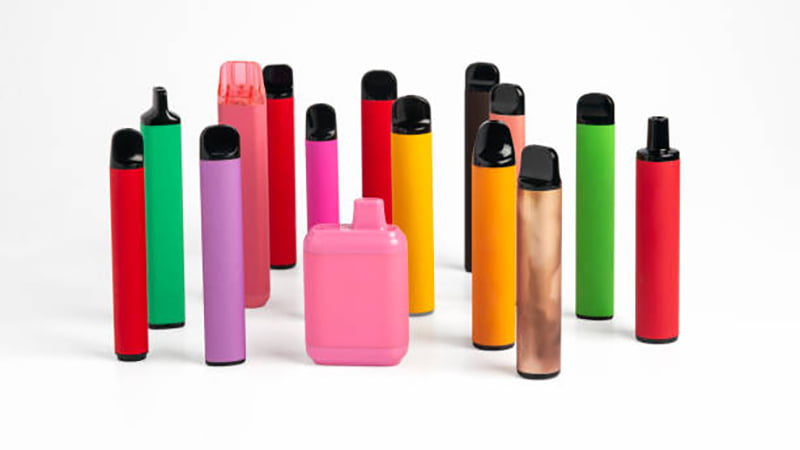
A disposable vape is a compact, pre-filled vaping device designed for single-use convenience. You open the package, inhale, and toss it when it runs out. That simplicity has made disposables the fastest-growing segment in the vaping market, valued at roughly $12 billion in 2025 and projected to grow at 10%+ annually through 2032, according to Verified Market Research.
I’ve been covering this industry for years, and the pace of change is remarkable. The devices hitting shelves in 2026 barely resemble the small, buttonless bars from even two years ago. Screens, rechargeable batteries, airflow controls, and puff counts north of 30,000 are now standard on premium models. This guide covers everything you need to know: what disposables are, how they work, how long they last, the current regulatory field, and how to pick the right one.
What is a disposable vape?
A disposable vape is a self-contained electronic cigarette that arrives pre-filled with e-liquid and pre-charged. Unlike pod systems or box mods, there is nothing to refill, no coils to swap, and no settings to configure. When the e-liquid is depleted or the battery dies, the device is done.
That said, the definition has gotten fuzzier. Many 2026 disposables feature USB-C recharge ports, adjustable airflow, and power modes, blurring the line between “disposable” and “reusable.” The key distinction remains: you cannot replace the e-liquid or coil. Once the juice is gone, the whole unit becomes waste.
The global disposable vape market reached approximately $12.3 billion in 2025, per Future Data Stats, and is forecast to hit $25.6 billion by 2033. Market figures vary by source (Business Research Insights estimates $20.2 billion for 2026, while Verified Market Research puts the 2024 figure at $6.9 billion), but all point to double-digit growth driven by convenience, flavor variety, and the shift away from combustible cigarettes.
How do disposable vapes work?
The mechanics are straightforward. Inside every disposable are three main components:
- Battery , A lithium-ion cell (typically 400–1000 mAh) powers the device. Early disposables were not rechargeable, but most modern models over 5,000 puffs include a USB-C port.
- Atomizer/coil , A heating element, usually a mesh coil, vaporizes the e-liquid when activated. Dual and triple mesh coils are increasingly common in premium devices for better flavor and vapor density.
- E-liquid reservoir , Pre-filled with nicotine salt e-liquid, ranging from 2 ml in small bars to 20+ ml in high-capacity models. Nicotine strengths typically range from 2% (20 mg/ml) to 5% (50 mg/ml).
When you take a draw, the battery activates the coil, which heats the e-liquid soaked into the wicking material. The resulting vapor travels through the mouthpiece. Most disposables are draw-activated (no buttons), but some newer models include a power button for mode switching.
What has changed recently is the level of control. Devices like the Geek Bar Pulse X 25000 offer a boost mode at 25W, which would have been unheard of in a disposable even a year ago. Others, like the Dojo Sphere S 40K, feature smart power management that adjusts wattage based on your draw length. These features used to belong exclusively to pod kits and mods.
Types of disposable vapes in 2026
The market has split into distinct categories. Here is how they break down:
Mini disposable bars (300–800 puffs)
Small, cigarette-sized devices like the Elf Bar 600. No charging port, no screen. These are the closest thing to the original disposable concept: grab one, use it for a day or two, and move on. Popular in the UK and EU where e-liquid capacity is capped at 2 ml by TPD regulations, though the UK has since banned single-use disposables entirely (more on that below).
Standard disposables (2,000–8,000 puffs)
The workhorse category. Devices like the Elf Bar BC5000 dominate here. Most are rechargeable via USB-C, hold 5–13 ml of e-liquid, and come in dozens of flavors. This is where most first-time buyers land.
High-capacity / “Big Puff” disposables (10,000–50,000 puffs)
The fastest-growing segment in 2026. Devices like the VooPoo NEXA Ultra 50K, RAZ TN9000, Lost Mary Quasar OS25000, and SWFT 3TK 40000 push puff counts into territory that would have seemed absurd just 18 months ago. These devices typically feature large screens showing battery and e-liquid levels, dual or triple mesh coils, adjustable airflow, and multiple power modes. They vape more like compact pod systems than traditional disposables.
At this capacity, a single device can last a moderate vaper two to four weeks. Our month-long testing of 50K disposables confirms they generally deliver roughly a month of use for the average consumer, though actual results vary with puff duration and frequency.
Flavor options
Disposables come in hundreds of flavors across every category: fruit, menthol, dessert, beverage, and tobacco. The BC5000 alone offers over 60 flavors. That variety is a big part of what drives sales, and also what drives regulatory attention, since critics argue that sweet flavors attract underage users.
How long does a disposable vape last?
Lifespan depends on three things: e-liquid volume, battery capacity, and how heavily you use it. Here is a rough guide based on manufacturer specs and independent testing:
| Puff count | E-liquid | Approx. lifespan | Rough cigarette equivalent |
|---|---|---|---|
| 300–600 | 1–2 ml | 1–2 days | 1–2 packs |
| 2,000–5,000 | 5–13 ml | 3–7 days | 4–16 packs |
| 8,000–15,000 | 12–16 ml | 1–2 weeks | 18–33 packs |
| 20,000–30,000 | 16–22 ml | 2–3 weeks | 44–66 packs |
| 40,000–50,000 | 20–28 ml | 3–5 weeks | 88–111 packs |
Cigarette equivalents assume roughly 15 puffs per cigarette, a commonly cited benchmark (Vape Wholesale Global, Vape Juice). Actual nicotine absorption differs between vaping and smoking. These are approximate volume comparisons, not health equivalencies.
A few things to keep in mind:
- Puff counts are manufacturer estimates. Independent tests consistently show real-world numbers fall 15–30% short of advertised counts, especially at higher ranges. (A useful rule of thumb from Vapormo: 1 ml of e-liquid yields roughly 250–300 real-world puffs.)
- Heavy users who take long, deep draws will burn through e-liquid faster.
- Rechargeable disposables solve the old problem of a dead battery with juice still in the tank. If you are buying anything above 5,000 puffs, make sure it has a USB-C port.
For a deeper look at puff counts versus real usage, our disposable vape lifespan guide is worth reading.
Pros and cons of disposable vapes
No device is perfect. Here is an honest breakdown.
What disposables get right
- Convenience. Open it and vape. No filling, no coil changes, no settings. This is still the single biggest selling point.
- Portability. Even the larger models slip into a pocket. No bottles of e-liquid or spare parts to carry.
- Flavor selection. Nothing else comes close. If you want to try watermelon ice, blue razz lemonade, and mango peach in the same week, disposables make that easy.
- Low upfront cost. A 5,000-puff disposable runs $12–$18. Cheaper than buying a pod kit plus pods, though the math flips if you vape heavily.
- No maintenance. When it is done, it is done. No cleaning, no troubleshooting.
Where disposables fall short
- Cost over time. At a pack a day equivalent, disposables can cost $100–$200 per month. A refillable pod system with bottled e-liquid cuts that by half or more.
- Environmental waste. Every spent disposable contains a lithium-ion battery, plastic housing, and electronic circuitry. U.S. PIRG estimates that Americans threw away 5.7 disposable vapes per second in 2023, with 178.7 million units sold annually containing approximately 30 tons of lithium, enough to power roughly 3,000 electric vehicle batteries. Most end up in landfills.
- Inconsistent quality. The market is flooded with counterfeit and low-quality devices. Buying from authorized retailers matters more than most people think.
- Limited nicotine options. Most disposables come in 5% (50 mg/ml) or 2% (20 mg/ml). If you want something in between, or 0 mg, you are out of luck.
- Regulatory uncertainty. More on this below, but the legal status of disposables is shifting fast, and a device you can buy today may not be legally available tomorrow in your state.
Are disposable vapes legal in 2026?
This is where things get complicated. There is no federal ban on disposable vapes in the U.S. as of May 2026. But the regulatory field has fractured into a patchwork of state-level restrictions that can make it feel like a ban depending on where you live.
United States: state-by-state patchwork
According to our updated U.S. flavored tobacco restrictions guide, at least 12 states have enacted significant restrictions. These fall into three models:
- Flavor bans. California, Massachusetts, New Jersey, New York, and Rhode Island prohibit flavored e-cigarette sales. California’s SB 793 is the strictest, banning menthol and requiring even tobacco-flavored products to appear on an approved list.
- Directory systems. Wisconsin, North Carolina, and Florida restrict sales to state-approved product lists. Since most disposable brands lack FDA Premarket Tobacco Product Authorization (PMTA), they are automatically excluded. North Carolina removed nearly 7,000 products from shelves when its directory took effect.
- Origin bans. Texas targets Chinese-manufactured disposables specifically (SB 2024), while keeping U.S.-made e-liquids and refillable hardware legal.
On the federal side, the FDA released draft guidance in March 2026 on flavored ENDS products, reaffirming that flavored vapes face a steep path to PMTA authorization. The agency has also intensified enforcement: warning letters to retailers selling unauthorized products have increased, and the Department of Justice has filed civil complaints against several manufacturers. On the shipping side, the PACT Act requires online sellers to register with the ATF, and major carriers like FedEx and UPS have largely stopped accepting vape shipments.
United Kingdom: complete disposable ban
If you are in the UK, the rules are much simpler: disposable vapes are banned. The UK implemented a complete ban on single-use vapes on June 1, 2025, making it illegal to sell any non-rechargeable, non-refillable vaping device across England, Scotland, Wales, and Northern Ireland. The ban was driven by environmental waste (roughly 1.3 million disposables discarded weekly, according to the UK government) and rising youth vaping rates.
Rechargeable pod systems and refillable devices remain legal. The UK is also introducing a vape tax of £2.20 per 10 mL starting October 2026. The broader Tobacco and Vapes Act 2026 phases out tobacco sales for anyone born on or after January 1, 2009.
For the latest on your local regulations, check the FDA’s tobacco product compliance page (U.S.) or the UK government’s guidance (UK) and your local health department.
Environmental impact and disposal
The environmental case against disposables is hard to ignore. Each device contains a lithium-ion battery, a plastic shell, electronic components, and residual e-liquid containing nicotine, classified as a toxic substance by the EPA.
The numbers paint a clear picture. The U.S. PIRG Education Fund’s 2025 Vape Waste report calculated that Americans threw away 5.7 disposable vapes per second in 2023, and annual U.S. sales contain roughly 30 tons of lithium. Material Focus, a UK recycling charity, found that 8 million vapes were improperly discarded each week in the UK alone, contributing to a rise in battery-related fires at waste facilities. Waste management professionals have even coined the term “vape effect” to describe the growing fire risk from lithium-ion batteries entering the waste stream.
Proper disposal matters. Here is what to do:
- Do not throw it in the trash. Lithium-ion batteries can ignite when crushed in waste compactors. This is a documented fire risk at recycling and waste facilities.
- Remove the battery if you can. Some devices make this easy; others do not. If the battery is accessible, take it to a battery recycling drop-off (many hardware stores and electronics retailers have them).
- Use e-waste collection. Treat spent disposables as electronic waste. Many municipalities have hazardous waste collection days or permanent drop-off sites.
- Check for vape shop recycling programs. Some retailers accept used devices for proper disposal.
- Empty residual e-liquid before disposal. Nicotine is toxic to aquatic life. Do not let it leak into soil or waterways.
For a complete guide on responsible vape disposal, see our authoritative vape recycling guide.
How to choose the right disposable vape
With hundreds of options on the market, here are the things that actually matter:
Puff count and e-liquid volume. Higher is not always better. If you vape lightly, a 5,000-puff device at $15 makes more sense than a 50,000-puff device at $25 that will sit around for months. Heavy users should look at 15K+ models with recharge ports.
Nicotine strength. 5% (50 mg/ml) is the standard in the U.S. and delivers a strong hit similar to a cigarette. 2% (20 mg/ml) is common in the EU/UK and better for lighter users. Going below 2% in a disposable is rare.
Recharge port. Any disposable above 5,000 puffs should have USB-C charging. Without it, the battery will die before the e-liquid runs out.
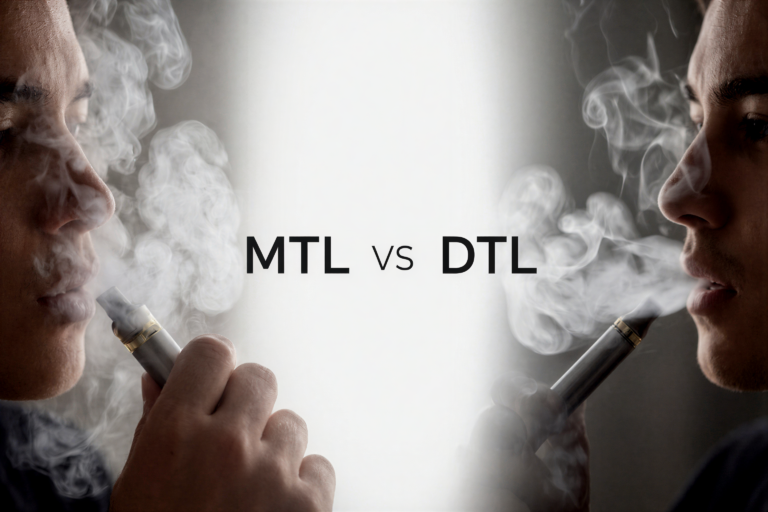
Airflow adjustment. If you care about draw tightness (MTL vs. RDL), look for devices with an airflow slider. Fixed-draw disposables are hit or miss depending on your preference.
Brand reputation. Stick with established names: Geek Bar, Lost Mary, Elf Bar, RAZ, VooPoo NEXA. Counterfeit disposables are a real problem, and they can contain incorrect nicotine levels or unsafe materials.
Where you buy. Purchase from authorized retailers or verified online stores. Prices that seem too good usually are.
For detailed product comparisons, browse our vape reviews and best vapes sections.
FAQ
What is a disposable vape?
A disposable vape is a compact, pre-filled e-cigarette designed for single use. It comes charged and loaded with e-liquid, with no refilling, no coil changes, and no buttons. When the juice or battery runs out, you dispose of the device.
How do disposable vapes work?
A lithium-ion battery powers a heating coil that vaporizes e-liquid stored in the device. Most are draw-activated: inhale through the mouthpiece and the device turns on automatically. Modern disposables often include USB-C charging, adjustable airflow, and power modes.
How long does a disposable vape last?
It depends on the puff count and how heavily you use it. A 5,000-puff disposable lasts about 3–5 days for a moderate vaper. A 25,000-puff device can last 2–3 weeks. Real-world puff counts tend to be 15–30% lower than advertised.
How many cigarettes equal a disposable vape?
A commonly cited estimate is 15 vape puffs per cigarette. By that measure, a 5,000-puff disposable equals roughly 333 cigarettes, or about 16 packs. Keep in mind that nicotine absorption differs between vaping and smoking. This is a volume comparison, not a health equivalency.
Are disposable vapes legal?
There is no federal ban in the U.S. as of 2026, but at least 12 states have enacted restrictions including flavor bans, product directories, and origin bans. The UK has banned disposable vapes entirely since June 2025. Check your local laws before purchasing. The FDA requires PMTA authorization for legal sale, and most disposable brands have not received it.
Can you recharge a disposable vape?
Many modern disposables (especially those above 5,000 puffs) include a USB-C charging port. This recharges the battery but does not refill the e-liquid. You can recharge the battery multiple times until the e-liquid runs out.
How should I dispose of a used disposable vape?
Do not throw it in the regular trash. Remove the battery if possible and take it to a battery recycling point. Treat the device as e-waste and take it to a hazardous waste collection site or vape shop recycling program. Empty any residual e-liquid first. See our vape recycling guide for full instructions.



Build your vape knowledge
Read more guides
Find explainers, how-to articles and reference material.
Open guide library →Compare vape products
Check specifications across the product database.
Open product data →Read hands-on reviews
See tested devices and documented trade-offs.
Read review coverage →