

The Quick Answer
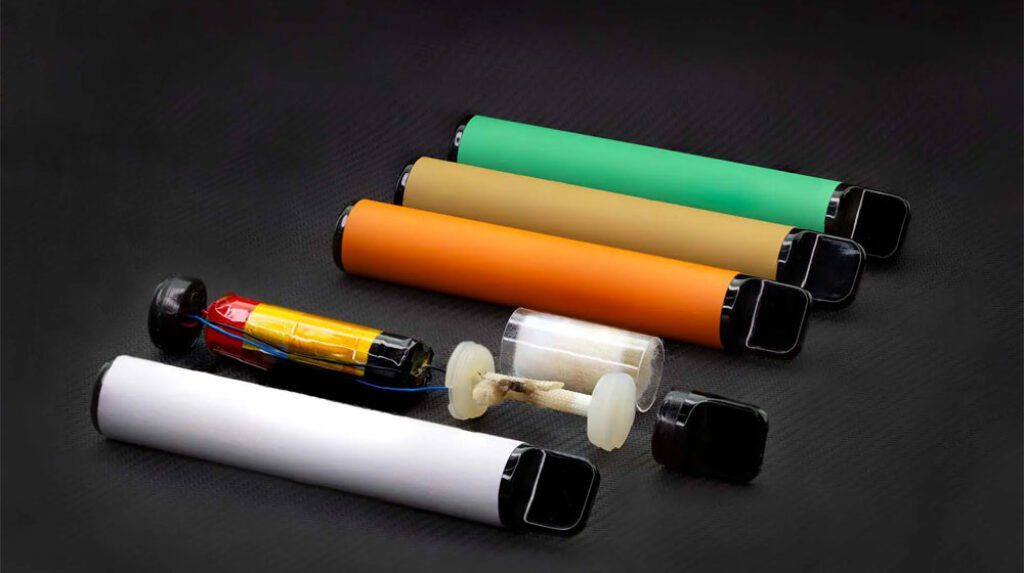
Disposable vape pens are convenient, affordable, and easy to use — no buttons, no filling, no charging (in the older models). But they come with real downsides: environmental waste, potential health risks from metal leaching, nicotine addiction concerns, and a growing regulatory crackdown that could make them harder to buy in the near future.
If you’re weighing whether disposables make sense for you, this guide breaks down every angle — the good, the bad, and what’s changing in 2026.
Pros of Disposable Vape Pens
Convenience: Open the Package and You’re Done
This is the big one. Disposable vapes come pre-filled and pre-charged. You rip open the packaging, pull off the mouthpiece cap, and start vaping. No coil replacements, no tank cleaning, no button presses. When it runs out, you toss it and grab another one.
For someone switching from cigarettes, that simplicity matters. The last thing a new vaper wants is to fiddle with wattage settings or figure out which coil fits which tank. Disposables remove every barrier to starting.
Portability and Low Profile
Most disposables weigh under 50 grams and fit in a jeans pocket without bulging. Compared to a box mod with a sub-ohm tank — which is basically a small brick — the difference is obvious. If you want something you can carry to a bar, a concert, or a walk without anyone noticing, disposables win that contest easily.
The slim form factor also means no spare batteries, no e-liquid bottles, no carrying case. One device, one pocket.
Flavor Selection That Pod Systems Can’t Match
Disposable manufacturers push flavors hard, and the variety is staggering. The Elf Bar BC5000 alone comes in over 70 flavors. You can try mango on Monday, blueberry ice on Tuesday, and move on if neither works for you — no commitment, no wasted e-liquid in a tank you have to clean out.
Pod systems have expanded their flavor lines, but they still lag behind. The economics of disposables make it easier for manufacturers to experiment with niche flavors, because each SKU is a sealed unit rather than a refill bottle that has to sell in volume.
Cost: Cheap at First, Expensive Over Time
A disposable vape typically costs between $5 and $20 depending on puff count and brand. That’s cheaper than any reusable starter kit, which runs $25–$50 before you buy coils and e-liquid. For someone who vapes occasionally or just wants to try it out, the low entry price makes sense.
But here’s the catch: disposables get expensive fast if you vape daily. A 5,000-puff device lasts roughly 3–5 days for a moderate vaper. At $15 per device, that’s $90–$150 per month. A refillable pod system with bottled e-liquid costs roughly $30–$50 per month for the same consumption level. The math flips the longer you vape.
| Cost Factor | Disposable Vape | Refillable Pod System |
|---|---|---|
| Initial purchase | $5–$20 | $25–$50 |
| Monthly cost (daily vaper) | $90–$150 | $30–$50 |
| Cost per puff (estimated) | $0.002–$0.004 | $0.001–$0.002 |
| Replacement parts needed | None (throw away whole device) | Coils every 1–2 weeks, e-liquid refills |
New Features: Screens, Rechargeable Batteries, Dual Coils
The disposable category has evolved past the old “single-use, throw-away” model. Many 2026 devices now include:
- Rechargeable batteries via USB-C — so you can actually finish the e-liquid before the battery dies
- Digital screens showing battery level and e-liquid remaining
- Dual mesh coils for better flavor and longer pod life
- Adjustable airflow and wattage on some premium models
Devices like the Spaceman Prism 20K and other high-puff-count disposables have essentially become reusable devices in a disposable form factor. That blurs the line between “disposable” and “refillable” in ways the original category never intended.
Cons of Disposable Vape Pens
Environmental Impact: The Numbers Are Ugly
According to CDC Foundation data cited by U.S. PIRG, Americans threw away roughly 500,000 disposable vapes per day in 2023 — that’s 5.7 devices per second. Each one contains a lithium-ion battery, plastic housing, and residual e-liquid with nicotine. Most end up in household trash rather than proper e-waste collection points.
The environmental toll breaks down into several layers:
- Lithium waste: U.S. PIRG estimates that annual sales of disposable vapes consume roughly 30 tons of lithium per year — enough to manufacture about 6,000 electric vehicle batteries
- Fire risk: Damaged lithium batteries in waste facilities trigger fires regularly. In Austria, a single battery-related fire at a waste management site in Schönau required 120 firefighters to control, and Austrian waste associations are now pushing for a full disposable vape ban
- Plastic pollution: The non-recyclable plastic shells contribute to growing microplastic contamination
- Nicotine leaching: Residual nicotine in discarded devices can leach into soil and water systems
A 2026 peer-reviewed study in the journal Sustainability described disposable e-cigarette waste as “challenging the circular economy” due to its embedded batteries, complex construction, and near-zero recycling rates.
Health Risks: New Research Raises Serious Concerns
A 2025 study from UC Davis, published in ACS Central Science, found that several popular disposable vape brands release higher levels of toxic metals than both older refillable e-cigarettes and traditional combustible cigarettes.
Specific findings:
- Lead emissions from one disposable vape pod during a day’s use exceeded the lead from nearly 20 packs of traditional cigarettes
- Levels of chromium, nickel, and antimony increased as puff count increased — meaning the longer you use a device, the more metal it releases
- Toxins were found already present in the e-liquid before heating, suggesting they leach from internal components into the liquid over time
“When I first saw the lead concentrations, they were so high I thought our instrument was broken,” said Mark Salazar, the UC Davis Ph.D. candidate who led the analysis. The study’s senior author, Brett Poulin, stressed that “these risks are not just worse than other e-cigarettes but worse in some cases than traditional cigarettes.”
This doesn’t mean vaping is worse than smoking across all metrics — combustible cigarettes still produce far more carcinogens through burning tobacco. But it does mean disposable devices carry specific metal-exposure risks that refillable systems don’t appear to have at the same levels, likely due to cheaper internal materials and looser manufacturing standards in unregulated brands.
Nicotine itself remains a concern regardless of device type. Most disposables use nicotine salt formulations at 5% (50mg/ml) concentration, which delivers nicotine faster and more intensely than freebase nicotine in older e-liquids. That rapid delivery is part of what makes them satisfying for smokers switching over — and part of what makes them risky for non-smokers, particularly young users.
Regulatory Pressure: Disposables Are Getting Banned
The legal landscape for disposable vapes is shifting fast:
- UK: From October 1, 2026, disposable vapes will be banned entirely under the Tobacco and Vapes Act. The UK government cited environmental waste and youth uptake as the primary reasons.
- EU: The European Commission approved Bulgaria’s plan to ban disposable vapes in March 2026. Several other EU member states are preparing similar legislation.
- Australia: Already banned the import of disposable vapes containing nicotine. Only pharmaceutical-grade vaping products are available through prescription.
- US: No federal ban yet, but the FDA has denied over one million marketing applications for flavored disposable products. Most disposables on the US market are technically unauthorized — they sell because enforcement lags behind. The recent FDA authorization of fruit-flavored vapes applies only to Glas Inc.’s age-gated system, not to the cheap disposables flooding convenience stores.
If you’re investing in disposables as your primary vaping method, the regulatory trajectory is worth paying attention to. Bans in major markets could limit availability, push prices up, or force a switch to refillable alternatives.
No Repair Option: When It Breaks, It’s Done
Disposable vapes are sealed units by design. If the auto-draw sensor fails, the coil burns out unevenly, or the battery dies before the e-liquid is finished, you can’t open it up and fix it. The device is landfill material.
This isn’t just a convenience issue — it’s a waste issue. A device that malfunctions at 3,000 puffs out of a rated 5,000 means 40% of the e-liquid and battery capacity goes unused and straight into the trash. Some common problems have workarounds, but there’s no real repair path for a sealed disposable.
Choosing brands with good warranty and replacement policies helps. Elf Bar, Geek Bar, and other established manufacturers typically honor replacements for defective units through their retail partners.
Nicotine Addiction and Youth Access
The high nicotine concentration in disposables (typically 5% nicotine salt) combined with appealing flavors and low prices has made them the most popular vaping product among teenagers. CDC data shows that the vast majority of teens who vape use fruit- and candy-flavored disposable devices — the ones that are technically unauthorized but still widely available.
This isn’t an abstract concern. Nicotine affects adolescent brain development differently than adult brains, impacting attention, learning, and impulse control. The convenience and flavor variety that make disposables attractive to adults are the same qualities that make them a pipeline for underage nicotine use.
Who Should Use Disposable Vapes?
Disposables make sense in specific situations:
- Cigarette smokers trying vaping for the first time — the low barrier to entry lets you test whether vaping works for you before investing in a kit
- Travel or temporary use — one device, no accessories, nothing to lose at the airport
- Occasional/social vapers — someone who vapes a few times a week won’t burn through disposables fast enough for the cost difference to matter
They’re a poor fit for:
- Daily vapers — the monthly cost is 3–5x higher than refillable systems
- Environmentally conscious users — the e-waste profile is hard to justify for regular use
- Anyone in a banning jurisdiction — if your country or state is moving toward a disposable ban, transitioning early saves hassle
What’s Changing in 2026
The disposable vape category is under pressure from three directions simultaneously: regulation, environmental science, and market evolution.
- Regulation: UK ban takes effect October 2026. EU member states are lining up. US enforcement, while slow, is gradually catching up to unauthorized brands.
- Science: The UC Davis study on metal leaching, combined with growing e-waste data, is giving regulators concrete evidence they didn’t have five years ago.
- Market: High-puff-count disposables with screens, rechargeable batteries, and adjustable settings are functionally reusable devices sold in disposable packaging. The category definition is blurring, and that creates new regulatory questions.
For consumers, the practical question is whether to ride the disposable wave while it lasts or transition to a refillable pod system that isn’t facing the same regulatory headwinds. If you’re already using disposables and happy with them, the smart move is to stay informed about local regulations and have a backup plan.
Frequently Asked Questions
Are disposable vapes safer than cigarettes?
For current smokers, switching to any vape (disposable or refillable) eliminates combustion and reduces exposure to the thousands of carcinogens produced by burning tobacco. But disposables carry their own specific risks — particularly metal leaching from cheaper internal components. The comparison isn’t simple.
How many puffs does a disposable vape last?
Ratings range from 300 puffs (older models) to 25,000+ (2026 high-capacity devices). Real-world usage typically delivers 60–80% of the rated puff count. A 5,000-puff device realistically lasts 3–5 days for a moderate vaper.
Why are disposable vapes getting banned?
Three main reasons: environmental e-waste (lithium batteries, plastic, nicotine residue), youth access (flavors and low prices attract underage users), and the fact that most disposable brands on the market never went through the FDA’s PMTA process.
Can you recharge a disposable vape?
Most 2026 high-puff-count disposables include USB-C charging ports. Older low-puff models (300–800 puffs) typically don’t. If your device has a charging port, use it — but remember the battery is still small, and the device is still designed to be discarded once the e-liquid runs out.
What should I do with a dead disposable vape?
Don’t throw it in household trash. The lithium battery poses fire risks in waste facilities. Take it to an e-waste collection point or a retailer that accepts vape recycling. Some jurisdictions have dedicated vape waste collection programs.
Sources: UC Davis / ACS Central Science (2025), U.S. PIRG Education Fund, Sustainability journal / MDPI (2026), Waste Management World, Business Research Insights, CDC Foundation




I think one potential pain point with disposable vape pens is the environmental impact. Since they are designed to be thrown away after use, they contribute to plastic waste. It would be interesting to see some information on how these pens are being recycled or if there are any eco-friendly alternatives available.
I’ve heard that disposable vape pens can be more affordable than refillable ones, but are there any studies comparing the overall cost effectiveness of the two options? It would be interesting to see some data on this.
I noticed that the article didn’t mention anything about the flavors available in disposable vape pens. Some people may be attracted to the wide variety of flavors, but there are concerns about the appeal to younger individuals. Can you provide more information on this topic?
I’ve read that prolonged use of disposable vape pens can lead to lung issues and other health problems. It would be great if the article could provide more insight into the long-term health effects of using these pens.
Are there any recommended alternatives to disposable vape pens? It would be helpful to explore other options that may be more sustainable or have less health risks.
I’ve tried disposable vape pens before and one tip I have is to be cautious with the nicotine content. Some brands have higher nicotine levels and it can be easy to get addicted or experience nicotine overdose. It would be helpful if the article mentioned the importance of checking the nicotine content before using these pens.