

If you have ever stood in a vape shop staring at shelves of e-liquid, wondering why some bottles say “nic salt” and others just say “freebase,” you are not alone. I remember the first time I tried to figure this out. The guy behind the counter threw around terms like pH levels and benzoic acid like I was supposed to know what he meant. I didn’t.
So let’s clear this up properly. By the end of this guide, you will know exactly which type of nicotine works best for your setup, your habits, and your goals. No guesswork. No wasted money on the wrong e-liquid.
The short version: Nic salts deliver nicotine faster and smoother at high strengths, while freebase nicotine gives you a stronger throat hit and bigger clouds at lower strengths. But there is a lot more nuance than that, especially in 2026, with new UK regulations changing the cost of everything.
What Is Freebase Nicotine?
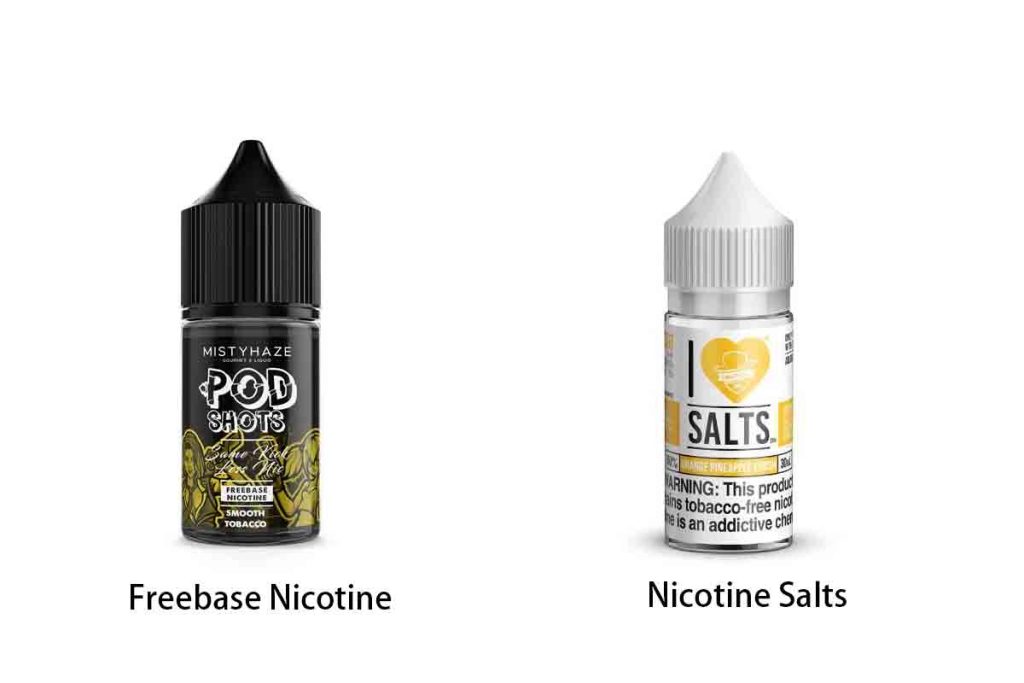
Freebase nicotine is the original form of nicotine used in e-liquids. When vaping first started, every bottle on the shelf was freebase. It is also the same form of nicotine that cigarette companies used to boost absorption in cigarettes back in the 1960s, which should tell you something about how it works.
Here is the simple chemistry: freebase nicotine is nicotine in its pure, uncombined form. It has a higher pH level, typically between 8 and 10, which makes it alkaline. That alkalinity is what creates the harsh feeling in your throat when you vape it. At low strengths like 3mg, that throat hit is mild and pleasant for most people. But crank it up to 18mg and it feels like inhaling pepper spray.
That harshness is actually the reason freebase e-liquid maxes out around 18mg for most vapers. You could make a 36mg freebase liquid, but nobody would want to inhale it. The throat hit would be brutal.
Freebase nicotine absorbs into your bloodstream more slowly than nic salts. A typical peak hits around 5 to 8 minutes after inhaling. For some vapers, especially cloud chasers and DTL (direct-to-lung) enthusiasts, that slower absorption is actually fine because they are vaping more frequently and taking bigger hits.
Freebase Quick Facts
- Common strengths: 0mg, 3mg, 6mg, 12mg, 18mg
- Best VG/PG ratio: 70/30 or 80/20 (high VG)
- Best device: sub-ohm tanks, DTL setups, high-wattage mods
- Shelf life: longer (more chemically stable)
- Throat hit: pronounced, especially above 6mg
What Are Nicotine Salts?
Nicotine salts are not some new synthetic chemical cooked up in a lab. They are actually the form of nicotine that exists naturally in tobacco leaves. When you smoke a cigarette, you are absorbing nicotine in its salt form. The e-liquid industry just figured out how to make it work in a vape.
The breakthrough came when someone realized that adding benzoic acid to nicotine salts lowers the pH from around 8 down to roughly 5 or 6. That might sound like a small change, but the effect is massive. Lower pH means the vapor is much smoother on the throat, even at concentrations like 35mg or 50mg that would be physically painful with freebase.
Benzoic acid also does something else that matters: it allows the nicotine to vaporize at a lower temperature and absorb into your bloodstream significantly faster. We are talking about reaching peak nicotine levels in roughly 1.2 to 1.5 minutes, compared to 5 to 8 minutes with freebase. That is a huge difference, and it is the main reason nic salts have become the go-to choice for people switching from smoking.
When I first tried a nic salt pod at 20mg, I was genuinely surprised. It was smooth. It was satisfying. And it actually felt like the nicotine was working, unlike the 12mg freebase I had been struggling with. That experience is common, and it explains why pod systems and nic salts have taken over such a large share of the market.
Nic Salt Quick Facts
- Common strengths: 10mg, 20mg (EU/UK max), 25mg, 35mg, 50mg (US)
- Best PG/VG ratio: 50/50
- Best device: pod systems, low-wattage MTL devices
- Shelf life: shorter (can oxidize and turn amber faster)
- Throat hit: smooth, even at high concentrations
Nic Salt vs Freebase: The Key Differences
Let’s put the two head to head. This is the comparison I wish I had when I started vaping.
| Factor | Nic Salt | Freebase |
| pH level | ~5-6 (smoother) | ~8-10 (harsher) |
| Throat hit at 20mg | Smooth | Very harsh |
| Absorption speed | Fast (1-2 min) | Slower (5-8 min) |
| Max common strength | 50mg (US), 20mg (EU) | 18mg |
| Best device type | Pod systems, MTL | Sub-ohm, DTL |
| Best PG/VG ratio | 50/50 | 70/30 VG/PG |
| Coil life | Longer (lower wattage) | Shorter |
| Shelf life | Shorter | Longer |
| Cost per session | Lower (use less liquid) | Higher (consume more) |
The biggest takeaway from this table is the absorption speed difference. That is not a minor detail. It fundamentally changes how satisfying the vape feels, especially for people coming off cigarettes who are used to getting a nicotine hit within seconds.
Another thing to notice: nic salts are cheaper per session because you consume less liquid to get the same nicotine satisfaction. A pod system running at 12 watts uses a fraction of the e-liquid that a sub-ohm tank at 80 watts burns through. Over a month, that difference adds up significantly.
How Nicotine Absorption Actually Works
This is where the science gets interesting, and it is worth understanding because it explains why nic salts feel so different from freebase.
When you inhale vapor, nicotine particles enter your lungs and pass through the lung tissue into your bloodstream. The speed and efficiency of that transfer depends on the form of nicotine and the size of the particles you are inhaling.
A landmark study published in Nature in 2014 compared nicotine delivery across different vaping devices. The researchers found that newer generation devices delivered 70% higher plasma nicotine levels than first-generation e-cigarettes, with a peak concentration of 23.47 ng/ml at 18mg/ml strength. That is getting much closer to the delivery profile of a traditional cigarette, which typically peaks around 13 to 20 ng/ml within 5 minutes.
The key insight from this research is that device efficiency matters as much as the nicotine form. A well-designed pod system with nic salts can deliver nicotine to your brain in under two minutes, closely mimicking the experience of smoking. A sub-ohm tank with freebase nicotine delivers more total vapor but the nicotine reaches your bloodstream more gradually.
Related research: Comparative analysis of nicotine salts vs freebase nicotine (PubMed 38253598).
Why does speed matter? Because the speed of nicotine delivery directly affects how satisfying it feels. This is well documented in nicotine research, as covered in depth by NCBI’s comprehensive review on nicotine pharmacology. When nicotine hits quickly, it satisfies cravings faster. When it trickles in slowly, you tend to vape more to chase that satisfaction, which can actually increase your overall consumption.
This is one of the main reasons I recommend nic salts to people who are switching from smoking. The faster absorption means fewer cravings, less over-vaping, and a smoother transition away from cigarettes.
Which One Should You Choose?
Alright, enough theory. Let’s get practical. Here is my honest breakdown based on the type of vaper you are.
Choose Nic Salt If…
- You are switching from smoking. The fast absorption and smooth throat hit at 20mg makes the transition dramatically easier. I have seen people go from 20 cigarettes a day to a 20mg nic salt pod almost overnight, whereas the same people struggled for weeks with freebase at 12mg.
- You use a pod system or MTL device. Nic salts with 50/50 PG/VG are designed for low-wattage setups. They wick properly, they do not gunk up your coils as fast, and the flavor holds up well.
- You want a discreet vaping experience. Pod systems with nic salts produce less vapor and are less obtrusive than cloud-chucking sub-ohm setups. If you vape at work or in public, this matters.
- You are budget conscious. Nic salt setups use less e-liquid per session because the nicotine is more bioavailable. Over a month, the savings can be significant, especially with the best vapes for nicotine salts that are optimized for efficiency.
- You are a light vaper who wants satisfaction without chain vaping. A few puffs on a 20mg nic salt can satisfy a craving for 30 to 60 minutes. Freebase at 6mg might take 10 to 15 puffs to reach the same level.
Choose Freebase If…
- You are a DTL cloud chaser. Sub-ohm tanks and high-wattage mods are built for high-VG freebase liquids. Trying to run nic salts through a sub-ohm setup is a bad idea, and we will get into why in the FAQ section.
- You enjoy the throat hit. Some vapers actively like the sensation of freebase nicotine hitting the back of their throat. It is part of the experience, especially at 3 to 6mg with a good DTL setup.
- You vape at low nicotine strengths (0 to 3mg). There is no real advantage to nic salts at these levels because the absorption speed difference is negligible when the concentration is that low.
- You want longer shelf life. Freebase e-liquid is more chemically stable. If you buy in bulk or rotate between flavors, freebase will stay fresh longer without oxidizing or changing color.
- You want the widest flavor selection. The freebase e-liquid market is still larger than the nic salt market, especially in the 70/30 and 80/20 VG/PG range. You will find more options, more brands, and more creative flavor profiles.
The Gray Area: RDL and Mid-Range
This is where it gets tricky. RDL (restricted direct lung) vaping sits between MTL and DTL, and it is becoming more popular as vapers look for a middle ground between flavor intensity and cloud production.
If you are an RDL vaper, you have options on both sides. Freebase at 3 to 6mg works well in RDL setups with a 70/30 VG/PG blend. You get decent vapor and a satisfying throat hit without it being too harsh. Alternatively, nic salts at 6 to 10mg with a 50/50 blend can work too, giving you faster absorption with slightly less vapor.
My recommendation for RDL vapers: start with freebase 6mg. It is the most versatile option and works well across a range of devices. If you find yourself chain vaping because the nicotine is not hitting fast enough, then consider switching to a lower-strength nic salt.
The other gray area is the light smoker (under 10 cigarettes per day) who is switching to vaping. Both options can work here. Nic salt at 10mg gives you a smooth experience with quick satisfaction. Freebase at 6 to 12mg gives you a stronger throat hit that some ex-smokers prefer because it more closely mimics the sensation of smoking. Try both if you can. Your preference is personal and there is no wrong answer.
Device Matching: Getting the Right Setup
Using the wrong e-liquid in the wrong device is one of the most common mistakes new vapers make. It leads to leaking, burnt coils, poor flavor, and wasted money. Here is a simple guide to matching your e-liquid to your hardware.
| Device Type | Recommended E-Liquid | Wattage Range | Why |
| Pod system (refillable) | Nic salt 10-20mg, 50/50 | 8-15W | Low wattage needs thin liquid; nic salts provide satisfaction in small hits |
| MTL tank | Nic salt 10-20mg or freebase 6-12mg, 50/50 | 10-20W | Both work; nic salts for faster hit, freebase for throat hit |
| RDL tank | Freebase 3-6mg, 70/30 or nic salt 6-10mg, 50/50 | 20-40W | Mid-range power suits both; freebase preferred for vapor |
| Sub-ohm tank (DTL) | Freebase 0-6mg, 70/30 or 80/20 | 40-100W+ | High VG needed for vapor production; nic salts would be too strong |
| Disposable (prefilled) | Nic salt 20mg (most common) | Fixed (8-12W typical) | Pre-configured for nic salts; see our best disposable vapes guide |
Golden rule: never put nic salt above 20mg in a sub-ohm tank. The vapor production at high wattage would deliver far too much nicotine in a single hit. It is uncomfortable at best and potentially dangerous at worst. If you want to understand how long a vape lasts with different setups, that guide breaks it down by device type.
Nic Salt vs Freebase: Cost Comparison
Let’s talk money, because this is where the two options really diverge, especially if you are in the UK or EU.
Daily Usage Costs
A typical pod system vaper using 20mg nic salt consumes roughly 2 to 3ml of e-liquid per day. At current UK prices, that is about £1.50 to £2.25 per day for the liquid alone.
A typical sub-ohm vaper using 3mg freebase consumes roughly 5 to 10ml of e-liquid per day. Even though freebase is cheaper per milliliter, the higher consumption means daily costs of about £2.50 to £5.00 per day.
Over a month, the nic salt vaper spends roughly £45 to £68 on e-liquid. The freebase vaper spends roughly £75 to £150. That is a difference of up to £82 per month, which is not trivial.
The UK Vaping Products Duty (VPD) Changes Everything
From October 1, 2026, the UK is introducing the Vaping Products Duty (VPD), which adds £2.20 per 10ml on ALL e-liquids, regardless of nicotine strength. This is a flat duty, not tiered. You can read the full details on the official UK government VPD page.
Here is what that means in practice:
| Product | Current Price (approx) | Price After VPD (approx) | Increase |
| 10ml nic salt 20mg | £3.50 | £5.70 | +63% |
| 10ml freebase 6mg | £2.50 | £4.70 | +88% |
| 50ml shortfill (0mg) + nic shot | £12.00 | £16.40 | +37% |
The flat duty structure hits cheaper products harder on a percentage basis. But the absolute cost increase per milliliter is the same across the board, which means nic salt vapers still come out ahead on total spend because they consume less liquid overall.
There is also a secondary effect to consider. The UK disposable vape ban that took effect on June 1, 2025, has already pushed many disposable users toward refillable pod systems and nic salts. The VPD will accelerate that shift further, since refillable systems remain more cost effective even after the duty increase.
For vapers in the EU, the TPD regulations remain in effect: maximum 20mg/ml nicotine strength, maximum 10ml bottle size, and maximum 2ml tank capacity. These rules limit your nic salt options to 20mg maximum, but the cost dynamics are similar.
Common Mistakes When Switching
I have seen people make the same errors over and over when switching between nic salts and freebase. Here are the top mistakes and how to avoid them.
Mistake 1: Using the same nicotine strength when switching. If you were vaping freebase 6mg and you switch to nic salt 6mg, you might not notice much difference. But if you switch from freebase 12mg to nic salt 20mg, the faster absorption can catch you off guard. Start lower than you think you need when moving to nic salts, and give yourself a few days to adjust.
Mistake 2: Putting high-strength nic salt in a sub-ohm tank. I covered this earlier, but it bears repeating. A sub-ohm tank at 60 watts produces massive vapor clouds. If that vapor contains 20mg or 50mg nic salt, you are inhaling a huge dose of nicotine in a single draw. The result is usually dizziness, nausea, or a headache. Keep high-strength nic salts in low-wattage devices only.
Mistake 3: Assuming nic salts are “stronger” than freebase. This is a misunderstanding. 20mg of nicotine is 20mg of nicotine regardless of the form. The difference is in how it feels and how fast it absorbs, not in the total amount of nicotine. 20mg nic salt is not “stronger” than 20mg freebase. It is smoother and faster absorbing.
Mistake 4: Ignoring the VG/PG ratio. Nic salts are typically 50/50, and freebase is typically 70/30 or 80/20 VG/PG. If you put 50/50 liquid in a sub-ohm tank designed for high VG, you might get leaking and gurgling. If you put 80/20 liquid in a pod system, you might get dry hits and burnt coils. Match the viscosity to the device.
Mistake 5: Not adjusting your vaping habits. When I switched from freebase to nic salt, I kept chain vaping out of habit and ended up with nicotine headaches. Because nic salts absorb faster, you naturally need fewer puffs to feel satisfied. Let the nicotine do its work and put the device down between sessions.
Can You Mix Nic Salt and Freebase?
Technically, yes. You can physically mix nic salt e-liquid and freebase e-liquid in the same tank or bottle. Nothing explodes. No chemical reaction occurs. But should you? In most cases, probably not.
Here is what happens when you mix them. You end up with a blended nicotine profile that is somewhere between the two. The throat hit will be moderate, the absorption speed will be moderate, and the overall experience will be a compromise that does not fully deliver the benefits of either type.
There are a few legitimate reasons to mix, though:
- Stepping down nicotine gradually. If you are trying to reduce your nicotine intake from 20mg nic salt, you could mix 20mg nic salt with 0mg freebase to create a 10mg blend. This is more cost effective than buying a separate 10mg bottle.
- Improving throat hit in nic salt. Some vapers find nic salts too smooth and miss the throat hit. Adding a small amount of freebase 6mg to a nic salt mix can add that sensation back without overwhelming the smoothness.
- Experimenting with VG/PG ratios. Mixing a 50/50 nic salt with a 70/30 freebase can give you a custom ratio that works better in certain devices.
My advice: if you are going to mix, do the math first. Calculate the resulting nicotine strength and VG/PG ratio before you pour anything together. And always mix in a separate bottle, never directly in your tank. If the result tastes wrong or feels off, you have not wasted a coil.
If your goal is reducing nicotine over time, check out our guide on how to quit vaping for a structured step down approach.
Frequently Asked Questions
Can I use nic salt in a sub-ohm tank?
You can, but you should not use high-strength nic salts (anything above 6mg) in a sub-ohm tank. The high wattage and large vapor production mean you would inhale too much nicotine too quickly. If you really want to use nic salt in a sub-ohm setup, stick to 3 to 6mg. But at that point, you would get a similar experience from freebase at the same strength, so there is not much reason to do it.
Low-strength nic salts (3 to 6mg) in a sub-ohm tank are safe from a nicotine delivery standpoint. The question is whether the 50/50 PG/VG ratio will work properly in your tank. Most sub-ohm setups are designed for 70/30 or higher VG. Running 50/50 through them can cause leaking, spitting, and reduced vapor production. It is not ideal.
Is 50mg nic salt dangerous?
50mg nic salt (available in the US, not the EU or UK) delivers a high dose of nicotine per puff. For context, a single puff from a 50mg nic salt pod at 12 watts delivers roughly the same amount of nicotine as one puff from a cigarette. For a pack a day smoker switching to vaping, 50mg can be appropriate because it matches the nicotine delivery they are accustomed to.
However, 50mg is not appropriate for everyone. If you were a light smoker, or if you are not currently a nicotine user, 50mg is excessive and can cause dizziness, nausea, elevated heart rate, and headaches. These are symptoms of mild nicotine overdose and they are unpleasant but not life threatening for healthy adults.
The key is matching the strength to your needs. A heavy smoker (20+ cigarettes per day) might need 35 to 50mg initially. A moderate smoker (10 to 20 per day) should start at 20mg. A light smoker should start at 10mg. If you want to understand how much nicotine you are actually getting compared to cigarettes, our article on how many cigarettes are in an Elf Bar breaks down the math.
Why does freebase feel harsher?
It comes down to pH. Freebase nicotine has a pH of roughly 8 to 10, making it alkaline. When alkaline vapor hits the mucous membranes in your throat, it triggers the same pain receptors that respond to irritants like chili peppers or strong alcohol. Your brain interprets this as a harsh, scratchy sensation.
Nicotine salts, by contrast, have been treated with benzoic acid to lower the pH to around 5 to 6. This is closer to neutral on the pH scale, which means the vapor is much less irritating to the throat. The nicotine is still there, but the physical sensation of inhaling it is smoother.
Some vapers actually prefer the harshness of freebase because it provides feedback. You can feel the hit and know you are getting nicotine. With nic salts, the smoothness can be deceptive because the nicotine is entering your bloodstream without the physical cue of a throat hit.
Can I switch from nic salt to freebase?
Absolutely, and many vapers do exactly that over time. The typical progression looks like this: start on 20mg nic salt in a pod system, then gradually step down to 10mg, then 6mg. At 6mg, you can transition to freebase in an MTL or RDL setup without a dramatic change in satisfaction.
The main challenge when switching from nic salt to freebase is adjusting to the slower absorption. You might find yourself vaping more frequently in the first few days because the nicotine is not hitting as fast. This is normal and usually settles within a week as your brain adjusts to the new delivery profile.
If you are switching to freebase because you want bigger clouds and more flavor options, the trade off is worth it. Just be patient with the adjustment period. Our complete beginner’s guide to vaping in 2026 covers this transition in more detail.
What nicotine strength for a 10-cigarette smoker?
For someone smoking around 10 cigarettes per day, I generally recommend starting with nic salt 10mg in a pod system. This provides enough nicotine to satisfy cravings without being overwhelming, and the fast absorption means you will not feel the urge to over-vape.
Alternative options that can work:
- Nic salt 20mg if 10mg does not fully satisfy your cravings after a few days
- Freebase 6mg to 12mg in an MTL tank if you prefer a stronger throat hit
Avoid the temptation to start too high. It is easier to step up in strength if 10mg is not enough than to deal with the dizziness and nausea that come from starting too high. Give each strength at least three to four days before deciding whether to adjust.
Does nic salt expire faster?
Yes, nic salt e-liquid generally has a shorter shelf life than freebase. The benzoic acid used to lower the pH also makes the liquid slightly more reactive. Over time, the nicotine can oxidize, causing the liquid to turn a darker amber or brownish color. This does not necessarily make it unsafe to vape, but it can alter the flavor and reduce the nicotine potency.
Most nic salt e-liquids have a shelf life of about 1 to 2 years when stored properly (cool, dark place, sealed tightly). Freebase e-liquids can last 2 to 3 years under the same conditions. In practice, most vapers finish a bottle long before it expires, so this is rarely a major concern.
To maximize shelf life for either type: keep bottles away from direct sunlight, avoid temperature extremes, and make sure the cap is tight when not in use. If your nic salt has turned dark amber and tastes stale or peppery, it is time to replace it.
Are nicotine salts natural?
Yes and no. Nicotine in its salt form is the naturally occurring form found in tobacco leaves. When you smoke a cigarette, you are absorbing nicotine salts. So in that sense, the concept is natural.
However, the nic salt e-liquid in your bottle is not simply squeezed from a tobacco leaf. The nicotine is extracted, purified, and then combined with benzoic acid to create the specific formulation that works in a vape. The benzoic acid is a food-grade additive that is also found naturally in many fruits and berries, but it is added deliberately to achieve the right pH for vaping.
So while nicotine salts are closer to the natural form of nicotine than freebase, calling them “natural” would be misleading. They are a manufactured product designed to deliver nicotine efficiently in an e-liquid format. The term “salt” refers to the chemical form, not to table salt or anything related to it.
If you are curious about nicotine-free alternatives, we have a detailed analysis on whether nicotine free vapes are safe that covers what we know about the ingredients and health implications.
For further reading: Nicotine absorption and metabolism pharmacokinetics (PubMed 41043656).
The Bottom Line
Choosing between nic salt and freebase is not about which one is “better.” It is about which one is right for you. Here is my simplified decision framework:
- New to vaping, coming from smoking? Start with nic salt 20mg in a pod system. It is the closest thing to the cigarette experience in terms of nicotine delivery speed and throat sensation.
- Want big clouds and lots of flavor? Go with freebase 3 to 6mg in a sub-ohm setup. Nothing else comes close for vapor production.
- Somewhere in between? You have options. Try freebase 6mg in an RDL tank first, and switch to nic salt 6 to 10mg if you find yourself craving faster nicotine delivery.
- Trying to cut down on nicotine? Nic salts make stepping down more controlled because each puff delivers a precise, satisfying dose. Step from 20mg to 10mg to 6mg, then switch to freebase 3mg when you are ready for a sub-ohm setup.
Whatever you choose, match your e-liquid to your device and start with a strength appropriate for your current nicotine tolerance. The right setup makes vaping enjoyable and satisfying. The wrong setup makes it frustrating and expensive.




Build your vape knowledge
Read more guides
Find explainers, how-to articles and reference material.
Open guide library →Compare vape products
Check specifications across the product database.
Open product data →Read hands-on reviews
See tested devices and documented trade-offs.
Read review coverage →