

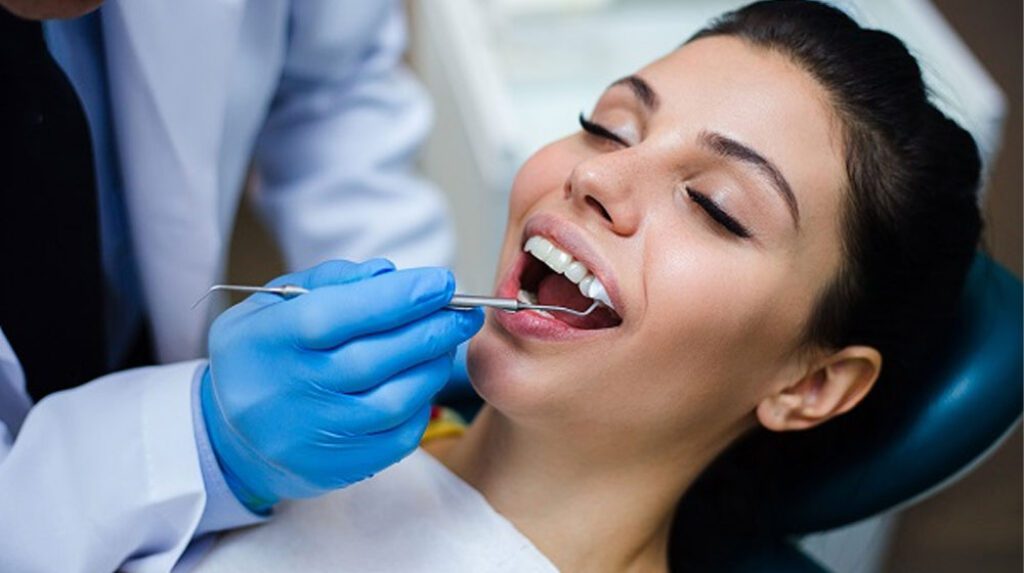
Yes, a dentist can tell if you vape. The American Dental Association has acknowledged the oral health effects of e-cigarette use. Not with a single glance, and not with a blood test, but trained dental professionals recognize a cluster of oral signs that point to e-cigarette use. These signs are usually milder than what cigarette smoking produces, but they are distinct enough to raise questions during a routine exam.
Here is what your dentist is actually looking for, what the research says about vaping and oral health, and what you can do to minimize the damage.
The oral signs that tell a dentist you vape
There is no single “vaping test” a dentist can run. Instead, they look for a pattern of signs that, taken together, suggest e-cigarette use. The key indicators:
| Sign | What the dentist sees | Why vaping causes it |
|---|---|---|
| Dry mouth (xerostomia) | Reduced saliva, sticky or cracked oral mucosa, difficulty swallowing | PG and VG in e-liquid reduce salivary flow; nicotine further decreases saliva production |
| Gum inflammation (gingivitis) | Red, swollen, or bleeding gums without the heavy tar staining of cigarette smokers | E-cig aerosol alters the oral microbiome, increasing plaque-forming bacteria |
| Nicotine stomatitis | White patches on the hard palate (roof of the mouth), red dot-like inflamed salivary duct openings | Heat and chemical irritation from inhaled aerosol; historically seen in pipe smokers, now observed in vapers |
| Tooth discoloration | Yellowing, especially along the gumline; less severe than cigarette tar stains | Nicotine oxidizes when mixed with saliva, creating yellow-brown compounds that bind to enamel |
| Increased plaque and tartar | More buildup between visits, especially near the gumline | VG’s sticky texture adheres to teeth; dry mouth reduces natural cleansing by saliva |
| Mouth sores or ulcers | Recurrent aphthous ulcers, irritated mucosa | Chemical irritation from flavorings and aerosol; heat from the device tip |
| Halitosis (bad breath) | Persistent unpleasant odor | Dry mouth allows bacteria to thrive; flavor compounds linger and decompose |
The critical point: none of these signs alone proves you vape. Dry mouth can come from medications, dehydration, or autoimmune conditions. Gum inflammation can come from poor brushing habits. But when several of these signs appear together in a patient who otherwise seems healthy, a dentist with experience will suspect e-cigarette use.
What the research says about vaping and oral health
A 2024 study published in iScience found that 42.5% of e-cigarette users showed signs of periodontal disease, compared to 72.5% of cigarette smokers and 28.2% of non-smokers. That puts vapers in a middle zone: worse than non-smokers, better than cigarette smokers, but clearly not risk-free.
A 2025 review in PMC11655679, “Risks of E-cigarettes on oral health and increased susceptibility to periodontal pathogens,” established a direct correlation between e-cigarette use and elevated risk of dental caries. The study found that e-cigarette aerosol modifies the oral microbiome, increasing caries-associated bacteria like Streptococcus mutans and periodontal pathogens like Porphyromonas gingivalis.
Research from the University of Rochester has also shown that e-cigarette vapor generates free radicals in the oral cavity, damaging cells and promoting inflammation. This oxidative stress weakens the immune response in the mouth, making it easier for infections, including oral thrush (Candida albicans overgrowth), to take hold.
For more on the full range of health effects, see our guide to symptoms of vaping too much.
How nicotine specifically damages your gums
Nicotine is the most problematic ingredient in e-liquid when it comes to oral health, and its effects are well-documented:
- Vasoconstriction. Nicotine narrows blood vessels, reducing blood flow to the gums by an estimated 20 to 30%. Less blood flow means less oxygen, fewer nutrients, and slower healing. This is why vapers often have gums that look pale or bleed more easily when prodded.
- Masking gum disease symptoms. Because nicotine reduces blood flow, it can suppress the bleeding that normally signals gingivitis. Your gums might look fine even while disease is progressing underneath. This delayed detection makes treatment harder once the disease is finally noticed.
- Impaired healing. After dental procedures like extractions, cleanings, or gum surgery, nicotine slows tissue regeneration. This is why dentists strongly advise against vaping after tooth extraction. For more on that, see our dedicated article.
- Gum recession. Chronic nicotine exposure can cause gums to recede over time, exposing the tooth root and increasing sensitivity and decay risk.
- Increased oral cancer risk. While vaping carries lower cancer risk than smoking, it is not zero. E-cigarette aerosol contains trace amounts of formaldehyde, nitrosamines, and heavy metals. Long-term exposure to these compounds in the oral cavity increases risk, though the magnitude is still being studied.
Does vaping stain teeth like smoking does?
Not as severely, but yes, it can. Cigarette tar is a thick, dark residue that produces obvious brown and black staining. Vape aerosol does not contain tar, which is why vaping stains are typically lighter and more yellow than cigarette stains.
The staining mechanism: when nicotine mixes with saliva, it oxidizes into compounds that bind to enamel. Over time, this creates a yellowish discoloration, especially near the gumline where saliva pools. VG-rich e-liquids produce thicker aerosol that tends to stick to teeth more, accelerating both staining and plaque buildup.
Professional whitening can remove these stains, but they will return if you keep vaping. For more on vaping and teeth staining, and how to manage it, see our guide on what chemicals are in vapes.
Can vaping cause oral thrush?
It increases the risk. Oral thrush (candidiasis) is an overgrowth of the fungus Candida albicans in the mouth. Vaping contributes through three mechanisms:
- Dry mouth reduces the natural antifungal properties of saliva. Saliva normally keeps Candida populations in check. When saliva production drops, the fungus has an easier time proliferating.
- Inflammation weakens the oral immune barrier. Free radicals from e-cigarette vapor damage epithelial cells, making it easier for fungi to colonize.
- Altered oral microbiome. E-cigarette use shifts the bacterial balance in the mouth, reducing the competing bacteria that normally keep Candida under control.
Symptoms of oral thrush include white patches on the tongue or inner cheeks, a cottony feeling in the mouth, soreness, and difficulty swallowing. If you notice these, see your dentist or doctor. Antifungal medication clears it quickly, but it will return if the underlying conditions (dry mouth, vaping) persist.
How to protect your oral health if you vape
You do not need to quit vaping to take care of your mouth. But you do need to be more diligent than a non-vaper.
- Brush twice a day for two minutes. Use a soft-bristled brush and fluoride toothpaste. Circular motions, not aggressive scrubbing. Brush your tongue too, where aerosol residue accumulates.
- Floss daily. This removes plaque between teeth where your brush cannot reach. Plaque buildup accelerates in vapers due to the sticky nature of VG.
- Use an alcohol-free mouthwash. Alcohol-based rinses worsen dry mouth. Choose a fluoride rinse that helps remineralize enamel and does not dry out your oral mucosa.
- Stay hydrated. Water combats dry mouth, supports saliva production, and helps flush residue from your mouth. Sip water throughout the day, especially after vaping sessions.
- Wait 30 minutes after vaping before brushing. The aerosol can temporarily soften enamel. Brushing immediately can cause microabrasions. Rinse with water first, then brush later.
- Get regular dental check-ups. Every 6 months minimum. If you vape daily, consider every 4 months. Your dentist can catch early signs of gum disease, enamel erosion, or microbiome changes before they become serious.
- Consider nicotine-free e-liquid. Removing nicotine eliminates the vasoconstriction problem. Your gums will have better blood flow and heal faster. For more on this, see our analysis of whether nicotine-free vapes are safe.
Why your dentist asks about vaping
Dentists ask about tobacco and nicotine use for two practical reasons: treatment planning and medical history accuracy. Nicotine affects how your gums respond to treatment, how quickly you heal after procedures, and what medications might interact with your recovery. If you disclose vaping, your dentist can adjust their approach accordingly.
Lying about it does not help. Your dentist can see the signs anyway, and withholding information means they cannot tailor your treatment properly. If you had a tooth extraction and vaped during the healing period, for example, your dentist needs to know so they can check for dry socket.
FAQ
Can a dentist tell if you vape?
Yes, through a combination of signs including dry mouth, gum inflammation, nicotine stomatitis, tooth discoloration, increased plaque, mouth sores, and halitosis. No single sign proves vaping, but the pattern is recognizable.
Does vaping stain teeth?
Yes, but less severely than cigarette smoking. Nicotine oxidizes in saliva, creating yellowish discoloration near the gumline. VG-rich liquids also promote plaque buildup that accelerates staining.
Can vaping cause gum disease?
Yes. A 2024 iScience study found 42.5% of vapers showed periodontal disease signs, compared to 28.2% of non-smokers. E-cigarette aerosol alters the oral microbiome, increasing disease-causing bacteria.
Can vaping cause oral thrush?
It increases the risk by promoting dry mouth, oral inflammation, and microbiome imbalance. Candida albicans thrives in these conditions.
Can vaping cause oral cancer?
The risk is lower than cigarette smoking but not zero. E-cigarette aerosol contains trace amounts of formaldehyde, nitrosamines, and heavy metals. Long-term exposure in the oral cavity increases risk, though the magnitude remains under study.
Should I tell my dentist I vape?
Yes. Nicotine affects healing, gum response to treatment, and medication interactions. Your dentist can see the signs regardless, and being honest allows them to tailor your care appropriately.
How can I reduce vaping damage to my mouth?
Brush and floss daily, use alcohol-free fluoride mouthwash, stay hydrated, wait 30 minutes after vaping before brushing, and get dental check-ups every 4 to 6 months. Switching to nicotine-free e-liquid also helps.
—
Sources: iScience (2024), periodontal disease prevalence in vapers vs smokers vs non-smokers; PMC11655679 (2025), “Risks of E-cigarettes on oral health and increased susceptibility to periodontal pathogens”; University of Rochester Medical Center, free radical generation from e-cigarette vapor in the oral cavity; Tobacco Free Colorado (2025), oral health clinical guide for dental professionals; Salimetrics, salivary biomarker interpretation guidelines; Mayo Clinic, nicotine stomatitis clinical description; ADA, fluoride and oral hygiene recommendations.



I didn’t vape for a week after my last dentist visit. It was torture.