

The Short Version
Disposable vapes give you something no other vaping category can match: zero friction between wanting nicotine and getting it. No setup, no maintenance, no learning curve. For smokers trying to quit, that matters more than any spec sheet.
But the benefits go beyond convenience. Research from Cochrane, the University of Bristol, and Public Health England backs up the harm-reduction angle. The flavor variety and nicotine salt formulation address the two biggest reasons quit attempts fail: satisfaction and throat hit. And the low upfront cost removes the financial excuse.
Here’s a deeper look at each benefit, with the data to back it up.
1. Convenience: The Reason Most People Start
Open the box. Remove the cap. Inhale. That’s the entire user manual for a disposable vape. No coil priming, no wattage adjustment, no e-liquid filling, no button to hold. When it’s done, you throw it away and open another one.
That sounds trivial, but it’s the number one reason smokers who try a complicated pod system end up going back to cigarettes. A pack of Marlboros is simpler than a Vaporesso XROS with adjustable airflow and a refillable pod. Disposables match that simplicity. If you can smoke, you can vape a disposable.
2. Harm Reduction: What the Science Actually Says
This is the benefit that matters most, and it’s also the most misunderstood.
In 2015, Public Health England published an independent review concluding that vaping is around 95% less harmful than smoking. That figure has been debated, updated, and sometimes distorted over the years, but the core conclusion has held: because e-cigarettes do not burn tobacco, they avoid producing the thousands of carcinogens and carbon monoxide that make combustible cigarettes lethal. The UK’s Office for Health Improvement and Disparities (PHE’s successor) and the NHS continue to recommend vaping as a harm-reduction tool for adult smokers.
The 2025 Cochrane Review — the gold standard for evidence-based medicine — analyzed 104 studies with over 30,000 participants and found that:
- Nicotine e-cigarettes help more people quit smoking for at least six months than nicotine replacement therapy (patches, gum, lozenges)
- They probably work better than e-cigarettes without nicotine
- They may work better than behavioral support alone
- Serious unwanted effects were uncommon across the studies reviewed
Here’s the problem: most smokers don’t know this. A 2025 study from the University of Bristol, published in Nicotine and Alcohol Research, found that 85% of adults who smoked in England incorrectly believed vaping is equally or more harmful than smoking — up from 59% ten years earlier. Dr. Katherine East, the study’s lead author, put it plainly: “While vaping is not without risks, the evidence is clear that vaping is much less harmful than smoking and can help people successfully quit smoking.”
For smokers, switching to any vape is a reduction in harm. Disposables make that switch easier because they remove the barriers that stop people from trying.
3. Nicotine Salt: Closer to the Cigarette Experience
Most disposable vapes use nicotine salt (nic salt) e-liquid rather than freebase nicotine. That’s not a marketing gimmick — it changes how the product actually feels.
Freebase nicotine, used in older tank systems and some pod devices, has a high pH that creates a harsh throat hit at concentrations above 12mg/ml. That’s why you rarely see freebase liquids above 18mg — they’d be too rough to inhale. The problem? A smoker who needs 20mg of nicotine to feel satisfied can’t get it from freebase without coughing.
Nicotine salts use benzoic acid or other organic acids to lower the pH, which allows concentrations of 20–50mg/ml (2–5%) with a smooth throat hit. A study published in Nicotine and Tobacco Research confirmed that nic salt formulations deliver nicotine to the bloodstream faster than freebase at equivalent wattage, which more closely mimics the rapid absorption curve of a cigarette.
That matters for quitting. If a vape doesn’t satisfy your nicotine craving quickly, you go back to cigarettes. Nic salt disposables are designed to close that gap.
4. Flavor Variety: Not Just a Party Trick
The flavor argument gets dismissed as catering to kids, but there’s a legitimate adult use case: finding a flavor that makes vaping preferable to smoking is a key factor in whether someone successfully switches.
The Elf Bar BC5000 comes in over 70 flavors. That’s not about novelty — it’s about finding the one flavor that replaces the ritual of lighting a cigarette. Some ex-smokers gravitate to tobacco or menthol flavors. Others find that a fruit or dessert flavor works better because it creates a clean psychological break from smoking. The flavoring compounds themselves are generally recognized as safe for ingestion, though inhalation safety is still being studied.
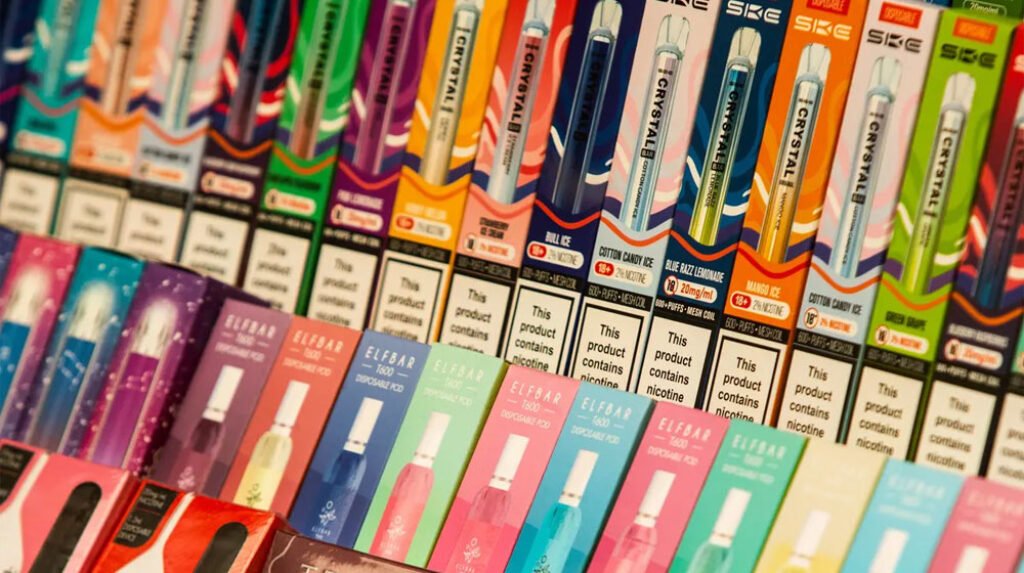
With disposables, there’s no commitment. You buy one flavor, finish it (or don’t), and try another. No cleaning out a tank, no wasting half a bottle of e-liquid that didn’t work for you.
5. Low Upfront Cost: Try Before You Invest
A decent refillable pod kit costs $25–$50 before you add e-liquid and replacement coils. If you’re a smoker who isn’t sure vaping will work for you, that’s a real barrier. Why spend $40 on something you might abandon after two days?
Disposables solve that. You can pick one up for $5–$20 and find out whether vaping satisfies your nicotine craving without any further investment. If it works, you can keep using disposables or transition to a refillable pod system. If it doesn’t, you’re out the cost of a pack of cigarettes instead of a full kit.
The cost math does flip for daily vapers — disposables run $90–$150/month compared to $30–$50 for refillable systems — but for the initial quit attempt, disposables are the cheapest way to test the waters. We break down the numbers in our pros and cons guide.
6. Zero Maintenance, Zero Leaks
Refillable devices have moving parts. Tanks crack. Coils burn out unevenly. E-liquid leaks into your pocket. Auto-draw sensors fail after a drop. Anyone who’s used a refillable vape for more than a month has a story about finding e-liquid all over the inside of their bag.
Disposables don’t have any of those problems because there’s nothing to maintain. The e-liquid is sealed. The coil is integrated. The battery is sized to match the e-liquid capacity. When something goes wrong with a disposable, you toss it and grab another — no troubleshooting, no replacement parts to order, no downtime.
For travel, this is a genuine advantage. A sealed disposable won’t leak under cabin pressure changes, doesn’t require you to pack e-liquid bottles (which have TSA liquid restrictions), and doesn’t need a charger if you get a non-rechargeable model. One device in your pocket, done.
7. No Secondhand Smoke
Vapor is not smoke. Combustible cigarettes produce sidestream smoke from the lit end between puffs, filling the room with carcinogens even when nobody is inhaling. E-cigarettes only produce aerosol when activated — there’s no sidestream emission between puffs.
The aerosol itself contains far fewer toxicants at far lower concentrations than cigarette smoke. A comprehensive review of the evidence shows that while secondhand vapor is not risk-free, it presents a substantially lower exposure risk than secondhand smoke. For people who live with non-smokers or have children, that difference is meaningful.
8. Discreet and Low-Odor
Cigarette smoke lingers. It gets into clothes, hair, car upholstery, and hotel rooms. The smell is immediately recognizable and sticks around for hours. Vapor from a disposable, especially a fruit or menthol flavor, dissipates within seconds and doesn’t leave the same residue. Most people in the same room won’t even notice.
The form factor helps too. A disposable vape looks like a small pen or USB drive. It doesn’t announce itself the way a box mod or a lit cigarette does. If you want to vape at a concert, on a walk, or during a break at work without drawing attention, disposables are the least conspicuous option.
9. No Combustion, No Tar, No Carbon Monoxide
This is the fundamental health distinction, and it’s worth stating clearly because a lot of people still confuse vaping with smoking.
Cigarettes burn tobacco at around 800°C, producing tar, carbon monoxide, and thousands of known carcinogens through combustion. That’s what causes lung cancer, COPD, heart disease, and the other conditions responsible for roughly 480,000 deaths per year in the US alone.
E-cigarettes heat liquid to 200–300°C. There is no combustion. No tobacco is burned. No tar is produced. No carbon monoxide is generated. The aerosol contains nicotine, propylene glycol, vegetable glycerin, flavorings, and some trace compounds — but none of the combustion byproducts that make smoking lethal.
This doesn’t mean vaping is safe. The UC Davis study published in ACS Central Science in 2025 found that some disposable devices leach metals (lead, nickel, antimony) at concerning levels — an issue tied to cheaper manufacturing in unregulated brands. But those risks are categorically different from the known, well-documented lethal effects of inhaling burned tobacco.
Who Benefits Most from Disposable Vapes?
| User Type | Why Disposables Work |
|---|---|
| Current smokers trying to quit | Low barrier to entry, nic salt mimics cigarette satisfaction, no setup required |
| Occasional/social vapers | No device sitting unused for weeks between sessions, no stale e-liquid |
| Travelers | Sealed, leak-proof, no TSA liquid issues, compact |
| Vapers who dislike maintenance | Zero cleaning, zero coil changes, zero troubleshooting |
| People in smoking cessation programs | Cochrane evidence supports e-cigarettes as an effective quit tool |
For daily vapers, refillable systems may make more financial sense long term. But as an entry point, a travel backup, or an occasional-use device, disposables fill a role that nothing else does as well.
Frequently Asked Questions
Are disposable vapes actually less harmful than cigarettes?
Yes. The Cochrane Review (2025) and Public Health England’s evidence reviews confirm that vaping is substantially less harmful than smoking because it avoids combustion and the associated tar, carbon monoxide, and carcinogens. However, “less harmful” is not the same as “harmless.” Some disposables from unregulated brands may leach metals, per the 2025 UC Davis study.
Why do disposable vapes use nicotine salts?
Nicotine salts allow higher nicotine concentrations (up to 50mg/ml) with a smooth throat hit, closely mimicking the rapid nicotine absorption of a cigarette. Freebase nicotine at those concentrations would be too harsh to inhale comfortably.
How long does a disposable vape last?
It depends on the puff rating and your usage. A 5,000-puff device lasts roughly 3–5 days for a moderate vaper. A 20,000-puff device can last 1–2 weeks. Real-world usage typically delivers 60–80% of the rated puff count.
Can disposable vapes help me quit smoking?
The evidence supports it. The 2025 Cochrane Review found that nicotine e-cigarettes help more people quit smoking than nicotine replacement therapy or behavioral support alone. Disposables are the easiest entry point because they require no setup or learning curve.
What’s the downside of disposable vapes?
Environmental waste (lithium batteries, plastic), cost over time (more expensive than refillable for daily users), and potential health risks from metal leaching in unregulated brands. We cover these in detail in our pros and cons guide.
Sources: Cochrane Review (2025), University of Bristol / Nicotine and Alcohol Research (2025), Nicotine and Tobacco Research (nic salt pharmacokinetics), UC Davis / ACS Central Science (2025), Public Health England / OHID




Build your vape knowledge
Read more guides
Find explainers, how-to articles and reference material.
Open guide library →Compare vape products
Check specifications across the product database.
Open product data →Read hands-on reviews
See tested devices and documented trade-offs.
Read review coverage →