

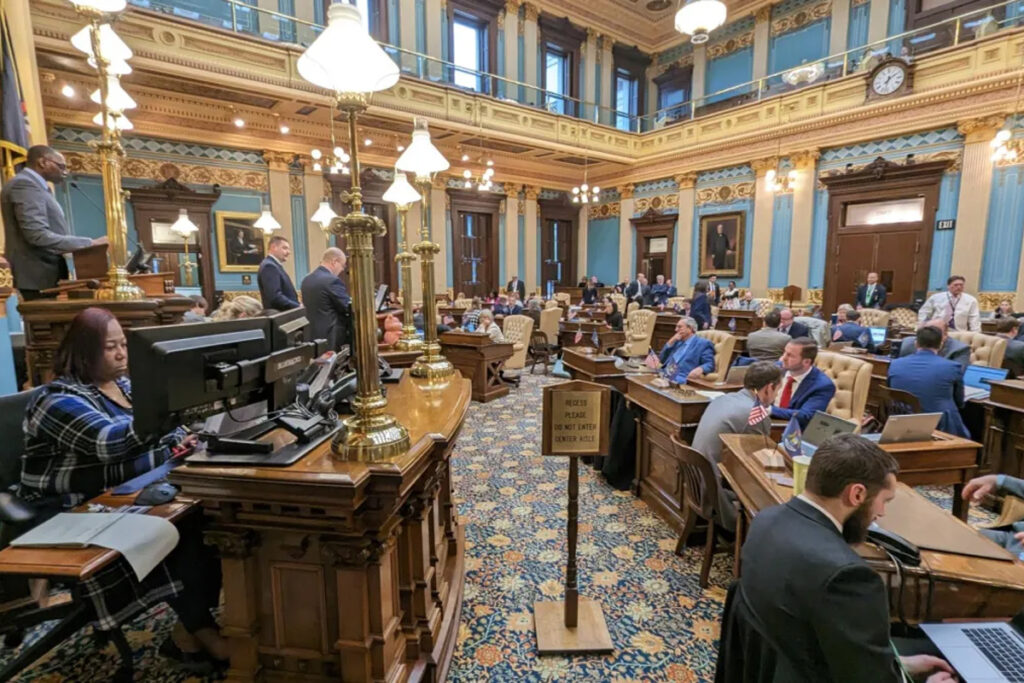
The Michigan Senate has passed a bipartisan package aimed at curbing youth tobacco use by requiring statewide licensure of tobacco retailers. Led by Senate Majority Floor Leader Sam Singh (D–East Lansing) with Republican co-sponsorship from Sen. Joseph Bellino (R–Monroe), Senate Bills 462 and 465 align Michigan with the majority of U.S. states that already license tobacco sellers.
“As the leading cause of preventable death in Michigan and across the nation, tobacco use amongst our youth is a grave and growing public health concern that we must act on immediately,” Sen. Singh said following passage. “By establishing a clear regulatory framework to hold our retailers accountable, we can ensure our kids here in Michigan are afforded the same protections as kids in nearly every other state in the country.”
Michigan remains one of only nine states that do not license tobacco retail establishments. The Senate bills now move to the House, where a companion package, House Bills 5368–5372, was introduced this week.
What the Senate bills would do
- Require licensure of tobacco retailers and establish a statewide regulatory system
- Mandate regular inspections to verify compliance with youth access laws
- Increase penalties for sales to minors
- Regulate online and delivery sales of tobacco products
- Ban “flash sales” for tobacco products
- Create a dedicated fund within the state treasury to administer and enforce the new rules
- Scope likely includes vapor products: Most state retail licensing laws apply to all “tobacco products,” a term that typically includes nicotine vapor products and synthetic nicotine. Michigan retailers should plan on being covered unless the final bill text explicitly carves out exceptions.
- Compliance will get real: Licensure plus routine inspections and clear penalty schedules tends to raise the stakes for retailers who cut corners on age verification or stocking noncompliant products. Expect more frequent stings, documented training requirements, and a defined ladder of fines and suspensions.
- Online and delivery rules will tighten: Michigan-specific requirements will layer on top of existing federal obligations (e.g., PACT Act registration, age verification, adult-signature delivery). If third-party delivery is in play, platforms may need to implement ID scanning and maintain logs.
- “Flash sale” ban needs definition: Vape shops often run time-limited promos. The term “flash sale” is broad; regulators should define it carefully so ordinary price promotions, loyalty discounts, and manufacturer coupons are not unintentionally swept up. Clarity here matters for day-to-day retail operations.
- Dedicated enforcement funding cuts both ways: A treasury fund financed by fees and penalties can professionalize enforcement, but fee levels and cost recovery models will matter for small independent vape shops already operating on thin margins.
- Leveling the playing field: Legitimate vape retailers that already enforce 21+ and ID checks may benefit if licensing edges out bad actors, including convenience outlets that have historically recorded more youth access violations. At the same time, excessive fees or ambiguous rules could push compliant independents out of the market.
- Illicit channel risk: Tougher enforcement at licensed brick-and-mortar and online outlets can reduce youth access—but if distributor-level oversight and product authentication are weak, demand can shift to informal or illicit sellers. The rulemaking should address supply-chain tracing and penalties for unlicensed sales to avoid this displacement.
What Michigan vape retailers should do now
- Audit age-verification procedures; implement ID scanning at point of sale and delivery
- Train staff and document training; keep records ready for inspections
- Review online checkout flows for robust third-party age verification and adult-signature options
- Map inventory to compliant SKUs; avoid products lacking proper nicotine warnings or provenance
- Prepare for licensing: gather EINs, ownership disclosures, prior violation history, and store plans
- Engage in the process: submit comments when draft rules open; ask for clear definitions and reasonable fees
Retail licensing is a proven lever to reduce youth access by shifting accountability squarely onto sellers. For Michigan’s vape sector, the package signals a move from a patchwork approach to a unified compliance regime. Well-calibrated rules—clear definitions, reasonable fees, and transparent enforcement—can weed out bad actors while preserving harm-reduction access for adults. Poorly calibrated ones risk driving consumers to unregulated channels. As the bills move to the House, the details will determine which outcome Michigan gets.




Follow the wider vape market
Read the latest vape news
Track regulation, launches and industry updates.
Open vape news →Browse product data
Move from market news to device specifications.
Open product data →Check product reviews
Read independent testing and comparison reports.
Read review coverage →