

The Science Behind Vape Liquids: Chemistry, Safety & 2026 Research
When you press fire on a vape, you are triggering a chain of chemical reactions that most people never think about. The science behind vape liquids is not just academic trivia. It determines what you inhale, how it feels, how much nicotine reaches your brain, and what long-term risks you might face. This guide breaks down the chemistry of every component in your e-liquid, from the base liquids that create the vapor cloud to the organic acids that make nicotine salts smooth enough to use in pod systems. Whether you are a casual vaper trying to understand what you are consuming or someone researching the vaping vs smoking debate, knowing the actual chemistry matters.
There is a wide gap between what marketing tells you about vape liquids and what the molecules actually do when heated to 250 degrees Celsius. This article covers vape liquid chemistry in depth, including the latest research from 2024 through 2026, regulatory realities that affect what ends up on shelves, and practical advice about how device technology changes the chemical profile of your aerosol. Let us get into it.
Why the Science Behind Vape Liquids Matters
Vaping is chemistry in your hand. You load a liquid into a device, heat it to temperatures that would burn your skin on contact, inhale the resulting aerosol, and absorb nicotine and flavor compounds through your lungs directly into your bloodstream. That process involves thermal decomposition, oxidation, and chemical reactions that create compounds not present in the original liquid. Understanding the science behind vape liquids is not optional if you are putting this into your body regularly.
The gap between marketing and molecular reality is substantial. E-liquid companies describe their products using terms like “food-grade ingredients” and “USP-grade propylene glycol.” Those labels are accurate, but they describe safety for ingestion, not inhalation. Food-grade means the FDA considers those ingredients safe to eat. Your digestive system processes chemicals very differently than your lungs do. A compound that passes harmlessly through your stomach can cause inflammation or damage when deposited deep in your respiratory tissue.
This guide covers the full picture of vape liquid chemistry. We will look at what is actually in your e-liquid (the four core ingredients), how nicotine salt chemistry works and why it changed the entire industry, what happens at the molecular level when you heat e-liquid to vaporization temperatures, why flavoring compounds deserve special scrutiny, how coil technology affects chemical emissions, what the latest research from 2024 to 2026 actually found, and how governments are handling the science through regulation. If you are new to vaping, you might want to start with our guide on how to vape before diving into the chemistry.
The Four Core Ingredients: What’s Actually in Your E-Liquid
Every e-liquid on the market, from the cheapest gas station disposable to the most premium boutique blend, contains the same four categories of ingredients. The ratios change, the specific flavor molecules change, but the framework is universal. Let us break down each one.
Propylene Glycol (PG)
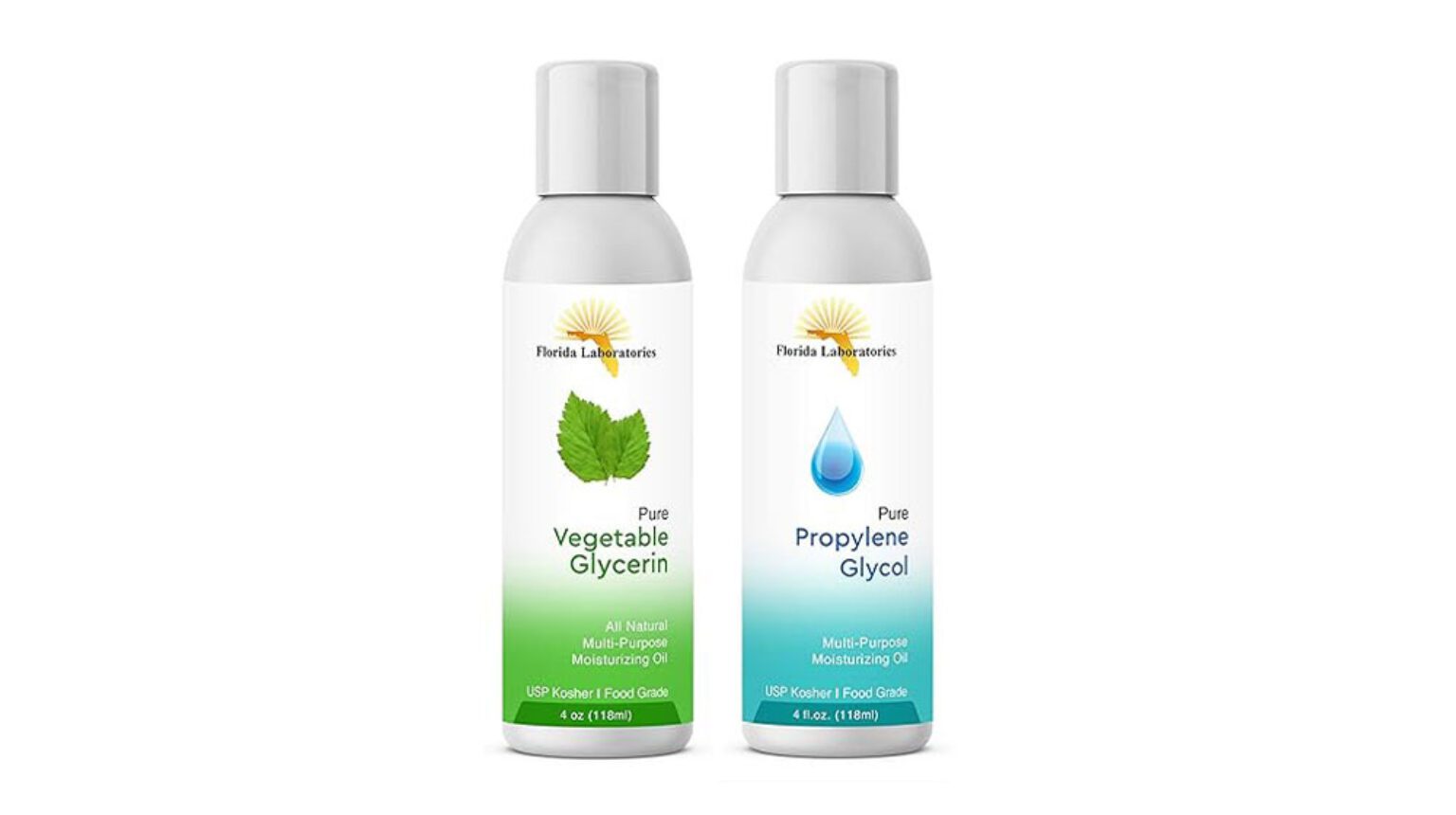
PG is a synthetic organic compound with the formula C3H8O2. It is colorless, odorless, and has a slightly sweet taste. In vaping, PG serves two primary functions: it carries flavor more effectively than VG, and it produces the throat hit that former smokers often seek. That throat hit is not just a sensation. PG stimulates the trigeminal nerve in your throat, creating a mild irritation that mimics the feeling of smoke.
PG is classified as GRAS (Generally Recognized As Safe) by the FDA for use in food and pharmaceuticals. You consume it in salad dressings, ice cream, and medications. But here is the key distinction: GRAS status applies to ingestion, not inhalation. The FDA has not evaluated the safety of heating PG to 250 degrees Celsius and inhaling the resulting aerosol. At normal vaping temperatures (180-290 degrees Celsius), PG decomposition primarily produces formaldehyde and acetaldehyde, but in trace amounts that constitute less than one percent of the total aerosol mass. At elevated temperatures above 350 degrees Celsius, those aldehyde levels increase significantly. This is one reason why temperature control matters, and we will get deeper into that later.
PG also acts as an antimicrobial agent, which is why it is used as a preservative in many food products. This property actually helps extend the shelf life of e-liquids. If you have ever noticed that a high-PG e-liquid lasts longer without developing off-flavors compared to a high-VG blend, the antimicrobial properties of PG are part of the reason.
Vegetable Glycerin (VG)
VG, also called glycerol, has the formula C3H8O3. It is a thicker, sweeter liquid derived from plant oils (typically coconut, palm, or soy). VG produces the dense vapor clouds that cloud chasers love, and its natural sweetness can reduce the need for additional sweeteners in e-liquid formulations. In higher VG blends (70% VG and above), the vapor production is noticeably thicker and smoother on the throat.
The safety conversation around VG is similar to PG in one important way and different in another. VG is also GRAS for ingestion, used in everything from baked goods to skin care products. But VG has a specific thermal decomposition concern that PG does not share to the same degree: acrolein production. Acrolein is a highly irritating aldehyde that forms primarily from VG decomposition at high temperatures. It has a sharp, acrid smell and is known to cause respiratory irritation. At normal vaping temperatures, acrolein appears in trace amounts similar to other aldehydes. But dry hits and overheated coils can push acrolein production up substantially. This is why running your tank dry or chaining puffs without letting the wick re-saturate is not just an unpleasant experience. It is a chemistry problem.
The thickness of VG also affects device compatibility. High-VG e-liquids do not wick well in small, tight coil builds designed for MTL vaping. If you try to run a 80% VG liquid through a pod system, you will likely get dry hits and burnt coils because the wicking material cannot pull the thick liquid through fast enough. This mismatch between e-liquid viscosity and device design is one of the most common causes of poor vaping experiences and unnecessary chemical exposure from dry hits.
Nicotine
Nicotine is the addictive component in e-liquids, and it is also the ingredient most people fixate on when discussing vaping risks. The reality is more nuanced than most public health messaging suggests. Nicotine is addictive, and that is not trivial. But nicotine itself is not the primary harm vector in combustible cigarettes. The tar, carbon monoxide, and thousands of combustion byproducts cause the disease. Nicotine drives the addiction that keeps people consuming those harmful byproducts.
In e-liquids, nicotine exists in two forms: freebase and salt. The chemistry difference between these forms is significant enough that it deserves its own section, which follows this one. For now, understand that nicotine concentration in e-liquids ranges from 0mg/ml (nicotine-free) up to 50mg/ml in some salt-based pod systems. The nicotine strength you choose affects not just the buzz but the entire vaping experience, from throat hit to satisfaction to how much you consume.
Flavorings
Flavorings are the wildcard ingredient in e-liquids. Unlike PG, VG, and even nicotine, which are single, well-characterized chemical compounds, flavorings are often complex mixtures of dozens of individual molecules. A “strawberry” flavor might contain 20 or 30 different ester, aldehyde, and ketone compounds blended to create the impression of strawberry. Each of those individual compounds has its own thermal stability profile, its own inhalation toxicity data (or lack thereof), and its own decomposition products when heated.
The flavor industry uses the FEMA GRAS list (maintained by the Flavor and Extract Manufacturers Association) to determine safety for food use. But FEMA has explicitly stated that their GRAS designations do not apply to e-cigarette use. The organization published a letter in 2016 making this point clear. When e-liquid manufacturers say their flavorings are “food-grade” or “FEMA-approved,” they are technically correct about the food part and silently sidestepping the inhalation question. We will dig deeper into specific flavor compounds and their risks in the Flavor Chemistry section.
Nicotine Salt vs Freebase: The Chemistry That Changed Vaping
If there is one piece of vape liquid chemistry that reshaped the entire industry in the past decade, it is nicotine salt formulation. Before JUUL popularized nicotine salts in 2015, high-nicotine e-liquids were essentially unusable for most people. Freebase nicotine at concentrations above 18-24mg/ml becomes extremely harsh on the throat, making it physically unpleasant to inhale. This limitation meant that early cigalikes and vape pens could not deliver nicotine at levels that satisfied heavy smokers. People would try vaping, find it did not scratch the itch, and go back to cigarettes.
Nicotine salts solved that problem through basic acid-base chemistry. Here is how it works.
Freebase Nicotine: Alkaline and Harsh
Freebase nicotine is the pure, unprotonated form of nicotine. It is alkaline, with a pH around 8 to 10 in solution. This alkalinity is what causes the harsh throat hit at high concentrations. The high pH irritates the mucous membranes in your throat and lungs, creating that sharp, peppery sensation that freebase users are familiar with.
Freebase nicotine has an advantage that is often overlooked in the current salt-focused market: it is more volatile. Because it is not bound to an acid, freebase nicotine vaporizes more readily at lower temperatures, which means it can reach your bloodstream quickly. This volatility is also what makes it harsh. The same property that speeds absorption also increases the intensity of throat irritation.
Freebase nicotine is the standard for traditional sub-ohm vaping and DTL setups, where lower concentrations (3-12mg/ml) are paired with higher vapor production to deliver satisfying nicotine levels. The larger clouds compensate for the lower concentration, delivering comparable total nicotine per puff through volume rather than concentration.
Nicotine Salts: Protonated and Smooth
Nicotine salts are created by combining freebase nicotine with an organic acid. The most common pairing is nicotine benzoate, where benzoic acid protonates the nicotine molecule, lowering the pH to around 5 to 7. This near-neutral pH is dramatically smoother on the throat, even at concentrations of 20-50mg/ml. That is the entire basis of the pod system revolution: you can deliver high levels of nicotine without the harshness that made high-strength freebase liquids unusable.
Benzoic acid is not the only acid used in nicotine salt formulations. Nicotine lactate (combined with lactic acid) and nicotine tartrate (combined with tartaric acid) are also common, and some evidence suggests they may offer faster nicotine absorption. The specific acid used affects the pH, the smoothness, and potentially the pharmacokinetics of nicotine delivery, though the research is still developing on those differences.
What the 2026 Research Shows
A 2026 study published in Nature examined the absorption characteristics of freebase versus protonated nicotine forms. The findings were nuanced. Freebase nicotine showed enhanced solution absorption over protonated forms, meaning that in the liquid state, freebase nicotine may be more bioavailable. However, the real-world delivery picture is more complicated because the protonated form in nicotine salts allows for much higher concentrations to be delivered smoothly, which can result in faster peak blood nicotine levels in practice despite the lower per-molecule absorption rate.
A 2023 study published in Frontiers in Pharmacology added another dimension to the conversation. The research found that nicotine salts produced greater reinforcement behaviors in rat models compared to freebase nicotine at equivalent doses. Reinforcement behavior is a measure of addictive potential. If nicotine salts are more reinforcing, that has implications for both their usefulness as smoking cessation tools and their potential for creating new nicotine dependence, particularly among young users. This is not a simple good-or-bad finding. It is a finding that demands thoughtful regulation and informed consumer choice.
The practical takeaway for vapers: nicotine salts are ideal for pod systems and MTL devices where you want high nicotine delivery with low vapor production. Freebase is better suited for sub-ohm and DTL setups where you want larger clouds with lower nicotine concentration. Neither is inherently safer. The chemistry is different, and your choice should match your device, your nicotine needs, and your awareness of the absorption differences.
The Chemistry of Vaporization: What Happens When You Press Fire
This is where the science behind vape liquids gets really interesting, and where the gap between marketing and molecular reality becomes most apparent. The liquid in your tank or pod is not the same as the aerosol you inhale. Vaporization is not simply boiling. It is a complex thermal process that creates new chemical compounds that did not exist in the original e-liquid.
Normal Vaping Conditions: 180-290 Degrees Celsius
Under normal vaping conditions, coil temperatures range from approximately 180 degrees Celsius (356 degrees Fahrenheit) to 290 degrees Celsius (554 degrees Fahrenheit). At these temperatures, the primary process is phase change: PG and VG transition from liquid to aerosol, carrying nicotine and flavor compounds with them. The aerosol produced at these temperatures contains roughly 100 to 150 identifiable chemical compounds.
Aldehydes, including formaldehyde, acetaldehyde, and acrolein, are present at these temperatures but in trace amounts, constituting less than one percent of the total aerosol mass. This is an important number to understand. It does not mean these compounds are absent. It means they are present at very low concentrations under normal operating conditions. For context, combustible cigarettes produce formaldehyde, acetaldehyde, and acrolein at levels that are orders of magnitude higher than what typical vaping produces at normal temperatures.
High Temperature and Dry Burn: Above 350 Degrees Celsius
When coil temperatures exceed 350 degrees Celsius (662 degrees Fahrenheit), the chemical profile of the aerosol changes dramatically. Formaldehyde and acetaldehyde levels increase substantially. Acrolein production from VG decomposition spikes. These are not minor increases. Research has documented order-of-magnitude jumps in aldehyde concentrations when coils are run dry or at excessively high wattage.
Dry burns are the worst case scenario for chemical exposure in vaping. When the wicking material is not adequately saturated with e-liquid, the coil temperature rises rapidly because there is no liquid to absorb the heat through vaporization. The coil can reach temperatures well above 400 degrees Celsius within seconds. At those temperatures, not only do aldehyde levels spike, but the wicking material itself (typically organic cotton) can begin to pyrolyze, adding additional combustion byproducts to the aerosol.
PG vs VG Decomposition Pathways
PG and VG decompose through different chemical pathways at high temperatures, which is why the PG/VG ratio of your e-liquid affects the composition of your aerosol. PG decomposition primarily produces formaldehyde and acetaldehyde. VG decomposition produces all three major aldehydes (formaldehyde, acetaldehyde, and acrolein), with acrolein being a VG-specific product that PG does not generate. This is one reason why high-VG e-liquids have a slightly different risk profile at elevated temperatures compared to high-PG blends.
Nicotine itself is relatively stable at normal vaping temperatures. It begins to degrade significantly above 300 degrees Celsius, producing nicotine-related degradation products including nicotine-N-oxides and myosmine. At normal vaping temperatures, the vast majority of nicotine survives the vaporization process intact and is delivered to the user as intended.
Why Temperature Control Matters for Chemistry
Temperature control (TC) mode is not just a feature for flavor chasers. It is a harm reduction tool. TC mode works by monitoring the resistance of the coil, which changes predictably with temperature for certain metals (nickel, titanium, stainless steel). When the coil reaches the set temperature, the device reduces power to maintain that temperature rather than continuing to heat up.
Research has consistently shown that TC mode reduces aldehyde formation significantly compared to wattage mode at equivalent power settings. The reason is straightforward: TC prevents the temperature spikes that drive thermal decomposition. If you are using a device that supports TC and you are concerned about aldehyde exposure, using TC mode with an appropriate temperature setting (200-250 degrees Celsius) is one of the most effective steps you can take. You can learn more about optimizing your setup in our guide on how to customize your vape setup.
Flavor Chemistry: Why “Food-Grade” Doesn’t Mean “Inhale-Safe”
The flavoring compounds in e-liquids deserve their own deep dive because they represent the largest category of chemicals in vaping that have the least inhalation safety data. When a manufacturer says their flavors are “food-grade,” they are telling the truth. But they are answering the wrong question. The question is not whether these compounds are safe to eat. The question is whether they are safe to aerosolize at 250 degrees Celsius and inhale into your lungs.
Diacetyl and Popcorn Lung
Diacetyl is the most well-known problematic flavor compound in vaping, and for good reason. A 2015 Harvard School of Public Health study found diacetyl in more than 75 percent of flavored e-liquids tested. Diacetyl has been linked to bronchiolitis obliterans, a severe and irreversible lung disease commonly known as “popcorn lung.” The name comes from an outbreak of the disease among microwave popcorn factory workers who inhaled diacetyl used as a butter flavoring.
The current status of diacetyl in the vaping industry is mixed. Most reputable manufacturers now avoid diacetyl in their formulations, and some have explicitly marketed their products as diacetyl-free. However, acetoin, a chemical precursor to diacetyl that can convert to diacetyl under certain conditions, still appears in some e-liquid flavor formulations. Additionally, the less scrupulous segment of the market, particularly some imported e-liquids and disposable vape products with minimal quality oversight, may still contain diacetyl. The absence of mandatory testing standards in most jurisdictions means that consumers largely have to trust manufacturer claims.
Sucralose: Sweetness That Gunks Your Coils
Sucralose is the most commonly used sweetener in e-liquids, and it presents a two-part problem. First, sucralose begins to decompose at approximately 125 degrees Celsius (257 degrees Fahrenheit), which is well below typical vaping temperatures. This means that every puff you take is decomposing sucralose into breakdown products, which may include chlorinated organic compounds. The health implications of inhaling sucralose decomposition products are not well characterized, but the presence of chlorine atoms in the decomposition products is a legitimate concern that warrants further study.
Second, sucralose is the primary driver of coil gunk. When sucralose decomposes on your coil, it leaves behind a dark, sticky residue that accumulates over time. This residue is not just a cosmetic annoyance. It changes the thermal properties of your coil, creating hot spots that increase local temperatures and potentially increase the production of harmful aldehydes. Coil gunk is a chemical problem, not just a maintenance hassle. If your coils are gunking up quickly, you are running a chemistry experiment with every puff after the gunk starts forming.
Cinnamaldehyde: Reactive and Unstable
Cinnamaldehyde, the primary flavor compound in cinnamon, is one of the most reactive flavor molecules used in e-liquids. It degrades quickly at vaping temperatures, and it can react with other compounds in the e-liquid over time, changing the flavor profile and potentially creating new chemical species. Cinnamaldehyde has also been shown to have antimicrobial properties at high concentrations, which raises questions about its effects on lung microbiota when inhaled. The research here is preliminary, but it illustrates how even “natural” flavor compounds can behave unexpectedly when vaporized and inhaled.
Menthol and Synthetic Cooling Agents (WS-23, WS-3)
Menthol has been used in tobacco products for decades, and it is a common flavoring in e-liquids. But the newer generation of synthetic cooling agents deserves particular attention. WS-23 and WS-3 are synthetic cooling compounds that activate the TRPM8 cold receptor in your mouth and throat, producing a cooling sensation without any mint or menthol flavor. They have become extremely popular in disposable vapes and flavored e-liquids where manufacturers want cooling without the mint taste.
The safety data for WS-23 and WS-3 inhalation is limited. These compounds were developed for topical and oral use in cosmetics and pharmaceuticals, and the inhalation toxicology studies are still catching up. WS-23 (2-isopropyl-N,2,3-trimethylbutyramide) and WS-3 (N-ethyl-p-menthane-3-carboxamide) have different chemical structures and likely different inhalation profiles, but both are being used in e-liquids at concentrations that have not been rigorously tested for long-term pulmonary exposure. This is a space to watch as research develops.
Vanillin: Stable but Not Immune
Vanillin is one of the more stable flavor compounds used in e-liquids. It does not decompose as readily as cinnamaldehyde or sucralose at typical vaping temperatures. However, vanillin does oxidize over time when exposed to air and light, which is why vanilla-flavored e-liquids often darken in the bottle. This oxidation does not necessarily make the e-liquid dangerous, but it does change the chemical composition and flavor profile. If your e-liquid has turned from clear to dark brown, the vanillin has oxidized, and the liquid contains compounds that were not present when it was manufactured.
The GRAS Problem
The fundamental issue with flavor compounds in e-liquids is the GRAS problem. GRAS (Generally Recognized As Safe) is a designation that applies specifically to oral consumption. The metabolic pathways your body uses to process ingested chemicals are different from the pathways involved when those same chemicals are deposited directly in lung tissue. Your liver metabolizes compounds differently than your alveolar macrophages do. The dose delivery is different. The exposure pattern is different. GRAS tells you that eating vanillin in a cookie is safe. It tells you nothing about aerosolizing vanillin at 250 degrees Celsius and depositing it in your bronchioles.
This is not alarmism. It is a call for appropriate caution and better research. The flavor compounds in your e-liquid may be perfectly safe to inhale. Many of them probably are, at the concentrations used in vaping. But “probably safe” and “demonstrated safe through inhalation toxicology studies” are very different standards, and the vaping industry is largely operating on the former.
Ceramic Coils, Mesh Coils, and Chemical Emissions
The coil in your vape device is not just a heating element. It is a chemical reactor that determines what ends up in your aerosol. The material, geometry, and operating temperature of your coil all affect the chemical profile of the vapor you inhale. This is an area where hardware choices have direct chemistry consequences.
Ceramic Coils vs Wire Coils
Ceramic coils use a porous ceramic material to wick and vaporize e-liquid, with a heating element embedded within or around the ceramic substrate. The theoretical advantage is more even heat distribution across the ceramic surface, which can reduce localized hot spots that drive thermal decomposition of PG and VG. Some studies have suggested that ceramic coils produce lower levels of certain aldehydes compared to traditional wire coils at equivalent power settings.
Wire coils (made from Kanthal, stainless steel, nichrome/Ni80, or nickel) are the traditional and still most common coil type. The primary chemical concern with wire coils is trace metal leaching. At very low levels, metals including nickel, chromium, manganese, and lead have been detected in aerosol from wire coil devices. The levels are typically well below occupational exposure limits, but they are not zero. For people with nickel allergies or other metal sensitivities, this is worth knowing about.
Ceramic coils may also have a longer useful life before performance degrades, which means fewer instances of running a deteriorating coil that could produce elevated levels of undesirable compounds. However, the evidence on ceramic coils producing definitively fewer harmful chemicals is still mixed, and more standardized comparative studies are needed before making strong claims.
Mesh Coils and Surface Area
Mesh coils use a flat, perforated metal sheet instead of a round wire. The key advantage is larger surface area in contact with the e-liquid. More surface area means the heat is distributed across a wider area, which results in more consistent vaporization at lower local temperatures. Lower local temperatures mean less thermal decomposition of PG and VG, which means lower aldehyde production.
This is not just marketing talk. The physics is straightforward. If you are delivering the same total power but spreading it across three times the surface area, the peak temperature at any given point on the coil is lower. Lower peak temperature means less decomposition. Mesh coils have become the standard in sub-ohm tanks for good reason, and the chemistry supports their adoption. If you are choosing a new tank or pod system, mesh coils are generally the better choice from a thermal decomposition perspective.
What UC Davis Research Actually Found
UC Davis has been conducting extensive e-cigarette aerosol research, and their 2026 findings deserve careful reading. Their research concluded that “common e-cigarette configurations produce chemical byproducts like formaldehyde, acetaldehyde, acrolein, benzene and toluene at levels approaching and occasionally exceeding” safety thresholds. That last phrase is doing a lot of work. “Approaching and occasionally exceeding” is very different from “consistently exceeding” or “far exceeding.”
The key context is that these elevated levels were observed at high power settings, which push coil temperatures into the range where thermal decomposition accelerates. At moderate power settings with properly saturated wicks, the aldehyde levels were well below safety thresholds. The takeaway is not that vaping is dangerous across the board. The takeaway is that how you vape matters. Power settings, coil condition, wick saturation, and airflow all affect the chemistry of what you inhale. Adjusting your airflow can help regulate coil temperature, and using appropriate wattage for your coil is one of the simplest harm reduction steps available.
What the Latest Research Actually Says (2024-2026)
Research on e-liquid chemistry has accelerated significantly in recent years, and the findings paint a more nuanced picture than either pro-vaping or anti-vaping advocates typically present. Let us walk through the most significant recent studies.
The Johns Hopkins Study: Context and Nuance
The Johns Hopkins study that identified approximately 2,000 chemical features in vape aerosol generated headlines, and understandably so. “2,000 chemicals” sounds alarming. But the context matters enormously. Many of those chemical features were detected at trace levels, near the limit of detection for the analytical instruments used. Detecting a compound at parts-per-trillion levels is not the same as being exposed to it at biologically relevant concentrations. Your tap water contains thousands of detectable chemical features too. The dose makes the poison.
That said, the study did identify compounds that were not previously reported in e-cigarette aerosol, including some with known toxicity. The real value of the study was not the headline number. It was the demonstration that e-cigarette aerosol is chemically more complex than previously characterized, and that comprehensive analytical screening reveals compounds that targeted analyses miss. This means our understanding of e-liquid chemistry is still incomplete, and the risk assessment is still developing.
UC Davis Findings on Aldehyde Levels
The UC Davis research program has provided some of the most detailed characterizations of how device operating conditions affect aldehyde output. Their work shows that the relationship between power, temperature, and aldehyde production is not linear. There appears to be a threshold effect, where aldehyde levels remain relatively low up to a certain temperature range and then increase sharply. This is consistent with the thermal decomposition chemistry of PG and VG, where decomposition rates accelerate exponentially above certain activation energies.
For vapers, this means that staying below the thermal decomposition threshold is the most effective way to minimize aldehyde exposure. Operating your device at moderate wattage, keeping your wick saturated, and avoiding chain puffing are all practical ways to stay in the lower-temperature regime where aldehyde production is minimal.
Nature 2026 Nicotine Absorption Study
The 2026 Nature study on nicotine absorption adds important data to the freebase versus salt debate. The study found that free-base nicotine shows enhanced solution absorption over protonated forms, meaning that the unprotonated molecule is more readily taken up in solution. However, the practical implications for vaping depend on multiple factors including aerosol droplet size, deposition patterns in the respiratory tract, and the rate at which nicotine crosses the alveolar membrane. The chemistry of the nicotine form is one variable in a complex delivery system.
Analytical Chemistry Advances
One of the most promising developments in e-liquid science is the application of AI-assisted spectrum analysis to characterize e-liquid constituents. A study analyzing 406 e-liquids using advanced computational methods was able to identify chemical patterns and previously uncharacterized compounds more efficiently than traditional methods. This kind of high-throughput analytical approach is exactly what the field needs. With thousands of e-liquid products on the market and new ones appearing regularly, manual characterization of each product is impractical. AI-assisted screening could make comprehensive e-liquid safety monitoring feasible for the first time.
What We Know and What We Do Not Know
Here is an honest summary of the state of e-liquid science in 2026. We know that e-cigarette aerosol is chemically simpler than cigarette smoke and contains fewer harmful compounds at lower concentrations under normal use conditions. We know that temperature is the single most important variable in determining the chemical profile of the aerosol. We know that nicotine salts enable higher nicotine delivery with lower harshness, but their reinforcement profile may differ from freebase nicotine. We know that certain flavor compounds (diacetyl, sucralose, cinnamaldehyde) have documented concerns for inhalation.
What we do not know is still substantial. We do not have comprehensive inhalation toxicology data for most flavor compounds at vaping-relevant concentrations. We do not fully understand the long-term health effects of chronic low-level aldehyde exposure from vaping. We do not know how the chemical interactions between multiple flavor compounds affect the overall toxicological profile. We do not have good data on how coil aging and degradation affect emissions over time. And we do not know how individual genetic and health variations affect susceptibility to e-liquid chemical exposure.
The science is advancing, and the direction is toward more detailed and more nuanced understanding. But anyone who tells you that vaping is definitively safe or definitively dangerous is oversimplifying a complex and evolving evidence base.
Regulatory Landscape: How Governments Handle E-Liquid Science
The regulatory environment for e-liquids reflects the tension between harm reduction potential and public health precaution. Different jurisdictions have taken very different approaches, and the regulatory landscape directly affects what products are available to consumers and what safety standards they must meet.
FDA PMTA Process (United States)
In the United States, all e-liquid products are legally required to have a Premarket Tobacco Product Authorization (PMTA) from the FDA. The PMTA process requires manufacturers to demonstrate that their product is appropriate for the protection of public health, which involves submitting extensive data on product chemistry, toxicology, manufacturing processes, and behavioral effects. As of 2025, only approximately 23 e-cigarette products have received PMTA authorization. That is 23 products out of the thousands on the market.
The reality on the ground is that many products without PMTA authorization are still available because the FDA has not enforced the requirement uniformly. Enforcement discretion, legal challenges, and the sheer volume of products have created a situation where the regulatory intent exists but the practical implementation is inconsistent. For consumers, the FDA e-cigarette information page remains the best starting point for understanding what is and is not authorized.
EU TPD Limits
The European Union’s Tobacco Products Directive (TPD) sets specific limits on e-liquid products sold in EU member states. The maximum nicotine concentration is 20mg/ml. The maximum refill container size is 10ml. The maximum tank capacity is 2ml. All e-liquid products must be notified to national authorities before sale, and the notification must include ingredient listings and emissions data.
These limits have practical chemistry implications. The 20mg/ml nicotine limit means that nicotine salts above 20mg/ml cannot be legally sold in the EU, which restricts access to the higher-concentration salt products that many former smokers find effective. The 10ml bottle limit was intended to limit nicotine exposure from accidental ingestion, but it also creates more packaging waste and higher per-ml costs for consumers. The 2ml tank limit is a device restriction rather than a chemistry restriction, but it affects how much e-liquid a user can carry and consume between refills.
UK: Post-Brexit TPD and the Disposable Ban
The UK continues to follow the EU TPD framework post-Brexit, maintaining the same nicotine concentration, bottle size, and tank capacity limits. However, the UK has gone further with a ban on disposable vaping products that took effect in June 2025. The disposable ban was driven primarily by environmental concerns (lithium battery waste and plastic waste from single-use devices) and by youth usage data showing that disposables were the most popular product category among underage vapers.
From a chemistry perspective, the disposable ban is interesting because disposable devices have been associated with some of the least transparent manufacturing practices in the industry. Disposables are typically manufactured overseas with minimal quality documentation, and independent testing has found discrepancies between labeled and actual nicotine concentrations, undeclared flavor compounds, and in some cases contaminants. Removing disposables from the market may improve the average quality of e-liquid products available to UK consumers.
California and State-Level Restrictions
California has implemented a broad flavor ban on most vape products, restricting sales to tobacco-flavored e-liquids only. Other states and municipalities have enacted similar restrictions, creating a patchwork of regulations across the United States. The FDA has also proposed a menthol cigarette ban, though this has not been finalized for e-cigarettes as of 2026.
Flavor bans are driven by youth usage concerns, but they have chemistry implications too. Tobacco-flavored e-liquids typically use simpler flavor formulations with fewer individual compounds than fruit, dessert, or beverage flavors. From a chemical complexity standpoint, a flavor ban reduces the number of flavor compounds that consumers are exposed to. Whether this translates to meaningful health benefits depends on which specific compounds are eliminated and what the baseline risk of those compounds is, which brings us back to the fundamental problem of insufficient inhalation toxicology data.
The Disconnect Between Regulation and Science
Perhaps the most significant issue in e-liquid regulation is the pace mismatch between scientific understanding and regulatory action. Research takes years to conduct, publish, and translate into policy. Meanwhile, new products with new formulations enter the market monthly. The PMTA process was designed for a product landscape that moved slowly. It was not designed for an industry that releases hundreds of new flavors per quarter. This mismatch means that regulators are often making decisions based on data that is years old while the products on shelves have evolved significantly since the data was collected.
For consumers, this means you cannot rely solely on regulation to protect you. Understanding the science behind vape liquids yourself, reading lab reports when available, and making informed choices about the products you use are your best defenses in a regulatory environment that is still catching up to the science. You can check vape pricing and product details, but also look for brands that are transparent about their ingredients and testing.
FAQ
Is PG safe to inhale?
The honest answer is that PG appears to be relatively safe for inhalation at the concentrations and temperatures typical of normal vaping, but it has not been proven safe in the rigorous, long-term way that pharmaceutical inhalation products require. PG is GRAS for ingestion and has been used in asthma inhalers and nebulizers for decades, which provides some reassurance about acute inhalation safety. However, the exposure pattern in vaping (hundreds of puffs per day, every day, for years) is very different from occasional use in a medical device. At normal vaping temperatures (180-290 degrees Celsius), PG decomposition produces trace amounts of formaldehyde and acetaldehyde that are well below levels of concern. At elevated temperatures or in dry hit conditions, those aldehyde levels increase significantly. The short answer: PG is one of the better-characterized ingredients in e-liquid, and the risk profile under normal use conditions is relatively low, but long-term chronic exposure data specific to vaping does not yet exist.
What is the difference between nicotine salt and freebase nicotine?
Freebase nicotine is the pure, unprotonated form of nicotine with an alkaline pH (8-10) that creates a harsh throat hit at high concentrations. Nicotine salts are created by combining freebase nicotine with an organic acid (most commonly benzoic acid), which protonates the nicotine and lowers the pH to 5-7, making it much smoother on the throat even at concentrations of 20-50mg/ml. Freebase is typically used in sub-ohm/DTL setups at lower concentrations (3-12mg/ml), while nicotine salts are used in pod systems and MTL devices at higher concentrations. The 2026 Nature study showed that free-base nicotine has enhanced solution absorption, while a 2023 Frontiers study found that nicotine salts produced greater reinforcement behaviors in animal models. Both forms deliver nicotine effectively, but through different concentration and absorption pathways.
Does vaping produce formaldehyde?
Yes, vaping does produce formaldehyde, along with acetaldehyde and acrolein. This is not in dispute. The important question is how much, and that depends entirely on operating conditions. At normal vaping temperatures (180-290 degrees Celsius), these aldehydes are present in trace amounts, constituting less than one percent of the total aerosol mass. For comparison, combustible cigarettes produce formaldehyde and other aldehydes at levels that are orders of magnitude higher. At elevated temperatures above 350 degrees Celsius, which occur during dry hits or when using excessive wattage, aldehyde levels in vaping aerosol can increase dramatically and may approach or exceed safety thresholds. This is why temperature control, proper wick saturation, and appropriate power settings matter so much for minimizing aldehyde exposure.
Are flavorings safe to inhale?
This is one of the hardest questions in vape liquid science, and the answer is: it depends on the specific compound, and for most flavor compounds, we do not have enough data to say definitively. The “food-grade” designation that most e-liquid flavorings carry applies to ingestion, not inhalation. Your body processes chemicals very differently depending on whether you eat them or breathe them. Some flavor compounds have documented inhalation concerns: diacetyl is linked to bronchiolitis obliterans, sucralose decomposes at vaping temperatures to produce potentially concerning breakdown products, and cinnamaldehyde is highly reactive. Other compounds like vanillin appear relatively stable. The best approach is to avoid e-liquids with known problematic compounds (look for diacetyl-free and acetoin-free certifications), choose brands that publish independent lab reports, and be aware that the long-term inhalation safety of most flavor compounds has not been established.
What temperature should I vape at to minimize risks?
Based on the available research, coil temperatures in the range of 180-290 degrees Celsius (356-554 degrees Fahrenheit) represent the normal operating range where aldehyde production is minimized while still providing effective vaporization. If your device supports temperature control mode, setting it between 200-250 degrees Celsius is a good starting point. If you are using wattage mode, use the recommended wattage range for your specific coil (usually printed on the coil itself or in the product documentation), and avoid exceeding it. Signs that you are running too hot include a burnt taste, decreased flavor quality, visible darkening of your e-liquid in the tank, and unusually warm vapor. All of these indicate that thermal decomposition is occurring at elevated levels.
Do ceramic coils produce fewer harmful chemicals?
The evidence is mixed but generally points in a favorable direction for ceramic coils. The theoretical advantage is that ceramic provides more even heat distribution, which reduces localized hot spots where thermal decomposition accelerates. Some studies have shown lower aldehyde emissions from ceramic coils compared to wire coils at equivalent power settings. Ceramic coils also avoid the trace metal leaching that can occur with wire coils, though the levels of metal emissions from wire coils are typically very low. However, ceramic coils are not a magic solution. They can still produce elevated aldehyde levels if run at excessive power or with dry wicks. The evidence suggests ceramic coils may offer modest benefits, but the magnitude of those benefits is not yet well-quantified in independent research.
What is diacetyl and should I be concerned?
Diacetyl is a flavor compound that produces a buttery taste and has been linked to bronchiolitis obliterans (“popcorn lung”), a severe and irreversible lung disease. It was first identified as a health risk when factory workers in microwave popcorn plants developed the condition after inhaling diacetyl used in butter flavoring. The 2015 Harvard study found diacetyl in over 75 percent of flavored e-liquids tested. Since then, most reputable manufacturers have removed diacetyl from their formulations, and many now explicitly label their products as diacetyl-free. However, acetoin, a chemical precursor that can convert to diacetyl, may still be present in some products. If you want to minimize your diacetyl exposure, choose brands that test for and certify the absence of both diacetyl and acetoin, and be cautious with cream, custard, and butter-flavored e-liquids where these compounds are most likely to appear.
How do I know if my e-liquid is tested?
Reputable e-liquid manufacturers should be able to provide a Certificate of Analysis (CoA) from an independent testing laboratory upon request. Some brands publish these on their websites. A thorough CoA should test for diacetyl, acetyl propionyl (2,3-pentanedione), and acetoin, heavy metals (lead, arsenic, cadmium, mercury), nicotine concentration accuracy, and specific harmful and potentially harmful constituents (HPHCs) as defined by the FDA. If a manufacturer cannot or will not provide lab reports, that is a red flag. You can also check whether a product has received FDA PMTA authorization, though as discussed, the vast majority of products on the market have not. The absence of PMTA authorization does not necessarily mean a product is unsafe, but it does mean it has not gone through the most rigorous review process available. Being proactive about checking product quality is one of the most practical ways to apply the science behind vape liquids to your own vaping choices. For more on making informed choices about vaping products and personalizing your setup, check out our related guides.
The science behind vape liquids is complex and evolving. What we know in 2026 is more than we knew in 2020, and what we will know in 2030 will be more again. The most responsible approach is to stay informed, follow the research, understand that both the “vaping is perfectly safe” and “vaping is incredibly dangerous” narratives are oversimplifications, and make your choices based on the best available evidence. Your lungs are worth the effort of understanding what you are putting into them.
For more information on e-liquid safety and vaping research, visit the PMC comprehensive review of e-liquid constituents and the UC Davis e-cigarette research program.



Super bedankt voor dit artikel!
Zeer interessant