

What Are Electric Cigarettes, and Why Do People Use Them?
Electric cigarettes are battery-powered devices that heat a liquid into an aerosol you inhale, with no burning tobacco or smoke and no ash. Just vapor. You’ve probably heard the term, though understanding what they really are and why millions of people use them requires looking a bit deeper.
Here’s a stat that got my attention: there were about 82 million vapers worldwide in 2021, up from just 7 million in 2011, according to the World Health Organization. That means this isn’t a niche anymore. It’s a global shift in how people consume nicotine. Hon Lik, a Chinese pharmacist, invented the modern e-cigarette in 2003 after his father died of lung cancer. He wanted a way to get nicotine without the tar and carbon monoxide from burning tobacco, and that simple motivation sparked an entire industry.
Why do people use them? The reasons vary quite a bit. Some want to quit smoking, others prefer the flavors or the social aspect, and plenty of folks just find them more convenient than traditional cigarettes. Whatever the reason, the basic idea is the same: get nicotine (or skip it, since you can get 0mg too) without lighting anything on fire. This guide covers everything, including how they work, the different types, what’s in that liquid, how they compare to cigarettes, and what you should know before trying one. It covers the full picture, including the health debate and regulatory landscape.
How Do Electric Cigarettes Actually Work?
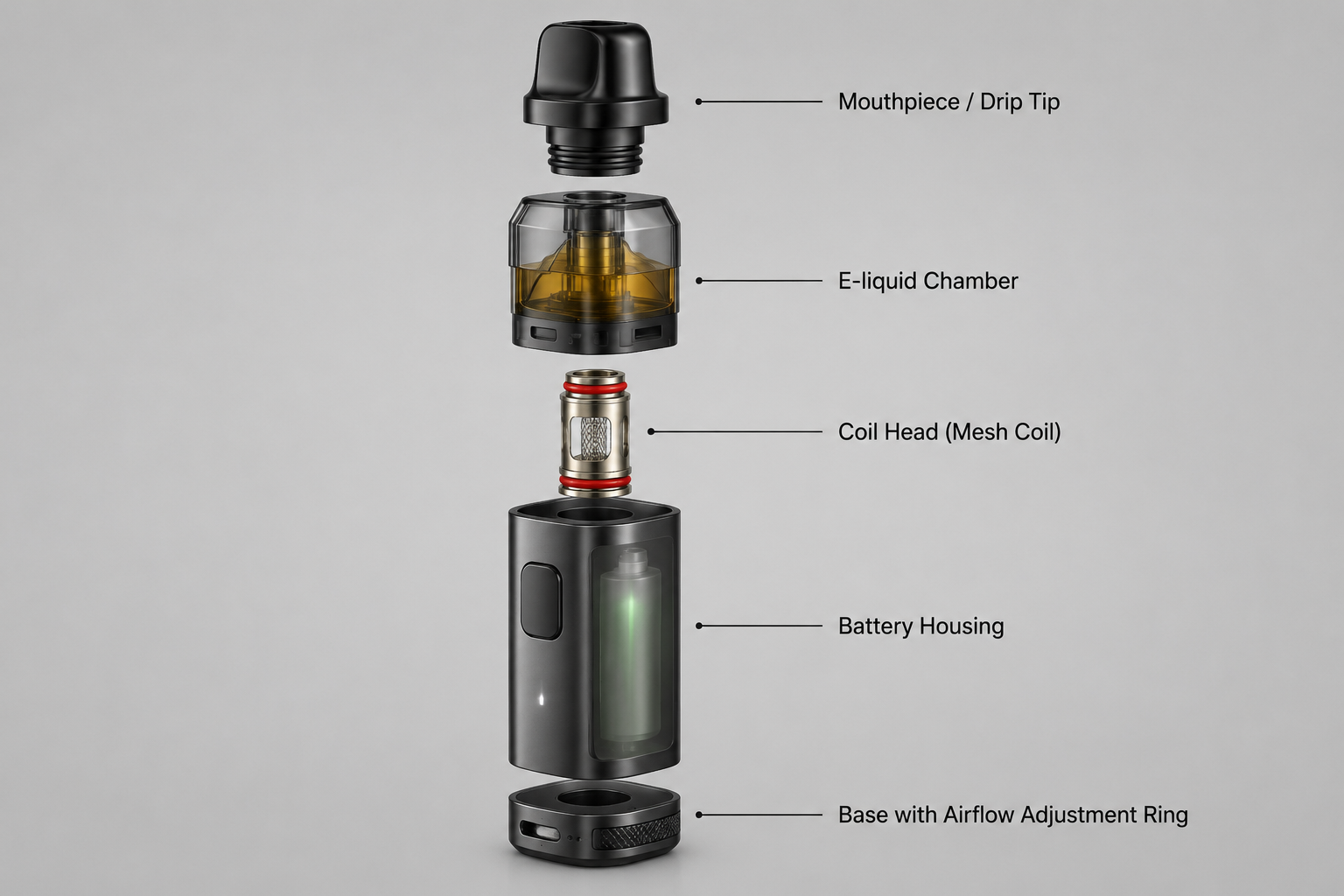
Here’s the short version: you press a button (or just inhale), a battery heats a coil that vaporizes the liquid, and you breathe in the vapor. There’s more going on under the hood though, and understanding how the components work together makes the whole thing much less intimidating.
Every electric cigarette has four main components. A battery powers everything, and most use rechargeable lithium-ion batteries ranging from 150mAh (tiny disposables) to 3,000mAh (big box mods), with higher mAh meaning longer use between charges. I’ve found that a 1,000mAh battery typically lasts me about a day of moderate use. An atomizer or coil is where the magic happens. It’s a small heating element, usually a wire wrapped around cotton or ceramic wicking material. When the battery sends power, the coil heats up to around 100-250°C (212-482°F). That’s hot enough to vaporize the liquid but nowhere near the 900°C of a burning cigarette.
The tank, cartridge, or pod holds the e-liquid, with capacities ranging from 0.5mL in tiny pods to 8mL+ in larger tanks. Some are pre-filled and disposable, while others you refill yourself. The mouthpiece is where you inhale, simple enough.
Absence of combustion is the key difference from smoking. When you light a cigarette, tobacco burns at around 900°C, creating tar, carbon monoxide, and thousands of chemicals including at least 70 known carcinogens. With an e-cigarette, you’re heating liquid rather than burning plant matter, which is why health authorities like the NHS say vaping is significantly less harmful than smoking. I think the best way to understand it is this: a cigarette is a tiny incinerator, while an e-cigarette is more like a humidifier. Both deliver nicotine, though they go about it in completely different ways, and that distinction matters for understanding the harm reduction potential.
Curious about other inhalation devices? Check out our guide on nectar collectors. They work on a similar heating principle, just for concentrates.
The Different Types of Electric Cigarettes
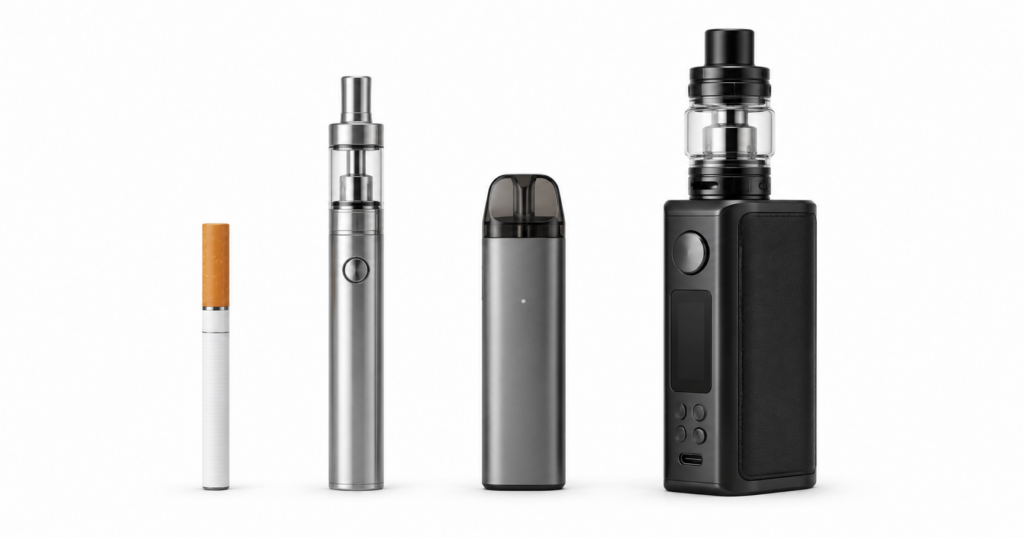
Not all e-cigarettes are the same. The market has evolved through several generations, and each type suits a different kind of user. The experience varies dramatically between types, from cigarette-like draws to massive cloud production.
Cigalikes were the first generation, designed to look like regular cigarettes with small batteries, low vapor output, and pre-filled cartridges. Brands like early Blu and NJOY dominated this space, and while they’re still around, most users have moved on to better options.
Vape pens are the second generation. These pen-shaped devices have refillable tanks and bigger batteries that offer a solid middle ground. They produce more vapor than cigalikes without the bulk of box mods, making them a good choice for beginners who want something simple.
Box mods are the enthusiast’s choice. These big rectangular devices feature replaceable batteries with variable wattage and temperature control for massive vapor production. Brands like SMOK, Voopoo, and GeekVape make popular ones, though they can be intimidating for new users.
Pod systems changed the market by offering compact devices that use nicotine salts for a smoother, stronger hit. JUUL kicked off this trend in 2017, and now brands like Vuse Alto and Caliburn dominate the category. They’re discreet and easy to use while delivering nicotine efficiently.
Disposables are the current market leader, accounting for 58.1% of US e-cigarette sales as of June 2024. These single-use, pre-filled devices require no maintenance, and brands like Geek Bar Pulse, Breeze Smoke, and RAZ offer anywhere from 600 to 100,000 puffs. They’re convenient, though they create a lot of waste.
Note: Device types and their features continue to evolve rapidly.
Here’s a quick comparison of the main types:
| Type | Battery | Refillable | Nicotine Type | Best For | Price Range |
|---|---|---|---|---|---|
| Cigalike | 150-300mAh | No | Freebase | Beginners quitting smoking | $10-30 |
| Vape Pen | 650-1,100mAh | Yes | Freebase | Intermediate vapers | $20-50 |
| Box Mod | 1,500-3,000mAh | Yes | Freebase | Enthusiasts | $40-150+ |
| Pod System | 350-1,000mAh | Some | Nic salts | Discreet/MTL vaping | $15-40 |
| Disposable | Built-in | No | Nic salts | Convenience/travel | $5-25 |
Wondering which disposable to start with? I’ve rounded up the best disposable vapes for this year. For those interested in pod-style devices, our Weed Carts Explained guide covers similar technology for cannabis concentrates.
How to Use an Electric Cigarette: A Beginner’s Guide
Using an e-cigarette isn’t complicated, though there are a few things I wish someone had told me before I started.
Step 1: Choose your device. Smokers looking to quit should start with a pod system or disposable because they deliver nicotine more efficiently and feel closer to smoking. Not a smoker and just curious? Start with a disposable at 0mg or low nicotine.
Step 2: Fill or activate. For disposables, just take it out of the package. For refillable devices, fill the pod or tank with e-liquid and wait about five minutes before using. The cotton wick needs time to absorb the liquid, and skipping this step will give you a dry, burnt hit. Skipping this step ruins the coil and the flavor.
Step 3: Inhale. Most modern devices are draw-activated, so you just put the mouthpiece to your lips and inhale, though some have a button you press while inhaling. The technique matters: take a slow, steady draw into your mouth first (mouth-to-lung, or MTL), then inhale into your lungs. It’s different from smoking a cigarette, where you inhale directly, and we’ve got a detailed guide on how to inhale a vape for the full breakdown.
Step 4: Adjust to your preference. Many devices let you adjust airflow or wattage. Tighter airflow gives a stronger throat hit (closer to smoking) while looser airflow produces more vapor with a smoother hit. Start in the middle and adjust from there.
Step 5: Maintain your device. Keep the tank clean, replace coils when flavor drops off (usually every 1-2 weeks), and charge the battery before it dies completely. For disposables, just use it until it’s empty and recycle it properly. For a complete walkthrough of proper vaping technique, see our how to vape correctly guide.
One thing beginners often overlook: don’t chain-vape. Give the coil a few seconds between puffs to re-saturate with liquid, otherwise you’ll burn the cotton and ruin the flavor. Different devices have different quirks and learning curves, so it helps to start with one type and learn its behavior before switching.
Electric Cigarettes vs Traditional Cigarettes: What’s the Difference?
Let’s get straight to the comparison between traditional cigarettes and e-cigarettes.
| Aspect | Traditional Cigarettes | E-Cigarettes |
|---|---|---|
| Combustion | Yes (burns at ~900°C) | No (heats at 100-250°C) |
| Tar | Yes (carcinogenic) | No |
| Carbon Monoxide | Yes | No |
| Known Carcinogens | 70+ | Significantly fewer |
| Secondhand Risk | Proven harmful | Limited evidence of harm |
The CDC states that e-cigarettes contain fewer harmful chemicals than cigarettes, though they’re not risk-free. The aerosol can contain heavy metals, volatile organic compounds, and other potentially harmful substances, just at much lower levels than cigarette smoke. Cancer Research UK puts it clearly: while no one should take up vaping without already smoking, the evidence shows vaping is far less harmful than smoking, and they also note there’s no good evidence that vaping causes cancer.
The Cochrane Review (2025) found high-certainty evidence that nicotine e-cigarettes are more effective for smoking cessation than nicotine replacement therapy (patches, gum). That’s a big deal for smokers who can’t quit with traditional methods. Dual use is worth mentioning here because using both cigarettes and e-cigarettes rather than fully switching actually has worse respiratory outcomes than using either alone. The goal should be complete substitution, not dual use. For common issues that arise when switching, check our guide on common vape problems and quick fixes.
For a smoker trying to quit, a pod system with nicotine salts (35-50mg for heavy smokers, 20-35mg for lighter smokers) works well because the hit is smoother and the nicotine delivery is faster. Someone who just wants to try vaping without quitting smoking should start with a lower-nicotine disposable or refillable pod system.
For more specialized devices, check out our guide to the best squonk mods for 2026 or the best dab pens and wax vapes if concentrates are more your thing.
Are Electric Cigarettes Safe? What You Should Know
No tobacco product is completely safe. Compared to smoking, however, e-cigarettes typically expose users to fewer toxic chemicals. Public Health England estimates vaping is about 95% less harmful than smoking, not because vaping is harmless but because smoking is extraordinarily harmful. One in two long-term smokers dies from a smoking-related disease, which puts the risk comparison into perspective.
Here’s what I’ve found about the specific risks, starting with nicotine addiction as the biggest concern. Nicotine is highly addictive and it harms adolescent brain development (which continues until about age 25), which is why health authorities strongly advise against vaping for young people and non-smokers. Respiratory effects are real though less severe than smoking, with some studies showing increased risk of asthma and COPD compared to non-use but significantly less than smoking. Cardiovascular effects are still being studied, with some evidence of increased heart failure risk, again less than smoking. Many people assume vaping is just as bad as smoking across the board, but the actual data tells a more nuanced story.
Cancer risk deserves a closer look. A 2025 review of 39 studies found no significant incident or prevalent cancer risk from vaping, which doesn’t mean zero risk though I find it reassuring. EVALI was a major concern in 2019, though it was linked to vitamin E acetate in illicit THC cartridges rather than nicotine vaping. That’s an important distinction that often gets lost in headlines. Battery safety is another real concern that I don’t think gets enough attention.
Lithium-ion batteries can explode if damaged or charged improperly. Use the charger that came with your device, don’t carry loose batteries in your pocket with coins or keys, and replace batteries if the wrap is damaged. The CDC’s health effects page has detailed information for deeper reading.
For those interested in vaping herbs rather than nicotine, I’ve covered the best herbs to vape in a separate guide.
Frequently Asked Questions About Electric Cigarettes
What is an electric cigarette and how does it work?
An electric cigarette is a battery-powered device that heats a liquid (e-liquid) into an aerosol that you inhale. It works by heating a coil that vaporizes the liquid, without burning tobacco. For a detailed breakdown of the different inhaling techniques these devices use, see our MTL vs DTL vs RDL guide.
An electric cigarette is a battery-powered device that heats a liquid (e-liquid) into an aerosol that you inhale. It works by heating a coil that vaporizes the liquid, without burning tobacco.
Are e-cigarettes safer than regular cigarettes?
Health authorities agree e-cigarettes are significantly less harmful than smoking. The UK’s Public Health England estimates they’re about 95% less harmful, though they’re not risk-free and they’re not recommended for non-smokers or youth.
Can e-cigarettes help you quit smoking?
Yes. A 2025 Cochrane review found that people using nicotine e-cigarettes to quit were up to twice as likely to succeed as those using nicotine replacement therapy like patches or gum.
Do e-cigarettes contain tobacco?
No. E-cigarettes contain nicotine (usually derived from tobacco plants), though they don’t contain tobacco leaf or produce tobacco smoke. The aerosol is fundamentally different from cigarette smoke.
What is in e-cigarette vapor?
The vapor is mainly propylene glycol, vegetable glycerin, nicotine (optional), and flavorings. It contains far fewer toxic chemicals than cigarette smoke, though it’s not harmless water vapor.
Is secondhand vape harmful?
There’s no good evidence that secondhand vapor is harmful to bystanders, unlike secondhand smoke. The NHS advises precaution around children, though the risk appears minimal.
What age can you buy e-cigarettes?
21 in the US (federal law), 18 in the UK and most of the EU. Photo ID is required for purchase in the US.
Can e-cigarettes explode?
It’s rare, though possible. Lithium-ion battery explosions usually result from improper charging or damaged batteries, or from using the wrong charger. Use the manufacturer’s charger and don’t carry loose batteries with metal objects.
Final Thoughts
Electric cigarettes aren’t a miracle solution, and they’re not for everyone. For the 82 million people who’ve made the switch from smoking though, these devices have provided a practical alternative that actually works. The evidence supports what many vapers already know: vaping is far less harmful than smoking, and it’s an effective tool for quitting. That said, don’t start vaping if you don’t already smoke, because the risks, even small ones, aren’t worth taking on, and parents should pay attention to youth vaping numbers.
For smokers looking to quit, the path is clearer than ever. Talk to your doctor, check out the NHS guidance, and find a device that works for you. The Wikipedia article on electronic cigarettes is also a solid resource for the full academic picture.
The most important takeaway: switching from smoking to vaping is one of the best things a smoker can do for their health. Finding the right device and using it correctly makes all the difference.
Nicotine is highly addictive. This article is for informational purposes only and is intended for adults 21+ only. Keep out of reach of children and pets.
Nicotine is highly addictive. This product is intended for adults 21+ only. Keep out of reach of children and pets.
⚠️ This product contains nicotine. Nicotine is an addictive chemical. You must be of legal age to purchase and use this product.




Build your vape knowledge
Read more guides
Find explainers, how-to articles and reference material.
Open guide library →Compare vape products
Check specifications across the product database.
Open product data →Read hands-on reviews
See tested devices and documented trade-offs.
Read review coverage →