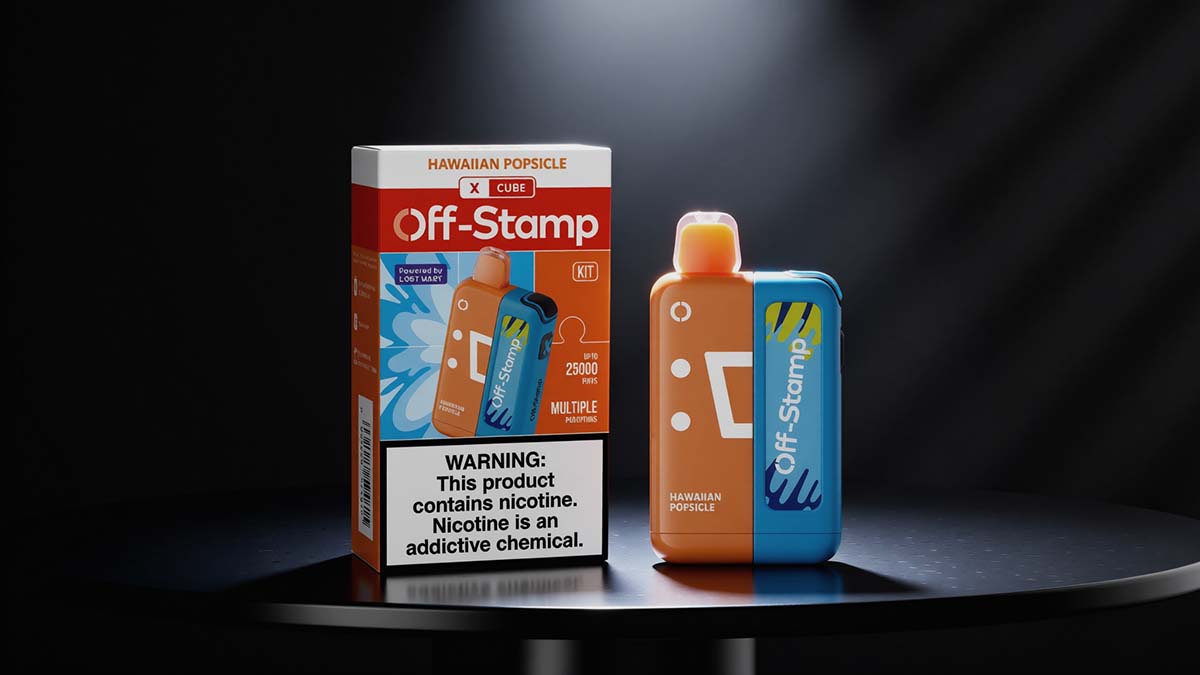

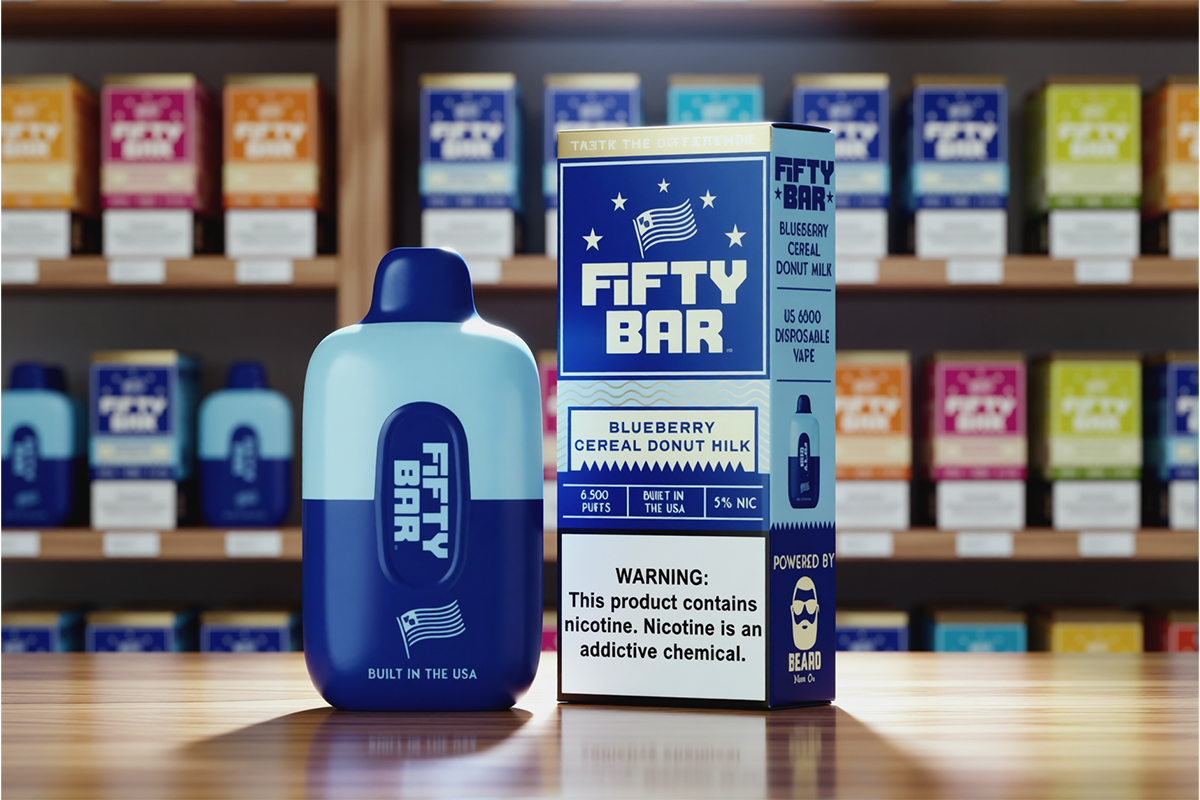
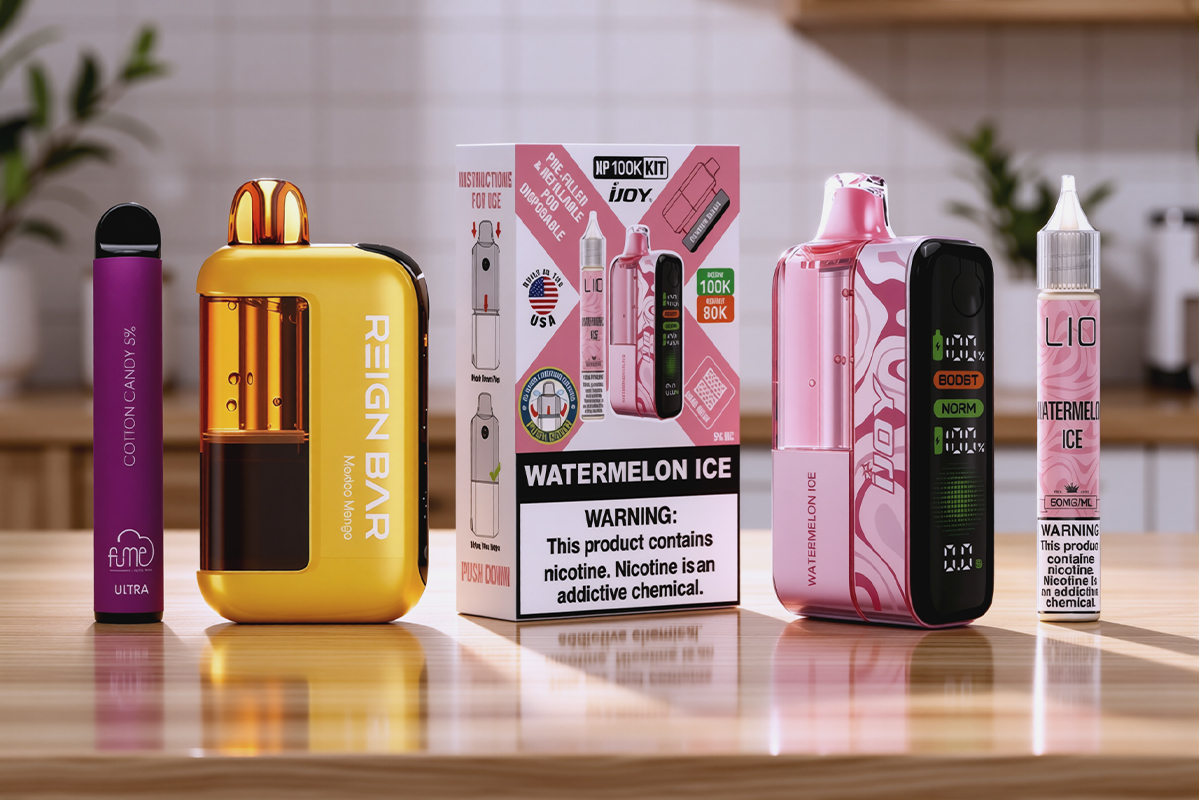
Have you walked into a vape shop or convenience store recently? You’ve probably noticed something weird: the shelves are still full of products that, technically speaking, the FDA never authorized. Elf Bars, Geek Bars, Lost Marys — they’re all there, despite having no PMTA approval. That disconnect between “illegal on paper” and “available everywhere” has been the open secret of the U.S. vape market for years.
On May 8, the FDA did something about it. Not by clearing the shelves — by rewriting the rules about what they’ll bother enforcing. Our FDA Authorized Vapes List tracks every product that’s made it through the process so far.
Under the new guidance, “Enforcement Priorities for Certain New Tobacco Products Marketed Without Premarket Authorization,” the FDA doesn’t authorize any new products. What it does is draw a line between products the FDA considers lower-risk (and will deprioritize enforcement against) and products it considers genuinely dangerous (and will crack down on). The result is a two-tier system that could reshape what’s available at your local store — and what disappears.
Here’s what changed, why it matters, and what it means for anyone buying, selling, or just watching the vape industry right now.
What the New Policy Actually Says
Before May 8, the FDA’s position was straightforward: having a PMTA under review didn’t give you a legal safe harbor. Your product was still unauthorized. The agency could come after you at any time.
That’s still technically true. The new guidance doesn’t change the law. What it changes is enforcement priority. (See our coverage of the fruit-flavored vape authorization that preceded this shift.)
Under the new policy, the FDA says it “generally does not intend to prioritize enforcement” against ENDS products and nicotine pouches that meet all of the following (official guidance document):
| Condition | Requirement | What This Means in Practice |
|---|---|---|
| 1. Accepted & Filed PMTA | Submitted on or after Nov 4, 2021 | The application cleared initial review — FDA found enough info for scientific review |
| 2. Timely Filing | Tobacco-nic: by Sep 9, 2020 / Synthetic-nic: by May 14, 2022 | Missing the deadline doesn’t auto-disqualify, though it matters |
| 3. No Red Flags | See below | Even with a qualifying PMTA, certain factors override enforcement discretion |
“Red flag” factors that can still trigger enforcement:
| Red Flag | Examples |
|---|---|
| Youth-appealing design or marketing | Cartoon characters, candy-like packaging, toy-shaped devices — see our Age-Gating Vape Technology analysis |
| High nicotine content | Concentrations raising public health concerns |
| Adverse events | Serious or unexpected reactions compared to authorized products |
| Missing child-resistant packaging | Failure to meet CPSC requirements |
| Fire hazards | Documented battery or thermal issues |
In plain English: products with a serious PMTA under review and nothing obviously sketchy going on? FDA probably won’t come after you. Slapping cartoon characters on mango-flavored disposables with no PMTA at all? Still a target.
What Changes on the Ground
Practical impact depends on who you are.
For major manufacturers with pending PMTAs (think Vuse, NJOY, Blu), this is basically a green light to keep selling while the FDA finishes its review. They’ve had applications in the pipeline for years. The new guidance formalizes what was already happening in practice.
For small and mid-size brands with accepted PMTAs, this is the real news. Companies that invested in the PMTA process and got past the acceptance stage now have more certainty that they won’t be hit with enforcement actions while they wait. That’s not a legal guarantee — the guidance is careful to say it doesn’t create “safe harbor” — then again, it’s meaningful in practice. I think this is the most consequential part of the whole guidance, because it finally rewards the companies that played by the rules instead of just selling first and asking forgiveness later.
For brands with no PMTA at all, nothing changes. They were always targets. They still are. The FDA emphasized it will continue “an aggressive strategy to stop illegal imports” and focus on “the most deceptive and dangerous products, worst actors, and egregious conduct.” Last year’s DOJ and FDA seizure of over 2 million unauthorized vapes shows what that looks like in practice.
For retailers, this is where it gets complicated. The guidance doesn’t tell stores what they can or can’t sell. That said, the FDA has said it will publish a public list of products that qualify for lower enforcement priority. Once that list drops, retailers will have a clearer idea of which products are “safe” to carry and which could get them a warning letter.
Here’s the complication: many states have their own PMTA directory laws with different eligibility criteria. A product that qualifies for federal enforcement discretion might not make a state’s approved list — and vice versa. Retailers will need to navigate both. Our Complete List of U.S. Flavor Restrictions breaks down the state-by-state landscape.
The $5 Million Question
You can’t talk about this policy shift without talking about what happened the week before.
| Date | Event |
|---|---|
| Apr 30 | Reynolds American donates $5M to Trump-backed super PAC MAGA Inc. (bringing total to $8M) |
| May 5 | FDA authorizes 4 Glas G2 pods — including “Gold” (mango) and “Sapphire” (blueberry), the first fruit flavors ever cleared |
| May 8 | FDA issues enforcement discretion guidance — deprioritizing enforcement against products with pending PMTAs |
| May 12 | FDA Commissioner Marty Makary resigns, telling associates he could not remain at the helm of an agency backing such a policy |
| May 20 | NYT reveals the Reynolds $5M donation, made ~1 week before the Glas authorization |
According to a White House spokesperson, the donation had “nothing to do with” the policy shift.
Yet the timeline speaks for itself. And it’s not the only connection: a Reynolds executive attended a White House dinner in October for donors who gave $2.5 million or more, and tobacco industry representatives at a separate lunch expressed dissatisfaction with how the FDA was regulating the industry.
Whatever scientific merit the policy itself may have, the process that produced it is under a cloud. What strikes me is how quickly all of this moved — from donation to authorization to guidance in under two weeks. That’s not how science-driven policy usually works.
What 10 Senators Want to Know
Political pushback came fast. Senators Richard Blumenthal (D-CT) and Jeff Merkley (D-OR) led a group of ten Democratic senators in sending a letter to Acting FDA Commissioner Kyle Diamantas, demanding the agency reverse its authorization of fruit-flavored e-cigarettes.
Their argument: “There is no scientific consensus that flavors provide a benefit to adults who want to quit using tobacco products, but there is clear data that proves flavored products draw in young people and that the tobacco industry intentionally markets flavored products to young people.”
Senators called the authorization “shortsighted and reckless.”
FDA’s counterargument hinges on the Glas device’s age-gating technology — a Bluetooth-connected system that requires biometric verification before the device can be used. The agency says this technology “is expected to effectively mitigate the ability of youth to use the product.”
Whether that’s enough to satisfy Congress — or the courts — remains to be seen.
The Three Things That Still Don’t Add Up
Setting aside the politics, the new enforcement framework has some internal tensions that are worth watching.
1. The “accepted and filed” cutoff creates a two-class system.
Products with PMTAs submitted before November 4, 2021 — under the old, less rigorous review framework — apparently don’t qualify for lower enforcement priority. That’s a lot of products. The guidance creates a dividing line: new applications that went through the more demanding process get a break; older applications don’t. Some companies that were first to file may actually be worse off than those who waited.
2. State directories and federal discretion don’t always align.
At least 12 states have their own PMTA directory laws. North Carolina, Florida, and Wisconsin use directory systems that only allow products on an approved state list. Texas uniquely bans Chinese-made disposable products. These state criteria don’t always match the FDA’s new enforcement discretion criteria. A product could be low-priority for federal enforcement yet illegal in your state — or the reverse.
3. The youth-appeal standard is still vague.
Under the guidance, products marketed in ways that appeal to youth won’t get enforcement discretion. Except — what counts as “youth-appealing”? Cartoon characters are obvious. What about bright colors? Fruit flavor names? Social media marketing? Until the FDA publishes its list and starts making specific enforcement decisions, this standard is a gray zone.
What This Means for You
Consumers wondering whether their vape is about to disappear — here’s the short version:
| Product Category | Example Brands | Enforcement Risk | Practical Outlook |
|---|---|---|---|
| FDA-authorized products | JUUL, NJOY, Vuse, Logic, Glas (45 total) | None — marketing granted orders | Safe, not going anywhere |
| Products with accepted PMTAs | Various mid-size brands | Low — deprioritized | Probably fine, though no guarantee |
| Products with no PMTA at all | Most illicit disposables (Elf Bar, etc.) | High — primary enforcement target | Living on borrowed time |
| State-banned products | Varies by state | Depends on state law | Federal discretion doesn’t override state bans |
Retailers: wait for the FDA’s public list before making big inventory changes. Cross-reference it with your state’s directory.
The Bigger Picture
This policy shift didn’t happen in a vacuum. It’s part of a broader realignment in how the U.S. approaches nicotine regulation — one that’s moving away from the “all flavors are bad” posture that defined the Biden-era FDA and toward a more nuanced, harm-reduction-adjacent framework.
That’s not universally welcomed. Public health organizations like the Campaign for Tobacco-Free Kids argue that any softening on flavors puts kids at risk. Researchers like Stanton Glantz at UCSF maintain that the evidence shows flavored vapes increase, not decrease, net harm.
On the other side, harm reduction advocates point to the Cochrane Review’s high-certainty evidence that e-cigarettes help people quit smoking, and argue that restricting adult access to flavors drives smokers back to cigarettes — or to the illicit market.
Truth is probably somewhere in the middle. And the FDA’s new enforcement discretion framework, messy and political as its origins may be, is an attempt to occupy that middle ground: crack down on the worst actors, give a break to companies playing by the rules, and try to keep kids away from products designed for adults.
Whether it works depends entirely on implementation. A guidance document is just words until the FDA starts making real decisions about which products to target and which to leave alone. I keep coming back to one question: will the FDA actually publish that list of qualifying products, and will it be updated fast enough to matter? The next six months will tell us whether this is a genuine policy shift or just a rhetorical one.
Internal Chaos: FDA Staffers Were Blindsided
The political timeline tells one story. What happened inside the FDA tells another.
According to an Associated Press investigation published in June 2026, senior officials in the FDA’s Center for Tobacco Products (CTP) were blindsided by the enforcement discretion guidance. Staffers tasked with enforcing vaping regulations were not consulted on the changes and only learned of them the night before the document was published.
The document’s sudden appearance sparked internal confusion about how the policy came about and who authorized it. In the days following, agency officials convened hours-long meetings grappling with how to implement the six-page memo, which breaks with longstanding FDA policy requiring scientific verification of health benefits before any new products are introduced.
It is highly unusual for the FDA to draft new policies without input from the staffers who oversee enforcement. The AP reported that the guidance was posted days before former FDA Commissioner Marty Makary resigned — a timeline that suggests the policy was pushed through at the highest levels, bypassing normal internal review processes.
Former FDA tobacco director Brian King, now with the Campaign for Tobacco-Free Kids, described the shift as “a broader opening up and responsiveness to flavored products by the agency both in terms of a stronger appetite for authorization but also less appetite to take enforcement action against flavored products.”
For context on how this fits into the broader regulatory landscape, see our coverage of the FDA’s first fruit-flavored vape authorization and the Zest Brands injunction against FDA.
Frequently Asked Questions
Does this new guidance make my vape legal?
No. The guidance doesn’t authorize any products. It just tells FDA staff which unauthorized products to prioritize for enforcement and which to deprioritize. Products without PMTA authorization are still technically illegal.
What products are most at risk of FDA enforcement?
Disposable vapes with no PMTA at all — especially those with youth-appealing designs, cartoon packaging, or candy-like flavor names. These remain the FDA’s primary enforcement targets.
Will the FDA publish a list of products that get enforcement discretion?
Yes, the agency has committed to publishing a public list. As of late May 2026, that list hasn’t appeared yet. Once it does, retailers and consumers will have a much clearer picture.
Does federal enforcement discretion override my state’s laws?
No. State PMTA directory laws and flavor bans still apply. A product that the FDA deprioritizes for enforcement can still be illegal under state law. Check your state’s directory.
This article is for informational purposes only and does not constitute legal or medical advice. All nicotine products carry health risks. Don’t use tobacco products? Don’t start.

Kevin Li — Founder & Editor, VapeObservation.com Kevin reviews vape products hands-on, prioritizing real-world performance over manufacturer claims. His goal: honest, practical advice that helps everyday vapers make informed choices. Before launching VapeObservation, he was a longtime vaper frustrated by promotional content disguised as reviews. Every article on the site reflects his commitment to data-driven, reader-first testing.