

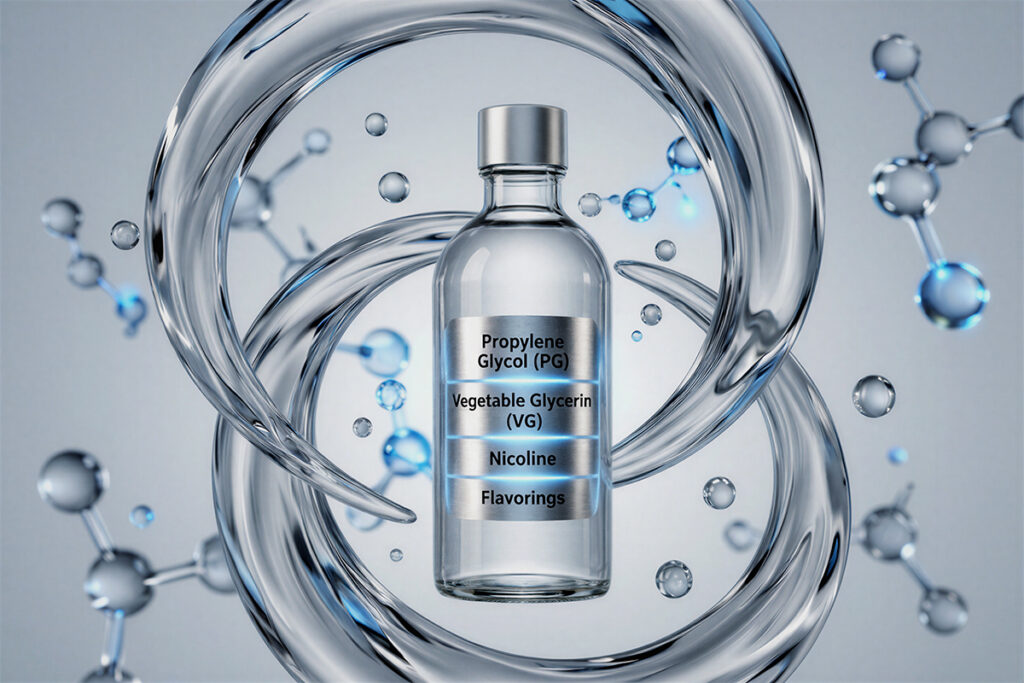
I remember being surprised when I found out how simple the ingredient list actually is. Vaping gets talked about like it’s some kind of chemistry experiment. The reality is far less dramatic. What matters is understanding what each ingredient does and what happens when they’re heated. That’s where the real conversation starts.
One thing that changed recently: the FDA added PG and VG to its Harmful and Potentially Harmful Constituents list in April 2026 (FDA HPHC list). Not because PG and VG are dangerous on their own. Because they can form harmful byproducts like formaldehyde and acrolein when they overheat or degrade. Fresh juice on a good coil is a different story from burnt juice on an old coil. We’ll get into that.
Ingredient 1: Propylene Glycol (PG)
PG is a thin, colorless liquid that carries flavor well and produces a throat hit similar to smoking. It’s the ingredient that makes vape juice feel like something you’re inhaling rather than just breathing in air.
You’ve encountered PG before, even outside vaping. It’s used in asthma inhalers, nebulizers, food coloring, vanilla extract, and stage fog machines. The FDA has classified it as “generally recognized as safe” for food and pharmaceutical use for decades. Different context than inhaling it, to be clear, but the safety profile is well-established for ingestion.
What PG does in your juice:
- Carries flavor more effectively than VG
- Creates the throat hit that mimics smoking
- Keeps the juice thin enough to wick in small devices
- Has a slightly sweet taste on its own
What PG doesn’t do: produce big clouds. PG vapor is thin and dissipates fast. Want clouds? That’s VG’s job. Our PG vs VG guide explains how the ratio between these two affects your entire vaping experience.
A small percentage of people are sensitive to PG. Symptoms include sore throat, dry mouth, or mild irritation. Switching to a high-VG juice usually fixes it. Some vapers use 100% VG for this reason.
Ingredient 2: Vegetable Glycerin (VG)
VG is thicker, sweeter, and produces the thick clouds that DTL vapers love. It’s derived from vegetable oils (usually soy, coconut, or palm) and is also widely used in food, cosmetics, and pharmaceuticals.
What VG does in your juice:
- Produces dense, visible vapor clouds
- Adds a natural sweetness to the liquid
- Creates a smoother throat hit compared to PG
- Makes the juice thicker (which affects wicking)
The thickness is a double-edged sword. High-VG juice creates great clouds, yet it doesn’t wick well in small pod devices with tight wicking holes. Put 70/30 VG/PG in a tiny pod and you’ll get dry hits within an hour. That’s why most pod juice is 50/50 and most sub-ohm juice is 70/30 or higher.
VG on its own doesn’t carry flavor as well as PG. That’s why you rarely see 100% VG juice with complex flavor profiles. The sweetness of VG can also mute certain flavor notes, especially tart or sour ones.
Ingredient 3: Nicotine
Nicotine is optional. Plenty of vapers use 0mg juice. For those who want it, nicotine comes in two forms that behave very differently.
Freebase nicotine is the traditional form. It’s alkaline, which means it hits the throat harder at higher strengths. That throat hit is why some smokers prefer freebase when they first switch. Freebase strengths typically range from 0mg to 18mg, with 3mg and 6mg being the most popular for sub-ohm vaping.
Nicotine salts are created by adding benzoic acid to freebase nicotine. This lowers the pH and makes the nicotine absorb faster and feel smoother. You can vape 20mg nic salt and barely feel it in your throat, whereas 20mg freebase would be harsh. Nic salts are the go-to for pod vapers and anyone switching from cigarettes.
The nicotine strength you choose should match your device and your smoking history. Heavy smokers switching to a pod? 20mg nic salt. Light smokers on a sub-ohm kit? 3 to 6mg freebase. Our nic salt vs freebase guide covers this in detail, and our e-liquid choosing guide has a strength-by-smoking-level table.
One thing people get wrong: nicotine is not what causes cancer in cigarettes. It’s addictive, yes. The carcinogens in smoking come from combustion and the thousands of chemicals in tobacco smoke, not from nicotine itself. Public Health England has stated that vaping is around 95% less harmful than smoking, and that assessment factors in nicotine use.
Ingredient 4: Flavorings
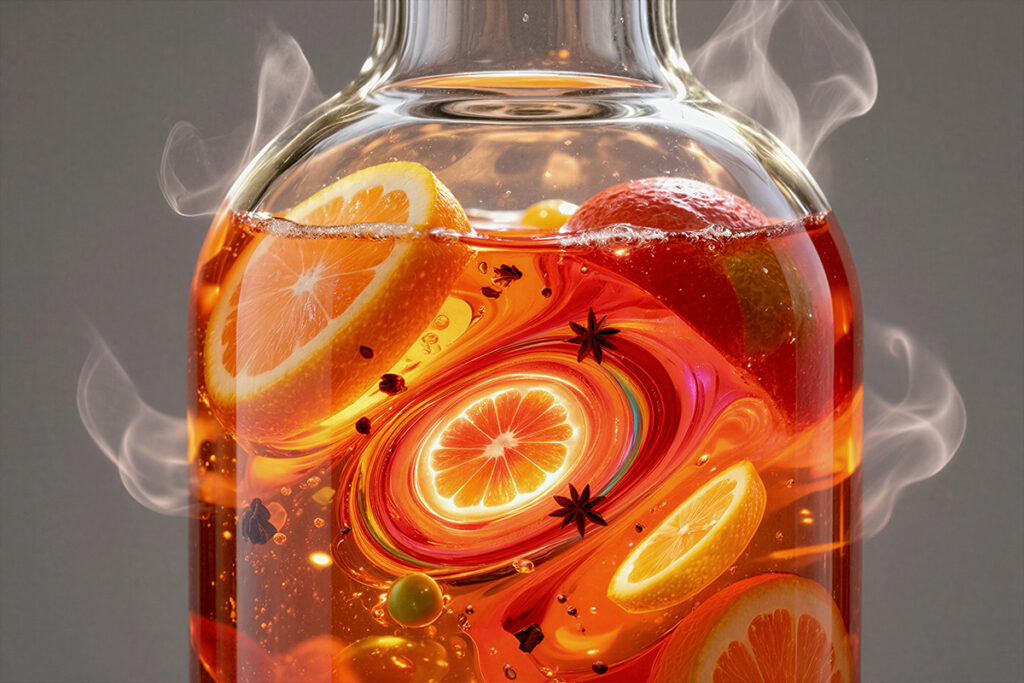
Flavorings are the wildcard. They’re also the least regulated ingredient in vape juice. Most e-liquid flavorings are food-grade, meaning they’ve been approved for eating, not for heating and inhaling. That distinction matters.
Common flavor categories include fruit, dessert, menthol, tobacco, and beverage. Each flavor is a blend of multiple chemical compounds. A “strawberry” flavor might contain a dozen different molecules that together create that taste.
What we know:
- Most food-grade flavorings appear safe at the concentrations used in e-liquid
- Some flavoring compounds (like diacetyl) have known inhalation risks and reputable brands avoid them
- Flavorings are the main source of variation between brands, both in taste and in chemical composition
What we don’t know: the long-term effects of inhaling heated food-grade flavorings. Eating a strawberry-flavored candy is not the same as vaporizing that flavor compound and breathing it into your lungs. The research is ongoing.
Buy from brands that publish lab reports and test for diacetyl, acetyl propionyl, and acetoin. Reputable manufacturers avoid these compounds. Cheap, untested juice from unknown sources is where the real risk lives.
Research published in PubMed in 2024 showed that PG/VG aerosols can affect airway inflammation and mucus production in cellular studies, highlighting the need for continued research on the inhalation effects of e-liquid base ingredients.
What About the FDA 2026 HPHC Update?
The FDA’s April 2026 decision to add PG and VG to the Harmful and Potentially Harmful Constituents list caused confusion. Some headlines made it sound like PG and VG themselves are toxic. They’re not.
The concern is about thermal decomposition. When PG and VG are heated above their safe range or when juice degrades over time, they can form formaldehyde, acrolein, and other aldehydes. These byproducts are harmful. A study published in Nature documented formaldehyde formation at very high voltages on dry coils.
A 2025 PubMed review confirmed that the primary health concern with PG/VG inhalation is thermal degradation byproducts formed at high temperatures, rather than the base compounds themselves.
What this means in practice:
- Use fresh juice, not expired or discolored liquid (check our expiration guide)
- Replace coils when flavor drops or tastes burnt
- Don’t push your device beyond its rated wattage
- Store juice properly, away from heat and light
The American Lung Association has flagged these breakdown products as a health concern (ALA on vape ingredients). Their position is clear: fresh, properly used juice is lower risk than degraded or overheated juice.
What Is NOT in Vape Juice
Let’s clear up some common myths.
Water. Vape juice is not water-based. Some juices contain tiny amounts of distilled water (1 to 2%) to thin high-VG blends, but water is never a primary ingredient. The vapor you exhale is not water vapor. It’s aerosolized PG, VG, nicotine, and flavorings.
Tobacco. No tobacco leaf, no tobacco extract (in most e-liquids). The nicotine in vape juice is pharmaceutical-grade, extracted and purified. It’s the same nicotine used in patches and gum. Some tobacco-flavored juices use flavor compounds to mimic the taste, not actual tobacco. Our article on whether vapes contain tobacco goes deeper.
Diethylene glycol. This one comes from a single 2009 FDA study that found trace amounts in one cartridge. No reputable e-liquid has contained diethylene glycol since. It was a contamination issue, not an ingredient.
Vitamin E acetate. This was the culprit behind the EVALI lung injuries in 2019. It was found in illicit THC cartridges, not in legitimate nicotine e-liquid. Completely different product category.
Frequently Asked Questions
What are the main ingredients in vape juice?
Four ingredients: propylene glycol (PG), vegetable glycerin (VG), nicotine (optional), and flavorings. That’s the complete list for standard e-liquid.
Is vape juice just water vapor?
No. The aerosol produced by vaping contains PG, VG, nicotine, flavoring compounds, and trace amounts of thermal byproducts. It’s not water vapor, and calling it that is misleading.
Are vape juice ingredients safe?
PG and VG are widely used in food and medicine with well-established safety profiles for ingestion. Inhaling them is a different exposure route. Fresh juice on a functioning device is considered lower risk. Degraded juice on old coils can produce harmful byproducts. Buy from brands that test their products.
Can you vape without nicotine?
Yes. 0mg juice contains only PG, VG, and flavorings. Many vapers gradually reduce their nicotine to zero. See our guide on nicotine-free vape safety for more details.
What is diacetyl and is it in vape juice?
Diacetyl is a buttery flavoring compound linked to a condition called bronchiolitis obliterans (“popcorn lung”) when inhaled in large amounts. Reputable e-liquid manufacturers avoid it. Cheap, untested brands might not. Always check for lab reports.
Does vape juice contain antifreeze?
No. PG is sometimes used in non-toxic antifreeze formulations, which is where this myth comes from. PG is also in your ice cream and your asthma inhaler. Sharing an ingredient with antifreeze doesn’t make something dangerous.
How can I tell if a vape juice is high quality?
Look for: childproof caps, batch numbers, expiration dates, ingredient lists, and third-party lab reports. Brands that are transparent about their ingredients and testing are generally safer bets. Avoid anything with no label information at all.



Build your vape knowledge
Read more guides
Find explainers, how-to articles and reference material.
Open guide library →Compare vape products
Check specifications across the product database.
Open product data →Read hands-on reviews
See tested devices and documented trade-offs.
Read review coverage →