

Why Airflow Matters More Than You Think
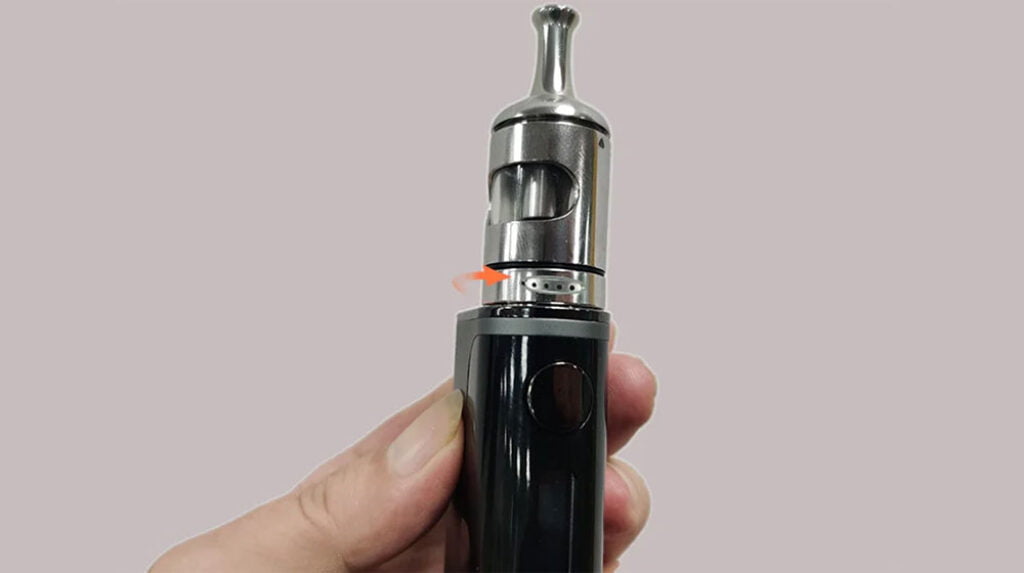
That little ring on your tank? It controls more about your vape than the wattage dial does. Airflow decides whether your draw feels like a cigarette or a hookah, whether you taste every note of the e-liquid or just blow clouds, and whether your throat gets a satisfying hit or a harsh burn. Most people set it once and forget it. That is a mistake.
Airflow is the volume of air that mixes with vaporized e-liquid on its way from the coil to your mouth. More air cools the vapor, dilutes the flavor, and increases cloud size. Less air concentrates the flavor, warms the vapor, and tightens the draw. The right setting depends on your device, your coil, your nicotine strength, and what you want out of the experience. A 2024 study in Nature Scientific Reports on e-cigarette aerosol dynamics confirmed that airflow rate directly affects particle size distribution in the inhaled aerosol, which in turn affects nicotine deposition in the respiratory tract.
How Airflow Actually Works
When you draw on a vape, air enters through intake holes, passes over or through the coil, picks up vaporized e-liquid, and travels through the chimney and drip tip to your mouth. The airflow control (usually a rotating ring with slots, or a slider) adjusts how much air enters by partially or fully blocking those intake holes.
Here is what changes when you adjust it:
| Airflow Setting | Vapor Temp | Flavor | Cloud Size | Throat Hit | Best For |
|---|---|---|---|---|---|
| Fully closed / tight | Warm | Concentrated | Small | Strong | MTL, high-nic salt |
| Half open | Moderate | Balanced | Medium | Moderate | RDL, mid-nic |
| Fully open | Cool | Diluted | Large | Mild | DTL, low-nic freebase |
Match Your Airflow to Your Vaping Style
Mouth-to-Lung (MTL): Tight Airflow
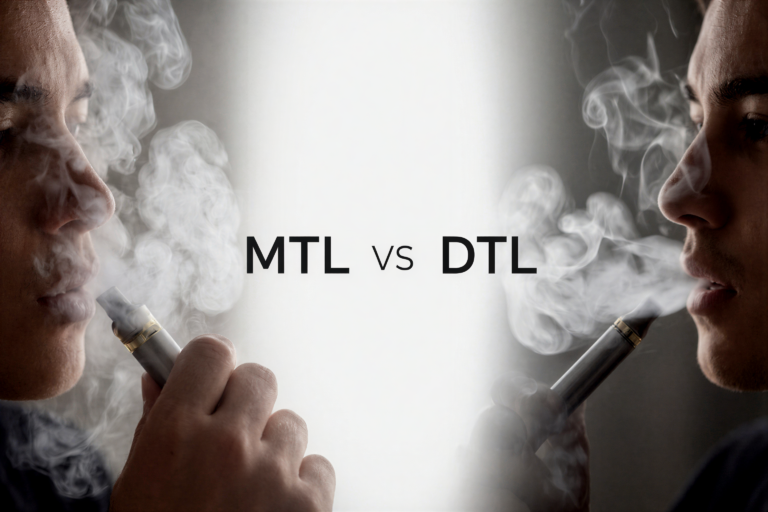
If you are switching from cigarettes or using a MTL device, you want the airflow nearly closed. A tight draw mimics the resistance of a cigarette. You pull vapor into your mouth first, pause, then inhale. The restricted airflow concentrates the vapor, giving you more flavor per puff and a stronger throat hit. This matters because MTL devices use high-nicotine salt e-liquids (3-5% or 30-50 mg/mL), and a strong throat hit at those concentrations would be uncomfortable with open airflow.
Typical MTL airflow settings: 1-2 slots open, or ring turned 90-120 degrees from fully closed. Coil resistance is usually 0.8 ohm and above. For more on MTL technique, see our beginner vaping guide.
Direct-to-Lung (DTL): Wide Open Airflow
DTL vaping is like taking a deep breath through the device. You pull vapor straight into your lungs without holding it in your mouth. This requires the airflow wide open. The coil is low resistance (sub-ohm, typically 0.15-0.5 ohm), running at higher wattage (30-100W+), producing a lot of vapor. Without generous airflow, that much vapor would be extremely hot and harsh. The tradeoff is that open airflow dilutes flavor and reduces throat hit. That is fine for DTL because you are using low-nicotine freebase e-liquid (0-6 mg/mL).
Typical DTL airflow settings: all slots open, ring fully open. For a complete guide, see our MTL vs. DTL vs. RDL guide.
Restricted Direct-Lung (RDL): The Middle Ground
RDL sits between MTL and DTL. You inhale directly into your lungs, but the draw is tighter than full DTL. Airflow is about halfway open. RDL gives you more flavor than DTL and more vapor than MTL, with a moderate throat hit. Many modern pod systems with adjustable airflow are designed for RDL. Coil resistance is typically 0.4-0.8 ohm. Nicotine strength is usually 6-20 mg/mL salt or 3-12 mg/mL freebase.
How to Find the Airflow Control on Your Device
Not every device has adjustable airflow. Here is where to look:
| Device Type | Airflow Control Location | Adjustable? |
|---|---|---|
| Disposable vape | Bottom of device (some models) or fixed | Some (e.g. Elf Bar BC10000), most are fixed |
| Pod system (closed) | Fixed, built into the pod | No (pods are preset) |
| Pod system (refillable) | Slider on the pod or base of device | Yes (slider or ring) |
| Vape pen | Rotating ring at the base of the tank | Yes (rotating ring) |
| Box mod / sub-ohm tank | Rotating ring at the base of the tank, sometimes dual-slot | Yes (rotating ring, often with multiple hole sizes) |
| Billet / AIO | Slider or lever on the side of the device | Yes (slider or lever) |
On most tanks, the airflow ring sits at the base and has a series of holes or slots. Rotate it clockwise or counterclockwise to open or close. Some high-end tanks have two separate airflow controls: one for the coil and one for the drip tip, giving you separate adjustment for draw resistance and vapor temperature.
Step-by-Step: Adjusting Your Airflow
- Start with the airflow halfway open. This gives you a baseline. You can tighten or loosen from there.
- Take a draw. Notice the draw resistance, vapor temperature, and flavor. Is it too tight? Too airy? Too warm? Too cool?
- Adjust in small increments. Rotate the ring one or two clicks (or move the slider a few millimeters). Do not go from fully closed to fully open in one move.
- Take another draw. Compare. Repeat until you find the sweet spot.
- Match airflow to your nicotine level. If you are using 5% salt nic, you need tight airflow. If you are using 3 mg/mL freebase, open it up. Running wide-open airflow with high nicotine will feel like nothing on the throat but may deliver too much nicotine per draw. Running tight airflow on a sub-ohm DTL coil will give you a burnt, harsh hit because the coil needs air to stay cool. For nicotine guidance, see our nicotine strength guide.
- Re-adjust when you change e-liquids. A 70/30 VG/PG juice flows differently than a 50/50 blend. Thicker juice (high VG) benefits from slightly more airflow; thinner juice (high PG) works well with tighter settings.
Airflow and Common Vape Problems
Getting the airflow wrong causes most of the problems beginners run into. Here are the big three:
Leaking from the Airflow Holes
If e-liquid seeps out of the airflow slots, you usually have one of these issues: the airflow is too open for the coil you are using, the tank is overfilled, or the coil is not seated properly. High-VG e-liquids are thicker and less likely to leak than thin high-PG juices. Closing the airflow slightly when not vaping can also help. For more fixes, see our common vape problems guide.
Spitback (Hot E-Liquid Popping into Your Mouth)
Spitback happens when the coil floods with too much e-liquid and the heat causes it to pop and splatter. Opening the airflow slightly can help by creating more airflow over the coil, which vaporizes the excess liquid instead of letting it pool. Also check that your wattage is not too low for the coil. A 2020 study in Chemical Research in Toxicology found that insufficient wicking combined with low power settings leads to incomplete aerosolization, which is the root cause of both spitback and dry hits.
Dry or Burnt Hits
A dry hit tastes like burnt cotton. It usually means the wick is not getting enough e-liquid, or the airflow is too open for the amount of juice the coil can wick. With very open airflow, you draw more vapor per second, which can outpace the wick’s ability to supply e-liquid. Try closing the airflow slightly or lowering your wattage. For a full fix guide, see our burnt taste guide.
Airflow, Coil Resistance, and Wattage: How They Connect
These three variables are linked. Change one and you may need to adjust the others.
| Coil Resistance | Wattage Range | Airflow | Nicotine | Style |
|---|---|---|---|---|
| 1.0-1.6 ohm | 8-15W | Tight (1-2 slots) | 3-5% salt nic | MTL |
| 0.6-0.9 ohm | 12-25W | Medium (half open) | 6-20 mg/mL salt | RDL |
| 0.15-0.5 ohm | 30-100W+ | Wide open | 0-6 mg/mL freebase | DTL |
The general rule: lower resistance needs more power and more airflow. If you try to run a sub-ohm coil at high wattage with tight airflow, the vapor will be too hot and the coil will burn through e-liquid faster than the wick can supply it. If you run a high-resistance coil with wide-open airflow, the draw will feel empty and unsatisfying because the coil is not producing enough vapor to fill the airflow channel. For more on coil selection, see our how to vape guide.
FAQ: Vape Airflow
Should I vape with the airflow open or closed?
It depends on your setup. If you are using a pod system with salt nic, close it down for a tighter MTL draw. If you are on a sub-ohm tank with freebase, open it up for DTL. The wrong airflow for your coil and nicotine combination will give you a bad experience, period.
Why does my vape feel airy with no flavor?
The airflow is probably too open for your coil. Try closing it a few clicks. More air dilutes the vapor, which dilutes the flavor. A tighter draw concentrates the aerosol and gives you more taste per puff. This is especially noticeable on pod systems where the airflow slider is set to the DTL position but you are using a high-resistance MTL coil.
Can too much airflow cause leaking?
Indirectly, yes. Very open airflow can cause pressure changes in the tank that push e-liquid out through the airflow holes. This is more common with sub-ohm tanks. Closing the airflow slightly when you are not vaping can help. Also make sure the coil is screwed in tightly and the tank is not overfilled.
Does airflow affect nicotine absorption?
Yes. A study in Nicotine & Tobacco Research found that aerosol particle size, which is influenced by airflow rate, affects where nicotine deposits in the respiratory tract. Tighter airflow produces smaller particles that tend to deposit deeper in the lungs, while wider airflow produces larger particles that deposit more in the upper airways. The practical effect: the same nicotine concentration can feel different depending on your airflow setting.
Why does my vape gurgle?
Gurgling means there is excess e-liquid in the airflow channel. This usually happens when the airflow is too tight for the coil (causing condensation) or the tank has been overfilled. Remove the pod or tank, blow through the airflow holes to clear the liquid, and adjust the airflow slightly more open. For more troubleshooting, see our common vape problems guide.
Does closing the airflow save e-liquid?
Yes. Tighter airflow means you produce less vapor per draw, which means you consume less e-liquid per session. A sub-ohm tank at 80W with the airflow wide open can go through 5-10 mL per day. The same tank with the airflow half-closed might use 3-5 mL. The tradeoff is less cloud production and a warmer vape. For more on vape costs, see our vape cost guide.


Build your vape knowledge
Read more guides
Find explainers, how-to articles and reference material.
Open guide library →Compare vape products
Check specifications across the product database.
Open product data →Read hands-on reviews
See tested devices and documented trade-offs.
Read review coverage →