

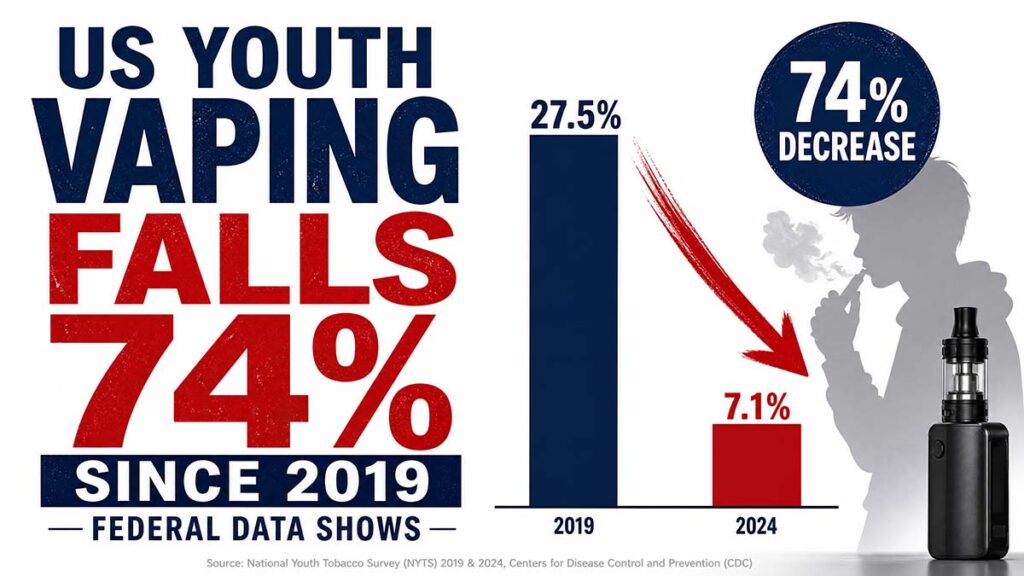
U.S. youth vaping has fallen 74% since 2019, according to federal data published this week, with a longitudinal study finding that most adolescent experimentation does not persist into regular use.
The figures, drawn from national survey data, show a steady decline over five years. A separate longitudinal study tracking adolescent vaping behavior found that the majority of young people who try e-cigarettes do not continue using them long-term.
The findings challenge the “youth vaping epidemic” framing that has driven restrictive U.S. vaping policy since 2018, when FDA enforcement actions intensified following surges in teen e-cigarette use. Youth vaping peaked in 2019 at nearly 28% among high school students, according to the National Youth Tobacco Survey.
Public health researchers have noted that the decline coincides with both regulatory measures, including flavor restrictions and state-level bans, and broader shifts in adolescent behavior. Youth smoking has also continued its decades-long decline.
The data arrives as the FDA continues reviewing premarket tobacco product applications under its updated enforcement policy. In May, the agency issued guidance granting enforcement discretion for certain products with pending applications, a move that retail groups have cited in pushing back against payment processor restrictions.
Researchers said the longitudinal findings suggest that experimentation patterns among teens differ from adult vaping behavior, where products are often used for smoking cessation. The distinction has policy implications: measures designed to prevent youth initiation may differ from those appropriate for adult harm reduction.
The data also comes amid international debate over nicotine policy. The EU Parliament recently rejected nicotine tax proposals, while the UK has moved to restrict disposable vapes amid concerns about youth uptake.
Sources:




Follow the wider vape market
Read the latest vape news
Track regulation, launches and industry updates.
Open vape news →Browse product data
Move from market news to device specifications.
Open product data →Check product reviews
Read independent testing and comparison reports.
Read review coverage →