

Popular Vaping Subcultures in 2026: Cloud Chasers, Trick Artists & More
Vaping subcultures have exploded far beyond what anyone predicted when the first e-cigarettes hit the market. What started as a smoking alternative has splintered into a whole landscape of communities, each with its own language, aesthetics, equipment obsessions, and social hierarchies. Whether you’re blowing massive clouds at a competition, hunting for the next limited-edition disposable, or carefully measuring flavor concentrates in your kitchen, there’s a vaping subculture that feels like home.
In this guide, I’m breaking down the major vaping subcultures that define 2026. From the competitive world of cloud chasing to the surprisingly crafty DIY mixing scene, from disposable vape culture to the nicotine pouch crossover that’s changing how people think about nicotine itself, we’ll cover what makes each community tick, who’s in it, and how regulations and social media are reshaping all of them.
Why Vaping Subcultures Matter
Here’s the thing about vaping that most outsiders miss: it was never just about quitting smoking. For millions of people, vaping became a gateway to community, identity, and creative expression. The vaping subcultures we see in 2026 are proof of that. Each one has its own forums, influencers, slang, meetups, and unspoken rules about what counts and what doesn’t.
Understanding vape culture matters because it tells us where the industry is heading. The subcultures drive innovation. Cloud chasers pushed mod manufacturers to build better hardware. Flavor enthusiasts created demand for premium e-liquids. Disposable vape culture reshaped the entire retail landscape. And DIY mixers have been quietly influencing commercial flavor development for years.
These communities also matter because they’re at the front lines of regulation. When the UK banned single-use disposables in June 2025, it didn’t just change what products were on shelves. It disrupted an entire social ecosystem of haul posts, flavor reviews, and collectible culture. When TikTok cracks down on vape content, it doesn’t eliminate the community. It pushes it somewhere else, usually somewhere harder to monitor.
So let’s get into it. Whether you’re curious about how to vape or you’ve been in the game for years and want to understand the bigger picture, this breakdown of vaping subcultures has you covered.

Cloud Chasers: Where Vapor Becomes Competition
Cloud chasing is probably the most visually dramatic vaping subculture out there. It started around 2012, when hobbyists began experimenting with low-resistance builds and high-wattage setups to produce the biggest, densest clouds possible. What began as informal contests at vape shops and meetups has evolved into organized competition with real prize money and sponsorships.
How Cloud Chasing Competitions Work
The competitive cloud chasing scene has matured significantly. Events like the World Series of Vape, VapeCap, and various Vape Expo competitions draw competitors and spectators from around the world. The format is straightforward: competitors take turns producing the largest vapor cloud they can, measured either by visual judging panels or increasingly by more standardized measurement systems.
There are typically two main categories. Cloud production is about raw volume, who can push the most vapor in a single exhale. Cloud density focuses on the thickness and hang time of the cloud, which requires a different technique and sometimes different equipment. Some events also include freestyle categories where competitors combine cloud production with trick elements.
The culture around these events has grown its own ecosystem. Sponsors, team jackets, after-parties, and a whole social hierarchy based on your personal best. It’s not unlike the car modification scene or competitive BBQ in that way. People invest serious money and time into their craft.
The Equipment Behind the Clouds
If you want to compete, your setup matters. Cloud chasers typically run sub-ohm builds in the 0.1 to 0.3 ohm range on rebuildable drip atomizers (RDAs). They pair these with high-VG e-liquid (80% VG or higher) because vegetable glycerin is what produces volume. PG carries flavor and throat hit, but VG is the cloud maker.
The power source is usually a high-wattage box mod, often pushing 100 to 200 watts or more. Some competitors go even higher with custom-built series mechanical mods, though that territory comes with serious safety considerations. If you’re looking into the best box mods, cloud chasers tend to favor dual-battery regulated mods that can sustain high wattage without voltage sag.
Technique and Safety
Equipment is only half the equation. Cloud chasing technique involves a direct-lung inhale (taking the vapor straight into your lungs rather than holding it in your mouth first), followed by a slow, controlled exhale. Competitors develop specific breathing techniques, some drawing from freediving or brass instrument playing, to maximize their lung capacity and control.
Safety is a real concern in this subculture. Running sub-ohm builds at high wattage pushes batteries to their limits, and the community has had to learn hard lessons about battery safety. Understanding Ohm’s Law, battery amp limits, and the relationship between resistance, voltage, and current isn’t optional. It’s the difference between a great cloud and a venting battery. Most veteran cloud chasers are adamant about safety education, and responsible competition organizers enforce equipment checks before allowing anyone to compete.
Cloud chasing has also started fusing with performance art culture. Some competitors choreograph their exhalations, using lighting and music to turn what could be a simple lung capacity test into something closer to a stage performance. It’s an evolution that’s pulling cloud chasing away from pure bro-culture and into something more creatively ambitious.
Vape Trick Artists: Performance Art with Vapor
If cloud chasing is about raw power, vape trick art is about control and creativity. This subculture has produced some of the most recognizable faces in the broader vape culture, and it’s been shaped more by social media than any other vaping community.
The Trick Vocabulary
Vape trick artists have developed a whole vocabulary of moves. Here are the ones you’ll see most often:
- O-rings (or Os): The foundational trick. You shape your mouth into an “O” and use a sharp, pulsing exhale from the back of your throat to push out ring-shaped clouds. Every other trick builds on this one.
- Jellyfish: Blow an O-ring, then push a second stream of vapor through the center of it, which causes the ring to expand and billow outward like a jellyfish.
- Dragon: Exhale vapor simultaneously through your nose and the corners of your mouth, creating four streams that look like a dragon breathing fire.
- Tornado: Blow a thick pool of vapor onto a flat surface, then use your hand to create a spinning motion that pulls the vapor up into a rotating column.
- French inhale: Let vapor drift up from your mouth and breathe it in through your nose. Simple but elegant, and it looks great on camera.
- Bane: A variation of the French inhale where you keep your teeth together and tongue pressed behind them, creating a mask-like pattern that resembles the Batman villain.
- Waterfall: Blow a dense cloud and let it pour downward over your hand or off a surface, creating a flowing liquid effect.
Learning these tricks takes patience. Most people start with O-rings and spend weeks getting consistent before moving on. The physical mechanics involve subtle throat and tongue control combined with an understanding of how airflow and vapor density interact. It’s more like learning to play a wind instrument than most people expect.
Social Media and the Trick Scene
Social media made vape trick culture what it is. Austin Lawrence, known online as “Vape God,” built a following of millions across YouTube and Instagram with slow-motion trick videos that turned vapor manipulation into something genuinely artistic. He and other creators like him proved that vape tricks could be compelling content, not just party tricks.
But the relationship between trick artists and social media platforms has been complicated from the start. TikTok has banned vape content multiple times, citing concerns about youth exposure. Each ban sends the community scrambling. Creators relocate to alternative platforms or use coded hashtags to avoid detection. The content never really disappears, it just gets harder for outsiders to find.
This cat-and-mouse dynamic has actually strengthened the community in some ways. Trick artists who share techniques through private Discord servers or Telegram groups build tighter connections than they would in public comment sections. The semi-underground nature of the content gives it a rebellious energy that resonates with the culture.
Equipment for Trick Artists
Trick artists have different equipment priorities than cloud chasers. They still want high-VG liquid for vapor density, and they usually prefer RDAs for the direct airflow control. But they tend to run moderate wattage, somewhere in the 40 to 80 watt range, because the goal isn’t maximum cloud volume. It’s controlled vapor density that behaves predictably when you manipulate it.
The ideal setup produces thick, smooth vapor that holds its shape long enough to be pushed, pulled, or shaped. Too thin and the tricks don’t hold. Too much output and you lose the precision needed for finer moves. If you want to customize your vape setup for tricks, focus on airflow control and finding the sweet spot between vapor production and manageability.
Flavor Enthusiasts: The E-Liquid Connoisseurs
Not every vaping subculture is about spectacle. The flavor enthusiast community is built around a quieter obsession: the pursuit of the perfect flavor experience. These are the people who can tell you the difference between a strawberry note sourced from Flavor West versus one from Capella, who debate the merits of different steeping methods, and who will absolutely let you know when a highly-hyped juice doesn’t live up to the marketing.
The Reviewing Ecosystem
Flavor enthusiasts have created a reviewing ecosystem that functions almost like wine criticism. YouTube reviewers like Vaping360 and countless smaller channels do side-by-side comparisons, detailed flavor breakdowns, and ranking videos. There are dedicated review blogs, Reddit threads analyzing new releases, and Discord servers where people trade tasting notes.
The language of these reviews can get almost pretentious, but that’s part of the appeal. When someone describes a juice as having “a bright custard opening with a warm graham cracker base and a subtle caramel finish on the exhale,” they’re providing actual useful information for people who care about these distinctions.
Premium E-Liquid Culture
Premium e-liquid is a real category with real price points to match. These are small-batch or artisan juices that cost significantly more than standard offerings, and the flavor enthusiast community is what sustains them. The argument for premium liquid comes down to ingredient quality, more complex flavor profiles, and the development time that goes into creating something that doesn’t taste like every other dessert vape on the market.
Flavor-tasting events have become a thing at vape expos. Vendors set up sampling bars, and attendees work through flavor profiles the way you might at a whiskey tasting. It’s social, it’s opinionated, and it drives real purchasing decisions. The flavor enthusiast community has an outsized influence on which brands succeed and which fade out, because these are the people whose reviews other vapers trust.
Flavor Bans and Their Impact
This community is also at the center of one of the most contentious debates in vaping: flavor restrictions. Several US states including California, Massachusetts, and New York have implemented flavor bans aimed at reducing youth appeal. The argument from regulators is that flavors like cotton candy and gummy bear target kids. The argument from flavor enthusiasts is that adults deserve flavorful alternatives to tobacco, and that banning flavors pushes people back toward cigarettes.
The bans have fractured the community in some states. Some flavor chasers have switched to tobacco and menthol flavors and made peace with it. Others have turned to DIY mixing (which we’ll get to). Others still have driven across state lines or turned to online vendors in less regulated states. The flavor enthusiast subculture is one of the most directly threatened by regulation, and its members are among the most politically active in the broader vaping vs smoking debate.
Disposable Vape Culture: The 2026 Phenomenon
Nothing has reshaped the vaping landscape in recent years quite like disposables. They now account for roughly 55% of US vape sales volume, and they’ve created an entirely new subculture that didn’t exist five years ago. This is the vaping subculture that most resembles sneaker culture or makeup culture, driven by brand loyalty, limited drops, and social media hype.
Brands as Identity
Brands like Geek Bar, Lost Mary, Raz, and Flum have developed fan communities that are genuinely passionate. We’re talking people who will defend their preferred brand in comment sections, who get excited about new flavor releases, and who treat the brand’s design language as part of their personal aesthetic. The devices themselves have become fashion accessories in a way that traditional box mods never achieved with mainstream audiences.
The “haul” post is a defining content format in this subculture. Someone buys three or four different disposables, arranges them artfully, and posts the photo or video with brief reviews of each. It’s the vape equivalent of unboxing videos or grocery haul content, and it generates massive engagement. Flavor discovery is the driver here. When a brand releases 15+ flavors, trying and ranking them becomes an ongoing project that fuels consistent content creation.
Collectible Culture
Limited edition disposables and special colorways have introduced a collectible dimension. Brands release seasonal flavors or collaborate with designers on special editions, and collectors track them down. Is it functionally different from the standard version? Sometimes not. But the exclusivity matters to the community, the same way it matters in any collectible space.
This collectible aspect is genuinely new for vaping. Traditional vape culture was about performance and customization. Disposable culture is about curation and display. It’s a different relationship with the product entirely, and it’s drawn in a demographic that might never have gotten into building coils or mixing e-liquid. If you want to explore what’s available, our guide to the best disposable vapes breaks down the top options.
The Environmental and Ethical Debate
Disposable vape culture has a significant backlash problem. The environmental argument is straightforward: single-use devices with lithium batteries that end up in landfills are not sustainable. The UK banned single-use disposables effective June 2025, citing both environmental waste and youth appeal as motivating factors.
The youth appeal argument is harder for the community to dismiss. Disposable vapes are the most accessible entry point to vaping, and CDC youth tobacco survey data consistently shows that flavored disposables are the most commonly used product among underage vapers. The colorful designs, sweet flavors, and low price points make them attractive to demographics that shouldn’t be using nicotine products at all.
At the same time, defenders of disposable culture point out that these devices serve real adult users too. They’re the most accessible option for smokers who want to try vaping without investing in a setup. They’re simple, they work, and they don’t require any technical knowledge. The convenience factor isn’t trivial, and for some people, it’s the difference between switching to vaping and staying with cigarettes.
Life After the UK Ban
The UK disposable ban is the most significant regulatory event this subculture has faced, and it’s reshaping the community in real time. Users who built their entire vaping identity around disposables are transitioning to pod vape systems, which offer similar convenience with refillable or replaceable pods. Some are embracing the shift. Others feel like they’ve lost something that defined their experience.
The social media content has shifted too. Where you used to see disposable haul posts, you now see comparison videos between pre-filled pod systems and refillable options. The flavor exploration continues, just in a different format. And there’s a lingering sense of loss among UK vapers who miss the simplicity of grabbing a disposable on the way home.
DIY E-Liquid Mixers: Crafting Custom Flavors
The DIY mixing community is the artisanal corner of vaping subcultures. These are people who buy PG, VG, nicotine base, and flavor concentrates separately and create their own e-liquids from scratch. Some do it to save money. Some do it for flavor control. Some do it because they don’t trust commercial juice ingredients. And some just enjoy the process.
The Recipe Sharing Ecosystem
DIY mixing has a surprisingly robust knowledge-sharing infrastructure. e-liquid-recipes.com hosts thousands of user-submitted recipes with ratings and reviews. Reddit’s r/DIY_eJuice has over 100,000 members who share recipes, troubleshoot off-flavors, and debate the merits of different concentrate brands. There are YouTube channels dedicated entirely to mixing tutorials, and Discord servers where people collaborate on new recipes in real time.
The community has developed its own measurement system and best practices. Recipes are typically shared in percentages rather than milliliter amounts, so they scale to any batch size. Experienced mixers talk about “the SFT” (single flavor test), where you mix a single concentrate at a specific percentage to understand its characteristics before combining it with other flavors. It’s methodical, scientific, and more akin to homebrewing or perfumery than most people realize.
Understanding the science behind vape liquids is fundamental to this community. PG/VG ratios affect both flavor carry and vapor production. Different flavor concentrates have different ideal percentage ranges. Some flavors need steeping time (days to weeks) to develop properly, while others are good to vape immediately. The learning curve is real, but the community is generous with guidance for newcomers.
Cost vs. Commercial
The cost savings are significant. A 30ml bottle of commercial e-liquid typically runs $15 to $25. Mixing your own, even with premium concentrates, can bring that down to $2 to $5 per 30ml once you have the base ingredients. For heavy vapers, this adds up fast. The initial investment in concentrates, PG, VG, and nicotine base can be $50 to $100, but it produces months of supply.
The real value for many mixers isn’t the savings, though. It’s the control. If a commercial juice is almost perfect but has too much sweetness, you can adjust it. If you want a flavor profile that nobody is selling, you can create it. If you want to avoid specific ingredients like certain sweeteners or cooling agents, you can leave them out. That level of customization is the core appeal.
Safety Considerations
This needs to be said clearly: DIY mixing involves handling concentrated nicotine, which is a toxic substance that can be absorbed through the skin. Safe mixing requires gloves, accurate scales (measuring to 0.01g), proper storage of nicotine base in a secure location away from children and pets, and knowledge of safe handling procedures. The community is vocal about safety, but the barrier to entry is low enough that not everyone follows best practices.
Inaccurate measurements are the other major risk. eyeballing nicotine concentrations can lead to juice that’s far stronger or weaker than intended. The community standard is to use digital scales rather than syringes or droppers, because weight-based measurement is far more accurate than volume-based measurement for viscous liquids like VG.
The overlap between DIY mixers and flavor enthusiasts is substantial. Many mixers started as flavor chasers who got frustrated with commercial options and decided to take matters into their own hands. The two communities share the same passion for flavor, just expressed through different approaches: one through curation, the other through creation.
Modders and Builders: The Tech Enthusiasts
The modding and building community is the hardware-obsessed heart of vape culture. These are the people who view their vape device the way car enthusiasts view their engine: something to be understood, modified, and optimized. Coil building is the most visible activity, but the subculture extends to mechanical mod collecting, aesthetic customization, and even open-source hardware development.
Coil Building as Craft
Building your own coils is both practical and artistic. At the practical level, building your own replacement coils for an RDA or RTA saves money compared to buying pre-made coil heads. But for the building community, it goes way beyond cost savings. Coil builders experiment with wire materials (kanthal, nichrome, stainless steel, nickel), wire gauges, wrap counts, internal diameters, and coil geometries (simple round wire, twisted, Clapton, alien, staggered fused Clapton).
The more complex builds are genuinely intricate. An alien coil, for example, involves wrapping a Clapton-style coil around a core, then stretching and re-wrapping it to create a textured surface that increases e-liquid contact area and produces more vapor and flavor. These builds can take an hour or more to complete, and the builders who master them are respected within the community the way master craftsmen are in any discipline.
If you’re looking to customize your vape setup, coil building is where most people start. The entry point is simple round wire builds on an RDA, which anyone can learn with a few tools and some patience. The rabbit hole goes as deep as you want it to.
Mechanical Mods and the Safety Conversation
Mechanical mods are devices with no circuitry, no safety features, no regulation. Press the button and the battery connects directly to the atomizer. They’re simple, reliable (in theory), and they produce the purest power delivery possible. They’re also the most dangerous category of vape device if you don’t know what you’re doing.
The mech mod community is well aware of this. Veteran mech users are often the most safety-conscious people in all of vaping, because they have to be. There’s no chip to protect you from a short circuit, no low-battery warning, no automatic shutoff. Understanding battery chemistry, continuous discharge ratings, voltage drop, and the relationship between coil resistance and amp draw is mandatory, not optional. The community aggressively polices unsafe behavior and promotes education, because the consequences of a venting battery in a metal tube pressed against your face are severe.
From Mechanical to Regulated
The broader trend in the modding community has shifted toward regulated devices over the past several years. Modern regulated mods offer temperature control, adjustable wattage, safety protections, and performance that rivals or exceeds what mechanical mods can deliver. For many builders, the practical advantages of regulated devices have outweighed the purity argument for mechanicals.
But mechanical mods haven’t disappeared. They’ve become more of a collector’s category, with enthusiasts seeking out specific manufacturing runs, rare materials, and limited editions from custom mod makers. The community has fragmented into people who use mechs daily (with full safety knowledge) and people who collect them as artisanal objects. Both groups coexist, though they sometimes disagree about whether mechs should be recommended to newcomers.
Custom Aesthetics and the Open-Source Mindset
Visual customization is a big part of modding culture. Resin-driptips, custom battery wraps, engraved mods, and themed setups (everything coordinated by color or design) are common. Local vape shops often have regulars whose setups are instantly recognizable.
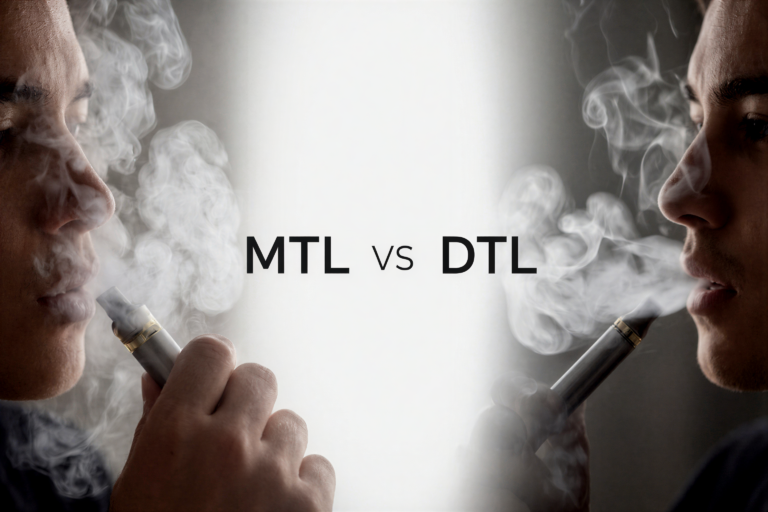
There’s also an open-source hardware mindset in parts of this community. Some mod designers share their CAD files freely, allowing others to manufacture or modify their designs. The understanding of different vaping styles (MTL, DTL, RDL) informs how builders approach their setups, and the knowledge sharing is remarkably collaborative for a community built around personal preference.
The Cessation Community: Vaping as a Quitting Tool
The cessation community is, by sheer numbers, probably the largest vaping subculture. It’s also the least “cultural” in the traditional sense, because its members often don’t identify as vapers first. They identify as former smokers who happen to use vaping as a tool. The relationship with vaping is practical, not aspirational.
The Evidence Base
Public Health England’s position that vaping is approximately 95% less harmful than smoking has been widely cited, though it’s also been debated. The figure comes from a 2015 expert review and has been both embraced by vaping advocates and criticized by some researchers who argue it oversimplifies a complex risk comparison. The FDA’s position is more cautious, acknowledging that e-cigarettes may benefit adult smokers who switch completely but expressing concern about youth uptake and dual use.
Regardless of where you land on the evidence debate, the lived experience of the cessation community is real. Reddit’s r/stopsmoking and r/vaping communities have hundreds of thousands of members, and the transition stories posted there are often deeply personal. People describe years of failed quit attempts with patches, gum, and cold turkey before finding that vaping finally worked for them. These stories aren’t clinical evidence, but they represent genuine experiences that deserve acknowledgment.
Support Systems
The cessation community operates through both online and in-person support networks. Online, the Reddit communities are the most active, but there are also dedicated forums, Facebook groups, and Discord servers. In person, some vape shops have informally taken on a support role, with staff who help new vapers choose appropriate nicotine levels and navigate the transition from smoking.
Transition stories are a major content genre within this community. YouTube is full of videos titled along the lines of “My Vaping Journey” or “How I Finally Quit Smoking,” and they follow a common structure: years of smoking, multiple failed quit attempts, discovering vaping, gradual nicotine reduction, and eventually either continuing to vape at low nicotine levels or quitting nicotine entirely. The narrative arc is powerful, and these stories serve as both motivation and practical guidance for people considering the same path.
Combining Approaches
Something that doesn’t get enough attention is the number of people who combine vaping with other nicotine replacement therapies. Using a vape for acute cravings while wearing a nicotine patch for baseline coverage is a strategy that some cessation counselors have quietly endorsed. It’s not the official approach, and you won’t find it in most clinical guidelines, but real-world users report that the combination works better for them than either approach alone.
Over time, many members of the cessation community drift into other vaping subcultures. What starts as a quit-smoking tool becomes a hobby, and someone who picked up vaping purely for cessation finds themselves getting interested in flavor, or cloud production, or the social aspects of vape culture. This transition is one of the more interesting dynamics in the space, because it blurs the line between therapeutic use and recreational culture in ways that make regulators uncomfortable.
How Regulations and Social Media Are Reshaping Vaping Subcultures
You can’t talk about vaping subcultures in 2026 without talking about the forces trying to contain them. Regulations and platform policies aren’t just external constraints. They’re actively reshaping how these communities form, where they gather, and what they value.
The Regulatory Landscape
The UK disposable ban (June 2025) is the most significant recent regulatory event. It directly targets the fastest-growing vaping subculture and forces users to adapt. Early data suggests that former disposable users are split between switching to pre-filled pod systems, moving to refillable pod vapes, and in some cases, returning to smoking. The ban achieves its environmental goal but introduces a complicated set of trade-offs for adult vapers who relied on disposables for accessibility.
In the US, the regulatory picture is a patchwork. California, Massachusetts, and New York have implemented flavor restrictions at the state level, while other states have no such restrictions. This creates a situation where your access to vaping products, and by extension your ability to participate in certain subcultures, depends heavily on your zip code. Online sales complicate enforcement, but the geographic disparities are real.
The EU’s TPD (Tobacco Products Directive) continues to shape device design and e-liquid availability across Europe. Tank size limits (2ml), nicotine strength caps (20mg/ml), and notification requirements mean that European vaping subcultures evolve under different constraints than their American counterparts. The hardware looks different, the e-liquid options are different, and the community culture reflects those differences.
Australia’s prescription-only model for vaping products is the most restrictive approach in any major English-speaking country. It hasn’t eliminated vaping. Instead, it’s pushed the community underground. Black market channels, personal imports, and a thriving informal network of vapers who share supplies exist alongside the official prescription pathway. The result is a community that’s harder to monitor, harder to reach with harm reduction information, and more skeptical of authority than it would be under a regulated legal market.
Social Media: The Platform Wars
Every major social media platform has some form of restriction on vape content. TikTok’s bans are the most visible, but Instagram, YouTube, and Facebook all limit the reach of vaping-related posts through algorithmic suppression and content policies. The stated reason is always the same: protecting minors from content that might normalize or promote nicotine use.
The practical effect is that vaping communities have migrated to platforms where content moderation is lighter or more navigable. Discord servers have become the primary gathering space for many subcultures, especially trick artists and modders who want to share detailed content without fighting algorithmic suppression. Reddit remains a hub for discussion-based communities like DIY mixers and cessation support. Telegram groups serve regions with heavy censorship or where the community prefers privacy.
This migration has a real cost. When vape content was on TikTok and Instagram, it was discoverable. Newcomers could stumble into the community accidentally, which was great for growth. On Discord and Telegram, you need an invite link or a specific search. The communities are stronger internally but less accessible externally. That’s a trade-off that shapes who joins and who doesn’t.
The Nicotine Pouch Crossover
One of the more interesting developments in 2026 is the growing crossover between vaping subcultures and the nicotine pouch community. ZYN, On!, and Velo have built their own user base, and it overlaps significantly with vaping. The appeal is straightforward: pouches work where vaping can’t. Airplanes, offices, indoor spaces, anywhere that vaping is impractical or prohibited.
The social dynamic is different, though. Nicotine pouch use is inherently private. There’s no cloud, no visible device, no performance aspect. It’s more like traditional smokeless tobacco in that sense, a personal nicotine delivery system that doesn’t announce itself. This makes the pouch community less culturally visible than any vaping subculture, but the user overlap is significant enough that it’s reshaping how people think about their nicotine consumption.
Some vapers have adopted a dual-use pattern: vaping at home and in social settings, using pouches at work or while traveling. It’s a pragmatic approach that reflects the reality of nicotine consumption in 2026, where regulatory and social constraints force users to be flexible. The crossover also raises interesting questions about identity. If someone vapes and uses pouches, which community do they belong to? Both? Neither? The answer is still forming.
The Future Under Regulation
Here’s what I think is happening: vaping subcultures are becoming more fragmented and more resilient at the same time. Regulations push communities into smaller, more private spaces. But those spaces develop stronger bonds because participation requires more effort and intention. The communities that survive platform bans and product restrictions are the ones that have genuine social infrastructure, not just viral content.
The disposable vape ban in the UK won’t kill the social dynamics that made disposable culture compelling. It will redirect them. The flavor restrictions in certain US states won’t eliminate flavor enthusiasm. It will change where and how people access flavors. And the social media bans won’t stop trick artists from creating content. They’ll just post it somewhere else.
Vaping subcultures have proven remarkably adaptable. The question for the next few years isn’t whether they’ll survive increasing regulation. It’s what they’ll look like on the other side.
FAQ
What is the biggest vaping subculture right now?
By raw numbers, the cessation community is the largest. Most vapers initially took up vaping as a smoking alternative, even if they later branched into other subcultures. But in terms of cultural visibility and social media presence, disposable vape culture has been the dominant force over the past two years, driven by the sheer volume of sales (roughly 55% of the US market) and the content ecosystem around flavor reviews and haul posts. The two overlap significantly, since many people who start with disposables for cessation purposes end up participating in disposable culture content.
Is cloud chasing dangerous?
Cloud chasing involves pushing batteries and coils to their limits, so the risk profile is real. The primary danger comes from improper battery usage. Running a build with resistance too low for your battery’s continuous discharge rating can cause the battery to vent or, in worst cases, enter thermal runaway. Understanding Ohm’s Law, using batteries rated for the current you’re drawing, and never exceeding your equipment’s limits are non-negotiable safety requirements. With proper knowledge and precautions, the risks are manageable. Without them, they’re serious. If you’re interested in high-wattage vaping, invest time in safety education before you invest in equipment.
Can I learn vape tricks as a beginner?
Absolutely. Most trick artists started with O-rings, which you can practice with almost any vaping setup (though high-VG liquid and an RDA make it easier). The learning curve is real. Expect to spend a few weeks getting consistent O-rings before moving on to more complex tricks. The key is understanding that vape tricks are about breath and mouth control, not just blowing vapor and hoping for the best. YouTube tutorials and the trick community on Discord are excellent resources. Start simple, be patient, and don’t be discouraged if your first hundred O-rings look more like sad blobs.
Why are disposable vapes so popular?
Three reasons: convenience, flavor variety, and low upfront cost. Disposables require zero setup, zero maintenance, and zero technical knowledge. You open the package and start vaping. The flavor options are enormous, with some brands offering 15 or more varieties. And at $5 to $15 per device, the initial investment is far lower than buying a mod, tank, and e-liquid separately. That accessibility is what drove disposables to dominate the market. The trade-off is higher long-term cost compared to refillable systems, and the environmental impact of single-use electronics. Check vape deals to compare pricing across different product types.
What happened to UK disposable culture after the ban?
The UK’s June 2025 ban on single-use disposables forced a significant shift. Former disposable users have largely moved to pre-filled pod systems and refillable pod vapes, which offer similar convenience in a more sustainable format. The social media content has adapted too, with haul posts and flavor reviews transitioning to pod system formats. Some users have expressed frustration with the change, particularly around flavor availability and the slight increase in complexity compared to grab-and-go disposables. There’s also a persistent gray market of imported disposables, though enforcement has reduced its scale. The community hasn’t disappeared, but it has been forced to evolve quickly.
Is DIY e-liquid mixing safe?
DIY mixing can be safe if you follow proper procedures, but it requires knowledge and caution that many newcomers underestimate. The primary risks are nicotine exposure (concentrated nicotine is toxic and can be absorbed through the skin) and inaccurate measurements that lead to unintended nicotine concentrations. Safe mixing requires gloves, a precision digital scale accurate to 0.01g, childproof storage for nicotine base, and a clean workspace. The DIY community is generally good about promoting safety, but the barrier to entry is low enough that people sometimes skip critical precautions. If you’re considering DIY, read the safety guides on r/DIY_eJuice before you buy any ingredients.
How do vaping subcultures differ by country?
Regulatory environments are the biggest differentiator. The US has the largest and most diverse vaping subculture landscape, with active cloud chasing, trick art, and disposable culture communities. The UK has a strong cessation community and is currently navigating the post-disposable-ban transition. Southeast Asian countries like the Philippines, Indonesia, and Malaysia have growing communities despite (or sometimes because of) legal restrictions that create a counter-cultural dynamic. In the Middle East, vaping communities in countries like the UAE and Saudi Arabia operate largely underground. China is the manufacturing hub for most vaping hardware, but domestic use is restricted, creating an interesting dynamic where the products are made locally but the culture is exported. Australia’s prescription-only model has pushed communities into informal networks. In each case, the regulations shape not just what products are available but how the community organizes and expresses itself.
Where can I find vaping communities online?
Reddit remains the most accessible starting point. r/vaping, r/electronic_cigarette, r/DIY_eJuice, and r/stopsmoking are all active communities with different focuses. Discord has become the primary hub for more interactive communities, especially trick artists, modders, and region-specific groups. You’ll need an invite link, which are usually shared through Reddit posts or community websites. Traditional forums like E-Cigarette Forum (ECF) still exist and have deep archives of technical information. Telegram groups are common in regions with heavier censorship. And despite platform restrictions, Instagram and TikTok still have active vape content creators using coded hashtags and algorithm workarounds. The community is distributed across platforms, so don’t expect to find everything in one place.


Build your vape knowledge
Read more guides
Find explainers, how-to articles and reference material.
Open guide library →Compare vape products
Check specifications across the product database.
Open product data →Read hands-on reviews
See tested devices and documented trade-offs.
Read review coverage →