

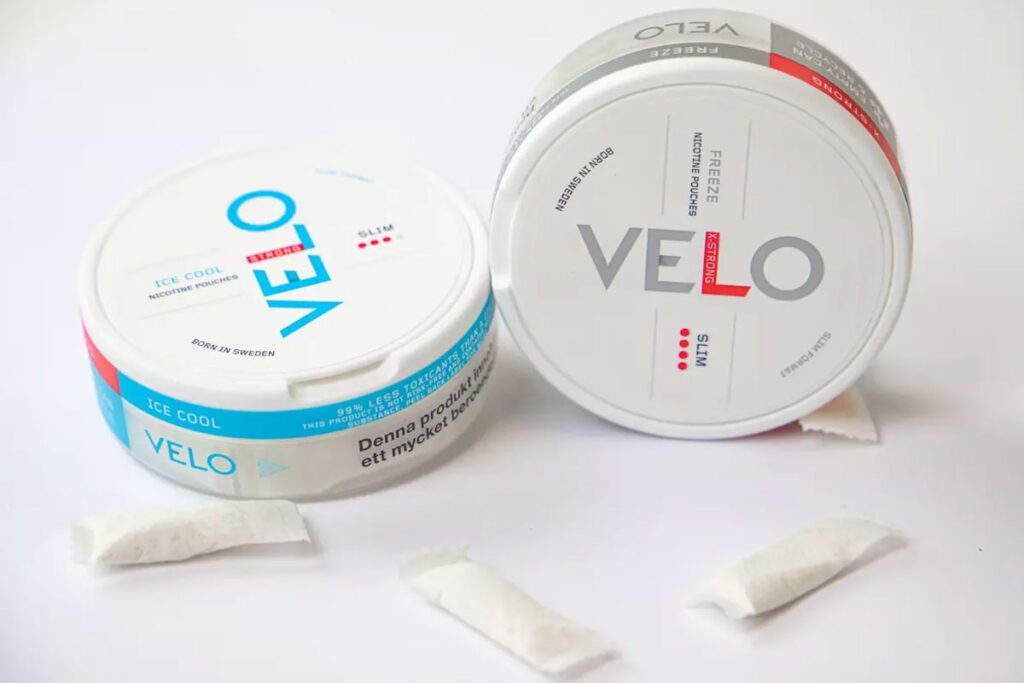
If you have heard the buzz about nicotine pouches but are not quite sure what they are, you are in the right place. These small, white, tobacco-free pouches have gone from a niche Scandinavian product to a mainstream staple in American convenience stores, and the pace of growth has been staggering. ZYN, the category leader, shipped 794 million cans in 2025 alone, and Philip Morris International expects that number to hit 800 to 840 million cans this year.
What Are Nicotine Pouches?

Nicotine pouches are small, pre-portioned sachets that contain pharmaceutical-grade nicotine, plant-based fillers, flavorings, and sweeteners. You tuck one between your upper lip and gum, and the nicotine absorbs through your oral mucosa into your bloodstream. No tobacco leaf, no combustion, no vapor, no spitting required.
That last point is what sets them apart from snus, the traditional Scandinavian product. Snus pouches contain ground tobacco, which means they carry tobacco-specific nitrosamines (TSNAs), the carcinogenic compounds found in tobacco leaf. Nicotine pouches are tobacco-free. The nicotine is either extracted from tobacco and purified to pharmaceutical grade, or it is synthesized in a lab. Either way, the final product contains no tobacco leaf, which eliminates TSNAs entirely.
Why have they exploded in popularity? A few factors converged at once. Vaping faced regulatory scrutiny and flavor restrictions in many states. Smoking continued its decades-long decline. And consumers wanted a nicotine delivery method that was discreet (no clouds, no smell), convenient (no device to charge or refill), and available everywhere (gas stations, convenience stores, online). Nicotine pouches checked every box.
The numbers tell the story. Nicotine pouch sales grew more than 600% from 2019 to 2022 in the United States, and the growth has only accelerated since. ZYN alone holds roughly 66% of the US market as of 2025. Philip Morris International saw enough potential that it acquired Swedish Match, ZYN’s parent company, for $16 billion in late 2022. That was not a bet on a fad. It was a bet on a structural shift in how people consume nicotine.
What’s Actually in a Nicotine Pouch?
If you are going to put something in your mouth for 30 minutes at a time, you probably want to know what is in it. Fair enough. Here is a breakdown of the typical ingredients you will find in a nicotine pouch, and why each one is there.
Nicotine
The active ingredient. This is pharmaceutical-grade nicotine, either extracted from tobacco plants and heavily purified, or synthesized from scratch in a laboratory setting. The purification process removes tobacco-specific nitrosamines and other tobacco-derived impurities. Synthetic nicotine goes even further by avoiding the tobacco plant entirely, which eliminates any trace of tobacco-derived compounds. Both forms deliver the same nicotine molecule. Your body cannot tell the difference.
Plant-Based Fibers
This is the filler that gives the pouch its volume and texture. Most brands use eucalyptus fiber or pine fiber, both of which are food-grade and completely inert. They do not dissolve, but they hold the other ingredients in place and create the physical structure of the pouch. If you have ever wondered why a used pouch looks slightly swollen compared to a fresh one, it is because the fibers absorb saliva and expand.
Flavorings
Food-grade natural and artificial flavorings. Mint, citrus, wintergreen, coffee, berry, and cinnamon are the most common. These are the same types of flavor compounds used in chewing gum and candy. The flavor concentration is relatively low because the pouch sits in your mouth for an extended period, so it needs to be pleasant without being overwhelming.
Sweeteners
Acesulfame K and sucralose are the two most common. Both are artificial sweeteners widely used in foods and beverages. They provide sweetness without adding sugar or calories, and they do not promote tooth decay. If a pouch tastes slightly sweet when you first place it, that is the acesulfame K doing its job.
pH Adjusters (This Matters More Than You Think)
Sodium carbonate and sodium bicarbonate (baking soda) are added to raise the pH of the pouch contents. This is not a cosmetic addition. It directly affects how much nicotine your body absorbs. Nicotine exists in two forms in solution: free-base (unionized) and protonated (ionized). Free-base nicotine crosses cell membranes easily, while protonated nicotine does not. A higher pH shifts the equilibrium toward free-base nicotine, which means more nicotine gets absorbed through your oral mucosa and into your bloodstream.
This is the same principle behind why some snus products feel stronger than others despite having similar nicotine content. The pH determines bioavailability, not just the raw milligram count on the label.
Humectants
These keep the pouch from drying out. Without humectants, a pouch would become brittle and lose its flavor within days of the package being opened. Glycerin and propylene glycol are common choices. They are the same humectants used in toothpaste, mouthwash, and many food products.
Stabilizers
These maintain the consistency and shelf life of the product. They prevent the ingredients from separating or degrading over time. Think of them as the reason your pouch works the same way on day 30 as it did on day 1.
How does this ingredient list compare to snus? Snus contains all of the above plus ground tobacco, which introduces TSNAs and a distinct tobacco flavor. Snus also tends to be more moist and requires refrigeration. Nicotine pouches are drier, do not require refrigeration, and have a cleaner flavor profile because there is no tobacco taste to mask.
How Nicotine Pouches Work: The Science of Oral Absorption

When you place a nicotine pouch between your upper lip and gum, a few things happen in quick succession. Saliva begins to dissolve the outer layer of the pouch, releasing nicotine and flavorings into the moisture in your mouth. The nicotine, now in free-base form (thanks to those pH adjusters), diffuses across the buccal mucosa, the tissue lining your inner cheek and gums, and enters the capillary blood supply directly.
This is called buccal delivery, and it has some distinct characteristics compared to other nicotine delivery methods.
Speed of Onset
You will typically start feeling the effects of a nicotine pouch within 5 to 10 minutes of placement. Peak plasma nicotine levels are reached around 10 to 30 minutes after you put the pouch in, depending on the strength and your individual metabolism. This is slower than smoking or vaping, where nicotine reaches the brain within seconds via the lungs, but faster than a nicotine patch, which delivers nicotine steadily over hours through the skin.
Duration of Effect
A single pouch lasts most people between 20 and 60 minutes. Lower-strength pouches (2 to 3mg) tend to deliver nicotine for a shorter window, while higher-strength ones (6mg and above) can sustain release for the full hour. The nicotine release curve is not a sharp spike like smoking. It is more of a gradual ramp-up, a plateau, and then a slow decline. This is one reason many users describe the pouch experience as “smoother” than smoking or vaping, there is no sudden head rush, but the satisfaction lasts longer.
Why pH Is the Hidden Variable
I mentioned this in the ingredients section, but it deserves a deeper look because it explains something that confuses a lot of new users. Two pouches with the same nicotine content can feel completely different depending on their pH. A 6mg pouch with a higher pH will deliver more nicotine to your bloodstream than a 6mg pouch with a lower pH, even though the label says the same number. This is why some brands feel “stronger” than others at the same strength rating. The pH, not just the milligrams, determines how much nicotine your body actually absorbs.
How This Compares to Other Delivery Methods
Smoking delivers nicotine to the brain in about 10 to 20 seconds through the pulmonary route (lungs to heart to brain). Vaping is similar, though slightly slower depending on the device and wattage. Nicotine patches deliver a slow, steady trickle through the skin over 16 to 24 hours. Nicotine gum and lozenges also use buccal delivery, so their absorption profile is similar to pouches.
The key difference between pouches and gum is convenience. With gum, you have to chew to release the nicotine, then “park” the gum between your cheek and gum to absorb it, then chew again. With a pouch, you just place it and leave it. No chewing rhythm to maintain, no risk of swallowing too much nicotine-laden saliva.
Want to learn more about the practical side? Check out our complete guide on how to use nicotine pouches for step-by-step instructions.
Nicotine Pouch Brands Compared (2026)
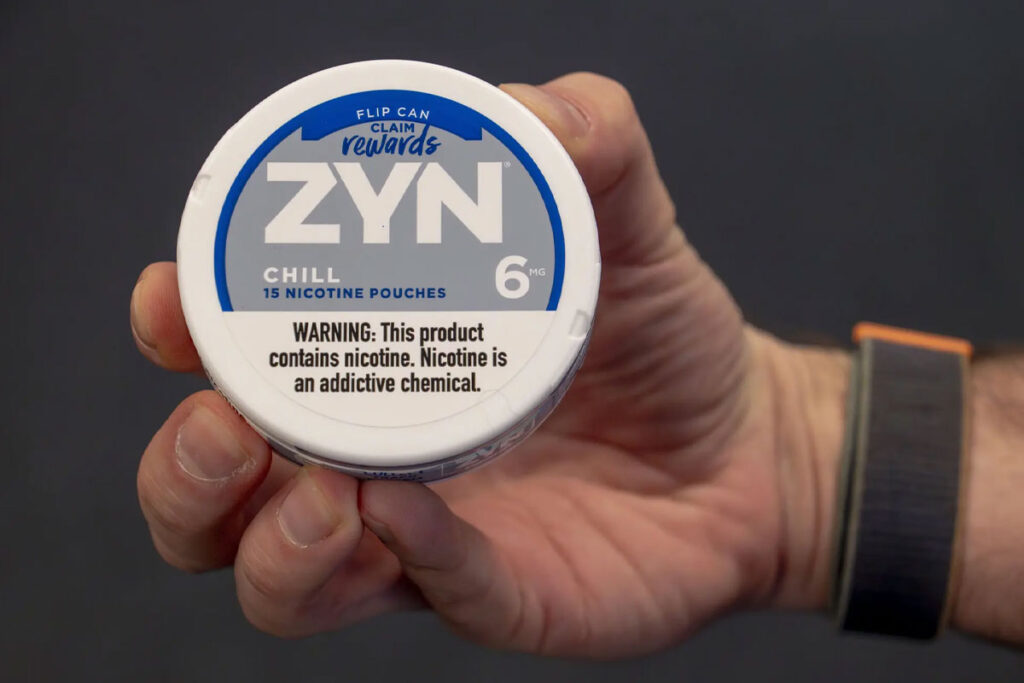
The nicotine pouch market in 2026 is dominated by a handful of major players, each with a distinct approach. Here is how they stack up.
| Brand | Manufacturer | Strengths | Format | Key Flavors | Market Share | Price Range |
|---|---|---|---|---|---|---|
| ZYN | Swedish Match / PMI | 3mg, 6mg | Mini-dry | Cool Mint, Peppermint, Wintergreen, Citrus, Coffee, Cinnamon, Smooth, Chill | ~66% | $4.50-$6.50/can |
| On! | Altria / Helix | 2mg, 4mg, 8mg | Mini-dry | Berry, Citrus, Mint, Wintergreen, Coffee, Original | ~12% | $4.00-$5.50/can |
| Velo | Reynolds / BAT | 2mg, 4mg, 7mg | Moist pouch | Mint, Wintergreen, Citrus, Berry, Dragon Fruit | ~10% | $4.00-$6.00/can |
| Rogue | Swisher | 2mg, 3mg, 6mg | Nicotine granules | Mint, Wintergreen, Honey, Mango | ~5% | $3.50-$5.00/can |
| Lucy | Lucy Goods | 4mg, 8mg | Moist pouch | Mango, Mint, Espresso, Breakers | ~3% | $4.50-$6.00/can |
ZYN: The Undisputed Leader
ZYN is not just the market leader. It is the category. When most people say “nicotine pouches,” they mean ZYN. With 66% market share and 794 million cans shipped in 2025, ZYN has become synonymous with the product category in the same way that Kleenex is synonymous with facial tissue. The brand offers 8 flavors in 2 strengths (3mg and 6mg), and its mini-dry format is the industry standard that competitors are measured against. If you want to explore the full flavor lineup, check out our ZYN flavors guide for detailed reviews.
On!: The Strength Specialist
On! differentiates itself with a wider strength range (2mg to 8mg) and a distinctive mini-dry format that is noticeably smaller than ZYN’s pouches. This makes On! popular with users who want a discreet option that is virtually invisible under the lip, or with experienced users who want the 8mg option that ZYN does not offer. Backed by Altria’s distribution network, On! has solid retail availability.
Velo: The Flavor Innovator
Velo, from Reynolds American (a BAT subsidiary), uses a moist pouch format that some users prefer because it starts releasing flavor and nicotine faster than dry pouches. Velo has also been more aggressive with unconventional flavors like Dragon Fruit, which appeals to users who are bored with the standard mint-and-citrus lineup. The 7mg strength hits a sweet spot between ZYN’s 6mg and On!’s 8mg.
Rogue: The Different Format
Rogue takes a different approach with its nicotine granule format. Instead of the traditional pouch filled with fiber, Rogue uses small granules that release nicotine differently. Some users prefer this because the granules conform to the shape of the gum more naturally. Others find the texture unusual at first. Rogue is also one of the more affordable options, which makes it popular with budget-conscious consumers.
Lucy: The Direct-to-Consumer Play
Lucy has carved out a niche by focusing on direct-to-consumer sales, subscription models, and stronger strengths (4mg and 8mg). The brand appeals to users who want higher nicotine content and are willing to order online rather than rely on retail availability. Lucy’s Mango and Espresso flavors have developed a loyal following among users who find ZYN’s flavor profile too conservative.
Nicotine Pouch Strengths and Flavors
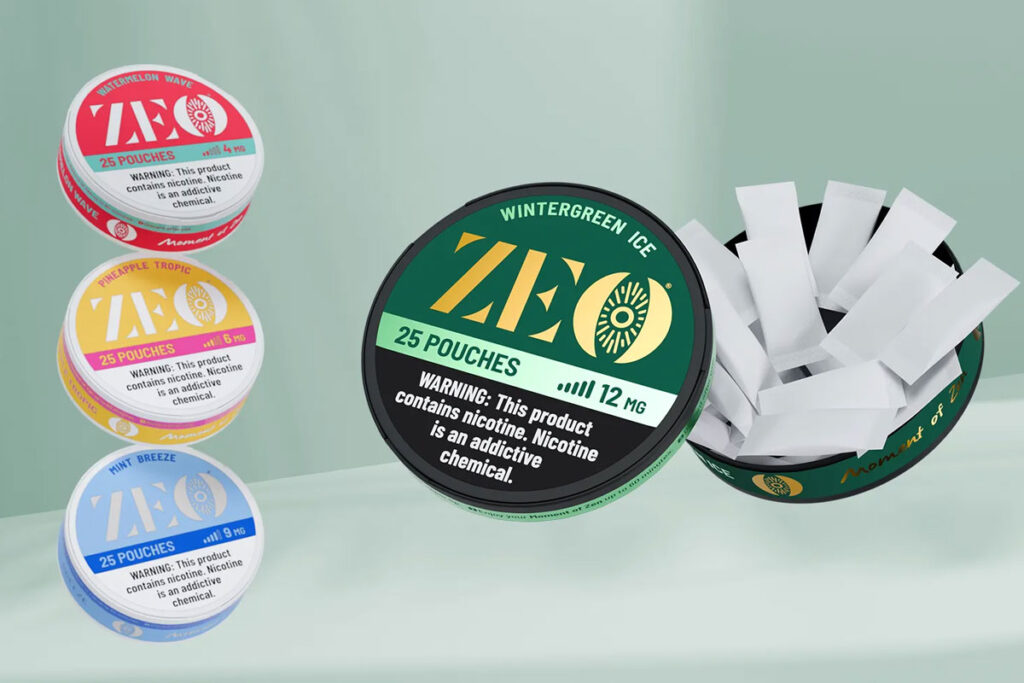
Choosing the right strength is probably the most important decision you will make when starting with nicotine pouches, and it is one of the most common places where people go wrong. Go too low and you will wonder what all the fuss is about. Go too high and you will feel nauseous within 15 minutes. Here is how to think about it.
Strength Tiers
Low (2-3mg): This is the entry point. If you have never used nicotine products before, or if you are a very light smoker (under 5 cigarettes per day), start here. Lower concentrations are actually the most popular segment of the market, which tells you that most users are not chasing a massive nicotine hit. They want a mild buzz or a way to take the edge off without being overwhelmed. A 2mg pouch from On! or a 3mg pouch from ZYN is a good starting point.
Medium (4-6mg): This is the sweet spot for most regular users. If you smoke a pack a day or vape regularly, 4 to 6mg will feel satisfying without being excessive. ZYN’s 6mg is the single most popular SKU in the entire category. Velo’s 4mg and On!’s 4mg are also strong sellers. At this tier, you get noticeable nicotine satisfaction without the side effects that come from overconsumption.
High (7-9mg+): This tier is for experienced users with high nicotine tolerance. On! 8mg and Lucy 8mg are the main options here. If you are a heavy smoker (more than a pack a day) or a long-time smokeless tobacco user, this might be where you need to start. But be honest with yourself about your tolerance. A 9mg pouch is no joke for someone who is used to 3mg.
The Flavor Landscape in 2026
Mint dominates, and it is not even close. Cool Mint, Peppermint, and Wintergreen account for the majority of all nicotine pouch sales. Citrus is a distant second, followed by berry and coffee flavors. The reasons are partly cultural (snus has always been mint-forward) and partly practical (mint flavors mask any bitterness from the nicotine more effectively than sweet flavors).
But the flavor landscape is shifting. Brands like Velo and Lucy are pushing into more exotic territory with Dragon Fruit, Mango, and Espresso. These flavors appeal to a younger demographic that grew up with the flavor variety of vaping and expects the same range in pouches.
The Flavor Ban Debate
The flavor question is not just about consumer preference. It is a regulatory battleground. Several states and municipalities have already banned flavored vaping products, and there is growing pressure to extend those bans to nicotine pouches. The argument is the same one that was used against flavored vapes: that sweet and fruity flavors appeal to underage users and serve as a gateway to nicotine addiction. The counterargument is that adult consumers deserve flavor variety, and that restricting flavors pushes people back toward combustible tobacco, which is far more dangerous.
This debate is far from settled, and the outcome will shape the category for years to come. If you are choosing a flavor, pick what you genuinely enjoy, but also be aware that your favorite might not be available forever depending on where you live.
Are Nicotine Pouches Safe? What the Research Says
Let me give you the honest answer upfront: nicotine pouches are less harmful than smoking, but they are not risk-free. Anyone who tells you otherwise is either selling something or not paying attention to the evidence. Our detailed analysis on are nicotine pouches safe goes deeper, but here is the current state of the science.
What We Know: The Benefits
No combustion means no tar, no carbon monoxide, no particulate matter in your lungs, and none of the thousands of chemicals produced when tobacco burns. This is the single biggest advantage of nicotine pouches over cigarettes, and it is not a small one. Combustion is what makes smoking catastrophically dangerous. Removing combustion removes the primary mechanism of harm.
No tobacco leaf means no tobacco-specific nitrosamines (TSNAs), the potent carcinogens found in snus and other smokeless tobacco products. The nicotine in pouches is pharmaceutical-grade, whether extracted and purified or synthesized, and it does not carry the carcinogenic baggage of tobacco leaf.
No inhalation means no lung exposure. Your respiratory system is not involved at all. For people with asthma, COPD, or other respiratory conditions, this is a meaningful distinction from vaping.
What We Know: The Risks
Gum irritation and recession. This is the most commonly reported side effect. Keeping a pouch in the same spot for 30+ minutes, multiple times a day, can irritate the gingival tissue. Over time, some users develop localized gum recession at the placement site. The fix is simple: rotate placement between the left and right side of your mouth, and avoid putting the pouch in exactly the same spot every time.
Nicotine addiction. Nicotine is addictive, period. The delivery method does not change this fundamental fact. If you use nicotine pouches regularly, you will develop dependence. The addiction profile is comparable to other oral nicotine products like gum and lozenges, and somewhat less intense than smoking or vaping because the onset is slower and there is no rapid “spike” in brain nicotine levels. But addiction is still addiction.
Cardiovascular effects. Nicotine elevates heart rate and blood pressure. This is a short-term effect that resolves after the nicotine is metabolized, but if you are using pouches throughout the day, your cardiovascular system is spending a lot of time in an elevated state. For healthy adults, this is generally manageable. For people with pre-existing heart conditions, hypertension, or a history of stroke, it is a genuine concern worth discussing with a doctor.
Gastrointestinal issues. Nausea is the most common complaint, especially among new users or those who start with a strength that is too high for their tolerance. Hiccups are another frequently reported side effect, caused by nicotine’s effect on the vagus nerve. Both tend to resolve as your body adjusts, but they can be unpleasant in the meantime.
Oral health concerns. Dry mouth is a common side effect, and chronic dry mouth can contribute to tooth decay over time because saliva plays a crucial role in neutralizing acids and washing away food particles. Some users also report increased sensitivity in their teeth and gums.
Who Should Avoid Nicotine Pouches
Pregnant women. The evidence on prenatal nicotine exposure is clear and concerning: it is associated with adverse developmental outcomes regardless of the delivery method. Adolescents and young adults under 25. Nicotine affects brain development, which continues into the mid-twenties. People with cardiovascular disease, uncontrolled hypertension, or a history of stroke. Anyone with a history of eating disorders or GERD, as nicotine can exacerbate both conditions.
What We Still Do Not Know
The biggest gap in the research is long-term data. Nicotine pouches have only been widely available in the US since around 2019. We have five to six years of market data, but that is not enough to understand what happens after 10, 20, or 30 years of regular use. The absence of combustion and tobacco leaf gives us good reason to expect a much better safety profile than smoking, but “better than smoking” is a low bar. We need longitudinal studies that follow pouch users over decades to understand the full picture.
Nicotine Pouches vs Vaping: Which Is Right for You?
If you are choosing between nicotine pouches and vaping, or wondering whether you should use both, here is a straightforward comparison.
| Factor | Nicotine Pouches | Vaping |
|---|---|---|
| Delivery method | Oral (buccal absorption) | Inhalation (pulmonary) |
| Speed of onset | 5-10 minutes to feel, peak at 10-30 min | Seconds to feel, peak at 3-5 min |
| Discretion | Completely invisible, no clouds, no smell | Produces visible vapor, detectable smell |
| Equipment needed | None, just the pouch | Device, charger, e-liquid, coils |
| Cost per use | $0.40-$0.65 per pouch | $0.30-$1.00+ depending on device/setup |
| Flavor variety | Limited (8-12 per brand) | Enormous (thousands of e-liquid flavors) |
| Social aspect | Private, no one knows you are using it | Visible, can be social activity |
| Lung exposure | None | Yes, inhaling aerosol into lungs |
| Convenience | Open and place, no maintenance | Requires charging, refilling, coil changes |
| Where you can use | Almost anywhere (offices, planes, indoors) | Restricted in most indoor/public spaces |
When Nicotine Pouches Make More Sense
You are on an airplane, in a long meeting, at your desk, in a movie theater, or anywhere that vaping is not allowed or would be socially awkward. You do not want to deal with device maintenance, charging, or e-liquid refills. You want something you can carry in your pocket and use without anyone knowing. You are concerned about inhaling anything into your lungs. You want a slower, more sustained nicotine release rather than a quick spike.
When Vaping Makes More Sense
You want the fastest possible nicotine delivery. You enjoy the hand-to-mouth ritual of smoking. You want an enormous variety of flavors. You are using vaping as a social activity. You want to control your nicotine intake more precisely by adjusting wattage, airflow, or e-liquid strength. For help finding the right setup, see our guide to the best disposable vapes.
The “Both” Approach
Plenty of people use both, and it is easy to see why. Vaping at home or in social settings where it is accepted. Pouches at work, on planes, in airports, or anywhere you cannot vape. This combination gives you the best of both worlds, but you need to be mindful of your total nicotine intake. If you are hitting a vape and running a pouch simultaneously, you are getting a lot of nicotine in a short window, and that can lead to nausea, elevated heart rate, and faster development of dependence. For context on how nicotine levels compare across products, check out our guide on how much nicotine is in a vape.
And if you are still weighing the broader question of vaping versus smoking, our in-depth piece on is it better to smoke or vape covers the full health comparison.
FDA Status and the Regulatory Landscape (2026)
The regulatory environment for nicotine pouches has shifted dramatically since our original article, and if you have been following this space, you know that the biggest change happened in January 2025.
January 2025: FDA Authorizes 20 ZYN Products Under PMTA
In a landmark decision, the FDA authorized 20 ZYN nicotine pouch products through the Premarket Tobacco Product Application (PMTA) pathway. This was the first-ever PMTA authorization for nicotine pouches, and it marked a turning point for the entire category. Prior to this, no nicotine pouch had received FDA authorization, which meant the entire market was technically operating in a regulatory gray zone.
What does PMTA authorization mean? It means the FDA has determined that these products are “appropriate for the protection of public health.” The agency reviewed the chemistry, manufacturing, toxicology, and behavioral data submitted by Swedish Match and concluded that the benefits to adult smokers who might switch to a less harmful product outweigh the risks of youth uptake. This is not the same as saying the products are safe. It means the FDA has evaluated the risk-benefit balance and come down on the side of authorization.
June 2025: Swedish Match Submits MRTP Applications
Six months after the PMTA authorization, Swedish Match took the next step by submitting Modified Risk Tobacco Product (MRTP) applications for 10 ZYN flavors in 2 strengths. The MRTP pathway is a separate, more rigorous process that, if approved, would allow ZYN to make specific reduced-risk claims in its marketing.
This is a big deal. If the MRTP application is approved, ZYN would be able to communicate directly to consumers that its products present lower health risks than cigarettes. That is a powerful marketing claim, and it would differentiate ZYN from unauthorized competitors who cannot make any health claims at all.
January 22, 2026: TPSAC Review Meeting
The Tobacco Products Scientific Advisory Committee (TPSAC) met on January 22, 2026, to review the ZYN MRTP applications. TPSAC’s role is to provide the FDA with independent scientific advice, and its recommendation carries significant weight in the final decision. The committee’s review focused on the strength of the evidence supporting reduced-risk claims, the potential for youth uptake, and whether the proposed marketing would benefit public health overall.
As of this writing, the FDA has not yet issued a final decision on the MRTP applications. The timeline for FDA decisions can stretch to a year or more after the TPSAC meeting, so we may not have a final answer until late 2026 or early 2027.
For the official FDA records on the Swedish Match MRTP applications, you can check the FDA’s Swedish Match MRTP page.
Federal Age Requirement
The federal minimum age for purchasing any tobacco or nicotine product, including nicotine pouches, is 21. This was established by the Tobacco 21 law passed in December 2019, which raised the minimum age from 18 to 21 nationwide. Online retailers are required to use age verification at the point of sale and upon delivery.
State-Level Actions
States are not waiting for the FDA to set all the rules. New York proposed a nicotine pouch tax in 2025 that would impose a per-unit excise tax similar to what the state already applies to cigarettes and other tobacco products. Several other states are considering similar measures. Flavor restrictions are also on the table in multiple jurisdictions, mirroring the approach that has already been applied to vaping products.
Some states are also tightening age enforcement at the retail level, with increased compliance checks and stiffer penalties for retailers who sell to minors. The overall trend is toward more regulation, not less.
International Regulations
The UK and EU take a different approach. In the UK, nicotine pouches that contain less than 20mg of nicotine per pouch are regulated under consumer product regulations rather than tobacco product regulations, because they do not contain tobacco. However, nicotine pouches are not approved as medicines or cessation aids. The UK government has published guidance on the regulation of nicotine-containing products that outlines the current framework.
Not approved as cessation aids: This point cannot be stressed enough. The FDA has not approved nicotine pouches, including ZYN, as smoking cessation aids. They are tobacco products regulated under the tobacco framework, not pharmaceutical products regulated under the drug framework. If you are looking for FDA-approved methods to quit smoking, nicotine replacement therapies like patches, gum, and lozenges remain the evidence-based options. For general information from the FDA about tobacco products, visit their consumer information page.
Nicotine Pouches and Smoking Cessation
Let me be direct about this: nicotine pouches are not FDA-approved for smoking cessation. If you want to quit smoking and want an evidence-based approach, you should talk to your doctor about FDA-approved nicotine replacement therapies (patches, gum, lozenges) and prescription medications like varenicline or bupropion, ideally combined with behavioral counseling.
That said, the reality is more complicated than the regulatory categories suggest. Many people do use nicotine pouches as part of their quitting strategy, and there are logical reasons why.
Why Some People Use Pouches to Quit
A cigarette delivers nicotine through the lungs, provides a hand-to-mouth ritual, and creates a social experience. When you quit cold turkey, you lose all three at once. Nicotine patches address the chemical dependence but not the behavioral or social aspects. Nicotine pouches address both the chemical and behavioral components (you still get the oral fixation and the routine of placing a pouch), which some people find more sustainable than a patch alone.
Anecdotally, many former smokers report that nicotine pouches helped them transition away from cigarettes because they could use pouches in situations where they would normally smoke, without the smell, the cost, or the health damage of combustion. But anecdotes are not clinical evidence, and the lack of randomized controlled trials means we simply do not have the data to make strong claims about pouches as cessation tools.
The Harm Reduction Argument
There is a broader argument that goes beyond cessation. If someone is unable or unwilling to quit nicotine entirely, is it better for them to use a product that eliminates combustion and tobacco leaf? Most public health experts would say yes, even if they are careful about how they phrase it. The Royal College of Physicians in the UK has been a prominent advocate of this position for vaping, and the same logic applies to nicotine pouches. A product that delivers nicotine without combustion is, by definition, less harmful than a product that delivers nicotine with combustion.
But harm reduction is not the same as harm elimination. If you do not currently use nicotine, starting with nicotine pouches is not a health-positive decision. You are introducing an addictive substance into your life for no medical benefit. The harm reduction argument applies to people who are already using more dangerous nicotine products and are looking for a less harmful alternative.
What Experts Recommend
If you want to quit smoking, the gold standard is a combination of FDA-approved nicotine replacement therapy (NRT) and behavioral counseling. This combination has the highest success rates in clinical trials. Nicotine pouches may eventually prove to be effective cessation aids, but until we have the clinical trial data, they remain an unproven option that some people choose to use on their own.
If you are currently using nicotine pouches and want to reduce your nicotine intake, you can step down gradually from higher strengths to lower ones. Going from 6mg to 3mg, or from 4mg to 2mg, is a manageable reduction that most people can handle without severe withdrawal symptoms. From there, you can reduce the frequency of use until you are ready to stop entirely.
Frequently Asked Questions
Do nicotine pouches have tobacco in them?
No. Nicotine pouches are tobacco-free. The nicotine they contain is either extracted from tobacco plants and purified to pharmaceutical grade, or it is synthesized in a lab. Either way, the final product contains no tobacco leaf, which means it also contains no tobacco-specific nitrosamines (TSNAs), the carcinogenic compounds found in tobacco products like snus and chewing tobacco. This is the fundamental distinction between nicotine pouches and snus: snus contains ground tobacco, nicotine pouches do not.
How long does a nicotine pouch last?
Most people keep a pouch in for 20 to 60 minutes, depending on the strength and their personal preference. Lower-strength pouches (2 to 3mg) tend to release their nicotine faster, so you might find that 20 to 30 minutes is enough. Higher-strength pouches (6mg and above) can sustain release for 45 to 60 minutes. You will know a pouch is “done” when the flavor fades and you stop feeling the nicotine effect. There is no harm in removing a pouch early if you feel satisfied, and no benefit in keeping it in longer than it is effective.
Can nicotine pouches help me quit smoking?
Nicotine pouches are not FDA-approved as smoking cessation aids. The evidence-based methods for quitting smoking are FDA-approved nicotine replacement therapies (patches, gum, lozenges), prescription medications (varenicline, bupropion), and behavioral counseling. That said, some people do use nicotine pouches as part of their personal quitting strategy because they address both the chemical dependence and the behavioral habit (oral fixation, routine). If you are trying to quit, talk to your doctor about the best approach for your situation.
Are ZYN pouches FDA approved?
Yes and no. In January 2025, the FDA authorized 20 ZYN nicotine pouch products under the PMTA (Premarket Tobacco Product Application) pathway. This means these specific products are legally allowed to be sold in the US because the FDA determined they are “appropriate for the protection of public health.” However, this is not the same as being “approved” in the medical sense. ZYN pouches are regulated as tobacco products, not as drugs or medical devices. They are not approved as smoking cessation aids. Additionally, Swedish Match has submitted MRTP (Modified Risk Tobacco Product) applications for 10 ZYN flavors, and the TPSAC reviewed these applications in January 2026. The final FDA decision on the MRTP applications is still pending.
What’s the strongest nicotine pouch?
The strongest commonly available nicotine pouches are 8mg, offered by On! and Lucy. Rogue also offers a 6mg option, and ZYN tops out at 6mg. But remember that the felt strength depends on more than just the milligram count. The pH of the pouch contents affects how much nicotine your body absorbs, so an 8mg pouch with a lower pH might feel similar to a 6mg pouch with a higher pH. That said, 8mg is the practical ceiling for the US market right now. The most popular strength is 3 to 6mg, which tells you that most users prefer moderate nicotine delivery over maximum intensity.
Can I use nicotine pouches and vape?
Yes, many people use both. The most common pattern is vaping at home or in social settings and using pouches in situations where vaping is not practical (at work, on airplanes, in meetings, indoors). There is no dangerous interaction between the two, but you should be mindful of your total nicotine intake. Using both throughout the day means you are getting a lot of nicotine, and that can lead to nausea, elevated heart rate, and faster development of nicotine dependence. If you are using both, consider stepping down the strength of one or the other to keep your total intake reasonable. You can learn more about the science behind vape liquids to understand what you are inhaling.
Do nicotine pouches stain teeth?
Less than smoking, but possible with long-term use. Cigarettes cause severe staining because the tar and combustion byproducts are dark and sticky, and they coat the teeth with every drag. Nicotine pouches do not produce tar or combustion byproducts, so the staining risk is much lower. However, nicotine itself can contribute to staining over time, and the flavorings and colorings in some pouches might cause mild discoloration with heavy, long-term use. If you are concerned about staining, regular dental cleanings and good oral hygiene will go a long way.
Where can I buy nicotine pouches?
Nicotine pouches are widely available at convenience stores, gas stations, tobacco shops, and online retailers. ZYN has the broadest retail distribution, and you can find it at most major chains. Other brands like On! and Velo are also well-distributed. Online, you can order directly from brand websites or from specialty retailers, but you will need to verify your age (21+) at purchase and again at delivery. Some brands, like Lucy, focus heavily on direct-to-consumer sales through their websites and subscription services. If you are looking for a local shop, our guide to vape shops near you can help you find retailers in your area that may carry nicotine pouches as well.
The bottom line on nicotine pouches is that they represent a real, meaningful reduction in harm compared to combustible tobacco. They are not risk-free, and they are not for everyone. But for adults who are already using nicotine and want a discreet, convenient, combustion-free option, the category has never been stronger or more accessible than it is in 2026. Stay informed, know your strengths, and make decisions based on honest information rather than marketing hype. For ongoing deals on nicotine products, check our vape deals page. And for more on the broader vaping culture and community, explore our coverage of popular vaping subcultures.
For more information on youth tobacco use and survey data, the CDC National Youth Tobacco Survey provides ongoing surveillance of tobacco and nicotine product use among young people in the United States.



Build your vape knowledge
Read more guides
Find explainers, how-to articles and reference material.
Open guide library →Compare vape products
Check specifications across the product database.
Open product data →Read hands-on reviews
See tested devices and documented trade-offs.
Read review coverage →