

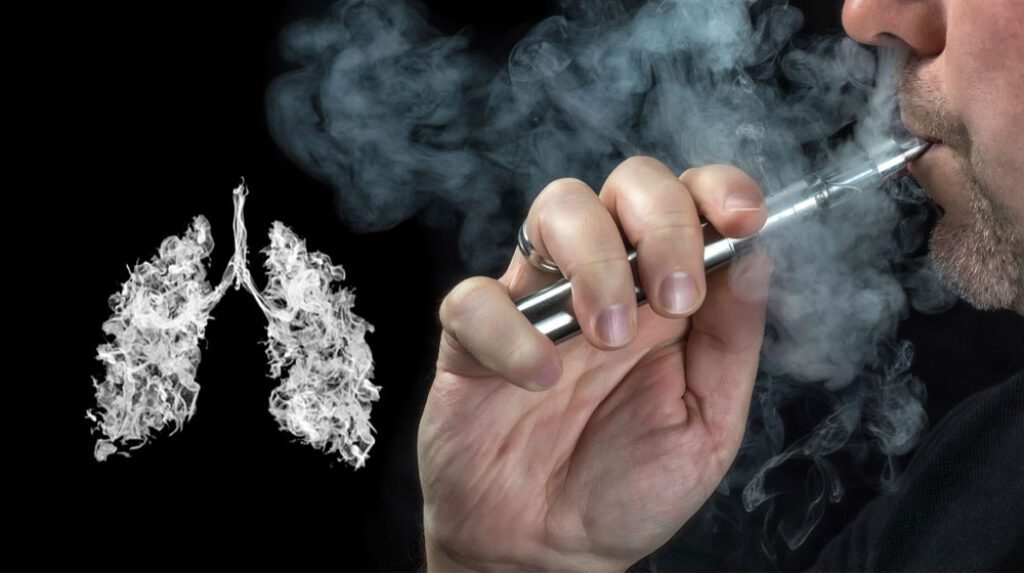
There is no evidence that vaping causes cancer in humans. But there is also no evidence that it does not. Vaping has not been around long enough for long-term studies to exist. What we do know: e-cigarette aerosol contains some cancer-causing chemicals, but at far lower levels than cigarette smoke. If you vape instead of smoke, your cancer risk drops. If you vape and have never smoked, you are exposing yourself to carcinogens you would not otherwise encounter.
Here is what the current research says, what the CDC and other health authorities conclude, and where the evidence is still unclear.
What is in vape aerosol
E-cigarette aerosol (commonly called vapor) is not harmless water. It contains:
- Nicotine (in most products), which is highly addictive
- Cancer-causing chemicals like formaldehyde and acrolein, though at much lower levels than in cigarette smoke
- Heavy metals such as nickel, tin, and lead, which can leach from the heating coil into the aerosol
- Volatile organic compounds (VOCs)
- Flavoring chemicals like diacetyl, which is linked to a serious lung disease called bronchiolitis obliterans
- Ultrafine particles that can be inhaled deep into the lungs
The CDC states that e-cigarette aerosol “can contain harmful and potentially harmful substances, including cancer-causing chemicals and tiny particles that can be inhaled deep into lungs.” The key word is “can.” The actual levels depend on the device, the e-liquid, the power settings, and how the person uses it.
Does vaping cause cancer? What the evidence shows
No human study has shown that vaping causes cancer. But there are reasons for concern:
- Formaldehyde is produced when e-liquid is heated to high temperatures. A 2015 study in the New England Journal of Medicine found that high-voltage e-cigarettes could produce formaldehyde at levels similar to those in cigarette smoke. However, subsequent research showed that these levels only occur at unrealistically high power settings that would produce an unpalatable “dry puff” that no one actually inhales.
- A 2017 animal study found that mice exposed to e-cigarette vapor developed DNA changes in their lungs, bladder, and heart that could increase cancer risk. Another 2018 study found similar DNA damage in the bladder and lungs of exposed mice.
- A 2024 study published in Cancer Research found that e-cigarette vapor exposure caused DNA damage in the oral cavity of human subjects, though the clinical significance of this damage is unclear.
Animal studies and short-term DNA damage markers are not the same as a cancer diagnosis. The gap between “DNA changes observed in a lab” and “a human develops cancer from vaping” is enormous, and we do not have the longitudinal data to close it yet. Vaping has only been widespread since about 2010, and most cancers take 10 to 30 years to develop.
Vaping vs. smoking: cancer risk comparison
| Substance | Cigarette smoke | Vape aerosol |
|---|---|---|
| Known carcinogens | Over 70 | A few, at much lower levels |
| Formaldehyde | High levels | Low to moderate (depends on power setting) |
| Tobacco-specific nitrosamines (TSNAs) | Present and potent | Trace amounts (from nicotine extraction) |
| Carbon monoxide | Present (from combustion) | Not present (no combustion) |
| Tar | Present (from combustion) | Not present (no combustion) |
| Heavy metals | Present | Present (from heating coils), generally lower |
Public Health England (now the UK Office of Health Improvement and Disparities) has stated that vaping is “a fraction of the risk of smoking” and estimated it to be around 95% less harmful. The CDC takes a more cautious stance, saying that e-cigarettes “may have the potential to benefit adults who smoke and are not pregnant if used as a complete substitute for all smoked tobacco products,” but emphasizes that they are not safe for youth or non-smokers.
The crucial distinction: vaping is less harmful than smoking, but that does not make it harmless. If you are deciding between smoking and vaping, the evidence favors vaping. If you are deciding between vaping and not vaping, the evidence favors not vaping.
What nicotine does to your body
Nicotine itself is not a carcinogen. It does not directly cause cancer. But it is not harmless either.
- It is highly addictive. Nicotine activates dopamine pathways in the brain, creating dependence quickly. The CDC notes that youth can start showing signs of addiction before they even vape daily.
- It harms adolescent brain development. The brain continues developing until about age 25. Nicotine exposure during adolescence can damage attention, learning, mood, and impulse control, according to the CDC.
- It affects the cardiovascular system. Nicotine raises heart rate and blood pressure. It constricts blood vessels. Over time, this can contribute to heart disease, though the risk from vaping alone appears lower than from smoking.
- It is toxic to developing fetuses. Pregnant women should avoid nicotine in all forms. Nicotine crosses the placenta and can affect fetal lung and brain development.
- It may promote tumor growth. Some lab studies suggest nicotine can stimulate the growth of existing cancer cells, even though it does not cause cancer on its own. This is an area of active research.
For people who already smoke, switching to a controlled nicotine intake through vaping may reduce their exposure to the thousands of carcinogens in cigarette smoke. But for people who do not use nicotine, starting is a net negative for health.
Vaping and lung disease
Cancer is not the only lung concern with vaping. Several other conditions have been linked to e-cigarette use:
EVALI
The most serious vaping-related lung injury documented to date is EVALI (e-cigarette or vaping product use-associated lung injury). The CDC documented over 2,800 hospitalizations and 68 deaths from EVALI in 2019 and 2020. The cause was identified as vitamin E acetate, an additive in some THC-containing vaping products, particularly from informal sources. EVALI is not cancer, but it can cause permanent lung damage.
Bronchiolitis obliterans (popcorn lung)
Diacetyl, a flavoring chemical once common in e-liquids, is linked to bronchiolitis obliterans, a serious and irreversible lung disease. The condition got its nickname “popcorn lung” from a 2000 outbreak among microwave popcorn factory workers who inhaled diacetyl. Many reputable e-liquid manufacturers have removed diacetyl from their products, but not all have, and regulation is inconsistent.
Other lung conditions
- Lipoid pneumonia: Caused by inhaling the oily components of e-liquid (VG/PG). Rare but documented.
- Spontaneous pneumothorax (collapsed lung): Case reports have linked heavy vaping to collapsed lungs, particularly in young men.
- Asthma and chronic bronchitis: Studies suggest vaping can worsen existing asthma and may contribute to chronic bronchitis symptoms.
Who should not vape
- Youth and young adults under 25. Nicotine harms brain development. The CDC is clear on this.
- Pregnant women. Nicotine is toxic to fetuses. It also passes into breast milk.
- People who do not currently use nicotine. Starting nicotine use voluntarily makes no health sense.
- People with cardiovascular disease. Nicotine stresses the heart and blood vessels.
Frequently asked questions
Does nicotine cause cancer?
No. Nicotine is not classified as a carcinogen by the International Agency for Research on Cancer (IARC). It is addictive and can harm cardiovascular health and adolescent brain development, but it does not directly cause cancer. The cancer risk from smoking comes from combustion byproducts (tar, carbon monoxide, TSNAs), not from nicotine itself.
Can vaping give you lung cancer?
There is no confirmed case of lung cancer caused by vaping alone. Vaping aerosol does contain some carcinogens at low levels, and animal studies show DNA changes, but human evidence does not exist yet. If you vape instead of smoking, your lung cancer risk is likely lower than a smoker’s, but not zero.
Is vaping safer than smoking?
For current smokers, yes. Public health authorities in the UK, New Zealand, and elsewhere agree that vaping is substantially less harmful than smoking because it avoids combustion. The CDC says e-cigarettes “may benefit adults who smoke” as a complete replacement. But “safer than smoking” is not the same as “safe.” If you want to eliminate all risk, quitting nicotine entirely is the answer.
Are nicotine-free vapes safe?
Nicotine-free vapes remove the addiction risk, but the aerosol still contains heated chemicals (PG, VG, flavorings) that are not inert in the lungs. “Nicotine-free” does not mean “risk-free.”
What about secondhand vape?
Secondhand vape aerosol contains fewer toxicants than secondhand cigarette smoke, but it is not harmless. It can expose bystanders to nicotine, fine particles, and volatile organic compounds. People with asthma or other respiratory conditions may be particularly sensitive.
What does “dual use” mean, and is it dangerous?
Dual use means smoking some cigarettes and vaping some of the time. The CDC warns that dual use “is not an effective way to safeguard health” and may result in greater exposure to toxins than using either product alone. If you are switching, the health benefit only comes from switching completely.
How long does it take for vaping damage to show?
Acute effects (cough, throat irritation, shortness of breath) can appear within days or weeks of starting. Long-term effects like cancer, chronic lung disease, or cardiovascular damage take years to decades to develop. Vaping has only been widespread since around 2010, so we are still in the early years of observing its long-term health impact.




One Comment