


Singapore’s Parliament has unanimously passed sweeping amendments that raise penalties for the possession, use, import, and sale of vaporisers (“vapes”), while creating a new legal framework to address vapes used as delivery devices for psychoactive substances—most etomidate, a drug recently linked to a spike in enforcement activity.
Senior Minister of State for Health Koh Poh Koon framed the changes as a response to “new challenges” posed by vaporisers, arguing that Singapore must “future-proof” tobacco control laws against evolving products and loopholes. The updated law also tightens obligations on warehouse and storage operators and extends expectations to nightlife venues to act when patrons are found vaping or carrying vapes.
What changed: from TCASA to TVCA
A key structural shift is the renaming of the Tobacco (Control of Advertisements and Sale) Act (TCASA) to the Tobacco and Vaporisers Control Act (TVCA)—a signal that vaporisers and their components are now explicitly central to the regulatory regime. The TVCA also expands coverage to include certain imitation tobacco products not previously captured.
A major escalation in penalties
The new ceiling penalties rise sharply across the board:
- Possession, purchase, or use of vapes: maximum fine increases to S$10,000 (up from S$2,000).
- Importing vapes: now carries mandatory imprisonment, with penalties up to 9 years’ jail and S$300,000 in fines.
- Selling/supplying vapes: up to 6 years’ jail and S$200,000 in fines.
- Imitation tobacco products: up to S$100,000 fine and 3 years’ jail for first-time offenders; repeat offenders may face double the maximum penalties.
Why etomidate matters—but the government says it’s not “most vapers”
Dr Koh stressed that while etomidate vapes helped trigger the recent enforcement escalation, “the majority of vape users do not use etomidate.” Still, authorities are treating etomidate vaping as a critical threat because of its psychoactive effects and abuse potential when delivered through vaporisers.
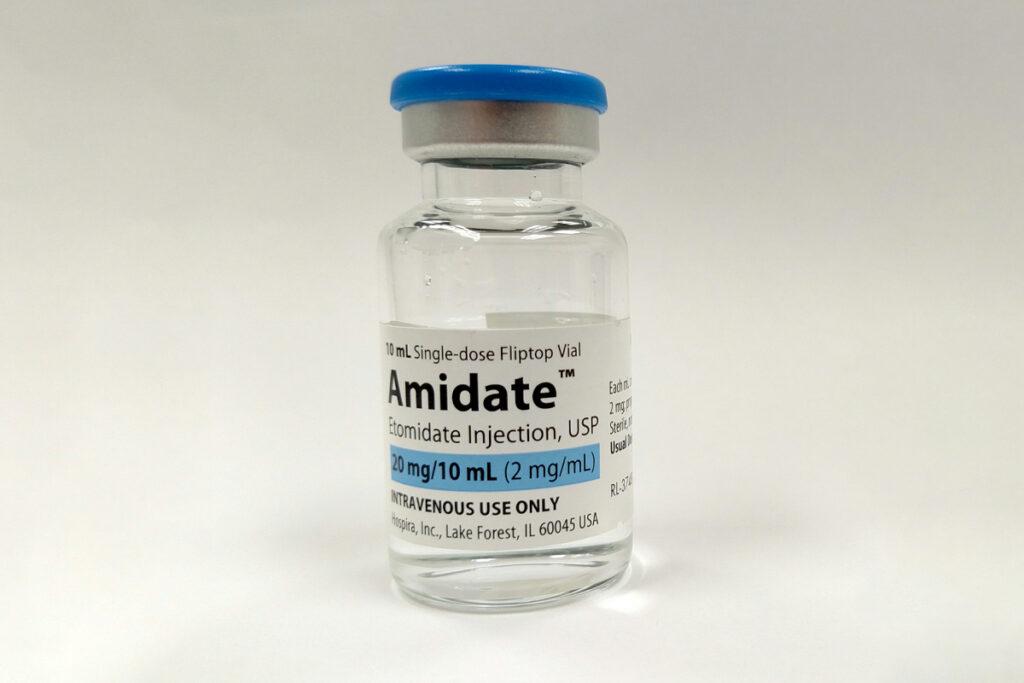
Authorities reported that in the past six months, they caught more than 5,100 people for vape-related offences. More than one in 10 of these were etomidate vape users, suggesting a meaningful—though not dominant—subset of users involved with psychoactive formulations.
Among those placed on rehabilitation, 42 defaulted. One person has been convicted and imprisoned, while the remainder will be charged. Meanwhile, 70 offenders completed rehabilitation, and four youth offenders reoffended—a datapoint lawmakers raised when discussing whether the system should focus on deterrence, rehabilitation, or both.
A new “Specified Psychoactive Substances” (SPS) category—built for future drugs
Perhaps the most consequential policy innovation is a new category: Specified Psychoactive Substances (SPS). This is designed to cover substances like etomidate that may be abused for psychoactive effects, including via tobacco products, vaporisers, or imitation tobacco products.
Singapore had previously dealt with etomidate by temporarily listing it and its analogues as Class C controlled drugs under the Misuse of Drugs Act (MDA). Under the new framework, etomidate will be removed from the MDA and placed under SPS when the law takes effect on May 1.
Penalties under SPS are severe and resemble Singapore’s tough drug enforcement posture:
- Supplying SPS: 2 to 10 years’ jail + 2 to 5 strokes of the cane
- Importing SPS: 3 to 20 years’ jail + 5 to 15 strokes of the cane
- Possessing/purchasing/consuming SPS: up to S$20,000 fine and/or up to 10 years’ jail
- Extrajurisdictional reach: Singapore citizens and permanent residents can be prosecuted for consuming SPS overseas, mirroring the MDA’s approach.
Protecting youths: criminal liability for adults who expose children
The amendments place special emphasis on youth protection—particularly adult accountability. Adults who knowingly or recklessly leave SPS products where children can access them, or fail to take reasonable steps to prevent youth use, face up to 10 years’ jail for a first offence. Repeat offences carry 2 to 10 years.
Even harsher: adults who involve young or vulnerable persons in importing or supplying face 4 to 20 years’ jail and 4 to 15 strokes of the cane.
The Ministry of Health (MOH) also outlined stepped-up prevention messaging across digital panels, mainstream media, and social media, plus collaboration with online content partners to reach youth. Schools and higher-learning institutions are integrating vaping harms into curricula.
A particularly strong signal of the state’s expectations of family involvement: Dr Koh said parents who refuse—without reasonable justification—to be involved in their children’s counselling could face criminal charges.
Rehabilitation becomes more formal—and broader
Alongside deterrence, the law expands powers for rehabilitation orders:
- Community-based rehabilitation orders can be imposed where there are reasonable grounds to believe someone consumed SPS, or where someone is convicted of (or compounds) SPS consumption.
- Repeat SPS consumers can be directed to treatment and rehabilitation at the Drug Rehabilitation Centre.
- Community-based rehabilitation can also apply to vape users generally.
In the parliamentary debate, Workers’ Party MP He Ting Ru cautioned against overly punitive approaches that stigmatise students, while PAP MP Choo Pei Ling argued the system’s credibility will hinge on swift, structured intervention for first-time youth offenders. Dr Koh responded that investigations and testing create unavoidable delays, though the government aims to minimise turnaround time.
Supply-chain enforcement: warehouses, storage units, and venue duties
The law creates a clearer duty of care for owners/occupiers of land and buildings to prevent prohibited products being stored on premises, suggesting increased enforcement attention on logistics and distribution networks. Due care may include tenant background checks, ad hoc inspections, and explicit tenancy clauses banning illegal activity.
Dr Koh cited HSA cases involving warehouse operations, including one seizure where vapes/components allegedly exceeded S$5 million in street value.
MP Yip Hon Weng asked for clarity on what constitutes “due diligence.” Dr Koh said guidance will be provided on identifying prohibited products, handling individuals involved, and when to call HSA. The law also criminalises obstructing or threatening owners/occupiers who are performing their duties.




Follow the wider vape market
Read the latest vape news
Track regulation, launches and industry updates.
Open vape news →Browse product data
Move from market news to device specifications.
Open product data →Check product reviews
Read independent testing and comparison reports.
Read review coverage →