

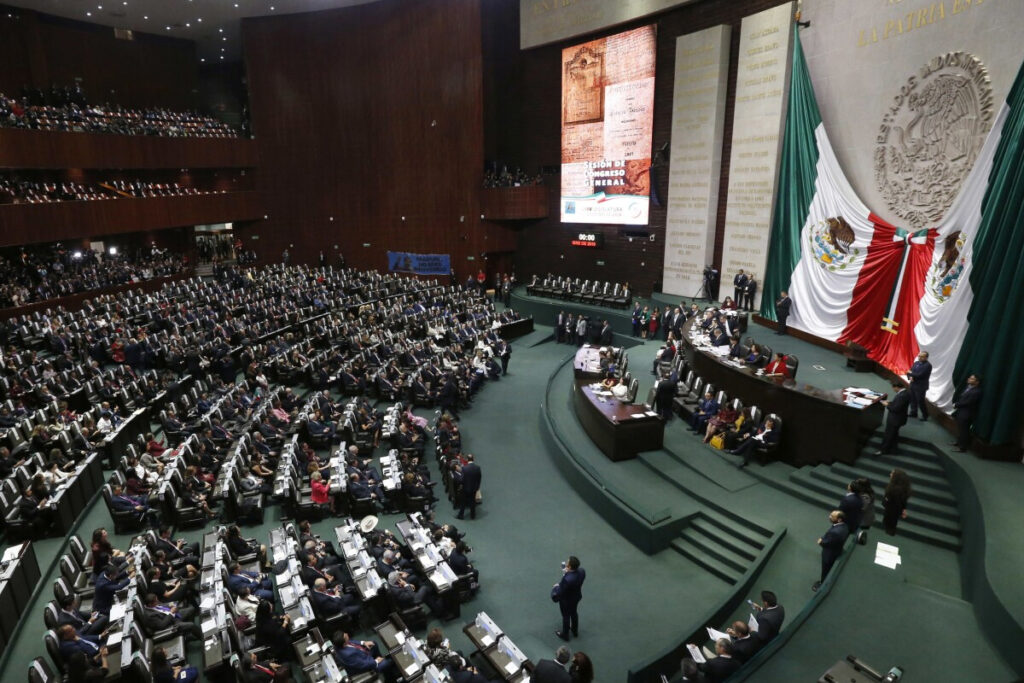
Mexico’s Congress has approved a sweeping constitutional and legal overhaul to prohibit electronic cigarettes and vaping devices nationwide, criminalizing their commercial supply chain with penalties of up to eight years in prison, while stopping short of penalizing personal use or possession.
In back-to-back votes this week, the Chamber of Deputies and the Senate advanced the Sheinbaum administration’s flagship anti-vaping initiative, recasting vaping as a public health threat and extending the Health Ministry’s authority to coordinate national health infrastructure, medicines, and system logistics.
What the reform does
- Total commercial ban: The law prohibits, “throughout the national territory,” the acquisition, production, manufacture, transport for commercial purposes, storage, import, export, distribution, sale, and supply of e‑cigarettes, vapes, and similar systems—along with any advertising or promotional activities.
- Broad definition: Covered devices include any mechanical, electronic, or other technology that heats, vaporizes, or atomizes toxic substances—liquid, gel, wax, aerosol, resin—with or without nicotine, different from tobacco, for inhalation.
- Criminal and financial penalties: Commercialization is punishable by one to eight years in prison. Fines range from 100 to 2,000 times the daily UMA (Unit of Measure and Update), equivalent to roughly MXN 11,314 to MXN 226,280 (about USD 621 to USD 12,430).
- Personal use: Consumption and personal possession are not criminalized—an element that drew intense scrutiny during the legislative process but was ultimately excluded from penalties.
- Public health framing: The law formally recognizes vaping as a public health threat, enabling policies to reduce dependence, protect vulnerable groups, and apply the precautionary principle in health risk management.
- Institutional reach: The reform also strengthens the Health Ministry’s planning powers for infrastructure, medicine supply, and coordination across Mexico’s National Health System.
How the votes broke down
- Chamber of Deputies: 324 in favor, 129 against, backing the presidential initiative introduced by Claudia Sheinbaum.
- Senate: 76 in favor, 37 against, one abstention. The reform adds a dedicated chapter on vaping devices to the General Health Law and imposes a comprehensive advertising ban across print, digital, radio, TV, and emerging platforms.
- Next step: The changes will take effect upon publication in the Diario Oficial de la Federación.
Competing narratives: public health vs. prohibition risks
- Government/Allies: Proponents argue the ban is necessary to curb youth uptake and address products containing nicotine, heavy metals, carcinogens, and particulates harmful to cardiovascular and pulmonary health. Legislators emphasized prevention campaigns and the state’s duty to mitigate health risks without intruding into private life.
- Opposition: PAN, PRI, and Movimiento Ciudadano warned the measure will entrench a thriving black market and shift sales further into the hands of organized crime. They argue prohibition deprives consumers of verified product information and meaningful oversight, and that the state should regulate rather than outlaw. Critics cited Mexico’s experience with underage tobacco sales as evidence that bans alone don’t eliminate access.
Context: A ban atop a ban
- Mexico already prohibited the import and commercialization of vapes and e‑cigarettes in 2022. Despite that, devices remain widely available online, in informal markets, and even shopping centers—an enforcement gap acknowledged by both sides, but with opposing prescriptions: tighter prohibition versus regulated markets.
- Public safety concerns: Opposition lawmakers accused the ruling bloc of creating a windfall for criminal networks and exposing users to unregulated products. Supporters counter that aggressive marketing, flavors, and easy access have driven youth uptake—framing vaping as a “silent epidemic.”
Why this matters for the vape market
- Supply shock: The law criminalizes virtually every link in the commercial chain—manufacture, import, distribution, retail, and advertising—while allowing possession. That combination typically accelerates the shift to unlicensed channels unless enforcement is sustained and omnidirectional.
- Enforcement and equity: With personal use legal but supply illegal, users may face practical risks—encounters with informal sellers, variable product quality, and uneven policing—issues opponents say could enable abuse and inconsistent enforcement.
- Industry and consumer outlook: Absent a regulated pathway, legitimate operators have no legal route to market. Consumers are likely to rely on gray and black markets, heightening the importance of risk communication and harm-reduction messaging—if the government chooses to provide it under the new framework.
Key quotes from the debate
- Opposition: “Not regulating a product people already consume means more black market and more money for narcos,” said deputy Iraís Reyes (Movimiento Ciudadano), calling the measure a “blank check” for organized crime to target youth.
- Ruling coalition: “The State fulfills its obligation to prevent risks and not be complicit with a market that deliberately targets vulnerable populations,” argued Morena legislators, highlighting toxic exposures and youth trends.
What to watch next
- Publication and enforcement: Timing and scope of implementing regulations, enforcement priorities at customs and retail, and inter-agency coordination.
- Market response: Migration of sales further online and into informal networks; pricing and product availability shifts; cross‑border flows.
- Legal challenges: Potential constitutional or administrative challenges by industry groups, consumer associations, or civil liberties organizations.
- Public health metrics: Youth use prevalence, product seizure data, poisoning/incidents, and healthcare indicators post‑implementation.
Mexico has chosen a maximalist prohibition model for vaping: criminalizing supply but not use, embedded in a broader public health mandate. The policy’s success will hinge on consistent enforcement and credible prevention efforts. Critics warn it may replicate past prohibition pitfalls—expanding the black market and reducing consumer safety—while supporters bet it will curb youth initiation and shrink demand over time




Follow the wider vape market
Read the latest vape news
Track regulation, launches and industry updates.
Open vape news →Browse product data
Move from market news to device specifications.
Open product data →Check product reviews
Read independent testing and comparison reports.
Read review coverage →