

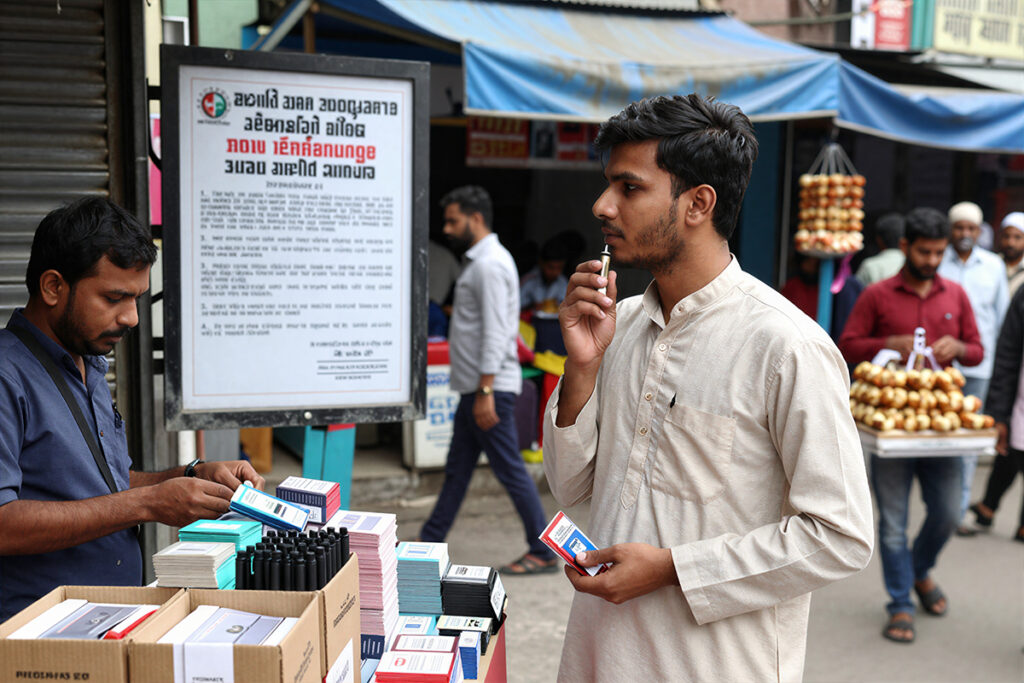
Bangladesh has implemented a sweeping prohibition on e‑cigarettes, vapes, heated tobacco, nicotine pouches, and other “emerging tobacco products,” following presidential approval of the Smoking and Tobacco Products Use Control (Amendment) Ordinance, 2025. The measure took effect this week and makes production, import, export, storage, sale, and use criminal offenses, punishable by up to six months in jail and fines up to Tk 500,000, with provisions for license cancellation and seizure in corporate cases.
Key provisions and tougher enforcement
- The ordinance folds e‑cigarettes, Electronic Nicotine Delivery Systems (ENDS), Heated Tobacco Products (HTPs), and nicotine pouches into an expanded legal definition of “tobacco products,” while empowering the government to designate similar products by gazette.
- A total ban on use of tobacco products in all public places and public transport; the maximum fine for violations rises from Tk 300 to Tk 2,000, with the definition of “public place” significantly widened.
- Comprehensive prohibitions on advertising, promotion, and sponsorship across print, electronic, and online channels, including social media and OTT platforms; bans on point‑of‑sale display and the use of tobacco company names/logos in CSR or event sponsorship.
- Sales prohibited within 100 meters of schools, hospitals, clinics, playgrounds, and children’s parks.
- Graphic health warnings covering 75% of packaging become mandatory; non‑standard packaging is prohibited.
- The law consolidates and tightens legacy rules on bidis, including a complete ban on the production, marketing, and use of bidis made from kumbi and tendu leaves.
- Mixing harmful or addictive substances with tobacco or tobacco products is now explicitly a punishable offense.
- Cases can be filed and conducted under the Code of Criminal Procedure, signaling an intent to make enforcement swifter and more consequential.
Why this move, and why now
Bangladesh has for years signaled a “tobacco‑free by 2040” ambition, mirroring a broader shift across South and Southeast Asia toward stringent controls on nicotine markets. By closing perceived loopholes around non‑combustible and novel products, the government is opting for a uniform prohibitionist approach rather than product‑specific regulation. The ordinance also unifies disparate bidi provisions into a single framework, simplifying enforcement.
How Bangladesh now compares globally
With a categorical ban on e‑cigarettes, HTPs, and nicotine pouches, Bangladesh joins the world’s most restrictive jurisdictions. The approach resembles India’s nationwide e‑cigarette ban and sits in contrast to markets such as the UK and New Zealand that have leaned on regulated harm‑reduction models (now also tightening youth protections). The inclusion of OTT/social media advertising and POS display bans brings Bangladesh in line with the strongest interpretations of WHO FCTC Article 13 on TAPS (tobacco advertising, promotion, and sponsorship).
Potential impacts and unintended consequences
- Public health trade‑offs: Proponents argue the ban protects youth and preempts a shift to nicotine initiation via novel devices. Critics will note that outright bans can remove substitution pathways for adult smokers who might otherwise switch to less harmful products, especially where cessation support is limited.
- Illicit market risk: Comprehensive prohibitions can push supply underground, particularly for small, high‑value items like vapes and pouches that are easy to smuggle or sell online. Robust border controls, digital marketplace enforcement, and retailer inspections will be critical—yet resource‑intensive.
- Retail and small business exposure: Rapid implementation without transitional stock‑clearance rules can strand inventory among small vendors. The ordinance is already in force; clarity on grace periods, seizure protocols, and license actions will shape near‑term disruption.
- Product substitution: Where smokeless tobacco use is entrenched, a clampdown on novel nicotine may inadvertently reinforce existing consumption patterns unless paired with targeted cessation and risk communication.
- Enforcement capacity: Expanding the definition of “public place,” banning displays, and policing a 100‑meter retail buffer around sensitive sites increases inspection scope. The success of the ordinance will hinge on practical enforcement guidance and local government coordination.
What to watch next
- Implementing rules and gazette notifications: Expect detailed definitions, inspection procedures, and any transitional timelines for packaging, stock disposal, and retail compliance.
- Online enforcement: How authorities handle cross‑border e‑commerce, social media sellers, and encrypted messaging channels will determine the real-world effect of the ad and sales bans.
- Legal challenges or industry petitions: As with prior regional bans, watch for constitutional or procedural challenges, especially on the breadth of delegated powers to classify “similar products.”
- Cessation services: Scaling evidence‑based cessation and counseling will be crucial to convert the policy’s intent into public health gains and reduce relapse to combustible tobacco.
Industry outlook
For global vape and heated tobacco manufacturers, Bangladesh is not among the largest revenue contributors, but the strategic signal is loud: another populous market has opted for prohibition across the entire category of novel nicotine products. Suppliers, distributors, and retailers face immediate compliance risk; diversified operators may rebalance toward legal combustible or non‑nicotine categories unless and until further restrictions arrive there too.
Bangladesh has chosen a maximalist, prohibition‑first strategy on novel nicotine, bundling it with tightened combustible tobacco controls. Whether the policy delivers fewer nicotine initiations without fueling a durable illicit market will depend on execution: clear rules, credible enforcement, and accessible cessation. In the short term, the legal vape and heated tobacco market in Bangladesh effectively ceases to exist; in the long term, the measure will test the region’s evolving balance between youth protection, harm reduction, and practicality on the ground
For background on the legislative process, see our earlier report: Bangladesh Tightens Grip on Tobacco with Sweeping New Ordinance


Follow the wider vape market
Read the latest vape news
Track regulation, launches and industry updates.
Open vape news →Browse product data
Move from market news to device specifications.
Open product data →Check product reviews
Read independent testing and comparison reports.
Read review coverage →