

Why More Vapers Are Making the Switch From Disposable to Refillable Vapes
If you have been vaping for a while, chances are you started with a disposable. They are everywhere — gas stations, convenience stores, online shops. But as 2026 unfolds, the conversation around switching from a disposable to refillable vape has gotten louder than ever. Between rising costs, environmental concerns, and tighter regulations, more vapers are asking whether that convenient little stick is really worth it in the long run.
This guide breaks down everything you need to know about moving from disposable vapes to refillable systems — the cost differences, device types, e-liquid choices, and the practical steps that make the transition feel less intimidating. Whether you are a casual weekend vaper or someone who goes through a disposable every two days, you will find the answers here.
Disposable vs Refillable: What Actually Changes?
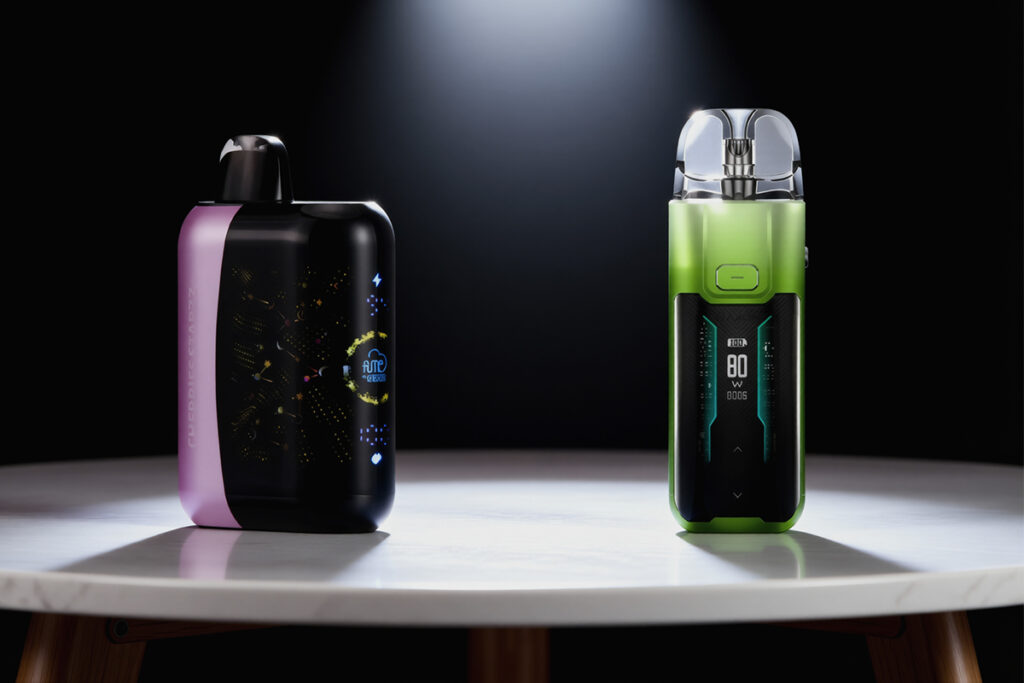
At its core, the difference is straightforward. A disposable vape comes pre-filled and pre-charged — you use it until it runs out, then toss the whole thing. A refillable vape lets you choose your own e-liquid, swap coils or pods, and recharge the battery. That flexibility is the whole point, but it also means learning a few new habits.
With disposables, what you see is what you get. The flavor, the nicotine strength, the airflow — all fixed at the factory. Refillable systems put you in control of those variables. That control comes with a small learning curve, but the payoff is real: better flavor, lower long-term costs, and way less waste hitting the landfill.
Quick Comparison
| Feature | Disposable Vape | Refillable Vape |
|---|---|---|
| Upfront cost | $8–$25 per device | $20–$60 for starter kit |
| Monthly cost (avg user) | $80–$200 | $30–$70 |
| Flavor options | Pre-set, limited | Thousands of e-liquids |
| Nicotine flexibility | Fixed strength | 0mg to 50mg+ |
| Environmental waste | High (whole device discarded) | Low (reusable hardware) |
| Battery lifespan | Single use | Rechargeable, 6–18 months |
| Customization | None | Airflow, wattage, coil type |
The Real Cost of Sticking With Disposables
Let us talk numbers, because this is where the switch from disposable to refillable vape really hits home. A typical disposable vape delivers roughly 5,000 to 15,000 puffs and costs between $12 and $25. If you vape moderately — going through one disposable every three to four days — you are spending somewhere between $90 and $250 per month.
Now look at vape costs on the refillable side. A decent pod system starter kit runs $25 to $50, and a bottle of e-liquid (30mL) costs about $12 to $18 and lasts most moderate vapers a week or more. Replacement pods or coils add $3 to $8 every couple of weeks. Do the math and you are looking at $30 to $70 per month after the initial purchase.
Annual Cost Breakdown
| Vaping Style | Disposable/Year | Refillable/Year | Annual Savings |
|---|---|---|---|
| Light (2-3 disposables/week) | $1,248–$2,340 | $420–$780 | $828–$1,560 |
| Moderate (1 disposable/2 days) | $2,190–$4,380 | $540–$960 | $1,650–$3,420 |
| Heavy (1+ disposables/day) | $4,380–$9,125 | $780–$1,440 | $3,600–$7,685 |
The heavier your vaping habit, the more money you leave on the table by staying with disposables. Even light users save over $800 a year by switching. That is not pocket change — that is a vacation fund or a couple months of groceries.
Understanding Refillable Vape Device Types
Walking into a vape shop or browsing online for the first time can feel overwhelming. There are pod systems, vape pens, box mods, AIO devices — the list goes on. But for someone transitioning from a disposable to refillable vape, the choices narrow down to a few practical categories.
Pod Systems (Best for Beginners)
Pod systems are the natural next step from disposables. They are small, easy to use, and draw-activated on most models — meaning you just inhale and they fire, exactly like a disposable. The big difference is that you fill the pod with your own e-liquid and replace the pod or coil when flavor starts to drop off.
Popular pod systems in 2026 include devices like the Vaporesso XROS series, Uwell Caliburn lineup, and Smok Novo series. These typically cost $20 to $40, use refillable pods that last one to two weeks, and charge via USB-C. They hit that sweet spot between simplicity and customization without overwhelming you with settings.
AIO (All-in-One) Devices
AIO devices sit between pod systems and full mods. They have a built-in tank and battery, so you do not deal with separate components. Just fill the tank, pop in a coil, and vape. They offer a bit more power and vapor production than pod systems but keep the complexity low. The Vaporesso Target series and some Joyetech models fit this category well.
Vape Pens
Vape pens are slim, cylindrical devices that have been around since the early days of vaping. They are straightforward — a tank on top, a battery below, and a single fire button. Newer models offer adjustable wattage and airflow, giving you more control than a pod system without the bulk of a box mod. Good options include the Innokin Endura series and the Freemax Marvos.
Box Mods (For Experienced Vapers)
Box mods are the heavy hitters. They pack larger batteries, support sub-ohm coils for massive vapor production, and let you fine-tune wattage, temperature, and airflow. If you are just making the switch from disposables, a box mod is probably more than you need right now. But if you find yourself wanting thicker clouds and richer flavor a few months in, this is where you graduate.
Which Device Should You Pick?
| Experience Level | Recommended Type | Price Range |
|---|---|---|
| Complete beginner | Closed pod system | $15–$30 |
| Coming from disposables | Refillable pod system | $20–$45 |
| Want more vapor/flavor | AIO or vape pen | $30–$60 |
| Ready for full control | Box mod + tank kit | $50–$120 |
E-Liquid 101: What to Know Before You Buy
Picking the right e-liquid is half the battle when moving from disposable to refillable vape. Disposables use salt nicotine (nic salts) at high concentrations — usually 5% (50mg/mL). When you switch to a refillable, you get to choose your own nicotine level, PG/VG ratio, and flavor. Here is what each of those means.
Nicotine Strength
If you were using a 5% disposable, you will want to start with 50mg nic salt e-liquid in a low-wattage pod system. That keeps the throat hit and satisfaction level close to what you are used to. If you want to gradually reduce your nicotine intake over time — and many vapers do — a refillable system makes that process manageable. You can step down to 35mg, then 20mg, then lower, at your own pace. The way nicotine in e-cigarettes affects the body depends on the concentration and delivery method, so having control over your intake matters.
According to the CDC, reducing nicotine consumption gradually tends to be more sustainable than quitting abruptly. A refillable vape gives you the tools to do that without sacrificing the hand-to-mouth habit or the flavor experience.
PG/VG Ratio
E-liquids contain two main base ingredients: propylene glycol (PG) and vegetable glycerin (VG). The ratio between them affects throat hit, vapor production, and flavor intensity.
| Ratio | Throat Hit | Vapor Production | Best For |
|---|---|---|---|
| 50/50 PG/VG | Strong | Moderate | Pod systems, MTL |
| 30/70 PG/VG | Mild | Thick clouds | Sub-ohm tanks, DTL |
| 20/80 PG/VG | Very mild | Maximum | Cloud chasers |
For your first refillable setup, stick with 50/50 nic salt e-liquids. They work perfectly in pod systems and deliver an experience that closely mirrors your disposable. Once you get comfortable and maybe explore different devices, you can experiment with higher VG blends.
Freebase Nicotine vs Nic Salts
Disposables almost always use nic salts because they deliver high nicotine concentrations with a smooth throat hit. Freebase nicotine, the older formulation, feels harsher at high levels but works well at lower concentrations (3mg to 12mg) in higher-wattage devices. Here is the simple rule: if your device has low wattage (under 25W), use nic salts. If you are running a sub-ohm tank at 50W+, go with freebase at 3mg to 6mg.
Step-by-Step: Making the Switch From Disposable to Refillable Vape
Enough background. Let us get practical. Here is exactly how to transition without the frustration that makes some people give up and go back to disposables.
Step 1: Pick Your First Device
Go with a refillable pod system. Seriously, do not overthink it. Look for these features:
- Draw-activated firing (no buttons to worry about)
- Refillable pods with built-in coils (fewer parts to manage)
- USB-C charging (fast and convenient)
- Compact size (familiar feel from your disposable)
- Good pod life (read reviews — some pods last weeks, others burn out in days)
Brands that consistently get positive feedback in 2026 include Vaporesso, Uwell, and OXVA. Pick one, buy two extra pods, and move on. Do not spend a month researching — you can always upgrade later.
Step 2: Choose Your E-Liquid
Match your nicotine level to what you were getting from disposables. If you used 5% disposables, buy 50mg nic salt e-liquid. If you used 2% (20mg), buy 20mg. Start with flavors you already enjoy — most disposable flavors have e-liquid equivalents. Fruit, mint, and dessert profiles are widely available in nic salt form.
Buy two or three small bottles (10mL to 30mL) to start. That way, if a flavor does not work out, you are not stuck with 100mL of something you dislike. And yes, e-liquid flavor can taste slightly different from what you got in a disposable, even with the same name. The hardware, coil resistance, and wattage all affect flavor delivery.
Step 3: Learn to Fill and Prime Your Pod
Filling a pod is simple: remove the mouthpiece or open the fill port, squeeze e-liquid in slowly, close it up, and wait five minutes. That waiting period is called “priming,” and it matters. The coil inside the pod has cotton wicking material that needs time to absorb e-liquid. Vaping on a dry or partially dry coil gives you a harsh, burnt taste and shortens the coil life dramatically.
Five minutes is the minimum. If you can wait ten, even better. Some vapers fill a new pod at night and let it sit until morning. There is no rush — the pod is not going anywhere.
Step 4: Adjust Your Vaping Habits
Refillable vapes behave slightly differently than disposables. The draw might feel a touch different. The vapor temperature might vary depending on battery level. The flavor might taste richer because fresh coils and fresh e-liquid deliver better flavor than a disposable that has been sitting on a shelf for months.
Give yourself a week to adjust. Most vapers report that after three to five days, the refillable experience feels natural and often better than what they were getting from disposables. If the throat hit is too harsh, try a lower nicotine strength or a smoother e-liquid. If the flavor seems weak, your pod might need a break-in period of 20 to 30 puffs.
Step 5: Build a Maintenance Routine
This is the part that scares some people off, but it is honestly not complicated:
- Refill the pod when e-liquid drops below a quarter full (running a pod dry burns the coil)
- Replace the pod or coil every one to two weeks, or when flavor turns muted or burnt
- Clean the contacts between pod and battery with a cotton swab every few days
- Charge before the battery dies completely — lithium-ion batteries last longer with partial charges
That is it. Four things. None of them take more than a minute.
Common Problems When Switching (and How to Fix Them)
Every vaper hits a few bumps during the transition. Here are the ones that come up most often and how to deal with them.
Leaking Pods
Leaking usually happens when a pod is overfilled, the fill port is not sealed properly, or temperature changes cause the e-liquid to expand. Fill slowly, leave a small air pocket at the top, and make sure the fill port cover clicks shut. If leaking persists, try a different pod brand — some have better seals than others.
Burnt Taste
A burnt taste almost always means the coil is dry or worn out. If it happens on a fresh pod, you did not prime it long enough. Remove the pod, add a drop of e-liquid directly onto the visible coil openings, wait another five minutes, and try again. If the burnt taste persists, replace the pod. Continuing to vape on a burnt coil is unpleasant and can produce aldehydes at higher levels than normal, as noted in research published by the FDA.
Weak Flavor
Weak flavor can stem from a few causes: the coil needs a break-in period, the e-liquid ratio does not match your device, or the airflow is too open. Close the airflow slightly, give a new pod 20 to 30 puffs to break in, and make sure you are using 50/50 e-liquid in a pod system rather than a high-VG blend.
Battery Draining Fast
Pod system batteries typically range from 600mAh to 1000mAh. If yours is dying before the end of the day, you might be vaping more than you realize (refillable vapes can be easier to hit since they are always ready). Carry a small power bank or charge during lunch. Also, batteries degrade over time — if your device is six months old and barely holding a charge, it might be time for a replacement.
Environmental Impact: A Reason That Keeps Growing
In 2026, the environmental argument against disposables has become impossible to ignore. The World Health Organization has highlighted the e-waste problem created by single-use vaping devices, and several countries have already enacted or proposed disposable vape bans. The UK banned disposable vapes in early 2025, and similar legislation is moving forward in parts of the EU, Australia, and several US states.
Each disposable vape contains a lithium battery, a small circuit board, plastic housing, and residual e-liquid. When millions of these end up in landfills each year, the cumulative environmental toll is significant. A single refillable pod system, by contrast, can last six months to over a year with proper care, and only the small pod or coil gets replaced periodically.
By switching from a disposable to refillable vape, you are not just saving money — you are cutting your vaping-related waste by an estimated 80 to 95 percent. That is a tangible difference, and it is one of the reasons the refillable market has been growing steadily through 2025 and into 2026.
Regulatory Landscape in 2026
The regulatory environment around vaping continues to shift, and 2026 has already seen some notable developments. The FDA’s PMTA (Premarket Tobacco Product Application) process has weeded out many disposable products from the US market, though enforcement remains inconsistent. Internationally, the trend toward restricting or banning disposable vapes has accelerated.
For vapers, this creates a practical concern: your favorite disposable might not be available next month. Refillable devices and e-liquids face their own regulatory hurdles, but the market is broader and more resilient. If one e-liquid brand disappears, dozens of alternatives exist. If a disposable gets pulled, there is no workaround — you have to find a new device entirely.
Staying informed about regulations in your area is always smart. The FDA’s tobacco product regulations page is a good starting point for US vapers, while the WHO Framework Convention on Tobacco Control covers international perspectives.
What About Nicotine Reduction?
One of the most underappreciated benefits of switching from a disposable to refillable vape is the ability to control your nicotine intake with precision. Disposables lock you into whatever strength the manufacturer chose — usually 5% or 2%. With a refillable system, you can step down gradually.
A common reduction path looks something like this:
| Phase | Nicotine Level | Duration |
|---|---|---|
| Starting point (matches disposable) | 50mg (5%) nic salt | 2–4 weeks |
| First reduction | 35mg (3.5%) nic salt | 2–4 weeks |
| Second reduction | 20mg (2%) nic salt | 4–8 weeks |
| Transition to freebase | 6mg freebase | 4–8 weeks |
| Low nicotine | 3mg freebase | Ongoing |
| Zero nicotine | 0mg | Whenever ready |
The timeline is flexible. Some people move through these steps in a few months; others stay at one level for a year before stepping down. There is no wrong pace. The point is that you have the option, which disposables simply do not provide.
Tips From Vapers Who Already Made the Switch
We surveyed active community forums and social media groups in early 2026 to collect advice from vapers who transitioned from disposables. Here are the most common tips:
- Buy backup pods — Running out of working pods and not having a spare is the number one reason people grab a disposable out of desperation. Keep two extra pods on hand at all times.
- Do not chase the exact same flavor — Disposable flavors are formulated for that hardware. The same flavor in a refillable might taste slightly different, and that is okay. Give new e-liquids a fair chance.
- Start simple — Skip the 200W mod with temperature control for now. Get comfortable with a pod system first. You can always upgrade later.
- Keep a disposable in your car or bag as backup — Not forever, but for the first two weeks while you build new habits. Knowing you have a fallback reduces the anxiety of switching.
- Join a community — Reddit’s r/electronic_cigarette, vaping Facebook groups, and local vape shop regulars are all great sources of troubleshooting help when something feels off.
- Clean your device weekly — A quick wipe-down and pod contact cleaning takes 30 seconds and extends the life of your hardware.
The Refillable Vape Market in 2026: What is New
The hardware landscape keeps evolving. In 2026, several trends are shaping the refillable market:
Mesh coils are standard now. Nearly every pod system ships with mesh coils, which heat e-liquid more evenly and deliver better flavor than the old wire coils. This was a premium feature three years ago; now it is the baseline.
Smart features are creeping in. Some newer devices offer Bluetooth connectivity, puff tracking, and adjustable wattage through a phone app. Whether these features are useful or gimmicky depends on your preferences, but the core vaping experience has not changed — you still fill, puff, and recharge.
E-liquid quality has improved. The nic salt e-liquids available in 2026 are smoother and more consistent than what was on the market even two years ago. More brands are using synthetic nicotine, which delivers a cleaner taste and more predictable satisfaction.
Sustainability is a selling point. Manufacturers are responding to the environmental backlash against disposables by marketing their refillable products as the greener choice. Some brands offer recycling programs for used pods and coils, and a few have introduced biodegradable pod materials.
Frequently Asked Questions
Is switching from disposable to refillable vape difficult?
Not as much as you might think. The learning curve is short — most vapers feel comfortable with a refillable pod system within three to five days. The main adjustments are filling the pod, waiting for it to prime, and replacing pods when flavor drops off. None of these tasks takes more than a minute or two.
Will a refillable vape taste the same as my disposable?
Close, but not identical. Disposable flavor is calibrated for that device’s coil resistance, wattage, and airflow. In a refillable, you might notice richer, more layered flavor because fresh coils and e-liquid deliver better than a disposable that has been sitting in packaging. Some flavors will taste different enough that you might prefer a different e-liquid brand — and that flexibility is part of the appeal.
How long does a refillable pod last?
Most refillable pods last one to two weeks with regular use. Sweet and dark-colored e-liquids tend to shorten pod life because they gunk up the coil faster. If you vape heavily throughout the day, expect closer to one week. Light users often get two to three weeks per pod.
Can I use any e-liquid in my refillable vape?
Not exactly. Pod systems work best with 50/50 PG/VG e-liquids, especially nic salts. High-VG e-liquids (70/30 or 80/20) are too thick for most pod coils and can cause dry hits or flooding. Match your e-liquid to your device type: 50/50 for pod systems and vape pens, 70/30 or higher for sub-ohm tanks and box mods.
Is it cheaper to use a refillable vape?
Yes, almost always. The upfront cost of a refillable starter kit is higher than a single disposable, but the ongoing expenses are dramatically lower. Most vapers save 50 to 75 percent per month after making the switch. The more you vape, the more you save.
What if I do not like my first refillable device?
That happens sometimes. Maybe the draw is too tight, the flavor is not what you expected, or the pod leaks. Try a different brand or model — there is no one-size-fits-all device. Vape shops often let you test devices, and online reviewers cover the pros and cons of every major pod system. Do not let one bad experience convince you that refillables are not for you.
Are refillable vapes safer than disposables?
Neither disposable nor refillable vapes are risk-free. Both deliver nicotine, which is addictive, and both involve inhaling aerosolized substances. However, refillable vapes give you more control over what you are vaping — you choose the e-liquid brand, the nicotine level, and the ingredients. Some vapers prefer this transparency over the opaque formulations of disposable products. The CDC maintains up-to-date information on the health considerations of e-cigarette use.
How do I dispose of old pods and coils?
Used pods and coils should not go in regular trash. The residual e-liquid contains nicotine, which is toxic to aquatic life. Check with your local vape shop — many accept used pods and coils for recycling. Some e-liquid brands also run mail-back programs. If no recycling option exists, seal the used pod in a small bag before disposing of it in household waste.
Final Thoughts on Making the Switch
Transitioning from a disposable to refillable vape is not as daunting as it seems before you try it. The key is starting with the right device — a simple, refillable pod system — and giving yourself a few days to adjust. The financial savings alone make the switch worthwhile for most vapers, and the environmental benefits, flavor variety, and nicotine control are compelling reasons on their own.
You do not have to go all-in overnight. Keep a disposable as a backup for the first week. Try a couple of e-liquid flavors. Figure out your preferred nicotine strength. Once the routine clicks — and it usually clicks fast — you will wonder why you did not switch sooner. The refillable vaping world is bigger, more flexible, and more rewarding than the disposable aisle ever was.
If you are still using disposables and want to learn more before making the switch, see our 2025 Beginner’s Guide to Disposable Vapes.


Build your vape knowledge
Read more guides
Find explainers, how-to articles and reference material.
Open guide library →Compare vape products
Check specifications across the product database.
Open product data →Read hands-on reviews
See tested devices and documented trade-offs.
Read review coverage →