


A disturbing trend is sweeping through Asia: the use of drug-laced e-vapes, known as “Kpods”, is growing rapidly, with organised crime syndicates increasingly involved in their production and distribution. The United Nations Office on Drugs and Crime (UNODC) has issued a stark warning that the use of these vapes, laced with substances such as ketamine and etomidate, constitutes a “looming crisis“ in the region.
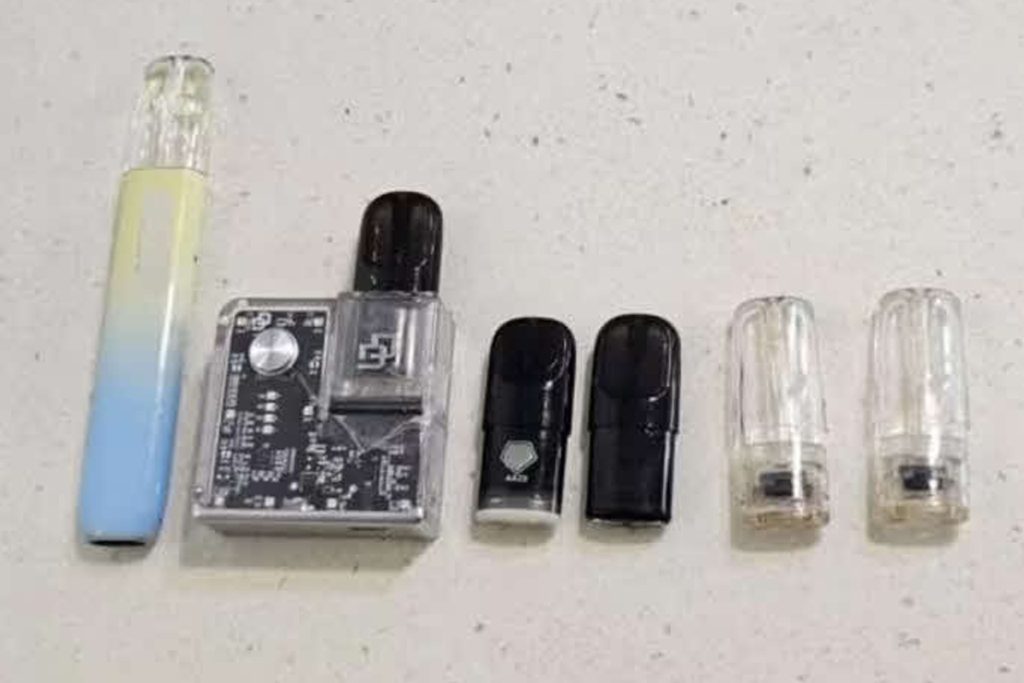
Singapore is at the center of this alarming phenomenon, with local authorities and families witnessing the devastating impact of these illicit products on young people.
A Mother’s Desperate Fight for Her Son
In a heart-wrenching case that has garnered widespread attention, a Singaporean mother, referred to as Susan (not her real name), struggled for weeks to get her 19-year-old son arrested for his addiction to etomidate-laced Kpods.
Once a vibrant and active teen, the boy had become increasingly withdrawn after November 2024, when he began using Kpods. He started self-harming and exhibited erratic behavior, even cutting himself with a knife.
“We saw many TikTok videos warning that Kpods can lead to suicide, so we tried to stop him,” Susan told The Straits Times.
Her husband installed cameras at home, and the family eventually witnessed their son staggering out of his room, struggling to walk. He claimed he had injured himself during a traditional lion dance, but his mother suspected something was deeply wrong.
“He was changing between five and 10 pairs of shorts every night,” Susan said, adding that she believed he had lost control of his bladder due to the effects of etomidate.
The mother reached out to the authorities, but was met with a chilling response. She was told that etomidate is not classified as a Class A controlled substance, meaning her son could only face a fine, not arrest.
In Singapore, etomidate is governed by the Poisons Act, and those caught in possession or using vape pods containing the drug can face up to two years in prison or a fine of $10,000.
A Growing Crisis Across the Region
According to the UNODC report, drug syndicates in Asia are leveraging their resources to produce and distribute increasingly sophisticated drug-laced vapes — especially those containing etomidate, ketamine, and other synthetic substances.
The report reveals that 65.6% of vape liquids seized in Malaysia between 2023 and 2024 contained dangerous drugs, and a significant portion of vapes seized in Singapore have originated from Malaysia.
The Health Sciences Authority (HSA) reported that in the first half of 2025, there were 28 cases of Kpods containing etomidate, compared to just 10 cases in 2024.
This alarming rise has been linked to organised crime groups that have joined forces with pharmaceutical and chemical suppliers to create new drug combinations that are difficult to detect and regulate.
The Role of Synthetic Drugs
One of the key drivers behind the surge is the criminal use of pharmaceutical agents as substitutes for traditional drugs like methamphetamine and heroin.
Etomidate, originally used in clinical settings as an intravenous anesthetic, has found its way into the illegal drug market. Its psychoactive effects — including hand tremors, unsteadiness, and mental confusion — make it a dangerous addition to vaping products.
According to the UNODC, etomidate appeared in China in significant quantities after synthetic cannabinoids were banned, and since then, it has been increasingly incorporated into vape products.
Inshik Sim, the UNODC’s lead analyst for South-east Asia and the Pacific, explained that during the pandemic, criminal networks struggled with traditional supply routes and turned to clinical-grade chemicals, such as etomidate, which became a new target for users seeking alternatives to methamphetamine and heroin.
“These groups needed to find an alternative,” Sim said. “Etomidate, which is used in clinical practice, really started to appeal to some of these users.”
The Kpod Epidemic
In Singapore, the emergence of Kpods was noted as early as March 2024, when the HSA detected vapes containing ketamine and etomidate.
A major raid in April 2024 led to the seizure of over 8,700 Kpods valued at $137,000, including etomidate-laced devices.
The first case of Kpod use among minors was reported in April 2024, when a 13-year-old girl was found acting erratically outside the State Courts. A home raid confirmed she had an etomidate-laced device.
Since then, videos have surfaced of young people behaving dangerously after using Kpods, leading to increased concern among parents, educators, and law enforcement.
The UN Warns: A Looming Public Safety Threat
The UNODC report highlights a dangerous trend of organised crime groups using vaping products as a delivery system for synthetic drugs, creating a new and hard-to-regulate form of drug abuse.
“This is a public safety issue,” the report states. “The use of etomidate and other substances in vaping products has been associated with public safety accidents, and the increasing prevalence of these products suggests they could gain significant popularity in the region, much like ketamine did in the past.”
To be continued…
Stay tuned for more updates on the growing crisis of drug-laced e-vapes in Asia, and the impact on vulnerable communities.




Follow the wider vape market
Read the latest vape news
Track regulation, launches and industry updates.
Open vape news →Browse product data
Move from market news to device specifications.
Open product data →Check product reviews
Read independent testing and comparison reports.
Read review coverage →