

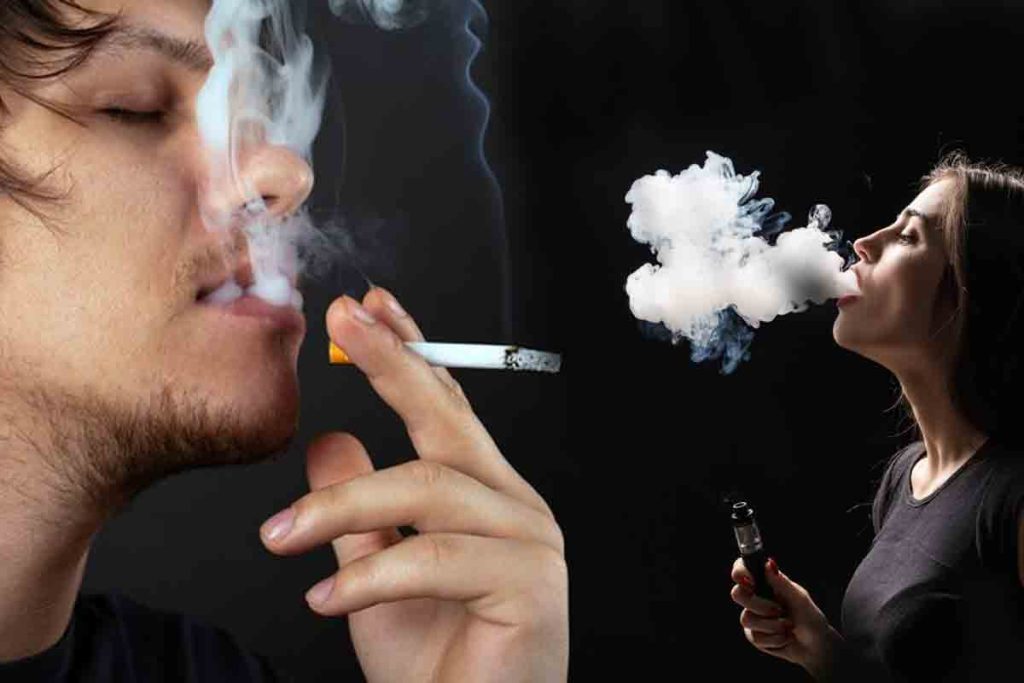
The Short Version: Same Drug, Very Different Ride
If you have ever switched from cigarettes to a vape and thought “something feels different,” you are not imagining it. Both deliver nicotine, but the way that nicotine reaches your brain, the sensations you feel along the way, and the chemical baggage that comes with it are not the same at all.
A cigarette burns tobacco at temperatures above 600 degrees Celsius, creating smoke that carries nicotine alongside roughly 7,000 chemicals. A vape heats a liquid to 100-250 degrees Celsius, producing an aerosol that carries nicotine with far fewer toxicants. That temperature gap alone explains most of the difference in how the two products feel, taste, and affect your body. But there is more to it than just heat.
This article breaks down the sensory, pharmacological, and health differences between cigarettes and nicotine vapes, with the research to back up every claim.
Throat Hit and Sensation: Sharp Burn vs. Smooth Warmth
The throat hit is probably the first thing anyone notices when switching between the two. And the difference is not subtle.
Cigarettes: the sharp, hot hit
When you drag on a cigarette, the burning tip hits 600-900 degrees Celsius. The smoke that reaches your throat is hot, dense, and irritating. That “hit” you feel is partly nicotine and partly thermal irritation from the combustion gases and ammonia compounds added to cigarette tobacco to boost nicotine absorption. For long-term smokers, that harshness becomes part of the satisfaction. Your brain associates the burn with the incoming nicotine rush.
Vapes: the smoother, cooler alternative
Vapes operate at a fraction of that temperature. The coil heats e-liquid to somewhere between 100 and 250 degrees Celsius, depending on the device and wattage. The aerosol that reaches your throat is cooler, less dense, and less irritating. Whether that feels “better” or “worse” depends on what you are used to. Many former smokers initially find vaping unsatisfying because they miss the harshness they have trained themselves to associate with nicotine delivery.
Nicotine salts changed this equation. Unlike freebase nicotine (the form used in older vape liquids and in cigarette smoke), nicotine salt formulations are less alkaline, which means they irritate the throat less at high concentrations. That is why a 5% salt-nic disposable can deliver 50 mg/mL of nicotine without making you cough, while the same concentration of freebase nicotine would be nearly unvapeable. For more on this, see our disposable vape nicotine guide.
Nicotine Delivery Speed: The Pharmacokinetic Reality
How fast nicotine hits your brain matters more than most people realize. It determines how satisfying the experience feels, how addictive the product is, and how well a vape can substitute for a cigarette.
The numbers from the research
A 2025 meta-analysis published in Nicotine & Tobacco Research pooled data from 30 studies with 2,728 participants to compare nicotine pharmacokinetics between cigarettes, closed pod systems, refillable e-cigarettes, and heated tobacco products. The key findings:
- Peak nicotine concentration (Cmax): Significantly lower for e-cigarettes and pod systems compared to conventional cigarettes.
- Time to peak (Tmax): Statistically similar across all products. Vapes reach their peak nicotine level at roughly the same rate as cigarettes.
- Total nicotine exposure (AUC): Lower for e-cigarettes compared to cigarettes.
In plain language: vapes get nicotine to your brain about as fast as cigarettes do, but the peak is lower and the total dose per session is smaller. That is why a single puff on a cigarette can feel more “intense” than a puff on a vape, even if both contain the same drug.
Nicotine salt vs. freebase: why it matters
A 2024 study in Nicotine & Tobacco Research specifically compared the pharmacokinetics and pharmacodynamics of inhaled nicotine salt versus freebase nicotine. The salt formulations allowed higher nicotine concentrations to be delivered with less throat irritation, making the experience closer to a cigarette in terms of satisfaction, even though the total nicotine delivered per puff was still generally lower. This is why modern pod systems and disposables feel more “cigarette-like” than the older box mods and sub-ohm tanks that used freebase nicotine at lower concentrations.
Taste and Flavor: Tobacco Smoke vs. Engineered Flavor
Cigarettes taste like what they are: burning tobacco. The flavor comes from the cured leaf, the combustion process, and the additives mixed in by manufacturers. It is smoky, bitter, and consistent. You do not have choices. Marlboro Red tastes like Marlboro Red, and that is the only option.
Vapes offer thousands of flavors. That variety is one of the main reasons people switch. But it is also one of the main reasons teenagers start. The CDC has consistently identified flavors as a key driver of youth vaping initiation, which is why flavor restrictions have become a major regulatory focus. For state-by-state flavor ban details, see our flavor restriction tracker.
There is also a functional taste difference. Cigarette smoke coats your tongue and dulls taste buds over time. Vape aerosol, being less chemically complex, tends to preserve taste sensation better. Many former smokers report that food tastes better after switching, though this may also reflect recovery from the taste bud damage caused by smoking.
What You Are Actually Inhaling: The Chemical Comparison
This is where the difference between cigarettes and vapes becomes most consequential. The table below breaks down what each product delivers to your lungs.
| Factor | Cigarette Smoke | Vape Aerosol |
|---|---|---|
| Temperature | 600-900 degrees C | 100-250 degrees C |
| Number of chemicals | ~7,000 identified | Far fewer (PG, VG, flavors, nicotine) |
| Known carcinogens | At least 70 | Some present at much lower levels |
| Tar | Present (combustion byproduct) | Absent (no combustion) |
| Carbon monoxide | High levels | Negligible or absent |
| TSNAs (NNK, NNN) | Present (from tobacco curing) | Much lower levels |
| Heavy metals | From tobacco and paper | Possible from heating coil |
| Nicotine form | Freebase (absorbed quickly) | Freebase or salt (salt = smoother delivery) |
The most widely cited comparison comes from Goniewicz et al. (2014) in Tobacco Control, which found that toxicant levels in e-cigarette vapor were 9 to 450 times lower than in cigarette smoke, and in many cases comparable to trace amounts in pharmaceutical nicotine preparations. That study has limitations (it tested early-generation devices), but the fundamental finding, that removing combustion removes the majority of harmful chemicals, has been consistently replicated.
For a complete breakdown of every chemical category, see our chemicals in vapes guide.
How It Feels Over a Session: Cigarette vs. Vape
Beyond the individual puff, the overall experience of using each product differs in ways that matter for habit formation and satisfaction.
Cigarettes: start-stop with built-in limits
A cigarette burns for about 5-8 minutes and then it is done. You smoke it, you put it out, and you wait until the next one. That natural endpoint creates a rhythm. A pack-a-day smoker gets about 20 discrete nicotine events per day, each lasting minutes with gaps in between.
Vapes: the always-available device
A vape has no natural endpoint. You can take a puff, set it down, pick it up five minutes later, and repeat all day. There is no “cigarette” to finish. No ash to tap. No time pressure from a burning ember. This makes vaping more convenient, but it also removes the natural pacing mechanism that cigarettes impose. Some vapers end up consuming more total nicotine per day than they did as smokers, simply because the device is always there. For insights on managing device settings, see our vape power settings guide and our airflow adjustment guide.
Health Comparison: What the Evidence Actually Shows
Neither product is safe. But they are not equally harmful either. The hierarchy is clear and well-supported by evidence:
- Cigarettes are the most harmful nicotine delivery system available. They cause lung cancer, COPD, heart disease, stroke, and dozens of other conditions. The CDC calls smoking the leading cause of preventable disease and death in the United States.
- Vapes are less harmful than cigarettes, primarily because they avoid combustion and its associated toxicants. The UK Office for Health Improvement and Disparities has consistently stated that vaping is less harmful than smoking. But “less harmful” does not mean harmless. Vaping still exposes the lungs to PG/VG aerosol, flavoring compounds, and potentially heavy metals from the heating coil.
A 2024 study in Nature Scientific Reports found that even PG/VG aerosol without nicotine or flavorings caused measurable inflammation and oxidative stress in lung cells. So the base ingredients of vape liquid are not inert when inhaled. They do something to your lungs, and we are still learning exactly what.
For the complete health risk picture, see our smoke vs. vape comparison and our vaping health risks guide.
FAQ: How Do Cigarettes Compare to a Nicotine Vape?
Does vaping feel the same as smoking?
Not exactly. The throat hit is milder, the “smoke” is cooler and thinner, and the flavor options are completely different. Many former smokers describe vaping as “similar enough” to replace cigarettes, especially with modern nicotine salt devices that approximate the nicotine delivery speed of a cigarette. But if you are expecting a one-to-one replication of the smoking experience, you will notice the differences immediately.
Which delivers nicotine faster, a cigarette or a vape?
They reach peak blood nicotine levels at roughly the same speed (similar Tmax), but cigarettes deliver a higher peak concentration and more total nicotine per session. The 2025 meta-analysis in Nicotine & Tobacco Research confirmed this across 30 studies: vapes get nicotine to your brain about as fast, but the hit is less intense.
Is the throat hit from a vape weaker than from a cigarette?
Generally, yes. Cigarette smoke is hot and chemically irritating, which produces a sharp throat hit. Vape aerosol is cooler and less irritating, especially with nicotine salt formulations. Some former smokers find this unsatisfying at first. Higher wattage devices and higher-PG e-liquids can increase throat hit, but they will not replicate the specific harshness of burning tobacco.
Why do some smokers not feel satisfied when they switch to vaping?
Usually for one of three reasons: the nicotine delivery is lower (the 2025 meta-analysis confirms lower Cmax for vapes), the throat hit is milder, or the behavioral ritual is different. All three can be adjusted. Higher-nicotine salt devices address the first two. The behavioral mismatch usually fades with time as the brain builds new associations.
Can vaping help you quit smoking?
Evidence supports it as a cessation tool. A 2022 UK evidence review found that nicotine vaping was more effective than nicotine replacement therapy for smoking cessation. The key is using vaping as a transition tool, not as a permanent replacement. For more, see our article on flavored e-cigarettes and quitting.
Are there chemicals in vapes that are not in cigarettes?
Yes. Propylene glycol and vegetable glycerin are the main ingredients in vape liquid and are not found in cigarette smoke. Flavoring compounds like diacetyl and vanillin are also unique to vapes. The reverse is also true: cigarettes contain combustion byproducts like tar and carbon monoxide that vapes do not produce. The two products share nicotine, but the chemical environments around it are completely different. See our article on whether vapes contain tobacco for more.
Related Articles
- Is It Better to Smoke or Vape? (full harm comparison.
- What Chemicals Are in Vapes? (ingredient breakdown.
- How Much Nicotine Is in a Disposable Vape? (nicotine content comparison.
- Do Vapes Have Tobacco? (tobacco content and legal classification.
- What Bad Things Can Happen When You Vape? (health risk overview.
- Flavor Restriction Tracker (state-level regulations.




I used to smoke cigarettes, but now I use vape