

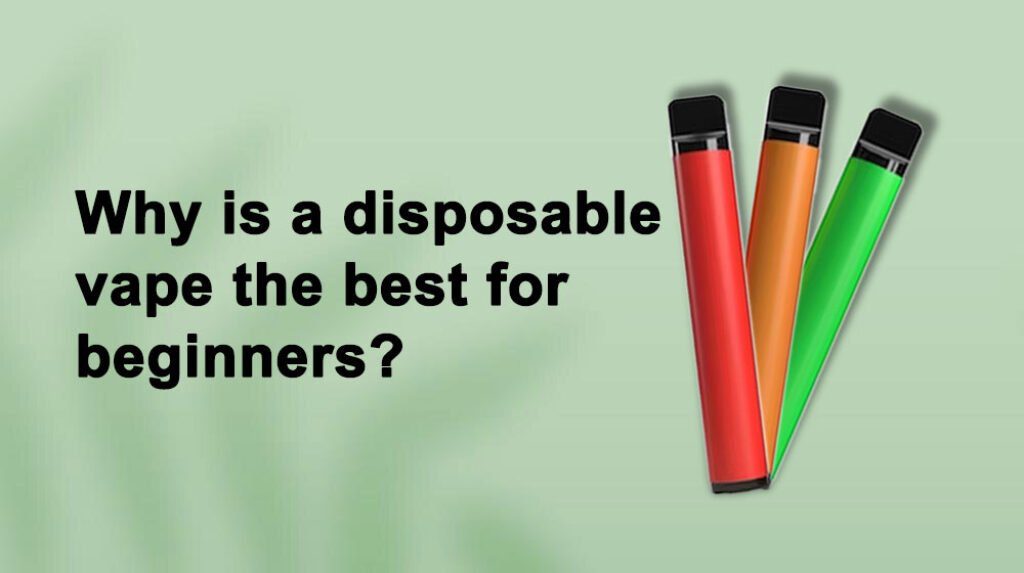
Why Most New Vapers Start With a Disposable
If you walk into any vape shop in 2026 and ask what to try first, the answer is almost always a disposable. Not because the staff is pushing the easiest sell, but because disposables solve the three problems every beginner runs into: they are dead simple to use, they do not require any setup, and they let you figure out whether vaping even works for you before you spend money on a refillable kit.
According to HHS data from 2024, disposable e-cigarettes were the most commonly used type of vape, at 55.6% of all current users. That is not just a youth trend. Adults switching from cigarettes gravitate toward disposables for the same reasons: convenience, low upfront cost, and no learning curve.
This is not a “disposables are perfect and everyone should use them” article. They have real downsides, and I will get into those. But for someone who has never vaped before and wants to see if it helps them cut back on smoking, a disposable is the most practical starting point.
The Five Things That Make Disposables Beginner-Friendly
1. Zero setup required
You open the package and inhale. No coil to install, no tank to fill, no wattage to adjust. The device is pre-charged and pre-filled. If it is a rechargeable model with a USB-C port, you plug it in when the battery dies, and you keep going until the e-liquid runs out.
Compare that to a refillable pod system: you have to buy a device, buy pods or coils separately, buy e-liquid separately, fill the pod without overfilling or leaking, wait five minutes for the coil to saturate, and then figure out the right draw technique. Each step is a potential frustration point for someone who has never vaped. Disposables skip all of it.
2. The price of entry is low
A typical disposable in 2026 costs between 15 and 25 dollars at a retail shop. Online prices run lower, usually 12 to 20 dollars per device. For that price, you get a device that lasts anywhere from one day (if you vape heavily on a 2,000-puff unit) to a week or more (if you are moderate on a 15,000-puff device).
| Device | Puff Count | Typical Price | Approx. Days (200 puffs/day) |
|---|---|---|---|
| Elf Bar BC5000 | 5,000 | $15-18 | ~25 days |
| Geek Bar Pulse | 15,000 (regular mode) | $20-23 | ~75 days |
| RAZ TN9000 | 9,000 | $17-20 | ~45 days |
| Lost Mary MT15000 Turbo | 15,000 | $19-22 | ~75 days |
Those per-day costs drop even further on larger devices. For a beginner who just wants to try vaping for a few days before committing, the 15 to 20 dollar range is a much smaller gamble than a 50 to 80 dollar refillable kit plus 15 dollars worth of e-liquid.
For detailed pricing, see our guide to buying vapes online.
3. Nicotine salts deliver what smokers need
Almost every disposable sold in the US uses nicotine salt at 5% (50 mg/mL). Nicotine salt is nicotine mixed with benzoic acid, which lowers the pH and makes high concentrations smooth enough to inhale. Freebase nicotine at 50 mg/mL would be harsh and nearly unvapable. Salt nicotine at that same concentration feels closer to a cigarette draw in terms of throat hit and satisfaction speed.
That matters for beginners who are switching from smoking. A device that delivers nicotine quickly and smoothly is more likely to keep someone from reaching for a cigarette. The CDC notes that e-cigarettes can deliver nicotine at similar levels to conventional cigarettes, and salt-nicotine disposables are the closest match.
If you want the math behind how much nicotine you are actually getting, our nicotine guide breaks it down by device.
4. Flavor variety lets you find what you actually like
Most disposable brands offer 20 to 40 flavors. The categories are roughly: fruit (the biggest seller), mint and menthol, dessert, and tobacco. For someone who has never vaped, the range is useful because it lets you experiment without buying separate bottles of e-liquid for a refillable device.
The caveat: flavored disposables are under regulatory pressure. Several states and cities have restricted or banned flavored vape sales, and the FDA has issued warning letters to manufacturers of fruit- and candy-flavored disposables. Before you buy, check our flavor restriction tracker to see if your state allows them.
5. No maintenance means no mistakes
Refillable devices have a learning curve that goes beyond just using them. Coils burn out and need replacing. Tanks leak if you fill them wrong. Batteries degrade over time. Pod connections get gunky. For a beginner, each of these is a reason to give up and go back to cigarettes, because cigarettes never have a “my coil is burnt and I do not know how to fix it” moment.
Disposables avoid that entirely. When a disposable stops producing vapor or the flavor goes bad, it is done. You throw it away and get a new one. There is no troubleshooting, no cleaning, no replacement parts. For more on common disposable problems and when to toss a device, see our disposable vape problems guide.
Where Disposables Fall Short for Beginners
The “best for beginners” label comes with caveats. Disposables are not without problems, and some of those problems matter more when you are new.
Cost accumulates over time
A 15-dollar disposable every two weeks is manageable. A 15-dollar disposable every three days is not. Heavy vapers burn through devices fast, and the per-month cost can easily exceed what a refillable setup would cost. A refillable pod kit (40 to 60 dollars upfront) plus bottles of e-liquid (about 10 to 15 dollars per 30 mL bottle) is cheaper in the long run if you vape regularly.
| Setup | Month 1 Cost | Monthly Cost After | 6-Month Total |
|---|---|---|---|
| Disposable (1 per week) | $60-80 | $60-80 | $360-480 |
| Refillable pod kit + e-liquid | $55-75 | $20-30 | $175-255 |
If you end up vaping long-term, disposables become the more expensive option. But for the first few weeks, when you are still figuring out whether vaping works for you, the lower upfront cost of a disposable makes more financial sense than committing to a kit.
Nicotine content is high and hard to adjust
Most US disposables come in 5% (50 mg/mL) only. A few brands offer 3% (30 mg/mL) variants, but they are less common on shelves. If you are a light smoker or someone trying to reduce nicotine, starting at 50 mg/mL and then finding you cannot easily step down within the disposable format is a real limitation.
Refillable systems let you buy e-liquid at any concentration from 0 to 50 mg/mL, so stepping down is straightforward. With disposables, you need to find a brand that sells a 3% version, or switch to a different device category entirely.
Environmental impact
Each disposable contains a lithium-ion battery, a plastic shell, and e-liquid residue. Most end up in landfills because there is no widespread recycling infrastructure for them. A FDA safety page specifically warns against tossing lithium batteries in regular trash because of fire risk.
If you care about waste, see our vape recycling guide for proper disposal steps.
No customization
You cannot adjust airflow, wattage, or draw style on most disposables (some newer models with screens offer limited airflow settings, but that is not the norm). If you find the draw too tight or too loose, or the vapor too warm or too cool, there is nothing to tweak. You either adapt to the device or try a different brand.
When a Disposable Is Actually the Wrong Choice
Disposables are a good starting point for current smokers who want to try vaping. They are not a good starting point for:
- Non-smokers who are curious about vaping. Nicotine is addictive. Starting a nicotine habit when you do not already have one is a bad idea regardless of the device format. The CDC explicitly states that e-cigarettes are not safe for youth, young adults, pregnant people, and adults who do not currently use tobacco.
- People with certain health conditions. If you have cardiovascular issues, respiratory conditions, or are pregnant, vaping carries specific risks. See our article on vaping health risks for details.
- Vapers who already know what they like. Once you have been vaping for a month or two and have settled on a preferred nicotine level and flavor profile, moving to a refillable system saves money and gives you more control.
How to Pick Your First Disposable
If you decide to start with a disposable, here are the practical considerations:
Nicotine strength
If you smoke a pack a day or more, start with 5% (50 mg/mL). If you smoke half a pack or less, 3% (30 mg/mL) may be enough. If you smoke occasionally, look for 1.7% or 2% options, though those are harder to find in US disposables.
Puff count and device size
Higher puff counts mean longer life but also larger devices and more nicotine per device. A 5,000-puff device at 50 mg/mL contains roughly 650 mg of total nicotine. A 15,000-puff device can contain 750 mg or more. For a beginner, starting with a mid-range device (5,000 to 10,000 puffs) is usually the right balance between longevity and nicotine intake. See how long disposables actually last for real-world lifespan data.
Flavor
Start with something you already like. Mint and menthol flavors are reliable first picks because they are consistent across brands and do not taste dramatically different from device to device. Fruit flavors vary more. Tobacco flavors in disposables rarely taste like actual tobacco, so do not expect a cigarette-like experience from a tobacco-flavored disposable.
Rechargeable vs. non-rechargeable
In 2026, most disposables above 5,000 puffs are rechargeable via USB-C. That means you can plug them in when the battery dies and keep using the remaining e-liquid. Non-rechargeable models (typically below 2,000 puffs) die when either the battery or the e-liquid runs out, and you cannot extend their life. For a beginner, rechargeable models are more practical because you will not lose unused e-liquid to a dead battery. For charging time estimates, see our charging guide.
Quick Reference: Beginner Disposable Checklist
| Decision | Recommendation | Why |
|---|---|---|
| Nicotine strength | 5% for pack-a-day smokers; 3% for lighter smokers | Matches cigarette nicotine absorption |
| Puff count | 5,000 to 10,000 | Balanced size, cost, and nicotine total |
| Flavor | Mint/menthol for reliability; fruit for variety | Consistent across brands |
| Rechargeable? | Yes (USB-C) | Prevents wasted e-liquid |
| Budget | $15-20 for first device | Low entry cost, try before committing |
Disposable vs. Refillable: Which Should a Beginner Choose?
| Factor | Disposable | Refillable Pod Kit |
|---|---|---|
| Upfront cost | $15-20 | $40-60 |
| Setup complexity | Zero | Moderate (fill pod, wait, adjust) |
| Nicotine options | 5% or 3% | 0% to 50 mg/mL (any level) |
| Long-term cost | Higher | Lower |
| Customization | None (limited on some models) | Full (airflow, wattage, coil type) |
| Best for | First 1-4 weeks of vaping | After you know vaping works for you |
For a deeper comparison, our smoke vs. vape article covers the health angle.
FAQ: Disposable Vapes for Beginners
Is a disposable vape safe for a beginner?
No vape is completely safe. Nicotine is addictive, and the long-term health effects of vaping are still being studied. But for an adult who currently smokes, Public Health England has stated that vaping is likely substantially less harmful than smoking. Disposables deliver the same nicotine and aerosol as other vape types. The device format does not make them safer or more dangerous than a refillable.
How many puffs should a beginner take per day?
There is no standard number. If you are replacing cigarettes, a reasonable starting point is the number of draws you would take from the cigarettes you are replacing. A typical cigarette involves 10 to 15 puffs over 5 to 8 minutes. If you smoked 10 cigarettes per day, that is roughly 100 to 150 puffs. Start there and adjust based on whether you feel satisfied or not.
Can I start with 0% nicotine disposable?
Yes, 0% (nicotine-free) disposables exist. They are a reasonable option if you want the hand-to-mouth habit and flavor experience without nicotine. But if you are using vaping to replace smoking, 0% will not address nicotine withdrawal, and you may end up reaching for cigarettes anyway.
What if my disposable tastes burnt right away?
A burnt taste on the first few puffs usually means a manufacturing defect or a coil that was not properly primed during production. This happens in about 3 to 5% of disposables. If it happens on a brand-new device, do not keep hitting it. Take it back to the shop for a replacement. For more troubleshooting, see why disposable vapes taste burnt.
Should I switch to a refillable after my first disposable?
If vaping helps you cut back on smoking and you plan to continue, yes. After one to four weeks on a disposable, you have enough experience to know what nicotine level and flavor profile works for you. At that point, buying a refillable pod kit and your preferred e-liquid will save money and give you more options.
Are disposable vapes legal everywhere?
Federal law permits them, but state and local restrictions vary. Some areas ban flavored disposables. Others restrict sales near schools or require age verification that online stores may not meet. Check our flavor restriction list before buying.
Related Guides
- Best Disposable Vapes , our current rankings and reviews.
- What Is a Disposable Vape? , device types, components, and the 2026 market.
- How Much Nicotine Is in a Disposable Vape? , total nicotine by device, absorption estimates.
- How Long Does a Disposable Vape Last? , real-world lifespan data by device.
- How to Know When Your Disposable Is Almost Empty , five warning signs.


Build your vape knowledge
Read more guides
Find explainers, how-to articles and reference material.
Open guide library →Compare vape products
Check specifications across the product database.
Open product data →Read hands-on reviews
See tested devices and documented trade-offs.
Read review coverage →