


FDA Authorizes Zyn Nicotine Pouches as Reduced-Risk Tobacco Product
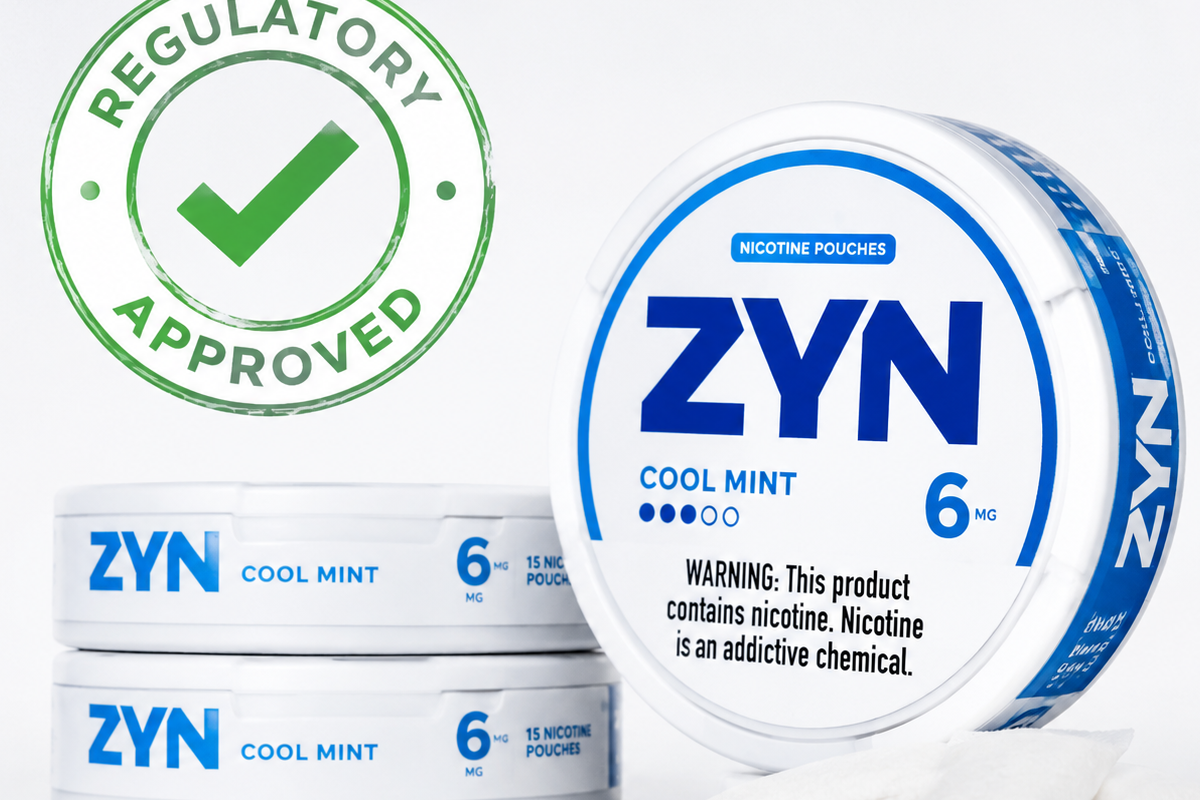
The U.S. Food and Drug Administration issued Modified Risk Tobacco Product (MRTP) orders for 20 Zyn nicotine pouch products on June 30, 2026, making Zyn the first nicotine pouch brand authorized to market reduced-risk health claims compared with cigarettes. Swedish Match USA, a Philip Morris International subsidiary, received the authorization for 10 flavors in both 3 mg and 6 mg nicotine strengths.
The FDA-authorized claim states that using Zyn instead of cigarettes lowers the risk of mouth cancer, heart disease, lung cancer, stroke, emphysema, and chronic bronchitis. This builds on the January 2025 PMTA authorization that allowed Zyn products to be legally marketed in the U.S.
What the MRTP Authorization Means
The MRTP designation is the FDA’s highest level of authorization for a tobacco product. It allows manufacturers to make scientifically supported claims about reduced health risks compared to smoking. The FDA said its decision followed an extensive scientific review of the products’ relative health risks, consumer understanding of the claim, youth use data, and overall population health impact.
The agency concluded that the modified-risk claim is scientifically supported, that consumers understand its meaning, and that allowing the claim is expected to benefit public health. The authorization requires Swedish Match USA to conduct post-market surveillance and behavioral studies. The orders expire after five years unless renewed, and the FDA retains authority to withdraw them if youth uptake increases or continued marketing no longer benefits public health.
This is a significant step beyond the standard PMTA pathway. While PMTA authorization simply allows a product to be sold, MRTP authorization allows the company to communicate reduced-risk messaging directly to consumers – a critical distinction for harm reduction.
Impact on Nicotine Pouch Users
For the estimated 3-5 million American nicotine pouch users, this authorization provides FDA-backed scientific validation that switching from cigarettes to Zyn reduces exposure to the harmful chemicals produced by combustion. The FDA’s MRTP framework represents a rigorous scientific review process that switching from cigarettes to Zyn reduces exposure to the harmful chemicals produced by combustion. The authorized claim covers specific diseases: mouth cancer, heart disease, lung cancer, stroke, emphysema, and chronic bronchitis.
The practical impact is that Zyn can now include reduced-risk language on packaging and in marketing materials. This makes it easier for smokers considering switching to understand the relative health benefits. However, the authorization applies only to complete switching – the FDA emphasized that the reduced-risk claim does not apply to dual use (both smoking and using pouches).
The 20 authorized products cover a range of popular Zyn flavors including Chill, Citrus, Coffee, Cool Mint, Peppermint, Smooth, Spearmint, and Wintergreen, in both 3 mg and 6 mg strengths. For context, our analysis of nicotine pouch safety found that while pouches carry lower risks than smoking, they are not risk-free.
PMI U.S. CEO Stacey Kennedy said the authorization provides adult nicotine consumers with FDA-reviewed, science-based information about the health benefits of switching completely from cigarettes to Zyn. The decision expands PMI’s portfolio of FDA-authorized modified-risk products, which already includes IQOS heated tobacco products and General snus.
The decision comes amid ongoing legal battles over nicotine pouch regulation. In June 2026, a federal court granted Zest Brands an injunction against the FDA over nicotine pouch PMTA denials, signaling continued tension between regulators and the industry over how nicotine pouches should be evaluated.
Public health groups have expressed mixed reactions. Some harm reduction advocates welcomed the decision as evidence-based, while youth prevention groups raised concerns about the potential for increased youth uptake of nicotine pouches – a concern the FDA explicitly addressed by retaining authority to withdraw the orders if youth use rises.
Zyn dominates the U.S. nicotine pouch market with an estimated 65-70% market share. The MRTP authorization gives Zyn a significant competitive advantage over other pouch brands that cannot make reduced-risk claims. This could accelerate the shift from cigarettes to pouches among adult smokers looking for FDA-validated alternatives.
The authorization also sets a precedent for other nicotine pouch manufacturers. Brands like On!, Velo, and Rogue may now have a clearer regulatory pathway to pursue their own MRTP applications. However, the extensive scientific review required means the bar remains high. Our comprehensive guide to nicotine pouches covers the differences between major brands and their regulatory status.
For international readers, the U.S. approach contrasts sharply with Europe, where new pouch brands are launching across multiple markets while countries like France have criminalized nicotine pouches entirely.
If you currently smoke and are considering switching to nicotine pouches, this FDA authorization provides strong scientific backing that Zyn carries substantially lower health risks than continued smoking. The key requirement is complete switching – dual use does not qualify for the reduced-risk benefit.
If you already use Zyn or other nicotine pouches, the authorization does not change the product itself, but it does provide FDA-validated information about relative risks. Continue to monitor for post-market study results, which the FDA requires Swedish Match to publish over the next five years.
If you are concerned about youth access, the FDA has explicitly retained the authority to revoke the MRTP orders if youth nicotine pouch use increases. Parents and educators should be aware that while pouches are less harmful than cigarettes for adult smokers, they are not intended for non-nicotine users.




Follow the wider vape market
Read the latest vape news
Track regulation, launches and industry updates.
Open vape news →Browse product data
Move from market news to device specifications.
Open product data →Check product reviews
Read independent testing and comparison reports.
Read review coverage →