


Frontiers in Oncology Study: Vape Flavorings Linked to Over 3,000 Gene Expression Changes
A study published July 9, 2026 in Frontiers in Oncology found that e-cigarette flavorings were associated with more than 3,000 changes in gene activity among adult vapers. Researchers analyzed oral cell samples from 35 vapers, 24 smokers, and 24 non-users. The findings were first reported by Tobacco Reporter.
The study does not demonstrate that flavored vapes directly cause disease. Rather, it suggests flavorings may influence biological pathways associated with cancer, cardiovascular, immune, and respiratory conditions.
Fruit Flavors Showed Largest Effects
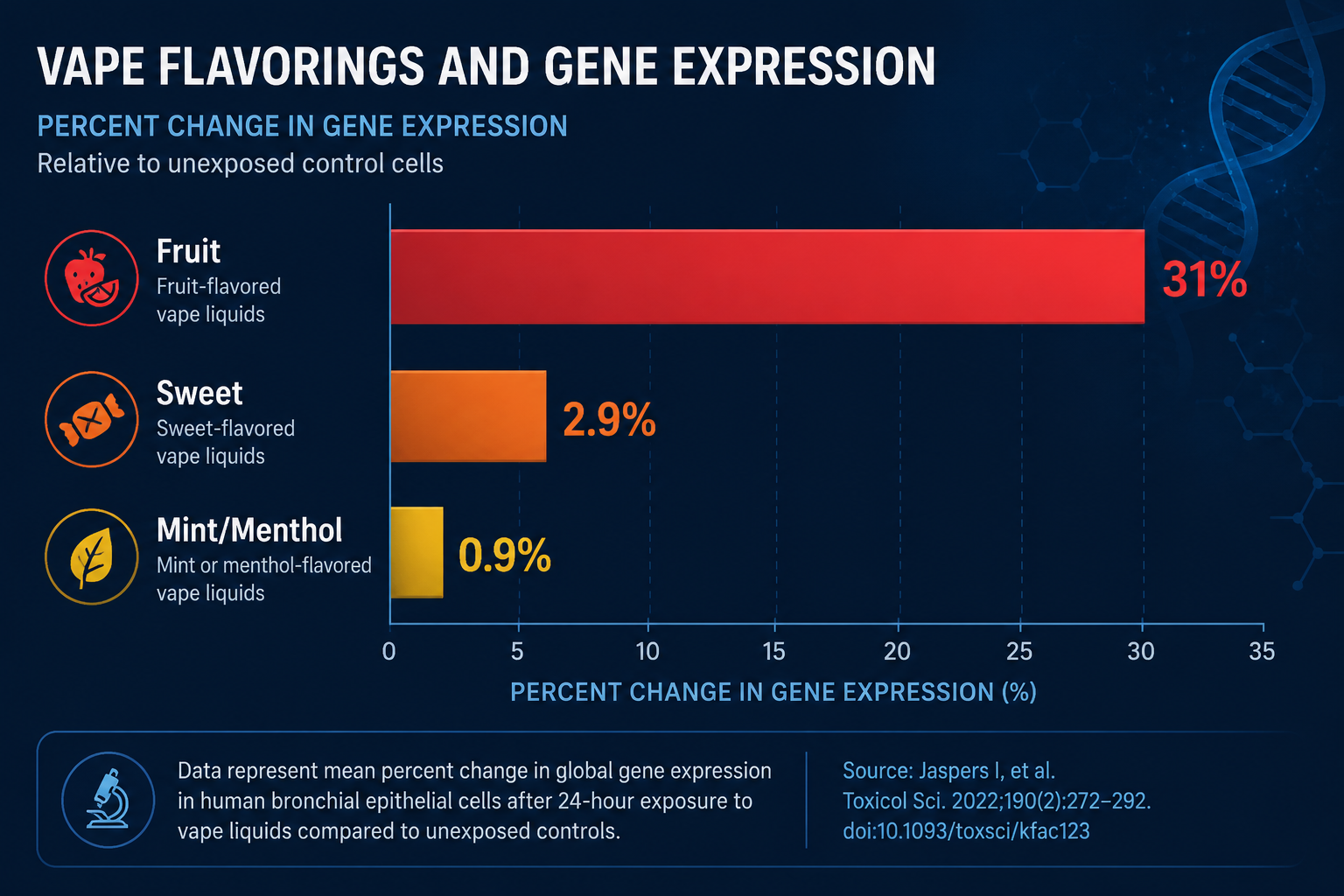
Fruit flavors accounted for approximately 31% of the observed gene expression changes. By comparison, sweet flavors contributed 2.9% and mint or menthol contributed just 0.9%. Users of multiple flavors exhibited the broadest range of genetic changes.
The researchers also found that more advanced vaping devices – those producing higher wattage and greater aerosol volume – were associated with larger changes in gene activity. This suggests both the flavoring compounds and the delivery method may influence biological impact.
Context Matters: What This Study Does and Does Not Say
The study raises legitimate questions about the long-term effects of inhaling flavoring compounds. However, the UK’s National Health Service continues to state that vaping exposes users to fewer toxins than smoking and remains an effective smoking-cessation aid for adult smokers. The NHS emphasizes that while vaping is not risk-free, the gap in harm between vaping and smoking remains substantial.
This distinction matters because misinterpretation of studies like this can fuel misconceptions. A separate ASH survey released this week found that more than half of UK smokers now wrongly believe vaping is equally or more harmful than smoking – a perception that directly undermines quit attempts.
For adult smokers using vaping to quit, the key takeaway is that vaping is still less harmful than smoking combustible cigarettes. The NHS and Public Health England’s evidence reviews consistently find vaping to be substantially less harmful than smoking.
Vapers concerned about flavor additives may consider simplifying their choices: using tobacco or menthol flavors, which showed minimal gene expression changes in this study, or reducing device power to decrease aerosol volume. The most important step remains avoiding cigarette smoking entirely. Vapers should not use this study as a reason to return to smoking – the health risks of combustible tobacco are orders of magnitude higher than any risk identified in this research.
Keep Reading




Follow the wider vape market
Read the latest vape news
Track regulation, launches and industry updates.
Open vape news →Browse product data
Move from market news to device specifications.
Open product data →Check product reviews
Read independent testing and comparison reports.
Read review coverage →