

What Is THCA Flower? A Beginner’s Guide to the Basics
You’ve probably seen “THCA flower” popping up at smoke shops and online stores. What exactly is it, and is it the same as regular cannabis? Will it actually get you high? These are the questions I hear most often from people who’re curious. And honestly, the answers aren’t as straightforward as you might think.
Here’s the short version: THCA flower is hemp-derived cannabis flower that’s high in tetrahydrocannabinolic acid (THCA) and low in Delta-9 THC, making it federally legal under the 2018 Farm Bill. Heat it by smoking or vaping, and THCA converts into the same Delta-9 THC found in traditional cannabis. That’s the core concept, and everything else builds from there. This guide covers the science, legality, consumption methods, and what to look for when buying. No sales pitch, no brand bias. Just the facts you need to understand what THCA flower is and whether it’s right for you. I’ve spent months researching this stuff, and I still learn new things about it.
Fair warning: the legal part gets weird.
What Is THCA? The Science Behind the Cannabinoid
THCA stands for tetrahydrocannabinolic acid. It’s the acidic precursor to Delta-9 THC, the compound most people associate with the “high” from cannabis. In raw, living cannabis plants, THCA is produced naturally rather than THC. Think of it as the plant’s stored form of THC, waiting for the right conditions to transform.
The chemical difference is small. The implications, however, are huge. THCA has an extra carboxyl group (COOH) attached to its molecular structure. This extra group is what makes THCA non-psychoactive in its raw form. It simply doesn’t bind well to the CB1 receptors in your brain. I think that’s one of the most counterintuitive things about cannabis chemistry: the plant’s most abundant compound does almost nothing until you apply heat. No kidding.
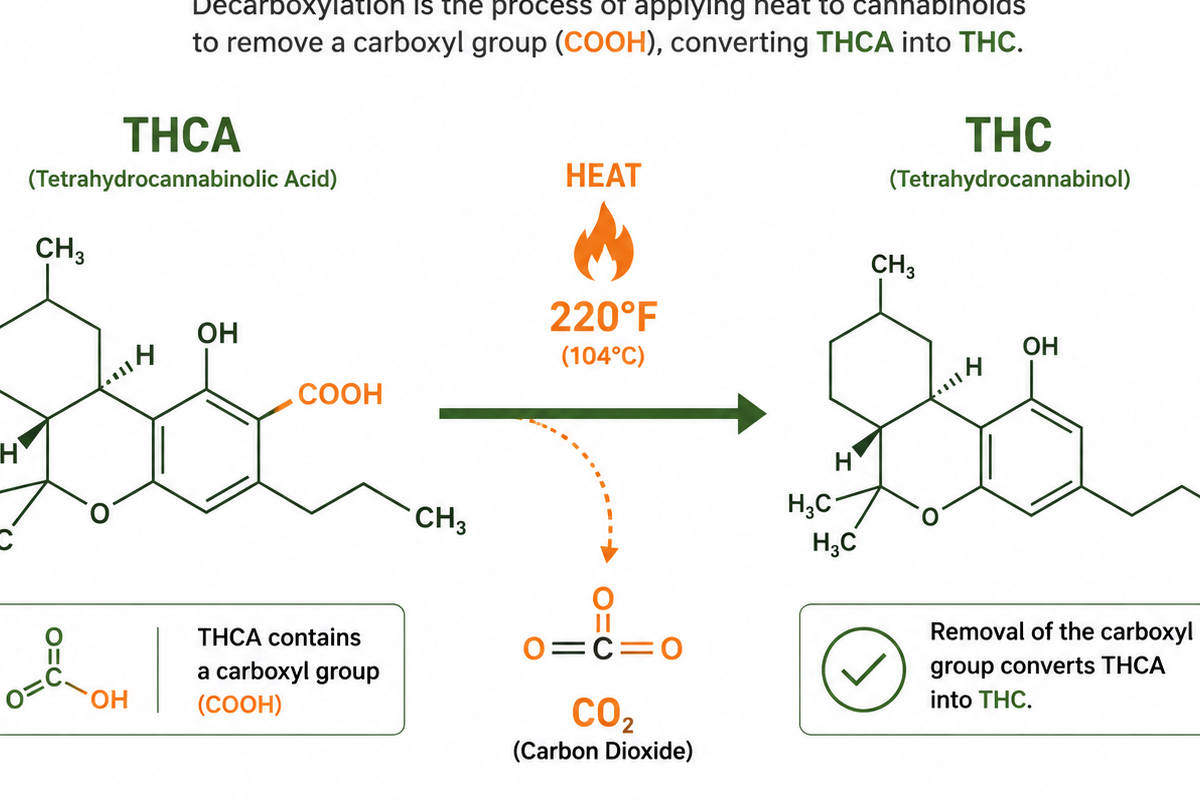
Decarboxylation is the process that removes that carboxyl group. Apply heat from a lighter, a vaporizer, or an oven, and the COOH group breaks off, turning THCA into Delta-9 THC. The optimal temperature for this conversion is around 220°F (105°C). It’s the same chemical reaction that happens when you bake cannabis into edibles, and it’s the reason raw cannabis flower doesn’t get you high. I find that once people understand decarboxylation, everything else about THCA flower clicks into place. In my experience, it’s the single most important concept for any beginner.
What Makes THCA Flower Different from Regular Cannabis?
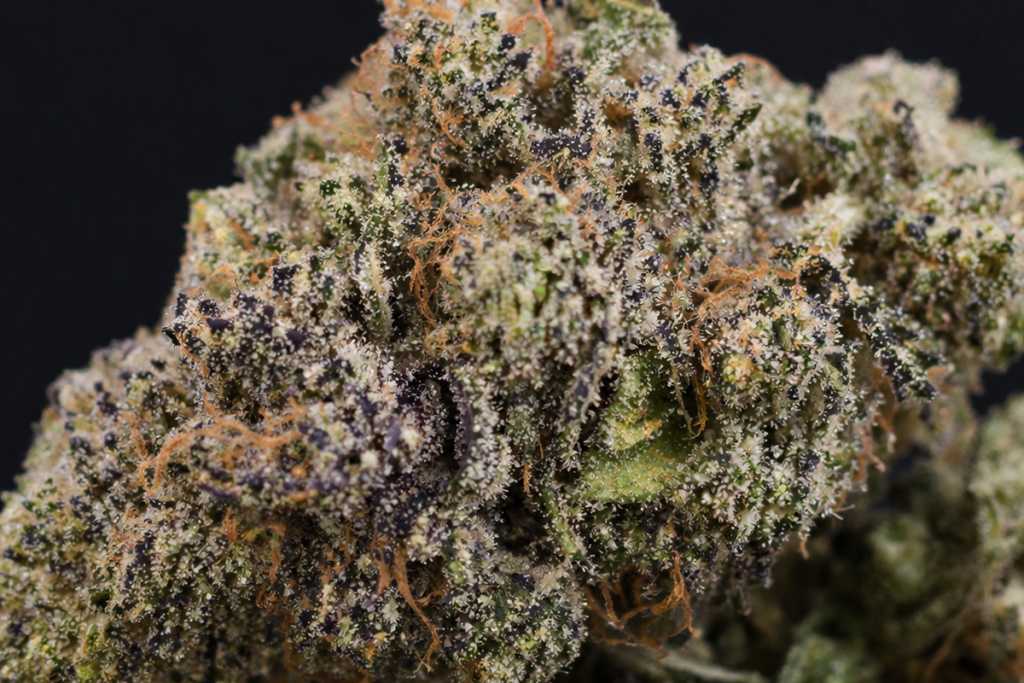
Visually, you probably couldn’t tell them apart. THCA flower looks like traditional cannabis: dense buds covered in frosty trichomes, with the same variety of colors and structures depending on the strain. The difference isn’t in appearance or genetics; it’s in legal classification.
Under the 2018 Farm Bill, hemp is defined as Cannabis sativa L. containing no more than 0.3% Delta-9 THC by dry weight. THCA flower is grown from hemp genetics selected for high THCA production while keeping Delta-9 THC below that legal threshold. When tested in its raw form, it passes as hemp. When heated, it delivers effects comparable to traditional high-THC cannabis. This legal distinction creates what many call a “gray area”: the plant material itself is federally legal, yet the experience it provides when consumed is essentially the same as marijuana. Different states have taken different positions on this, which I’ll cover in the legality section.
THCA Flower Strains: Indica vs. Sativa vs. Hybrid
THCA flower comes in the same strain categories as traditional cannabis. Indica strains are typically associated with relaxing, body-heavy effects. Sativa strains tend to be more uplifting and cerebral. Hybrids offer a balance of both. Popular THCA strains include Jealousy, Lemon Cherry Gelato, Super Boof, Pineapple Express, and Ice Cream Cake. Names you’ll recognize if you’re familiar with the cannabis market. The strain names and genetics are the same as what you’d find at a dispensary. The only difference is the legal classification. Most THCA flower is grown from hemp cultivars bred to maximize THCA while staying under the 0.3% Delta-9 THC limit.
For beginners, I’d suggest starting with a hybrid strain. It gives you a balanced introduction without committing to the heavy sedation of an indica or the intense energy of a sativa. I personally think hybrids are the safest bet when you’re not sure what you want. Hybrids are your friend here.
Does THCA Flower Get You High? Understanding Decarboxylation
This is the question I get asked most, and the answer depends entirely on how you consume it.
Raw THCA flower won’t get you high. Eat it raw in a smoothie, a salad, or fresh juice, and the THCA passes through your system without converting to THC. Some people report anti-inflammatory or anti-nausea effects from raw consumption, though there’s no psychoactive experience.
Heated THCA flower will get you high. Smoke it, vape it, or bake it into edibles, The heat triggers decarboxylation, converting THCA into Delta-9 THC. The resulting effects are comparable to traditional cannabis: euphoria, relaxation, altered perception, and the munchies. Onset and duration depend on your consumption method.
This dual nature is what makes THCA flower unique. It can be both a non-psychoactive wellness product and a psychoactive cannabis alternative, depending entirely on how you use it, and I honestly can’t think of another product that works quite like this. Here’s the thing, though: the wellness angle gets overhyped by some vendors, and I’m not convinced by the marketing language around “therapeutic” raw consumption when the research is thin and most of what you’ll read online is anecdotal. I tried raw juicing once and didn’t feel a thing, which is exactly the point. It also means the wellness claims are hard to verify without proper studies.
Let me put it differently: the wellness claims need more research, and I wouldn’t take them at face value.
How to Use THCA Flower: Consumption Methods and Best Practices
There are several ways to consume THCA flower, each with different onset times and durations. The experience varies a lot by method.
| Method | Onset | Duration | Notes |
|---|---|---|---|
| Smoking | 1-5 min | 1-3 hours | Most common; full terpene experience |
| Vaping (dry herb) | 1-5 min | 1-3 hours | Smoother; temperature control |
| Edibles | 30-90 min | 4-8 hours | Decarboxylate first; dose carefully |
| Raw/Juicing | 15-30 min | 1-3 hours | Non-psychoactive; wellness use |
| Tinctures | 15-45 min | 2-6 hours | Alcohol or oil-based; effects vary |
Smoking and vaping are the most direct methods. Grind the flower and pack it, then apply heat. The decarboxylation happens instantly and the effects hit within minutes, lasting 1 to 3 hours. Vaping gives you more temperature control: lower temperatures preserve more terpenes, while higher temperatures maximize THC conversion.
Edibles require an extra step. You need to decarboxylate the flower first by baking it at 220-240°F for 30 to 40 minutes, then infuse it into butter or oil. The effects are stronger and last longer, 4 to 8 hours, so start with a low dose and wait at least 90 minutes before taking more. I learned this one the slow way, sitting on my couch for what felt like an eternity after a poorly-dosed batch of brownies.
Raw consumption, juicing or blending into smoothies, keeps THCA in its non-psychoactive form. This is the route people take when they’re interested in the potential wellness benefits without any intoxicating effects, though the evidence for those benefits remains largely anecdotal.
Is THCA Flower Legal? Federal Law and State Variations
The legal status of THCA flower is where things get complicated. At the federal level, the 2018 Farm Bill removed hemp (defined as cannabis with ≤0.3% Delta-9 THC) from the Controlled Substances Act. Since THCA flower meets this definition in its raw form, it’s federally legal. The FDA’s regulation of cannabis products continues to evolve, though THCA itself isn’t listed as a controlled substance. The DEA has stated that synthetically derived THCA is controlled, while naturally occurring THCA from hemp falls under the Farm Bill’s protections. I’d argue that the Farm Bill’s drafters never imagined this scenario, but here we are.
State laws vary dramatically. States like Texas, Georgia, Florida, North Carolina, and Tennessee generally allow THCA flower under their hemp programs. States with adult-use cannabis like California, Colorado, and New York typically treat THCA flower as marijuana, requiring dispensary purchases. A few states like Idaho have no hemp program and prohibit all cannabis products entirely.
The CDC’s cannabis information page provides general health guidance, and NORML’s overview of federal penalties explains the broader legal framework. For state-specific questions, check your local laws before purchasing. Regulations are changing fast.
I always tell beginners: assume your state’s laws apply to THCA flower the same way they apply to cannabis, unless you’ve confirmed otherwise. Federal legality doesn’t guarantee state legality. A friend of mine had a package seized in Idaho—legal at the federal level, illegal in that state—and I learned that lesson the hard way so you don’t have to.
How to Choose Quality THCA Flower: Lab Testing and COAs
Not all THCA flower is created equal. Quality varies dramatically between vendors, and the only reliable way to know what you’re getting is through third-party lab testing. A Certificate of Analysis (COA) is a document from an independent laboratory that verifies the product’s cannabinoid profile and screens for contaminants, and every reputable vendor should have COAs readily available. If they don’t, that’s a red flag. To my mind, a missing COA is the biggest red flag in this market—it’s not a suggestion, it’s an automatic dealbreaker.
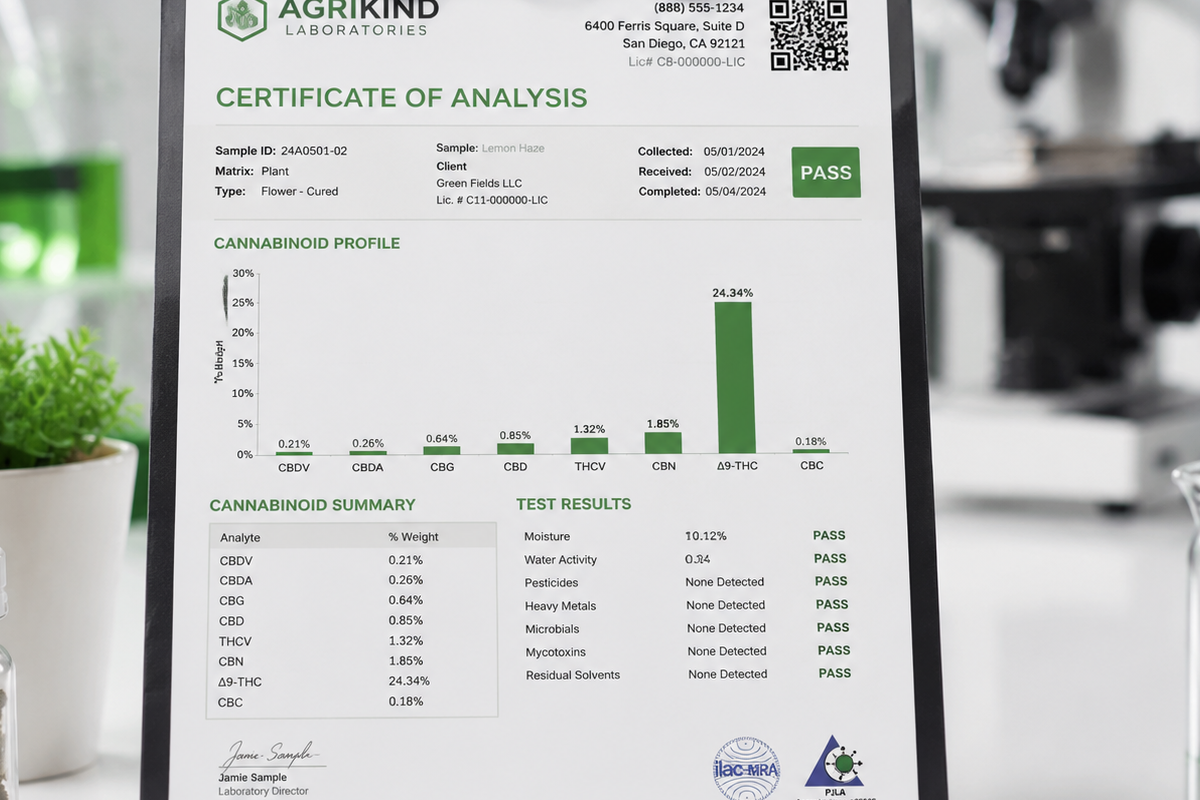
What to look for in a COA:
- Cannabinoid profile: THCA percentage, Delta-9 THC percentage (should be ≤0.3%), and total THC (calculated as THCA × 0.877 + D9-THC). Also check for other cannabinoids like CBD or CBG
- Contaminant screening: Pesticides, heavy metals, residual solvents. Mold and mycotoxins too.
- Lab accreditation: ISO/IEC 17025 certification ensures reliable testing
- Date: COAs should be recent, ideally within 3-6 months
Red flags to watch for: no COA available, a COA from a non-accredited lab, Delta-9 THC above 0.3%. Also watch for COAs that look reused across multiple batches. Quality flower is typically indoor or greenhouse-grown. properly cured, and hand-trimmed with visible trichomes. I can’t stress this enough: a missing COA is an automatic no. I’m not convinced by the “wellness” marketing angle some vendors push, either—if they’re serious about quality, they’ll prove it with lab results. What I find interesting is how quickly this market has matured; two years ago, finding a vendor with real COAs was rare, and now it’s table stakes.
THCA vs. CBD vs. Delta-8: How Do They Compare?
If you’re new to hemp-derived cannabinoids, the options can feel overwhelming. Here’s how THCA stacks up against the most common alternatives.
| Property | THCA | CBD | Delta-8 THC |
|---|---|---|---|
| Psychoactive (raw) | No | No | Yes (mild) |
| Psychoactive (heated) | Yes (→D9-THC) | No | Yes (milder than D9) |
| Natural occurrence | Abundant in raw cannabis | Abundant in hemp | Trace amounts |
| Potency vs. D9-THC | Same (after decarb) | N/A | ~50-70% |
| Research depth | Emerging | Extensive | Limited |
| Drug test risk | Yes (converts to THC) | Possible (trace THC) | Yes |
The key difference is that THCA is essentially “pre-THC,” offering the full traditional cannabis experience when heated while remaining federally legal in raw form. CBD never produces psychoactive effects regardless of how you use it, while Delta-8 is psychoactive but noticeably milder—many users describe it as “THC-lite”—and I think that’s what confuses most beginners. Three compounds, three completely different experiences.
For someone who wants the familiar cannabis experience yet lives in a state without legal dispensaries, THCA flower is the closest legal alternative. That’s why it’s become the fastest-growing segment in the hemp-derived cannabinoid market. I expect that growth to continue until federal regulators decide how to handle it. For anyone wanting the real thing through a legal channel, THCA is your best bet right now.
Where to Buy THCA Flower: Online vs. In-Store
You’ve two main options for purchasing THCA flower, and each has its trade-offs.
Online vendors offer wider strain selection and detailed COAs at competitive prices with discreet shipping. The downside is you can’t inspect the product before buying, and you need to verify the vendor ships to your state. When choosing an online vendor, look for transparent lab testing and positive customer reviews. Clear sourcing information is another must. I lean toward online vendors for THCA flower specifically. The selection is just better. When I’m shopping around, I look for vendors who publish COAs for every strain right on the product page. Black Tie THCA Flower is one example that does this consistently, with lab reports for each strain and a 30-day satisfaction guarantee. They’re a useful benchmark for what transparency should look like, not the only option. If you’re already familiar with buying vapes and cannabis products online, the same principles apply: read reviews and verify credentials before you buy. Start with small test orders to gauge quality.
In-store purchases at smoke shops or dispensaries let you see and smell the flower before buying. You walk out with the product immediately, and staff can answer questions. The trade-off is typically higher prices and a more limited selection. Not all smoke shops carry THCA-specific products, so call ahead.
For more detailed guidance on selecting a vendor, check out our THCA flower buying guide; it covers specific brands, price comparisons, and what to expect from different vendors.
Frequently Asked Questions
Is THCA flower the same as weed?
Not exactly. THCA flower is hemp-derived and federally legal in its raw form, though when heated, it produces the same effects as traditional cannabis. The plant material looks and smells like weed and behaves like it too; the difference is legal classification.
Will THCA flower show up on a drug test?
Yes, because drug tests screen for THC metabolites rather than THCA itself. Since THCA converts to THC when heated, consuming THCA flower produces the same metabolites as traditional cannabis, so if you’re subject to drug testing, assume THCA flower carries the same risk.
How long does THCA flower stay fresh?
Stored properly in an airtight container away from light and heat, THCA flower can stay fresh for 6-12 months. Over time, THCA slowly converts to THC even without heat—a process called natural decarboxylation—so keep it in a cool, dark place to slow this down.
Can I fly with THCA flower?
The TSA’s policy focuses on security threats rather than cannabis enforcement, yet federal law still prohibits transporting marijuana across state lines. Since THCA flower occupies a legal gray area, flying with it carries risk and I wouldn’t recommend it.
What’s the difference between THCA flower and Delta-8 flower?
THCA flower contains naturally occurring THCA that converts to Delta-9 THC when heated, while Delta-8 flower is typically regular hemp flower sprayed with Delta-8 distillate. THCA flower is generally considered higher quality because the cannabinoids are naturally present in the plant rather than added after harvest.
How much THCA flower should a beginner use?
Start with one small puff and wait 10-15 minutes to assess the effects—THCA flower can be as potent as traditional cannabis, and it’s easier to take more than to undo taking too much. For edibles, start with 5-10mg of decarboxylated THCA and wait at least 90 minutes before considering more.
Final Thoughts
THCA flower is a fascinating intersection of cannabis science, federal law, and market demand. It offers the full traditional cannabis experience through a legal loophole in the 2018 Farm Bill, a situation that’s unlikely to last forever but is very much a reality for now. I think the most important thing is to go in with your eyes open: understand decarboxylation and check your state’s laws. Verify lab testing. Start slow.
The same advice applies when you’re exploring THC vapes and their uses or researching online vendors for wellness products. Knowledge is your best tool for making informed decisions. I go back and forth on whether the trade-off here is worth it: giving people access to cannabis through an unregulated gray market fills a genuine need for people in prohibition states, but the lack of mandatory testing means consumers take a risk every time they buy. I don’t have a clean answer to that one. What I do know is that THCA flower isn’t a loophole that’ll last forever, but for now it’s a legal way to experience cannabis that’s worth understanding, whether you decide to try it or not.
Last updated: July 2026
Disclaimer: This article is for informational purposes only. The FDA hasn’t approved THCA as a treatment for any medical condition. Only Epidiolex (CBD), Marinol, Syndros, and Cesamet (synthetic THC) are FDA-approved. Consult a healthcare professional before using any cannabinoid products. Laws regarding THCA flower vary by state and are subject to change.

Build your vape knowledge
Read more guides
Find explainers, how-to articles and reference material.
Open guide library →Compare vape products
Check specifications across the product database.
Open product data →Read hands-on reviews
See tested devices and documented trade-offs.
Read review coverage →