

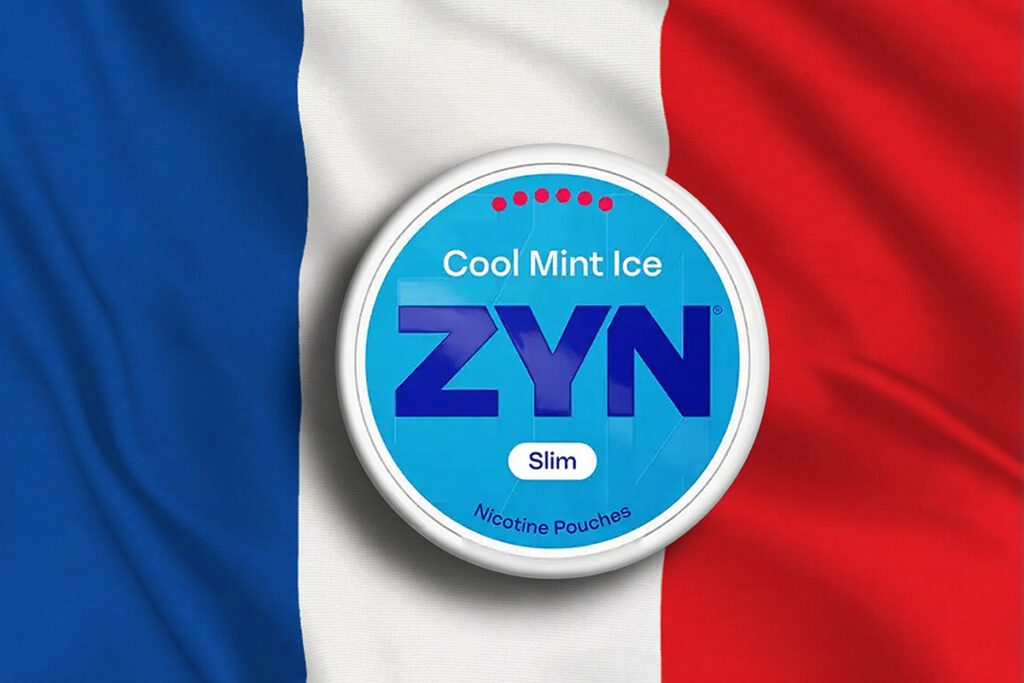
Since April 1, carrying a can of Zyn in France can land you in prison for five years and cost you $436,600 in fines. Not selling. Not manufacturing. Possessing. Using. Even having a single pouch in your pocket at a Paris train station is now a criminal act.
France has become the only country in the world to criminalize personal possession and use of nicotine pouches. The ban, enacted by the French health ministry, covers all tobacco-free oral nicotine products — pouches, lozenges, and dissolvable nicotine tablets. It does not cover cigarettes, e-cigarettes, or FDA-approved smoking cessation medications like nicotine gum and inhalers.
The logic is straightforward, even if you disagree with it: France classifies nicotine as a “toxic substance,” and oral nicotine products don’t have pharmaceutical authorization. Therefore, they’re illegal under existing poison control laws. The health ministry cites addiction risk and “acute nicotine syndrome” as justification.
But the execution is extreme, and the evidence supporting it is thinner than French officials suggest. I’ve been following this since the proposal stage, and the gap between the rhetoric and the data keeps getting wider. Here’s what’s happening, why it matters beyond France, and what the data actually shows. (For health context, see our Are Nicotine Pouches Safe? analysis.)
What the Ban Covers — and What It Doesn’t
The prohibition is broad. Here’s what’s banned versus what’s still legal:
| Category | Products | Status Under French Law |
|---|---|---|
| Banned: Nicotine Pouches | Zyn, On!, Velo, all similar pouches | ❌ Possession = crime |
| Banned: Oral Nicotine Lozenges | Dissolvable nicotine tablets | ❌ Possession = crime |
| Banned: All tobacco-free oral nicotine | Any non-pharmaceutical oral nicotine product | ❌ Possession = crime |
| Exempt: Cigarettes & tobacco | All combustible tobacco products | ✅ Legal, taxed, widely sold |
| Exempt: E-cigarettes | All vaping devices and e-liquids | ✅ Legal (TPD-regulated) |
| Exempt: Cessation medications | Nicotine gum, patches, inhalers (pharmacy-sold) | ✅ Legal (pharmaceutical license) |
| Exempt: Chewing tobacco | Traditional chewing tobacco products | ✅ Legal |
And the penalties:
| Offense | Maximum Penalty |
|---|---|
| Possession of a single nicotine pouch | Up to 5 years imprisonment + €400,000 ($436,600) fine |
| Acquisition of nicotine pouches | Same as above |
| Use of nicotine pouches | Same as above + criminal record |
| Sale or distribution | Same as above (enhanced for commercial scale) |
For comparison, here’s what happens if you’re caught with cigarettes in France — a product that kills 75,000 French citizens annually (highest in the EU per capita):
| Product | Health Impact | Possession Penalty |
|---|---|---|
| Cigarettes | 75,000 deaths/year in France | None — fully legal |
| Nicotine pouches | Zero documented deaths globally | Up to 5 years prison + $436,600 fine |
The Diplomatic Fallout
Sweden didn’t take this quietly.
Nicotine pouches are descended from snus, a product that has been part of Swedish culture for over 200 years. Sweden has the lowest smoking rate in the European Union (about 5% of adults) and the highest snus use rate. Swedish men have used oral nicotine for generations, and the country’s public health data strongly suggests that snus availability has contributed to their low smoking rates (roughly 5%).
Swedish Trade Minister Benjamin Dousa responded to the French ban with unusual diplomatic force: “It is as absurd as if we would prohibit French baguettes or French wine in Sweden.”
He went further, calling the ban “a direct attack on the free movement within Europe” and warning that it sends the signal “that you are not allowed to be Swedish in France.” A Swedish tourist carrying Zyn on a flight to Paris would be committing a criminal act the moment they land.
The friction isn’t just rhetorical. The ban potentially violates EU principles of free movement of goods. Sweden has raised the issue at the EU level, arguing that France is using public health as a pretext for protectionist legislation that discriminates against Swedish products.
Where Other European Countries Stand
France isn’t alone in restricting nicotine pouches. Still, the severity of its approach is unique. Australia has also cracked down on illicit nicotine pouches with 5-year jail terms, and the EU is plotting its own crackdown ahead of COP11.
| Country | Policy | Criminalized Possession? |
|---|---|---|
| France | Total ban (use, possession, sale) | Yes — up to 5 years prison |
| Netherlands | Ban on sale and use (effective 2026) | Use prohibited, possession unclear |
| Austria | Sale restricted, classified as medicinal | No |
| Belgium | Sale banned, possession not criminalized | No |
| Germany | Sale regulated under pharmaceutical law | No |
| Sweden | Legal and culturally normalized | No |
| UK | Legal, regulated under consumer law | No |
| Norway | Snus legal, nicotine pouches restricted | No |
Every other country that restricts nicotine pouches does so at the point of sale. France stands alone in criminalizing the user. Poland, for example, banned sales to minors but didn’t criminalize possession.
The Evidence Problem
Here’s where the French position gets awkward.
France’s health ministry cites addiction risk and public health as the justification for criminalization. But the country’s own data tells a different story.
| Evidence Source | Key Finding | Implication for the Ban |
|---|---|---|
| OFDT (France’s own drug monitoring agency) | “Gateway effect” has not materialized; overall nicotine consumption halved 2018–2024 | Undermines the “youth epidemic” justification |
| French Parliament | Declined to advance e-cig neutral packaging bill after OFDT data | Lawmakers themselves aren’t convinced further restrictions are needed |
| Sweden’s natural experiment | Lowest EU smoking rate (~5%) alongside 200+ years of snus use | Oral nicotine access correlates with less smoking, not more |
| WHO/Stanford report (May 2026) | Focuses on tobacco company marketing tactics, not user health outcomes | The concern is corporate behavior, not consumer harm |
When your own government’s data agency, your own parliament, and the WHO’s own research all point away from criminalization, the policy starts to look ideological rather than evidence-based.
The Contradiction
Something genuinely strange about this regulatory framework: the least harmful product gets the harshest penalty.
| Product | Contains Tobacco? | Produces Smoke? | Annual Deaths in France | Legal Status |
|---|---|---|---|---|
| Cigarettes | Yes | Yes | ~75,000 | ✅ Legal, taxed |
| E-cigarettes | No | No | 0 documented | ✅ Legal |
| Nicotine pouches | No | No | 0 documented | ❌ Criminalized (5yr prison) |
An argument that nicotine pouches bypass pharmaceutical regulation and pose addiction risks doesn’t hold up when cigarettes pose addiction risks plus cancer, heart disease, and emphysema. If the standard for criminalization is “addiction risk without pharmaceutical oversight,” cigarettes should be the first product banned — not the last.
What strikes me as the real explanation is simpler: nicotine pouches are new, they’re associated with American tobacco companies (Philip Morris International owns Zyn manufacturer Swedish Match), and they’re culturally foreign. France has a long history of protecting its domestic industries (wine, cheese, tobacco) while restricting foreign competitors under the banner of public health.
Travelers heading to France who use nicotine pouches need to take this seriously.
| Situation | Legal? | Risk Level |
|---|---|---|
| Bringing Zyn/Velo/On! into France | ❌ Criminal offense | High — even a single can |
| Vaping (e-cigarettes, e-liquids) | ✅ Legal (TPD-regulated) | None |
| Nicotine gum/patches from pharmacy | ✅ Legal (pharmaceutical) | None |
| Buying nicotine pouches in France | ❌ Not available — sale banned | N/A |
| Customs actively searching for Zyn | Unlikely — but law exists | Low practical risk, high legal risk |
The enforcement question matters. Will French customs actually search your bag for Zyn? Realistically, no — customs resources are focused on drugs and contraband, not nicotine pouches. But the law exists, and if you’re caught for another reason and pouches are found, they can be added to charges.
The Bigger Question
The French ban is the most aggressive example of a growing trend: governments treating nicotine itself as the enemy, rather than the delivery methods that cause the most harm.
This approach ignores evidence from multiple countries — Sweden, the UK, Japan — where making less harmful nicotine alternatives available has led to significant reductions in smoking rates. Public Health England has consistently found vaping to be less harmful than smoking. Sweden’s snus experience demonstrates that oral nicotine products can coexist with the lowest smoking rates in Europe. It treats all nicotine products as equivalent, regardless of their risk profile. And it criminalizes individual behavior in ways that are disproportionate to the actual harm.
The alternative approach — harm reduction — accepts that some people will use nicotine, and focuses on making less dangerous forms available to those who would otherwise smoke. The UK has embraced this philosophy explicitly. Japan has seen its cigarette sales plummet as heated tobacco products gained market share. Sweden achieved the EU’s lowest smoking rate through snus availability.
France has chosen the opposite path. I think time will tell whether it reduces harm or simply drives nicotine pouch users back to cigarettes — or to a black market that no one can regulate.
Frequently Asked Questions
Can I bring Zyn to France for personal use?
No. Possession of nicotine pouches is a criminal offense under French law since April 2026, regardless of quantity or purpose. Even a single can in your luggage at Charles de Gaulle airport technically violates the law.
Will French customs actually search for nicotine pouches?
Unlikely — customs resources focus on drugs and contraband. But if pouches are found during a search for another reason, they can be added to charges. Low practical risk, high legal risk.
Are e-cigarettes also banned in France?
No. E-cigarettes remain legal and regulated under TPD (Tobacco Products Directive) rules. Only tobacco-free oral nicotine products (pouches, lozenges, dissolvable tablets) are criminalized.
Is Sweden challenging the ban at the EU level?
Yes. Sweden has raised the issue with EU institutions, arguing the ban violates principles of free movement of goods. No formal ruling yet, but the diplomatic pressure is real.
This article is for informational purposes only and does not constitute legal advice. If you are traveling to France, consult current French government guidance on prohibited substances. All nicotine products carry health risks.




Follow the wider vape market
Read the latest vape news
Track regulation, launches and industry updates.
Open vape news →Browse product data
Move from market news to device specifications.
Open product data →Check product reviews
Read independent testing and comparison reports.
Read review coverage →