

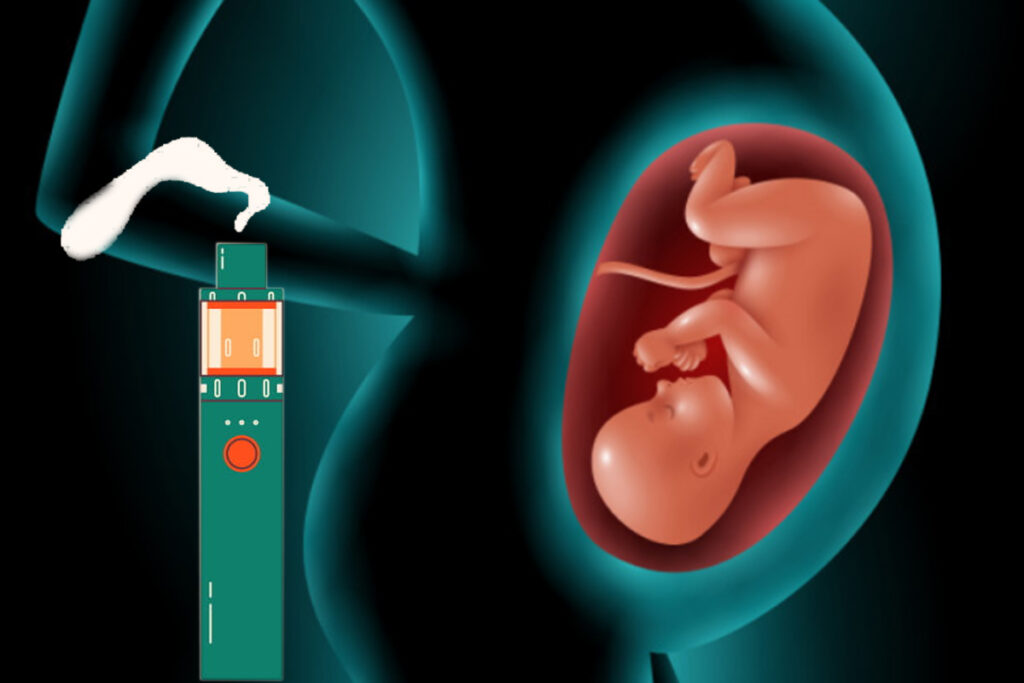
California, USA — September 2, 2025 — A new study published on August 28, 2025, in Communications Medicine (a Nature portfolio journal) reveals that flavored e-cigarette vapor can disrupt embryo development and placental growth — even in the absence of nicotine. The findings challenge the common belief that nicotine-free vaping is “safer,” and highlight potential risks for pregnant users.
Background
Electronic cigarettes (ENDS, electronic nicotine delivery systems) have been marketed as a safer alternative to traditional tobacco, largely due to their lack of combustion and controllable nicotine delivery. However, most e-liquids contain flavoring additives — ranging from fruit and dessert flavors to menthol — whose effects on pregnancy are poorly understood.
While some pregnant individuals turn to e-cigarettes believing them to be less harmful, little research has examined the independent effects of flavoring agents. This study fills a critical knowledge gap by investigating how flavored vapor, with or without nicotine, affects pregnancy outcomes in a mammalian model.
Methods
- Model: Female C57BL/6J mice, under IACUC-approved protocols.
- Groups:
- SHAM: No exposure
- VAPE: Flavored vapor, nicotine-free
- VAPE NIC: Flavored vapor with 6 mg/mL nicotine
- Exposure conditions:
- E-liquid: “Strawberry Custard” (VapeTasia Killer Kustard Strawberry)
- Device: Joyetech Mini, 65 W, 250 °C
- Schedule: 3 hours/day, 5 days/week, for ≥3 weeks before mating, continued through gestational day (E) 6.5 or E12.5.
- Measurements:
- Implantation success and embryo elongation (E6.5)
- Fetal and placental weights, fetal-to-placental weight ratios (E12.5)
- Placental histology (layer areas, uterine NK cell counts)
- Placental gene expression (hypoxia, oxidative stress, and growth pathways)
- Serum cotinine to verify nicotine exposure
Key Findings
- Early Pregnancy Abnormalities (E6.5)
- Nicotine-free flavored vapor significantly increased abnormal erythrocyte accumulation within implantation sites — a potential marker of implantation failure or early pregnancy loss.
- Fetal Growth Restriction (E12.5)
- Nicotine-containing flavored vapor was associated with a reduced fetal-to-placental weight ratio, suggesting impaired nutrient exchange and relative fetal growth restriction.
- Placental Morphology
- No major changes were observed in placental structural layers or uterine NK cell counts, indicating that functional disruption may occur without overt anatomical abnormalities.
- Gene Expression Changes
- Multiple genes crucial for hypoxia signaling, oxidative stress defense, and growth regulation showed sex-dependent downregulation in exposed groups, including:
- Hif1a (hypoxia response) — decreased in nicotine-free flavored exposure
- Ptgs2 — reduced in female placentas
- Gpx2/3, Txnrd1, Mapk1 — antioxidant and growth-related genes downregulated across sexes
- Multiple genes crucial for hypoxia signaling, oxidative stress defense, and growth regulation showed sex-dependent downregulation in exposed groups, including:
- Embryo Resorption Trends
- A higher trend of embryo resorptions (losses) was observed in the nicotine-free group, though not statistically significant with current sample sizes.
- Scientific breakthrough: Demonstrates, for the first time, that flavoring chemicals in e-cigarettes alone may pose risks during pregnancy.
- Mechanistic insights: Flavor compounds may trigger oxidative stress and inflammation, while nicotine alters vascular or placental growth regulation.
- Public health warning: Flavored e-cigarettes — with or without nicotine — are not safe substitutes for tobacco during pregnancy.
Limitations
- Findings are based on a mouse model; human pregnancy outcomes may differ.
- Only one flavor (“strawberry custard”) and one nicotine dose were tested.
- Follow-up was limited to mid-gestation (E12.5); late pregnancy and long-term offspring outcomes were not assessed.
Expert Commentary
Lead investigators stated:
“Our findings indicate that flavoring agents in e-cigarettes themselves can disrupt pregnancy, independent of nicotine. Pregnant individuals should avoid flavored vaping altogether.”
Independent experts noted that the study provides strong evidence for updating prenatal health guidelines, underscoring that vaping is not a safe alternative during pregnancy.
Policy & Public Health Impact
- For pregnant individuals: Clear message — flavored vaping may endanger fetal development.
- For clinicians: Reinforce counseling to avoid all e-cigarettes in pregnancy.
- For regulators: Stronger oversight of e-cigarette flavorings is warranted, beyond nicotine content.
Conclusion
This study shows that flavored e-cigarette vapor can adversely affect embryo development and placental function — even without nicotine. With e-cigarette use rising among young adults and women of childbearing age, these findings carry urgent significance for public health policy and prenatal care.




Follow the wider vape market
Read the latest vape news
Track regulation, launches and industry updates.
Open vape news →Browse product data
Move from market news to device specifications.
Open product data →Check product reviews
Read independent testing and comparison reports.
Read review coverage →