

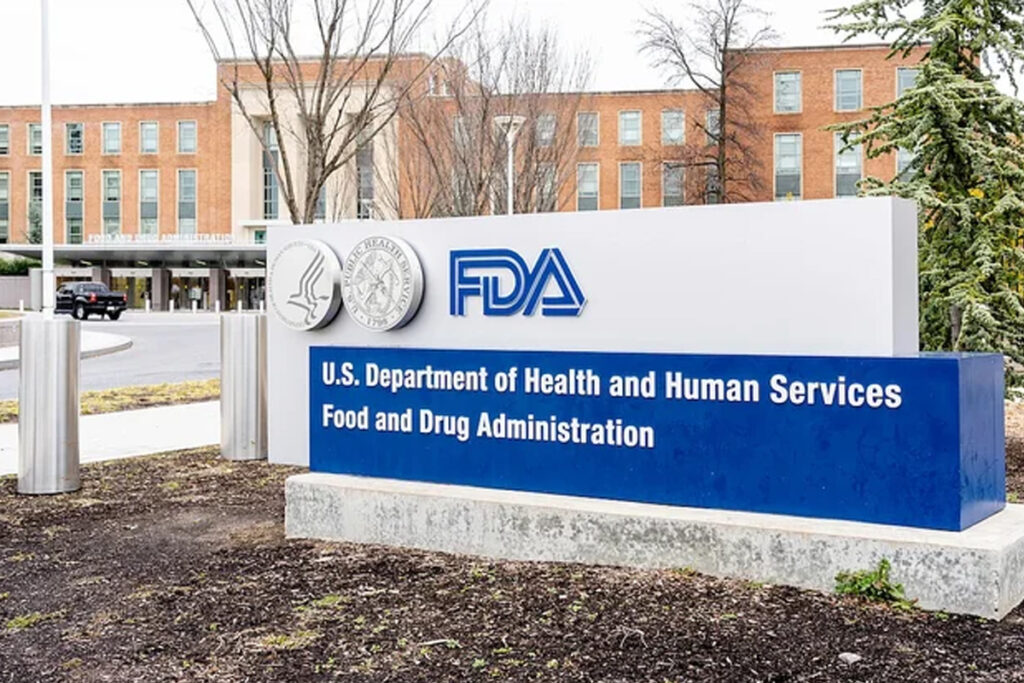
In a landmark decision that could reshape the regulatory landscape for tobacco and vaping products, the U.S. District Court for the Northern District of Texas has ruled that the FDA’s civil monetary penalty (CMP) provisions under the Federal Food, Drug, and Cosmetic Act (FD&C Act) are unconstitutional.
The ruling in Wulferic, LLC v. FDA (No. 4:24-cv-1183-O) hinges on the Supreme Court’s 2024 decision in SEC v. Jarkesy, 603 U.S. 109, where the Court held that administrative law judges (ALJs) cannot impose civil penalties in securities fraud cases without violating the Seventh Amendment’s right to a jury trial.
This week, the Texas court applied Jarkesy to the FDA’s tobacco enforcement regime, finding that the agency’s CMPs for tobacco products are similar to securities fraud penalties in both purpose and effect.
What Happened in Wulferic, LLC v. FDA?
The plaintiff, Vapor Lab, a company that sells e-liquid products, challenged a $19,000 civil penalty imposed by the FDA under the FD&C Act. The agency alleged that Vapor Lab had sold unapproved e-liquid products.
The court agreed with Vapor Lab that the CMP provision at 21 U.S.C. § 333(f)(9) violates the Seventh Amendment because it allows the FDA to impose penalties in an administrative proceeding without the right to a jury trial. The key issue was whether the remedy at stake—monetary penalties—was a type of remedy that traditionally required a jury.
The court found that the penalties are “more akin to a penalty at common law” than a restitutionary or regulatory remedy. This is significant because Jarkesy emphasized that the Seventh Amendment applies to “suits at common law.” The court held that the FD&C Act’s CMPs, which are designed to punish and deter, rather than to restore the status quo, fall within the scope of the Seventh Amendment’s protections.
The Public Rights Exception?
The FDA argued that the public rights exception—which allows agencies to exercise certain powers without violating the Seventh Amendment—applies here. However, the court rejected this argument, noting that the public rights exception does not extend to federal agencies in this context. The court reasoned that the power to promote public health is a state police power under the Tenth Amendment, and not a unique federal prerogative.
What Does This Mean for the FDA?
The court ordered the government to dismiss the administrative complaint against Vapor Lab and barred it from pursuing CMPs against the company in an administrative proceeding. However, the court declined to issue a nationwide injunction, meaning the decision is limited to this case and does not immediately halt the FDA’s broader enforcement of CMPs.
But the ruling has major implications: it opens the door for similar challenges against the FDA’s use of CMPs in tobacco and vaping regulation.
What’s Next?
The Wulferic decision is the first to find a FD&C Act CMP provision unconstitutional, and it’s likely to spark a wave of litigation against the FDA.
Currently, at least two other cases are pending in the Fifth and D.C. Circuits—Texas Tobacco Barn, LLC v. HHS and D and A Business Investments, LLC v. FDA—both challenging the constitutionality of FDA’s CMPs under Jarkesy. A third case, The Vaping Dragon LLC v. FDA, is also in the Northern District of Texas and is pending a decision.
The FDA has not yet indicated whether it will appeal the Wulferic ruling. But if it does, the case could make its way to the Supreme Court, setting a precedent that could change the way the FDA and other agencies enforce civil penalties.
Our Take
This ruling is a turning point in the battle over regulatory power in the United States. It signals that the courts are increasingly skeptical of agency overreach and are willing to hold the federal government to the same constitutional standards that apply to the judiciary.
For the vaping and tobacco industries, this decision is a significant win. It challenges the FDA’s ability to use administrative penalties as a primary enforcement tool, and could lead to meaningful legislative and administrative reforms.
But for public health advocates, it raises serious concerns. If the FDA is unable to enforce its regulations through traditional penalties, what options remain to ensure compliance with public health protections?
As this case unfolds, we will continue to monitor developments and bring you the latest updates.




Follow the wider vape market
Read the latest vape news
Track regulation, launches and industry updates.
Open vape news →Browse product data
Move from market news to device specifications.
Open product data →Check product reviews
Read independent testing and comparison reports.
Read review coverage →