

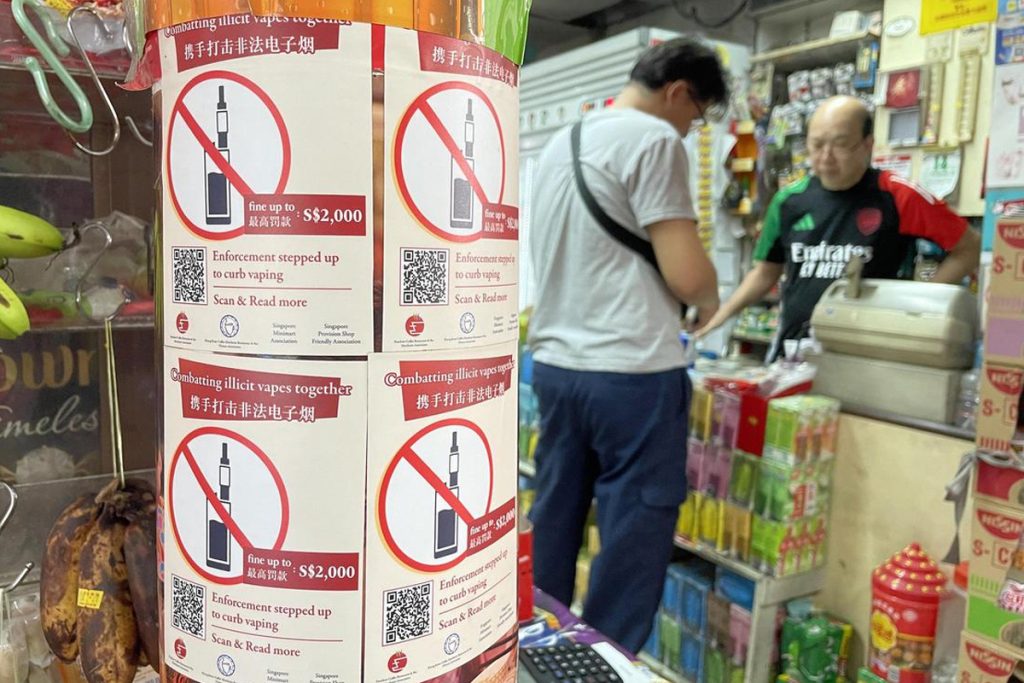
In response to an alarming rise in the use of e-vaporisers laced with controlled drugs, Singapore is considering tightening its existing vaping regulations, according to a joint statement from the Ministry of Health (MOH) and the Ministry of Home Affairs (MHA). The move comes as authorities detect an increasing number of devices containing substances such as the anaesthetic etomidate—once reserved for medical use—being distributed across the country.
A Surge in Illicit Vape Devices
The Health Sciences Authority (HSA) reported 28 cases involving e-vaporiser pods containing etomidate in the first half of 2025, a near tripling of the 10 cases reported in 2024. This sharp increase has prompted the government to evaluate whether current legislation is sufficient to curb the trend.
Although Singapore banned vaping in February 2018, authorities have seized over SGD41 million worth of e-vaporisers and related components between January 2024 and March 2025. Still, the emergence of drug-laced vape devices is raising concerns about public health and law enforcement.
A Case of Concern: 13-Year-Old Girl and “Kpod” Vape
One recent incident involved a 13-year-old girl who was found behaving abnormally outside the State Courts while using an e-cigarette. Subsequent investigations revealed her device, referred to as a “Kpod,” contained etomidate.
A 25-year-old man was arrested for selling the vape to the teenager. He, his wife, and the girl are now assisting in the ongoing investigations.
Etomidate, a powerful sedative regulated under the Poisons Act, is strictly used in clinical settings and can cause severe health complications when inhaled through vapes, including involuntary muscle spasms, seizures, psychosis, and physical dependence.
Strengthened Enforcement and Public Awareness
In response to the growing threat, the HSA has intensified surveillance at both online platforms and physical hotspots. The authority also collaborates with the Singapore Police Force, Immigration and Checkpoints Authority (ICA), and the National Environment Agency (NEA) to combat the trade of illicit vape devices.
Meanwhile, the Health Promotion Board is working with the Ministry of Education to raise awareness about the dangers of vaping and support users through the “I Quit” programme.
Stricter Penalties on the Table
Under current laws, possession or use of e-vaporisers can result in a fine of up to SGD2,000. Those convicted of importing or distributing drug-laced vapes may face up to SGD10,000 in fines, six months in prison, or both.
Authorities have emphasized that enforcement will be “intensified,” particularly against those involved in the import, sale, and use of vapes containing harmful substances.
Regional Concerns
The issue is not limited to Singapore. In Malaysia, authorities have reported that 65% of vape liquids seized since 2023 contain banned synthetic substances. The United Nations Office on Drugs and Crime also noted a rising trend of vapes laced with illicit substances across East and Southeast Asia, including etomidate.
What’s Next?
While the government has not yet announced specific legislative changes, the discussions are seen as a clear signal of growing concern. With the increasing sophistication of the black market and the rising appeal of drug-laced vapes among younger users, officials are under pressure to act swiftly.
As the situation evolves, vapeobservation.com will continue to monitor the developments and provide in-depth coverage of how Singapore and its neighbors respond to this emerging threat.




Follow the wider vape market
Read the latest vape news
Track regulation, launches and industry updates.
Open vape news →Browse product data
Move from market news to device specifications.
Open product data →Check product reviews
Read independent testing and comparison reports.
Read review coverage →