

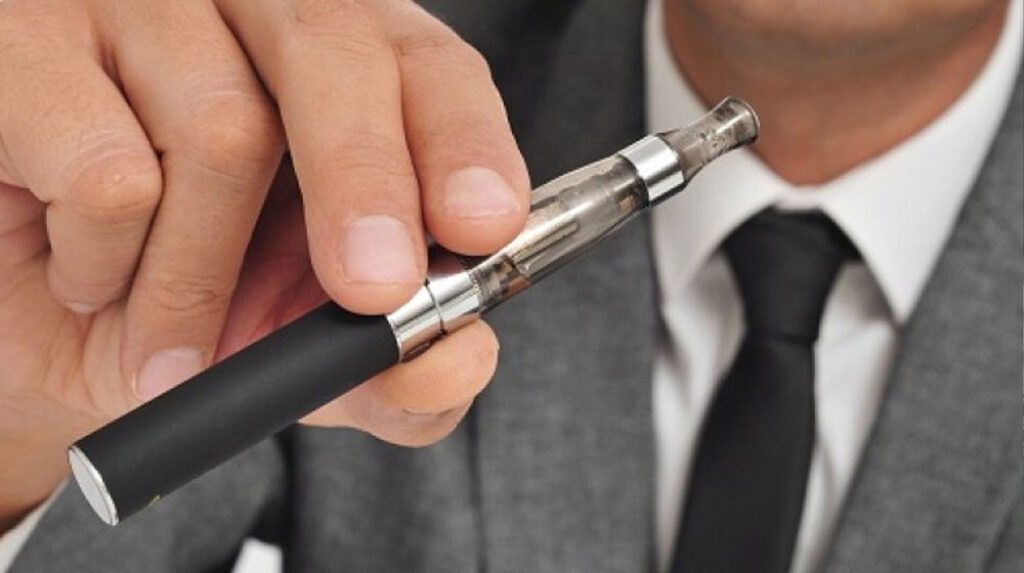
The first electronic cigarette was invented in 2003 by Hon Lik, a Chinese pharmacist from Shenyang. But the idea goes back much further. Joseph Robinson filed a patent for an electric vaporizer in 1927, and Herbert A. Gilbert patented a “smokeless non-tobacco cigarette” in 1965. Neither made it to market. It took another 38 years before the technology caught up with the concept.
This article walks through the full timeline: the early patents that never launched, the invention that actually worked, the global spread of vaping, and where the industry stands today.
The first vaping patents (1927 to 1965)
The earliest known patent for an electronic vaporizer was filed by Joseph Robinson in 1927 and granted in 1930 (US Patent 1,775,947). His device was designed to vaporize medicinal compounds for inhalation, not nicotine. It never went into commercial production.
In 1963, Herbert A. Gilbert filed a patent for a “smokeless non-tobacco cigarette” (US Patent 3,200,819, granted 1965). Gilbert’s design replaced burning tobacco with a flavored, heated air system. He described it as a way to get the satisfaction of smoking without the harmful effects of combustion. The concept was sound, but the technology of the 1960s (battery size, heating elements) wasn’t ready. Gilbert’s invention never reached consumers either.
These early attempts are important context. People have been trying to create a smoke-free alternative to cigarettes for nearly a century. The ideas were there. The hardware wasn’t.
Hon Lik and the first modern e-cigarette (2003)
Hon Lik (also known as Han Li) was born in Shenyang, China in 1951. He was a pharmacist at the Liaoning Academy of Traditional Chinese Medicine and a heavy smoker, consuming about two packs a day. His father, also a heavy smoker, died of lung cancer. That loss pushed Hon Lik to find a way to deliver nicotine without burning tobacco.
In 2003, Hon Lik filed his patent in China for an electronic cigarette that used a heating element to vaporize a nicotine-containing liquid. His early design used piezoelectric ultrasound to create a mist, though later versions switched to a resistive heating coil, which is what all modern vapes use today. The device was powered by a lithium battery, a technology that had finally become small and powerful enough to make a portable e-cigarette practical.
The first commercial e-cigarette, called “Ruyan” (meaning “like smoke”), was manufactured in 2004 in Shenyang. Hon Lik’s company, Golden Dragon Group, brought it to the Chinese market first. By 2006, e-cigarettes had reached Europe, and by 2007, they were available in the United States.
One detail : Hon Lik never successfully quit smoking. He has said he now uses both cigarettes and e-cigarettes, though he claims he only smokes to test flavors. He has compared the e-cigarette to the digital camera, calling it a technological shift from analog to digital.
The global spread of vaping (2006 to 2015)
When e-cigarettes arrived in Europe and the US around 2006 to 2007, they were crude by today’s standards. Most were “cigalikes,” devices designed to look and feel like a traditional cigarette, with a small battery and a pre-filled cartridge. They didn’t produce much vapor and the battery life was measured in minutes, not hours.
But they caught on. Smokers looking for an alternative found that even these early devices could satisfy nicotine cravings. The market grew fast. By 2011, an estimated 2.5 million Americans had tried e-cigarettes. By 2015, that number had jumped to over 9 million.
The industry hit its first major regulatory hurdle in 2009, when the FDA attempted to block imports of e-cigarettes, classifying them as unapproved drug devices. A federal court ruled against the FDA in 2010, allowing e-cigarettes to remain on the market as tobacco products. This decision shaped the regulatory framework that still governs the industry today.
In 2014, the European Union passed the Tobacco Products Directive (TPD), which set limits on nicotine concentration (max 20 mg/mL), tank size (max 2 mL), and required child-proof packaging. These rules still apply across the EU and UK.
The evolution of vaping devices
| Generation | Era | What changed | Examples |
|---|---|---|---|
| 1st Gen | 2004-2009 | Cigalikes. Looked like cigarettes. Low vapor, short battery life. | Ruyan, NJOY |
| 2nd Gen | 2010-2015 | Vape pens and eGo-style devices. Bigger batteries, refillable tanks, more vapor. | eGo-T, Kanger Protank |
| 3rd Gen | 2014-2018 | Box mods with variable wattage/voltage. Sub-ohm coils. Massive vapor production. | SMOK Alien, VOOPOO Drag |
| 4th Gen | 2015-2020 | Pod systems. Nicotine salts for higher absorption. Compact and easy to use. | JUUL, Suorin Drop |
| 5th Gen | 2021-present | High-puff disposables (5K-50K). Smart screens, dual mesh coils, rechargeable disposables. | Elf Bar BC10000, Geek Bar Pulse, RAZ TN9000 |
Each generation solved a problem from the previous one. Cigalikes were discreet but weak. Vape pens added power but were bulky. Box mods offered control but were too complicated for most people. Pod systems simplified everything, and disposables removed the learning curve entirely.
The introduction of nicotine salts in 2015 was a turning point. PAX Labs (the company behind JUUL) developed a formulation using benzoic acid that allowed high concentrations of nicotine (up to 59 mg/mL in early JUUL pods) to be inhaled smoothly. Freebase nicotine at those concentrations would be extremely harsh. Nicotine salts made it palatable, and JUUL captured over 70% of the US market at its peak.
The disposable vape boom and crackdown
Starting around 2020, disposable vapes flooded the market. Brands like Elf Bar, Puff Bar, and later Geek Bar and RAZ pushed devices with puff counts climbing from 2,000 to 50,000. These devices required no refilling, no coil changes, and no maintenance. You used them until they ran out and tossed them.
The convenience came with problems. Youth vaping rates surged. The CDC’s 2024 National Youth Tobacco Survey found that 1.63 million middle and high school students reported current e-cigarette use, with disposables being the most popular device type. Fruit and candy flavors drove the appeal.
Regulators responded. The UK banned disposable vapes in January 2025. The EU proposed similar restrictions under revised TPD rules. Australia made nicotine vaping prescription-only in 2024. Multiple US states, including California and New York, enacted flavor bans. The FDA issued warning letters to hundreds of retailers selling unauthorized disposables.
The environmental impact also drew attention. Disposable vapes contain lithium-ion batteries, and millions of them end up in landfills each year. Some contain enough lithium per device to power a smartphone, raising serious questions about e-waste.
Key regulatory milestones
| Year | Event |
|---|---|
| 2009 | FDA attempts to block e-cigarette imports as unapproved drug devices |
| 2010 | Federal court rules e-cigarettes are tobacco products, not drugs |
| 2014 | EU Tobacco Products Directive (TPD) sets limits on nicotine and tank size |
| 2016 | US FDA Deeming Rule extends tobacco product authority to e-cigarettes |
| 2020 | FDA bans flavored cartridge-based e-cigarettes (except tobacco and menthol) |
| 2021 | China bans e-cigarette sales to minors; begins regulatory framework |
| 2022 | FDA issues first PMTA denials to major brands; JUUL receives marketing denial |
| 2024 | Australia makes nicotine vaping prescription-only; UK announces disposable ban |
| 2025 | UK disposable vape ban takes effect; EU tightens flavor restrictions |
Notable vape manufacturers
Several companies have shaped the industry since its early days:
- Ruyan (Golden Dragon Group): Hon Lik’s original company. Manufactured the first commercial e-cigarette in 2004. Sold the patent to Imperial Tobacco in 2013.
- JUUL (PAX Labs): Launched in 2015 with nicotine salt technology. Dominated the US market with over 70% share at peak. Now facing thousands of lawsuits over youth marketing.
- SMOK: One of the earliest Chinese manufacturers to gain international reach. Known for box mods like the Alien and Mag series.
- VOOPOO: Entered the market in 2017 with the GENE chip and Drag series. Became one of the top-selling mod brands globally.
- Vaporesso: Subsidiary of SMOORE (the world’s largest vape OEM). Known for the XROS pod system and target series.
- Elf Bar: Chinese disposable brand that became the best-selling disposable vape in multiple markets. Now facing trademark disputes and regulatory scrutiny worldwide.
- Geekvape: Known for the rugged Aegis series. Pioneered waterproof and shock-resistant vaping devices.
- Uwell: Creator of the CALIBURN pod system, widely considered one of the best pod vapes ever made.
- Innokin: One of the oldest Chinese vape companies, founded in 2011. Known for reliable, beginner-friendly devices.
Most major vape manufacturers are based in Shenzhen, China, which has become the manufacturing hub of the global vaping industry. An estimated 90% of the world’s e-cigarettes are produced in the Shenzhen area.
Where vaping stands today
The global vaping market was valued at approximately 22 billion USD in 2023 and is projected to grow to over 40 billion by 2030. But the industry is under pressure from multiple directions.
On the health side: The evidence on e-cigarettes remains mixed. Public Health England (now the UK’s OHID) maintains that vaping is “significantly less harmful than smoking,” while the CDC warns that e-cigarettes are not safe for youth and young adults. A 2025 Cochrane review found that nicotine e-cigarettes are more effective than nicotine replacement therapy for smoking cessation, but long-term health effects are still unknown.
On the regulatory side: The FDA’s Premarket Tobacco Product Application (PMTA) process has created a bottleneck. Only a handful of e-cigarette products have received marketing authorization, while thousands of applications have been denied or remain pending. Many popular disposable brands operate in a legal gray area.
On the technology side: The latest generation of disposables features smart screens, adjustable wattage, dual mesh coils, and puff counts exceeding 50,000. These devices are more sophisticated than many box mods were five years ago, which raises questions about whether “disposable” is even the right label anymore.
Frequently asked questions
Who actually invented the vape?
Hon Lik, a Chinese pharmacist from Shenyang, invented the modern electronic cigarette in 2003. Earlier patents existed (Joseph Robinson in 1927, Herbert Gilbert in 1965), but neither was commercially produced. Hon Lik’s device was the first e-cigarette to reach the market.
When did vaping become popular?
Vaping started gaining mainstream traction around 2010 to 2012 with the introduction of vape pens and eGo-style devices. The real explosion came with JUUL in 2015 to 2018, and again with disposables after 2020.
What was the first e-cigarette brand?
“Ruyan,” which means “like smoke” in Chinese. It was manufactured in 2004 in Shenyang by Golden Dragon Group, Hon Lik’s company.
Why did it take so long for e-cigarettes to be invented?
The concept existed since the 1920s, but the technology didn’t. Portable lithium-ion batteries (essential for e-cigarettes) didn’t become commercially viable until the 1990s. Without small, rechargeable, high-energy batteries, a handheld electronic cigarette wasn’t practical.
Are vapes safer than cigarettes?
Public health authorities generally agree that vaping is less harmful than smoking because there’s no combustion, but it’s not risk-free. The long-term health effects of inhaling vaporized propylene glycol, vegetable glycerin, and flavoring chemicals over decades are still unknown. Vaping is not harmless, and nobody should start vaping if they don’t already use nicotine.
What is the biggest vape company?
SMOORE International, based in Shenzhen, is the world’s largest vape manufacturer by revenue. They produce devices for multiple brands including Vaporesso andRELX. In terms of brand recognition, JUUL dominated the US market and Elf Bar has been the top disposable brand globally.
When did the FDA start regulating vapes?
The FDA’s “Deeming Rule” in 2016 officially extended its tobacco product authority to cover e-cigarettes. Before that, vapes existed in a regulatory gray zone. The PMTA (Premarket Tobacco Product Application) process began requiring approval for new products after 2020.


Build your vape knowledge
Read more guides
Find explainers, how-to articles and reference material.
Open guide library →Compare vape products
Check specifications across the product database.
Open product data →Read hands-on reviews
See tested devices and documented trade-offs.
Read review coverage →