

Last updated: June 28, 2026
Introduction
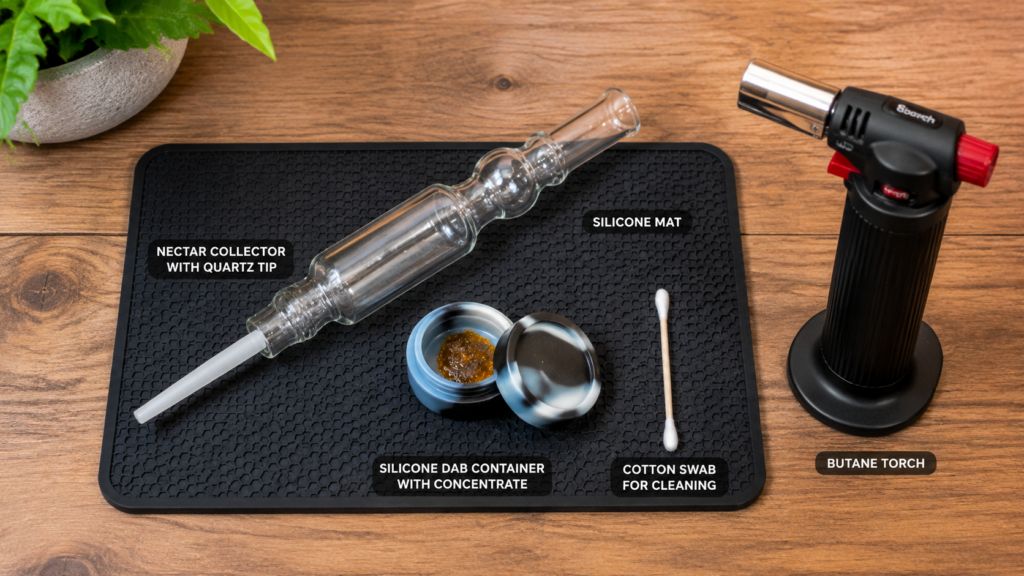
You’ve probably seen them at your local dispensary or in online vape shops. A strange-looking glass straw with a heated tip that doesn’t look like any vape you’ve used before. That’s a nectar collector, also called a dab straw or honey straw, and it’s one of the simplest ways to vape cannabis concentrates.
I’ve been using nectar collectors on and off for years, and here’s what I’ve learned: they’re not for everyone, though for the right person, they’re better than a dab rig or a vape pen. This guide covers everything you need to know. What they are, the different types, how to use one, what to look for when buying, and how to keep it clean. By the end, you’ll know whether a nectar collector makes sense for your setup.
Let’s start with the basics.
What Is a Nectar Collector?
A nectar collector is a dabbing device that works like a straw for your concentrates. Instead of loading wax into a chamber like a dab pen, or dropping it onto a hot nail like a traditional rig, you heat the tip and touch it directly to your concentrate while inhaling through the mouthpiece. The concentrate vaporizes on contact and you can’t beat that simplicity, and you inhale the vapor through the tube.
That’s the thing about the design – it’s brilliantly simple. It’ll have just four parts: the body (usually glass, silicone, or metal), the heating tip (titanium, quartz, or ceramic), the mouthpiece, and sometimes a water bubbler attachment for smoother hits. That’s it. There’s no coils to replace, no chambers to load, no buttons to press.
I’m not kidding when I say I’ll never forget the first time I used one. I’m telling you, I kept expecting something to go wrong because it felt too simple. That’ll be the whole point though. You’ll dip what you need, you’ll get exactly that much vapor, and there’s almost no waste. Compare that to a dab pen where you load a chamber and commit to vaping all of it, or a rig where you drop a dab on a hot nail and watch some of it slide off. The nectar collector gives you control.
How It Works
The mechanics are straightforward. You’ll heat the tip with a butane torch (for manual models) or flip a switch (for electric models), wait for it to reach the right temperature, then gently touch it to your concentrate while inhaling. The heat vaporizes the concentrate instantly, and the vapor travels up the tube into your mouth.
The key difference from other dabbing methods is that the heat source moves to the concentrate, not the other way around. In a traditional dab rig, you drop the concentrate onto a pre-heated nail. With a nectar collector, you bring the heated tip to the concentrate. That means you’ll be able to take smaller, more controlled hits without committing to a full dab. It’s like the difference between pouring a full glass of water and sipping from a straw. Same result, you decide how much.
Nectar Collector vs Dab Pen vs Dab Rig
When we’re trying to decide between these three options, here’s how they stack up.
| Feature | Nectar Collector | Dab Pen | Dab Rig |
|---|---|---|---|
| Form Factor | Straw-like tube | Pen-shaped | Glass rig with nail |
| Heating Method | Torch or electric | Battery-powered coil | Torch-heated nail |
| Portability | High | Very high | Low |
| Price Range | $15-$100+ | $20-$150+ | $50-$500+ |
| Learning Curve | Moderate | Low | Moderate-High |
| Waste | Minimal | Some in chamber | Can waste more |
| Hit Size | Small to moderate | Small to moderate | Large hits possible |
So what’s the biggest advantage of a nectar collector? You can’t beat the control you have over how much you consume. With a dab pen, you load a chamber and commit to vaping all of it. With a nectar collector, you dip, inhale, and stop. There’s no waste and no commitment.
That said, I’ve found a dab pen is still the better choice for truly discreet on-the-go use. I’ve written a full guide on the best dab pens and wax vapes if you want to compare options side by side.
Types of Nectar Collectors
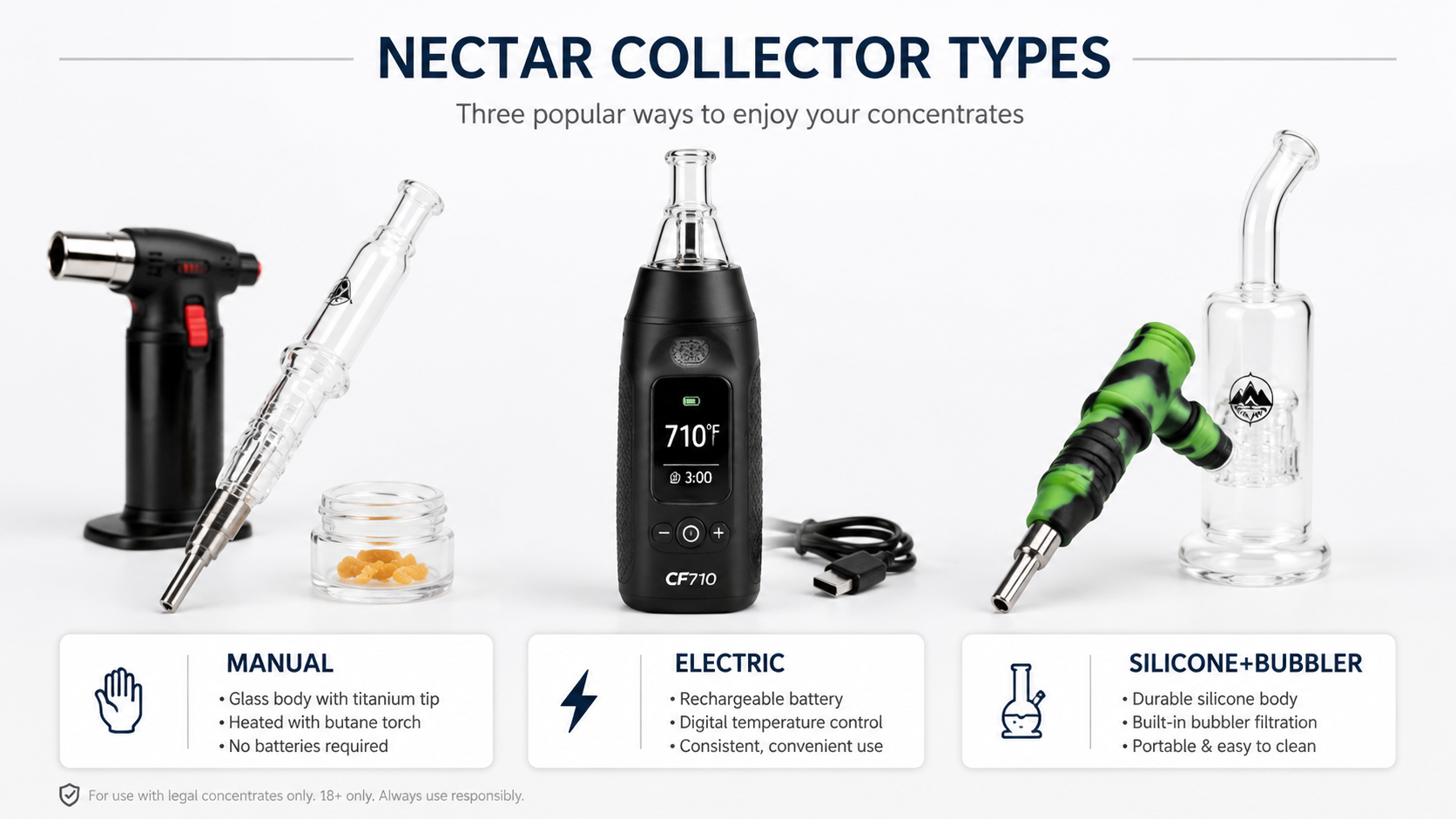
Not all nectar collectors are the same. The biggest split’s between manual (torch-heated) and electric (battery-powered) models, though material and features matter too.
Manual vs Electric
Manual nectar collectors use a butane torch to heat the tip. They’re cheaper ($15-$50), don’t need batteries, and give you more control over temperature once you learn the timing. The downside? You’ve got to carry a torch, there’s a learning curve, and you can burn yourself when you’re not careful.
Electric nectar collectors use a rechargeable battery with a heating coil. They cost more ($40-$100+) yet offer consistent temperature, no torch required, and are much safer. Popular models include the Boundless CF 710, Linx Ares, and Dipstick Dipper.
I’m speaking from experience when I say I’ll be honest, I started with a manual glass nectar collector and honestly, I burned my first few hits. The tip was too hot, the vapor was harsh, and I didn’t enjoy it. Switching to an electric model changed everything. Consistent temperature, no guesswork, just dip and inhale. I’d recommend starting electric for anyone who’s new to dabbing.
Material Matters
The body material affects durability, flavor, and price.
| Material | Pros | Cons | Price |
|---|---|---|---|
| Glass | Pure flavor, easy to clean | Fragile, can break easily | $15-$60 |
| Silicone | Durable, unbreakable | Can retain odors | $15-$40 |
| Metal/Steel | Very durable, portable | Can affect flavor | $20-$50 |
I’ve found glass is the best choice for flavor. If you’re clumsy or plan to travel with it, silicone’s your friend. Metal is a decent middle ground, though I find it can add a slight metallic taste to the vapor. It’s not terrible, but it’s noticeable when you’re a flavor snob like me.
Tip Materials
The tip is where the magic happens, and the material makes a real difference.
Quartz offers the best flavor. It heats and cools quickly, which means you can take back-to-back hits without waiting. The downside? It can crack when you overheat it or drop it. I’ve broken two quartz tips in my time, and both times it was my fault for getting impatient with the torch.
Titanium is the most durable option. It heats evenly and takes longer to cool down, giving you a wider window for hitting the right temperature. Just make sure you’re getting Grade 2 titanium. Cheap titanium can release harmful fumes at high temperatures.
Ceramic provides gentle, even heat with good flavor. It’s more fragile than titanium and needs careful heating to avoid cracking. I don’t see ceramic tips as often these days, though they’re a solid choice when you find one.
With or Without Water Filtration
Some nectar collectors come with a built-in bubbler attachment. The water cools the vapor before it reaches your mouth, making for noticeably smoother hits. It’s a nice addition when you find direct hits too harsh, though it makes the device bulkier and adds another part to clean.
I’ve used a bubbler attachment at home and skip it when I’m out. The difference is real. The bubbler makes even high-temp hits feel smooth, though it’s one more thing to carry.
How to Use a Nectar Collector
Using a nectar collector isn’t complicated, though getting the temperature right takes practice. Here’s the step-by-step guide.
For Manual (Torch-Heated) Models
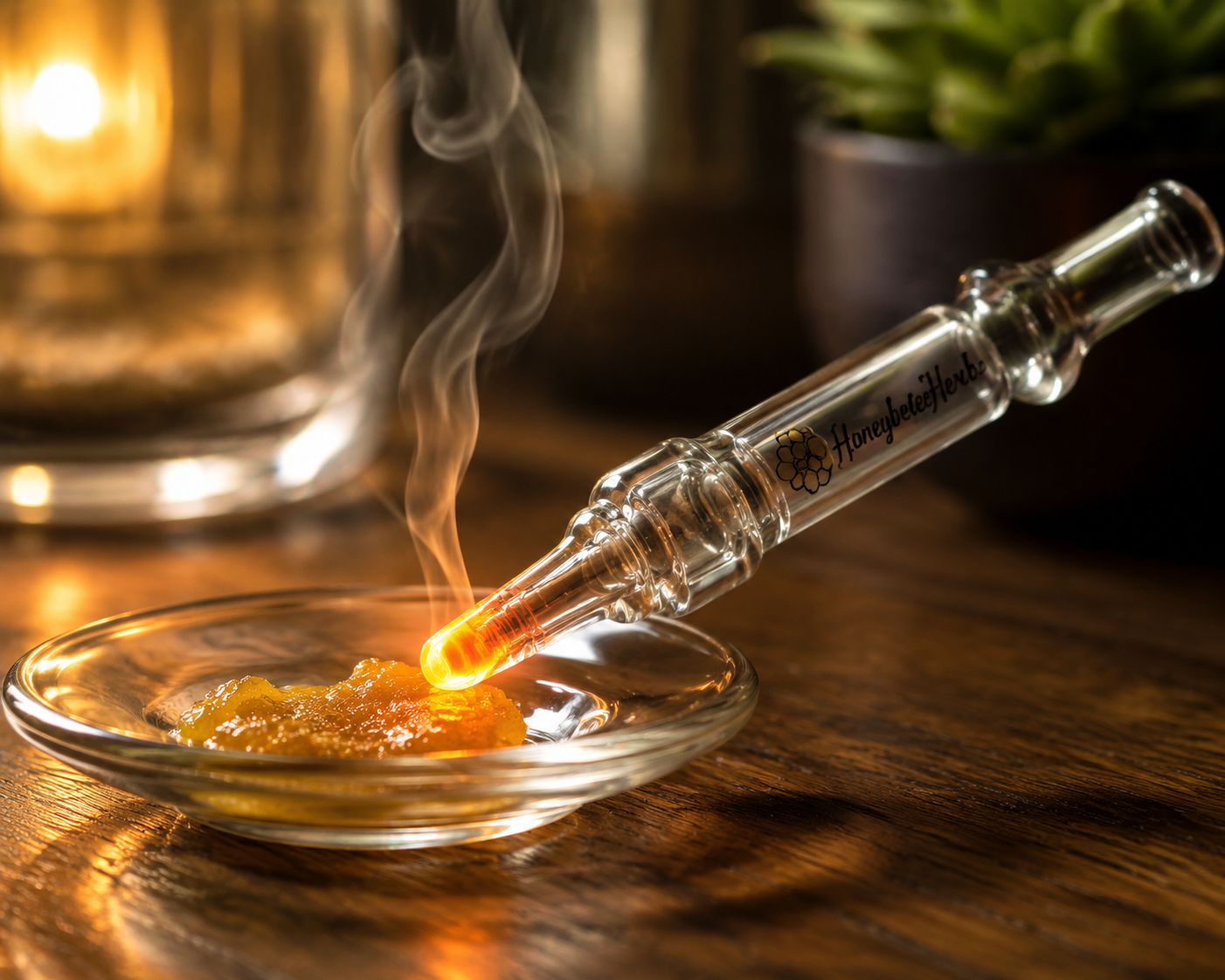
Step 1: Set up your station. Place your concentrate in a dab dish or silicone container on a stable, heat-resistant surface. Make sure your nectar collector is assembled correctly. Have your butane torch ready.
Step 2: Heat the tip. Use a butane torch to heat the tip evenly. For titanium tips, heat until it glows red (about 15-30 seconds), then let it cool for 10-20 seconds. For quartz tips, heat for 10-15 seconds and let cool for 5-10 seconds. Quartz retains heat longer. For ceramic tips, heat gently for 8-12 seconds. Ceramic can crack under extreme heat, so take it slow.
Step 3: Check the temperature. This is the hardest part to learn. Too hot and you’ll get harsh, burnt-tasting vapor. Too cool and nothing won’t vaporize. Here’s a rough guide:
| Temp Range | Experience | Best For |
|---|---|---|
| 315-400°F | Best flavor, smooth hits, less vapor | Flavor chasers |
| 400-500°F | Balanced flavor and vapor | Everyday use |
| 500-600°F | Bigger clouds, harsher, less flavor | Cloud chasers |
Step 4: Dip and inhale. Gently touch the heated tip to your concentrate while inhaling slowly through the mouthpiece. The concentrate will vaporize on contact. Lift the tip slightly as you inhale to allow airflow. This helps the vapor travel up the tube. For proper inhalation technique, check out my guide on how to inhale a vape properly. I’m convinced that slow, steady draws work best with nectar collectors.
Step 5: Clean immediately. Wipe the tip with a cotton swab while it’s still warm. This prevents residue buildup and keeps the flavor clean for your next session.
I’m telling you, I can’t stress the cleaning part enough. I learned this the hard way. I left a quartz tip uncleaned for a week and the flavor was never the same after. It’ll only take 10 seconds and it saves you from a ruined tip.
For Electric Models
Electric nectar collectors are simpler. Charge the battery, attach the heating tip, turn it on, select your temperature, touch the tip to your concentrate, and inhale. Clean after each use. That’s all there’s to it.
The main advantage of electric models is temperature consistency. You set it and forget it. There’s no guessing, no burnt hits, no torch required. I’ve covered different inhalation styles in my MTL vs DTL vaping guide. The principles apply here too.
Nectar Collector Buying Guide
Ready to buy? Here’s what I’ve learned to look for.
What to Consider
Your priority. Are you after the best flavor? Go with a glass body and quartz tip. Need something durable for travel? Silicone body with a titanium tip. Want convenience? Get an electric model. The right choice depends entirely on how you plan to use it.
Your budget. Nectar collectors range from $15 to over $100. Budget models ($15-$30) are basic glass or silicone with manual heating. Mid-range ($30-$60) offers better build quality, some with bubblers or basic electric options. Premium ($60-$100+) gets you high-quality electric models with advanced features like precise temperature control and longer battery life.
Ease of cleaning. Detachable tips are much easier to clean than fixed ones. I’d recommend getting one with interchangeable tips when you plan to use it regularly. Trust me on this. Cleaning a fixed-tip nectar collector’s a pain.
Recommended Products
Based on my experience and research, here are some solid options:
- Boundless CF 710 ($60-$80): Great electric option for beginners. Easy to use, consistent temperature, decent battery life. Boundless makes reliable products.
- Linx Ares ($70-$90): Best for flavor chasers. Quartz tip, precise temperature control, excellent vapor quality. Linx focuses on flavor-first design.
- Dipstick Dipper ($40-$60): Compact and portable. Good middle-ground option for on-the-go use.
- Basic glass nectar collector kit ($15-$30): On a tight budget and don’t mind the learning curve? This is a fine starting point.
I own the Boundless CF 710 and it’s what I’d recommend to most people. It’s not the best at any single thing, though it does everything well. Good flavor, easy to use, reasonable price. For more on dabbing alternatives, check out my best dab pens guide. I’ve also seen positive reviews on Reddit’s r/Dabs community for the Dipstick Dipper as a budget-friendly starter.
Safety and Maintenance
Nectar collectors involve high heat, so safety matters more than most people realize.
Heat Safety
The tip gets extremely hot. 500-600°F at the high end. Don’t ever touch the heated tip. Don’t forget to let it cool completely before storing. Don’t forget to always use your torch on a stable, heat-resistant surface away from flammable materials. Keep a silicone mat or ceramic plate nearby to rest the hot tip on between hits.
I’ve got a small burn scar on my forearm from a careless moment with a titanium tip. It heals, though it’s a reminder that these things demand respect. Don’t get complacent. The FDA also recommends keeping all vaping and dabbing equipment away from children and pets, and advises users to only purchase devices from reputable sources.
Cleaning
Clean after every use. Wipe the tip with a cotton swab while it’s still warm. For deep cleaning, soak the tip in isopropyl alcohol (91% or higher) for 15-30 minutes. Add coarse salt for abrasive cleaning when needed. Rinse with warm water and dry completely.
For glass bodies, use isopropyl alcohol and salt, shake gently. For silicone, you can boil it or soak in warm soapy water. For metal, use isopropyl alcohol, though avoid abrasive materials that could scratch the surface.
How often? Light use, clean weekly. Heavy use, every 2-3 days. When changing strains, clean between uses. According to Leafly’s cleaning guide, regular maintenance is the single best way to extend the life of your dabbing equipment. Hempire Gardens also recommends a thorough iso soak at least once a month for heavy users. I’d add that DabConnection has a solid nectar collector cleaning tutorial worth checking out. WayofLeaf also covers the basics well for beginners.
Storage
Store in a padded case to prevent breakage. Keep tips separate when they’re detachable. Store in a cool, dry place away from direct sunlight. Keep out of reach of children and pets.
When to Replace Tips
Titanium: Replace every 3-6 months with heavy use, or when discolored, warped, or developing rough spots. Quartz: Replace when chazzed (cloudy white buildup), cracked, or chipped. Ceramic: Replace when cracked or not heating evenly. Electric coils: Replace when flavor degrades or resistance changes.
FAQ
What is a nectar collector used for?
A nectar collector is used for vaping cannabis concentrates like wax, shatter, budder, and live resin. It works by touching a heated tip directly to the concentrate while you inhale through the mouthpiece, giving you precise control over how much you consume with minimal waste.
Is a nectar collector the same as a dab pen?
No, a nectar collector and a dab pen are different devices. A nectar collector is a straw-like device that you dip directly into your concentrate for on-demand hits. A dab pen has a built-in chamber where you load concentrate before each session. Nectar collectors offer more control over hit size and produce less waste, while dab pens are more discreet and portable. Many vapers own both for different situations.
How do I clean a nectar collector?
Wipe the tip with a cotton swab after each use while it’s still warm. For deep cleaning, soak the tip in isopropyl alcohol (91% or higher) for 15-30 minutes. Clean glass bodies with alcohol and coarse salt. Silicone bodies can be boiled or soaked in warm soapy water. According to Leafly, regular maintenance is the single best way to extend the life of your dabbing equipment.
What temperature should I heat my nectar collector tip to?
For the best experience, heat your nectar collector tip to 315-500°F depending on your preference. Low temperature (315-400°F) gives the best flavor with smooth hits but less vapor. Medium temperature (400-500°F) offers balanced flavor and vapor production for everyday use. High temperature (500-600°F) produces bigger clouds but sacrifices flavor and can be harsh. Electric models let you set precise temperatures, while manual torch heating requires practice to get right.
Are electric nectar collectors better than manual ones?
Electric nectar collectors are generally better for beginners because they offer consistent temperature control, no torch required, and safer operation. They cost more ($40-$100+) but eliminate the guesswork of manual heating. Manual nectar collectors are cheaper ($15-$50) and give experienced users more control over temperature, but require a butane torch and have a steeper learning curve. If you’re new to dabbing, start with an electric model.
Can I use a nectar collector without water filtration?
Yes, you can absolutely use a nectar collector without water filtration. Many nectar collectors are designed as dry devices without any water chamber. Water filtration is an optional feature found on some models with built-in bubbler attachments. Using it dry gives you a more direct flavor profile and makes the device simpler to clean and more portable. If you find direct hits too harsh, look for a model with a detachable bubbler that you can add or remove as needed.
Final Thoughts
Nectar collectors occupy a sweet spot in the dabbing world. They’re more portable than a dab rig, more efficient than a dab pen, and simpler than both. They’re not the best choice for everyone. I’ve always thought a dab pen is still the way to go when discretion’s your priority. When you want a device that delivers clean, controlled hits with minimal waste though, a nectar collector’s hard to beat.
Start with a basic model when you’re unsure. You don’t need to spend $80 to figure out if this style of vaping works for you. A $20 glass nectar collector with a quartz tip’ll tell you everything you need to know. Love it? Upgrade to an electric model. Don’t love it? You’re out twenty bucks instead of a hundred.
Continue Reading
- Best Dab Pens and Wax Vapes (2026) — Compare the top portable concentrate vaporizers side by side.
- How to Inhale a Vape Properly — Master your inhalation technique for smoother, more satisfying hits.
- MTL vs DTL Vaping: Which Style Is Right for You? — Understand the difference between mouth-to-lung and direct-to-lung vaping.
For more on dabbing and vaping, check out my guide to the best dab pens and wax vapes for alternatives, or learn about proper inhalation technique to get the most out of any device.



Build your vape knowledge
Read more guides
Find explainers, how-to articles and reference material.
Open guide library →Compare vape products
Check specifications across the product database.
Open product data →Read hands-on reviews
See tested devices and documented trade-offs.
Read review coverage →