

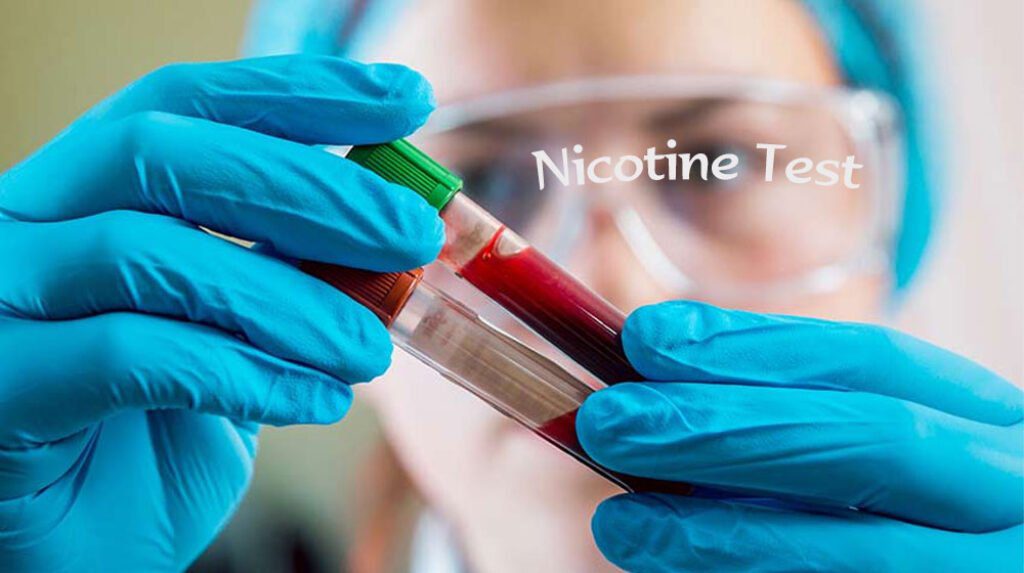
If you vape and you have a nicotine test coming up, you need to understand what the test is actually looking for. It is not testing for nicotine itself. It is testing for cotinine, a metabolite your body produces when it processes nicotine. Cotinine sticks around far longer than nicotine does, and that is what makes passing a test harder than just putting your vape down for a day.
Nicotine tests come up in three main contexts: life insurance medical exams, employer wellness programs, and surgical pre-op screenings. The stakes are real. A positive nicotine test on a life insurance exam can mean premiums that are two to three times higher than non-smoker rates. Some employers charge $50 to $100 per month in tobacco surcharges on health insurance. Surgery can be delayed or canceled if nicotine is detected before an operation.
Here is what you need to know about how these tests work, how long cotinine stays in your system, and what your options are.
The difference between nicotine and cotinine
This distinction matters. Nicotine has a half-life of about 2 hours in the blood. That means if you vape at 8 AM, half the nicotine is gone by 10 AM. After about 1 to 3 days, nicotine itself is virtually undetectable in your bloodstream.
Cotinine is different. It is the primary metabolite your liver produces when it breaks down nicotine, and it has a half-life of about 16 to 20 hours. That is why virtually all “nicotine tests” are actually cotinine tests. Cotinine is far more stable, detectable for much longer, and gives a more accurate picture of whether someone has used nicotine recently.
The cutoff level for most urine cotinine tests is 200 ng/mL (nanograms per milliliter). For life insurance blood tests, the cutoff is typically 20 ng/mL for cotinine in serum. Even secondhand exposure can produce trace levels, but they generally stay well below these thresholds.
Detection windows by test type
| Test type | What it detects | Detection window | Typical cutoff |
|---|---|---|---|
| Urine test | Cotinine | 3 to 21 days (occasional user: 3-4 days; heavy user: 10-21 days) | 200 ng/mL |
| Blood test (serum) | Cotinine | 1 to 10 days | 20 ng/mL |
| Saliva test | Cotinine | 1 to 4 days | 10-30 ng/mL |
| Hair follicle test | Nicotine and cotinine | Up to 3 months (1 cm of hair = approximately 1 month) | Varies by lab |
These ranges come from data compiled by Drugs.com (2025), Nectr Energy (2026), and the Salimetrics cotinine interpretation guidelines. The wide range in urine detection (3 to 21 days) reflects the difference between occasional and heavy users. If you vape once or twice a week, you are on the low end. If you vape all day every day, you are on the high end.
A note about hair tests: they are rare in employment and insurance contexts because they are more expensive and more prone to false positives from environmental exposure. But they exist, and if you are facing one, there is no quick fix. Cotinine deposits in hair as it grows, creating a timeline that can stretch back months.
Why vapers get tested
Life insurance. Most life insurance companies require a medical exam for policies above a certain amount, and cotinine testing is standard. Smoker premiums are typically two to three times higher than non-smoker rates. On a $500,000 term life policy, that can mean paying $100+ more per month. The test is almost always a blood draw or urine sample during the paramedical exam. Quest Diagnostics is one of the largest providers of these tests for insurers.
Employer wellness programs. Some companies offer lower health insurance premiums to employees who certify as non-tobacco users. To verify this, they may require periodic cotinine testing. A failed test can mean a tobacco surcharge of $50 to $100 per month on your health insurance premium. Under the Affordable Care Act, employers can charge tobacco users up to 50% more for health insurance.
Pre-surgery screening. Surgeons, especially those performing procedures involving blood flow (orthopedic surgeries, plastic surgeries, dental implants), often test for nicotine before surgery. Nicotine constricts blood vessels and impairs healing, increasing the risk of complications. A positive test can delay or cancel your procedure.
How to pass a nicotine test if you vape
The only guaranteed way to pass a nicotine test is to not have nicotine in your system when you take it. Everything else is a matter of degree and timing.
Stop vaping as early as possible
This is not a trick or a loophole. It is the only thing that reliably works. Based on the detection windows above:
- For a urine test: Stop vaping at least 7 to 10 days before the test if you are a light user, and 14 to 21 days if you are a heavy user.
- For a blood test: Stop at least 5 to 7 days before the test for light users, and 10+ days for heavy users.
- For a saliva test: Stop at least 3 to 5 days before the test. Saliva has the shortest detection window.
- For a hair test: There is no reliable shortcut. Cotinine in hair reflects usage over the past 1 to 3 months. Abstinence is your only option, and it needs to be long-term.
Hydration helps, but it is not magic
Drinking water dilutes urine, which can lower the concentration of cotinine below the cutoff threshold. But this only works if your cotinine levels are already close to the cutoff. If you have been vaping heavily and your levels are in the thousands of ng/mL, no amount of water will bring you under 200 ng/mL in a few days. Hydration supports the body’s natural elimination processes; it does not override them.
Exercise may speed up metabolism slightly
Physical activity increases your metabolic rate and can promote the breakdown and elimination of stored nicotine and cotinine. A 2023 study in Drug Metabolism Reviews noted that exercise can modestly accelerate the clearance of some drug metabolites through increased blood flow and sweating. But the effect is small. Do not count on a morning jog to clear a month of daily vaping.
Switch to nicotine-free vapes during the waiting period
If you cannot go cold turkey, switching to a nicotine-free vape stops new nicotine from entering your system while giving you something to do with your hands. 0mg vapes contain the same PG and VG base but no nicotine, so they will not add to your cotinine levels. This is one of the more practical strategies for people who need to pass a test but are not ready to quit entirely.
Do not waste money on detox products
There is no scientifically validated detox drink, pill, or flush that specifically targets cotinine. Products that claim to “cleanse your system” for nicotine tests are not supported by peer-reviewed research. Save your money. The only thing that clears cotinine is time and your liver.
Be honest about NRT use
If you are using nicotine replacement therapy (patches, gum, lozenges) to quit, tell the testing facility. NRT products contain nicotine and will produce a positive cotinine result. Some insurance companies and employers make exceptions for NRT users who are actively trying to quit. For more on vaping alternatives, see our guide to quitting smoking alternatives.
Does secondhand vape exposure show up on a test?
It is possible but unlikely to trigger a positive result. A 2024 review in Nicotine & Tobacco Research found that average cotinine levels in non-smokers exposed to secondhand e-cigarette aerosol are around 0.1 to 1.0 ng/mL in saliva, well below the 10 to 30 ng/mL cutoff for saliva tests and far below the 200 ng/mL urine cutoff. You would need to be in an extremely enclosed, poorly ventilated space with heavy vaping for an extended period to approach a positive result from secondhand exposure alone.
For more on what is in secondhand vape aerosol, see our article on secondhand vape exposure.
What about vaping vs smoking: does it matter for the test?
No. A cotinine test cannot distinguish between nicotine from a cigarette, a vape, a nicotine pouch, a patch, or chewing tobacco. Cotinine is cotinine, regardless of the source. If you vape nicotine, you will test positive on a cotinine test the same way a cigarette smoker would.
For more on how vaping compares to smoking, see our comparison of vapes vs cigarettes.
FAQ
How long does cotinine stay in your system from vaping?
It depends on how heavily you vape and the type of test. For urine: 3 to 21 days. For blood: 1 to 10 days. For saliva: 1 to 4 days. For hair: up to 3 months. Heavy daily vapers will be on the high end of each range.
Can I pass a nicotine test after vaping the day before?
Extremely unlikely for any standard test. Even a saliva test, which has the shortest window, can detect cotinine for 1 to 4 days. You would need to be a very infrequent user and lucky with the cutoff threshold.
Will a nicotine-free vape show up on a nicotine test?
No. 0mg nicotine-free vapes contain no nicotine and produce no cotinine. They will not trigger a positive result. See our guide on nicotine-free vape safety for more details.
Does the test check for nicotine or cotinine?
Almost all clinical and insurance nicotine tests check for cotinine, not nicotine. Cotinine is more stable, lasts longer in the body, and is the standard biomarker for nicotine use.
Can secondhand vape smoke cause a positive test?
Very unlikely. Secondhand vape exposure typically produces cotinine levels of 0.1 to 1.0 ng/mL, well below the cutoff for standard tests. You would need extreme, prolonged exposure in a very confined space.
How much more does life insurance cost if you vape?
Typically two to three times the non-smoker rate. On a $500,000 20-year term policy, a non-smoker might pay $30 to $50 per month, while a vaper would pay $80 to $150 per month. The exact difference depends on age, health, and the insurer.
Sources: Drugs.com (2025), “How Long Does Nicotine Stay in Your System?”; Nectr Energy (2026), “Cotinine Detection Times Complete Guide”; Salimetrics, “Guidelines for Interpreting Cotinine Levels in the United States”; Quest Diagnostics, “Tobacco Cessation and Cotinine Testing”; CRL Corp (2024), “Cotinine Levels and Smoker Misrepresentation Over Time”; Nicotine & Tobacco Research (2024), secondhand e-cigarette aerosol exposure review; Term Life Online (2025), “Do Life Insurance Companies Test for Nicotine?”; Affordable Care Act, tobacco surcharge provisions.


Build your vape knowledge
Read more guides
Find explainers, how-to articles and reference material.
Open guide library →Compare vape products
Check specifications across the product database.
Open product data →Read hands-on reviews
See tested devices and documented trade-offs.
Read review coverage →